On Sunday, South African authorities and nature lovers alike celebrated the centenary of Kruger National Park—a 7,500-square-mile paradise of African wildlife, and a cornerstone of the nation’s conservation efforts.
Minister of Forestry, Fisheries, and the Environment Willie Aucamp rang in the celebrations at Skukuza Rest Camp inside the massive protected area, saying how “proud” he was to be associated “with those who’ve maintained and managed it so magnificently,” over the last 100 years.
One of the largest and oldest of all national parks in Africa, Kruger was named after the Republic’s first president Paul Kruger, who, inspired by a law organizing the area into private game camps before his term in office, eventually sought to create a large game reserve in the area that is now northern Kruger National Park to protect species of large animal that needed plenty of space to thrive.
Kruger was no longer in office by the time the park was created, but his interest and effort in creating its predecessor, the Sabi Game Reserve, were noted when selecting a name.
Today, Kruger National Park receives 2 million visitors every year, and has become a bastion of biodiversity that spills over into three nations. It is home to more species of large mammal than any other place in Africa, as well as hundreds of bird, reptile, and plant species.
It’s been the testing ground for cutting-edge methods of protecting endangered species and for pioneering wildlife research and animal biology, as well as a role model for balancing wilderness needs, conservation aims, and tourist accessibility, for the continent at large.
“As a united people, we are celebrating this success story, realizing we have the responsibility to take this forward to another 100 years so that our grandchildren and great grandchildren can see what it is like to see when a herd of elephant is walking and hear lions roar in the most pristine natural area in the world,” said Minister Aucamp.
The centenary was not just focused on celebrating the past, but securing the future, as two days before the anniversary, South African National Parks and Aucamp’s Ministry signed the Beneficiation Scheme Framework Agreement with seven communities that live and have lived historically in and around the area of the park.“This beneficiation agreement represents… shared commitment to transforming natural resources into lasting opportunities for you, the beneficiaries, and your future generations,” said Aucamp at the camp. Iconic Kruger National Park Celebrates 100th Year of Protecting African Wildlife, Including the Big 5
The Great Pyramid of Giza in Egypt has survived more than 4,500 years. Earthquakes have repeatedly shaken the region, including the magnitude 5.8 Cairo earthquake in 1992, which dislodged some of the pyramid’s outer casing stones. Yet the main body remained essentially intact.
How has it survived so well? A new study of the pyramid’s vibrations by Egyptian geophysicist Asem Salama and colleagues provides insight into its performance during earthquakes, and identifies some interesting features.
But we should be cautious to conclude that its impressive longevity is proof of its builders’ knowledge of earthquake engineering.
What the research found
The researchers measured the pyramid’s vibrations in ambient conditions. They found that its natural frequencies – the frequencies at which it “prefers” to vibrate – are mostly between about 2.0 and 2.6 hertz (cycles per second). The surrounding soil has a much lower dominant frequency, around 0.6Hz.
Every structure has a natural rhythm. Push a child on a swing at the right moment and the motion grows; push at the wrong moment and little happens.
Buildings and monuments behave similarly. If earthquake shaking matches a structure’s natural frequency, the motion can be amplified. This is called resonance, and it can be catastrophic.
The study also reports reduced vibrations near the so-called relieving chambers above the King’s Chamber. These chambers are understood to redirect the enormous weight of stone above, and may also affect how vibration energy moves through the pyramid.
These findings suggest some behaviour that may be helpful during an earthquake, including a frequency mismatch between the pyramid and the soil. But they do not, by themselves, prove people intentionally built the pyramid to be resilient to earthquakes.
How the researchers measured it
The study used a method called horizontal-to-vertical spectral ratio analysis, or HVSR. This records tiny background motions from wind, traffic, human activity and natural ground vibration.
By comparing the horizontal and vertical components of these motions, researchers can estimate dominant frequencies in the soil and structure. In this case, instruments were placed at 37 locations in and around the pyramid, including internal passages, exterior stones and nearby soil.
This suits a heritage structure. Engineers cannot drill into the Great Pyramid, load it experimentally, or put instruments on it like a modern bridge.
The method provides useful information without damage. However, it only measures the response to small background vibrations, not the severe shaking of an earthquake.
The importance of frequency mismatch
When shaking from an earthquake happens at a frequency that matches a structure’s natural frequency, it can cause resonance. Resonance can be catastrophic.
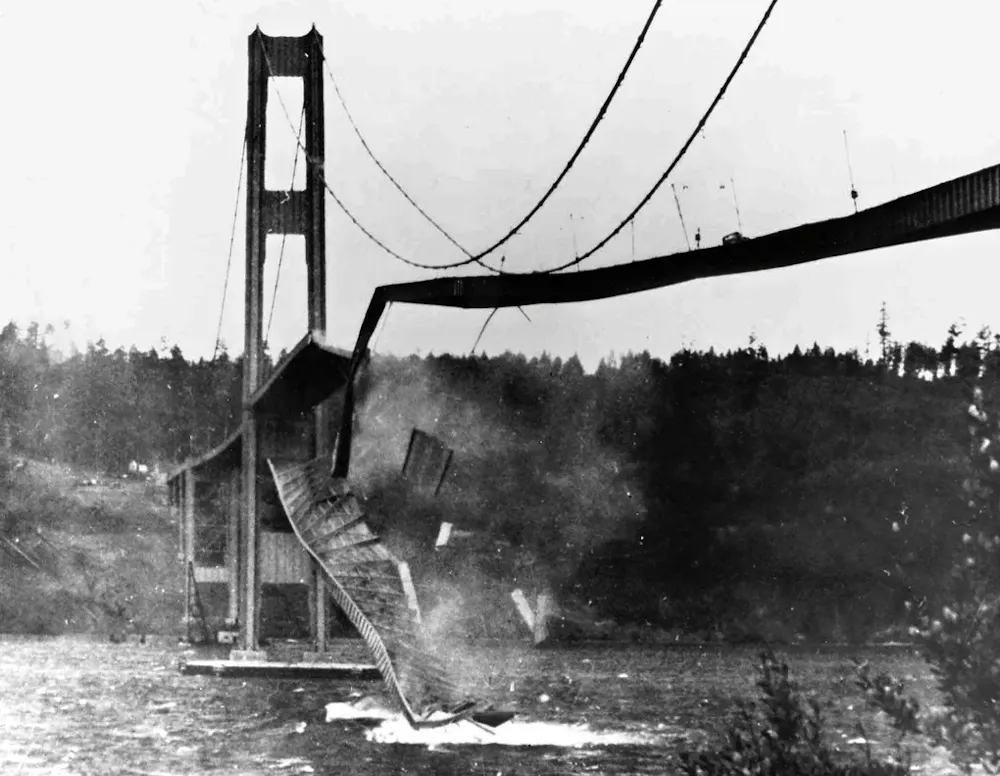
The 1940 collapse of the Tacoma Narrows bridge in the US is often attributed to resonance during high winds. Wikimedia
So the measured difference matters. If the ground and the structure vibrate at different rates, the ground is less likely to feed energy efficiently into the structure.
But this addresses only one possible mechanism of earthquake damage. There are plenty of examples of structures performing poorly in earthquakes, even though there was a frequency mismatch to the soil below.
Earthquake resilience is more complicated
Modern earthquake design does not assess resilience from one frequency comparison.
Instead, we look at a whole list of questions. How severe is the expected shaking? What ground is the structure on? How heavy and flexible is the structure? Can the structure deform and dissipate energy without sudden collapse? How serious would failure be?
The structure’s natural period or rhythm (which is related to its natural frequency) is part of that assessment. But it sits alongside many other factors.
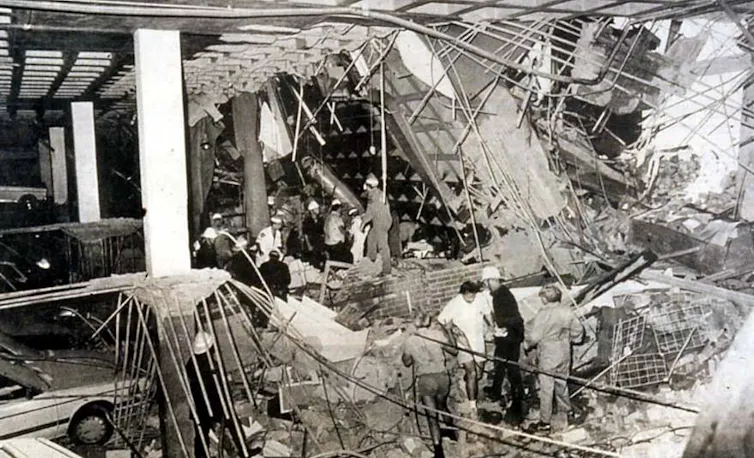
In practice, earthquake damage depends not only on the earthquake but on the structures that receive it. Australia’s 1989 Newcastle earthquake, for example, was not huge by global standards, but many buildings fared poorly and 13 people died.
Australia’s 1989 Newcastle earthquake wasn’t huge – but it caused great damage and 13 deaths. Australian Earthquake Engineering Society, CC BY
For the Great Pyramid, the behaviour of the stonework is especially important. Ambient vibration testing measures behaviour under very small motions. During strong earthquake shaking, masonry can crack, open joints, rock, slide and lose stiffness. Each of these changes the structure’s natural period, complicating the behaviour.
Beware survivorship bias
In evaluating the pyramid’s longevity, we should also consider survivorship bias.
Famously, in the second world war, statistician Abraham Wald was asked where armour should be added to aircraft. The obvious answer was to reinforce the places where returning aircraft had the most bullet holes.
Wald argued the opposite: those aircraft had survived. The aircraft that did not return were missing from the data.
Ancient structures pose a similar problem. We admire ancient aqueducts, temples and pyramids because they are still here. The failed structures, poor foundations, weak details and abandoned experiments are mostly gone.
That does not diminish the Great Pyramid. It simply means looking at structures that survive today does not tell us everything about the design intentions behind them.
What the pyramid does teach us
The pyramid may not have been intentionally designed for resilience in an earthquake. But its survival is not an accident, either.
From an engineering point of view, it has many favourable features: a broad base, low centre of mass, tapering form, symmetrical plan, competent limestone foundation and massive masonry load path. It is squat, stiff and well-founded rather than tall, slender and flexible.
The safest conclusion is that the builders made excellent empirical engineering choices. Those choices may have been driven by construction experience, observation, structural necessity, or cultural intent. Their seismic benefits may be real without being the original purpose.
The Great Pyramid’s survival is not magic, and it is not proof of ancient seismic design. As evidence, this study is important and impressive, but incomplete.
Without any fanfare from either party, it was recently revealed that Mozambique cleared its entire $701 million debt with the International Monetary Fund (IMF).
The news comes as a meeting between the officials and the IMF was scheduled for August, which it had previously been presumed would include discussions about the outstanding debt becoming distressed.
Such a state would put billions in additional debts, current and future, for vital gas and infrastructure projects, at risk according to the World Bank.
Business Insider Africa reports that without any announcement, in the final days of march the IMF website updated Mozambique’s outstanding debt level to zero, while Fáusio Mussá, chief economist at Standard Bank in Mozambique, the local branch of Africa’s largest continental bank, disclosed that the country had settled.
The news makes Mozambique the latest in a small series of African country to get out from under internationally-held, aid-related debt.
The southeast African nation had built up all-time record foreign currency reserves of $4.15 billion, which have been reduced to $3.5 billion following the repayment.
The country ranks among the least-developed in the world along multiple lines of standard measurement, such as life expectancy and GDP-per-capita. It had been ravaged by a civil war until 1994 when it held its first multiparty elections had has remained mostly stable since.
Namibia and Nigeria are two other countries to have recently paid off large amounts of IMF debt. In October of last year, Namibia paid off $750 million to make it the second-lowest debtor to the organization in Africa, while in May, Nigeria paid back a $3.4 billion loan to cushion the impact from its government-mandated business closures and lockdowns while attempting to reduce the impact of COVID-19. Another African Country Has Cleared its Debt to the International Monetary Fund.
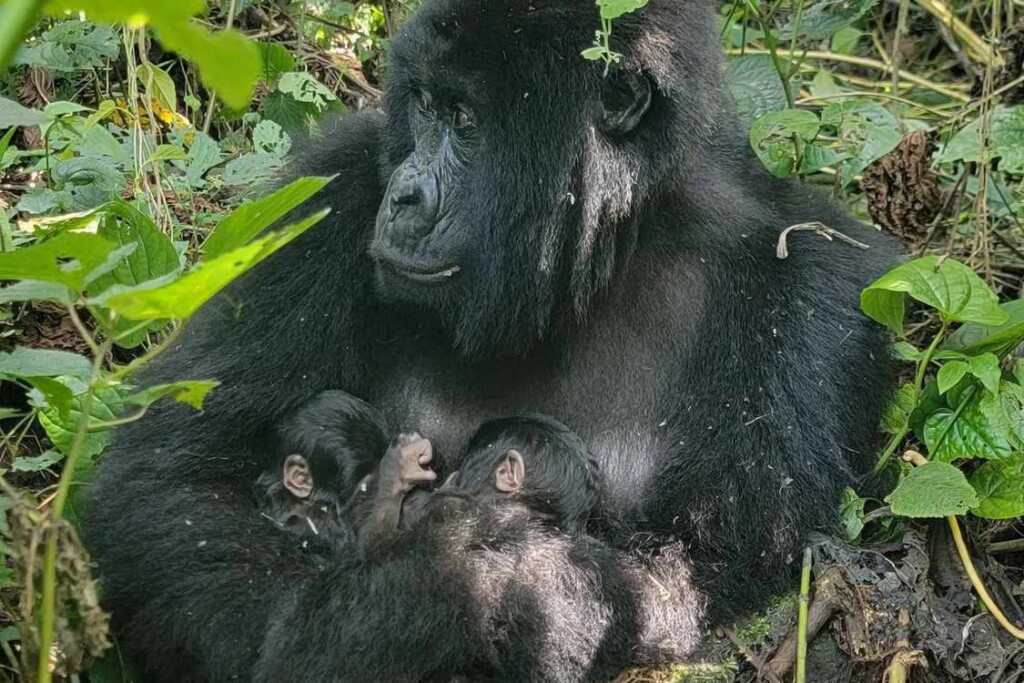
The Bageni family has a pair of blue balloons outside their mailbox, after this Congolese gorilla clan welcomed twins.
Now numbering 59 individuals, the twins were born to an adult female named Makufu, who will be closely monitored during the babies’ childhood.
Mountain gorillas are a critically-endangered subspecies of the eastern gorilla. Their strongholds concentrated in the sub-Saharan African countries of DRC, Uganda, and Rwanda.
Among their most guarded haunts is the Democratic Republic of the Congo’s Virunga National Park, considering the security environment in the country and the threat of the animals from poaching.
Makufu the now 7th-time mom, used to be part of the Kabirizi family of gorillas, which suffered from poaching, including of her mother.
Nonetheless, mountain gorillas now number around 1,000 individuals, up from 400 in the 1980s, the Independent reports.
“Twin births among mountain gorillas are rare and present additional challenges, particularly during the early months when infants are entirely dependent on their mother for care and transport,” park officials said in a statement.
“Following the births, additional monitoring and protection measures will be deployed to closely observe the twins and support their health and survival during this critical early period.”The boys are the first births of this year, and as they appear to be in healthy, robust condition, it’s hoped they will mark an auspicious year for the clan and the species at large. Rare Twins Born to Mountain Gorilla Family in Virunga National Park
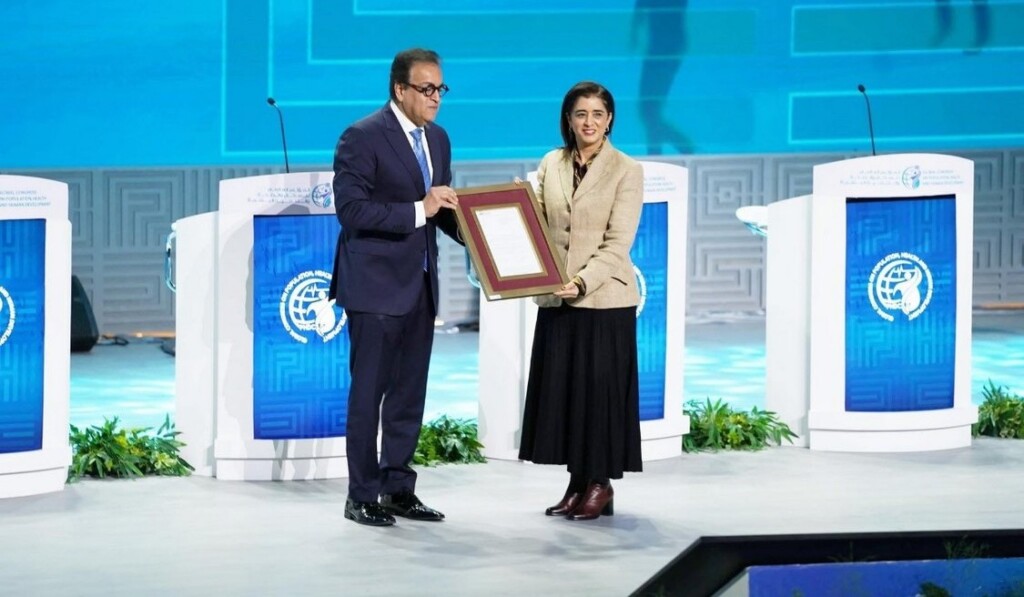
Dr. Khaled Abdel Ghaffar, Deputy Prime Minister and Minister of Health and Population of Egypt, receiving a commendation from Dr. Hanan Balkhy, Regional Director for WHO’s Eastern Mediterranean Region – credit WHO
Egypt has become the 26th country to eliminate trachoma as a public health concern, building on a steady string of triumphs over tropical diseases.
Having eliminated lymphatic filariasis, malaria, and now trachoma in the last 30 years, Egypt has emerged as a continental leader in the control and eradication of neglected tropical diseases.
Trachoma, caused by the bacteria Chlamydia trachomatis, is the world’s leading cause of infectious blindness, and has been documented in Egypt for over 3,000 years.
Public health efforts to address its burden began in the early 20th century, when pioneering ophthalmologist Arthur Ferguson MacCallan established Egypt’s first mobile and permanent eye hospitals and laid the groundwork for organized trachoma control globally. Yet by the 1980s, it still blinded many adults and affected over half of all children in some Nile Delta communities.
Since 2002, the Ministry of Health and Population of Egypt, in partnership with the World Health Organization and other national and international stakeholders, has pursued trachoma elimination through the WHO-endorsed SAFE strategy, which represents Surgery for trichiasis, Antibiotics to clear the causative organism, Facial cleanliness and Environmental improvement.
Between 2015 and 2025, extensive mapping and surveillance across all 27 of Egypt’s governorates showed steady reductions in the proportion of children aged 1–9 years affected by active (inflammatory) trachoma, and no significant burden of the blinding complications of trachoma in adults.
Both indicators are now below WHO elimination prevalence thresholds nationwide. In 2024, Egypt integrated trachoma surveillance into its national electronic disease reporting system, which should facilitate rapid response to any future cases.
“Egypt’s elimination of trachoma as a public health problem underscores the nation’s sustained commitment to equitable healthcare delivery and the transformative impact of initiatives such as Haya Karima, which have expanded access to safe water, sanitation, and primary care services in rural communities,” said Professor Dr. Khaled Abdel Ghaffar, Deputy Prime Minister and Minister of Health and Population.
“This achievement is a collective triumph for Egypt’s health workers, communities, and partners who collaborated to eradicate this ancient disease.”
The country became the seventh in the WHO’s Eastern Mediterranean region to eliminate trachoma as a public health concern, defined as 1 in 1,000 adults with trichiasis. The region includes the Near and Middle East as far as Pakistan, the Arabian Peninsula, and North Africa, including Morocco and and Somalia.
“This milestone adds to Egypt’s strong track record in eliminating communicable diseases, including polio, measles, rubella, and most recently malaria. It demonstrates what can be achieved when political commitment, strong partnerships and years of sustained public health efforts, led by the Ministry of Health and Population, come together towards a shared vision,” said Dr. Nima Abid, WHO Representative to Egypt.
“Egypt’s achievement serves as an inspiring example for other countries in the Region and beyond.”
Following Egypt’s success, trachoma remains a public health problem in 30 countries and is responsible for the blindness or visual impairment of about 1.9 million people. Blindness from trachoma is difficult to reverse. Based on April 2025 data, 103 million people live in trachoma endemic areas and are at risk of trachoma blindness.Yet even devastatingly poor countries—such as Togo, Papua New Guinea, and Mauritania, can, and in fact already have, achieved what Egypt has. Egypt Becomes 26th Country to Eliminate Leading Cause of Infectious Blindness with Triumph Over Trachoma
Mumbai, (IANS) Actress Priyanka Chopra Jonas is sharing what her life has been like, “lately”. On Saturday, the actress took to her Instagram, and shared a bunch of pictures from her vacation in Africa.
The pictures show the actress enjoying her holiday, gorging on some lip-smacking food, shedding the extra pounds in the gym, capturing the wildlife in her lens, sitting under the night sky, and enjoying some breathtaking views.
She simply wrote in the caption, “Lately”. The actress geo-tagged Africa in her location. She also shared an overhead shot of the Nile river in Africa.
The River Nile, which runs through several countries in East and North Africa, is regarded as the longest river on Earth, running nearly 6,700 kilometers from its source in Lake Victoria to its mouth in the Mediterranean.
Earlier, the actress celebrated 16 years of her film ‘Kaminey’, and reminisced about how the film became a turning point in her career after Vishal Bhardwaj offered her the role in the film.
She took to Instagram, where she shared a string of stills from the film, which stars Shahid Kapoor in a dual role and is set against the backdrop of the Mumbai underworld. The actress recalled how the role of Sweety Bhope was offered to her while she was filming ‘Dostana’ in Miami.
“Sweety Bhope. I was filming for Dostana in Miami, Florida with @tarun_mansukhani directing and @bachchan and @thejohnabraham starring. One cool evening after we wrapped up the shoot , I saw a missed call from Vishal Bhardwaj. What?? I had wanted to work with him forever and never thought he would cast me because of my ‘commercial’ image at the time”.
She added, “He said he’d like to come see me, and he did. To Miami. I remember him telling me the story and I said, ‘Well, she has approximately 8 scenes’. And he said, ‘With us working on it, it will end up being so much more. Trust me’. And I did, he promised he would make something incredible for me after this in appreciation for doing the part”.The actress also said that she was just “greedy to work with him”. Priyanka Chopra Jonas’ African holiday is all about wildlife, good food | MorungExpress | morungexpress.com
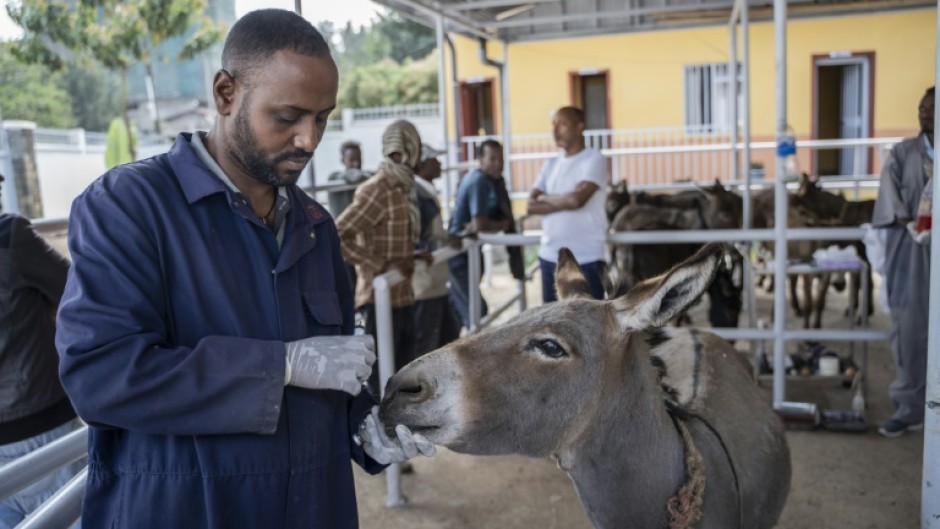
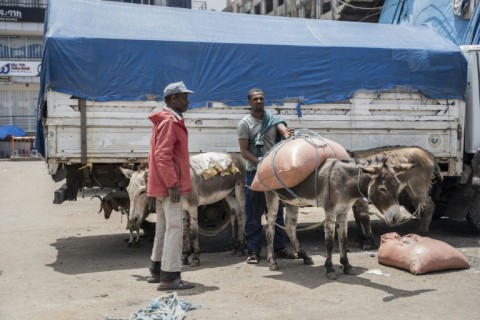
ADDIS ABABA - At a clinic in Ethiopia's capital, a donkey is complaining as a vet tries to trim his nails.
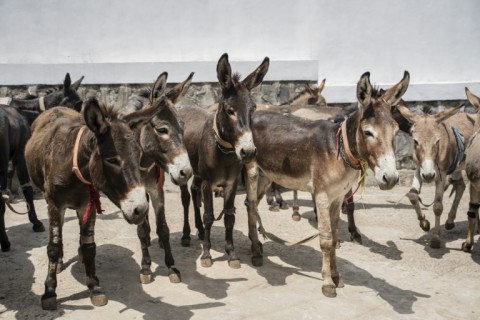
Ethiopia is thought to have the most donkeys in the world, one in five of the global total according to the United Nations, and they form a vital part of the economy.
So the Donkey Sanctuary, run by a British charity that operates around the world, has its work cut out at its free clinic near Merkato, Addis Ababa's vast open-air market.
On a recent visit by AFP, several dozen donkeys were gathered in pens, some agitated and kicking their feet, while others eagerly pounced on food.
Caregivers and veterinarians were taking turns treating injuries, colic and eye problems.
Guluma Bayi, 38, walked more than an hour and a half with his two donkeys to reach the clinic.
"It has been three weeks since my donkeys became sick," he told AFP. "One has a leg problem and the other has a stomach issue."
Like the others making the trip, Guluma relies heavily on his donkeys to make a living. He uses them to transport jerrycans of water to sell to his fellow villagers.
"After they became ill, I couldn't buy bread for my children," he said. "I begged a guy to bring me here."
After successful treatment, Guluma was able to go home with both donkeys.
The UN Food and Agriculture Organisation says Ethiopia had some nine million donkeys as of 2018.
AFP | Amanuel Sileshi
They play a major economic role in the East African country of around 130 million people, ploughing fields and transporting goods, offering a cheaper alternative to vehicles at a time when petrol prices have risen sharply.
"There is a proverb in Ethiopia: if you don't have a donkey, you are a donkey yourself," said Tesfaye Megra, project coordinator for the Donkey Sanctuary, laughing.
The charity operates in several regions across the country and opened its Addis Ababa centre in 2007.
"They are invaluable animals... and they are suffering while they are providing different services to the community," said Tesfaye.
The daily life of donkeys is no picnic.
Urban sprawl in the Ethiopian capital has made green spaces increasingly scarce.
The loads they carry can be heavy, and many are beaten and badly treated.
Another visitor to the clinic, Chane Baye, said he used his two donkeys to carry sacks filled with grain for clients across the city.
They allow him to earn between 200 and 400 birr per day (around $1.50 to $3) -- not bad in a country where a third of the population lives below the World Bank's poverty line of $2.15 per day.
The 61-year-old comes roughly every three months to have his donkeys checked -- "whenever they start limping or have a stomach problem," he said.
"Before this clinic, we used traditional ways to treat them," he added, referring in particular to nails roughly removed from the animals' legs with a knife.
He is pleased his donkeys now get professional treatment for wounds and infections.
Derege Tsegay, a vet at the sanctuary, performs a routine but unsavoury operation, inserting his gloved-up arm deep into a struggling donkey's rectum.
AFP | Amanuel Sileshi
Derege pulls out the large chunk of feces that had accumulated in the animal's stomach.
"It happens often," he said.
A shortage of food in the city means donkeys eat whatever they find, often including plastic which can block their digestive system.
It's not always pleasant, but he knows how important the work can be for local people.
Indian American Rajan Hooda, PhD., a former McKinsey consultant and Senior Banker, has claimed to have unraveled the mystery behind the construction of Egyptian giant pyramids after dedicating over 50 years to the quest.
In his 20-page research paper, “How the Pyramids Were Built,” Hooda presents the “Theory of The Conjoint Solution and The Shrinking Dual L Notch Ramps,” which according to him offers fresh insights into the engineering marvels of ancient Egypt.
Hooda, an alumnus of IIM Ahmedabad, with an MBA and Ph.D. from the Booth School of Business, at the University of Chicago, describes his work as providing “irrefutable evidence,” for his theory on the construction method, which he believes solves the ongoing mystery of Egyptian Pyramids.
About his findings, Hooda told South Asian Herald, “I remember being captivated as an eight-year-old when I first heard of ‘one of the great mysteries in the history of mankind – a puzzle unsolved for the past 4,500 Years.’ As a senior at Doon School, I remember spending hours in the large open library reading room, pouring over books on the pyramids and endlessly admiring the photos of these magnificent structures.”
Reflecting on his five-decade-long “labor of love and persistence,” Hooda, expressed satisfaction at finally piecing together what he describes as an “immense three-dimensional jigsaw puzzle.”
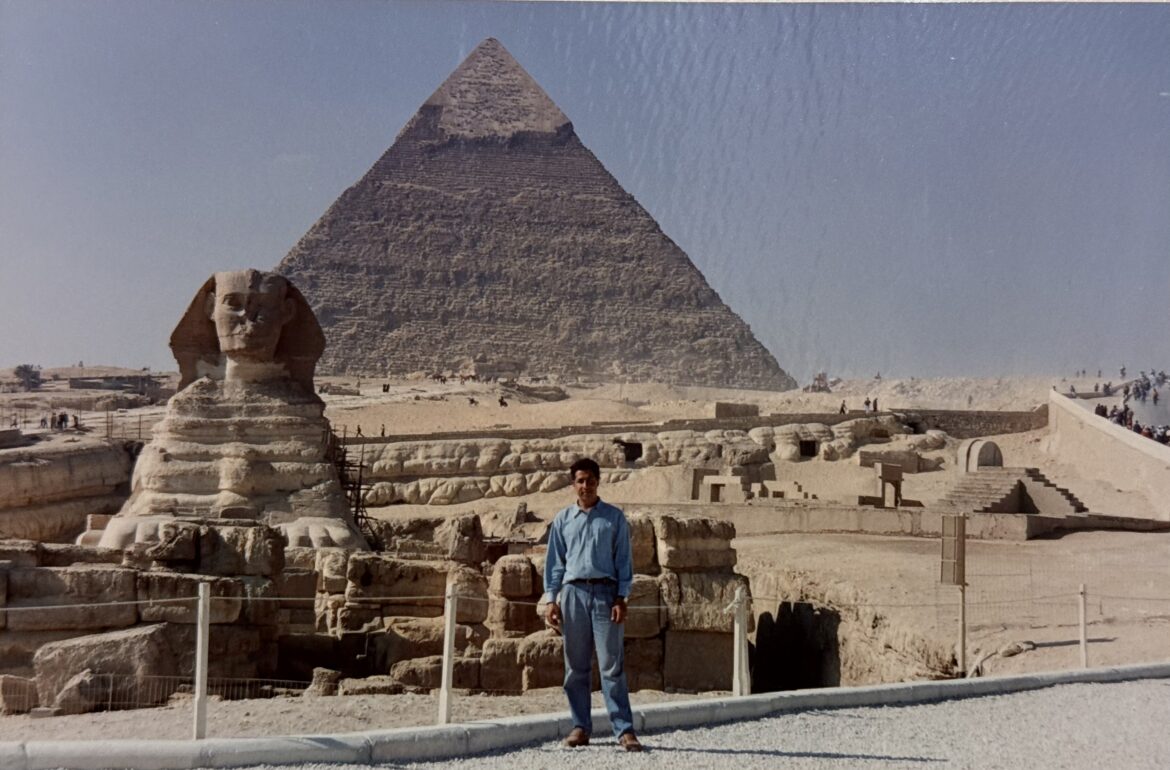
“I first saw the pyramids during my Egypt visit in 1996. I had every fact, and all the physical dimensions of the pyramids at my fingertips, but I was not prepared for what I saw. Standing before the giant pyramid was an otherworldly experience for me,” Hooda explained. “The audacious scale, the perfect visual symmetry, the awe-inspiring presence were nothing that pictures and statistics of its size and shape can ever hope to even remotely capture. My fascination with, and passion to solve, its mystery, only multiplied.”
In his research paper, Hooda argues that the prevailing theories about pyramid construction, such as the use of an exterior ramp larger than the pyramid itself or a complex interior tunnel ramp are structurally “untenable.” He went on to say, “I realized after extensive analysis that the only solution had to have the advantages of both – i.e., simplicity of the exterior ramp as well as the benefit of efficiency of construction of the interior ramp – while not having the disadvantages of either.”
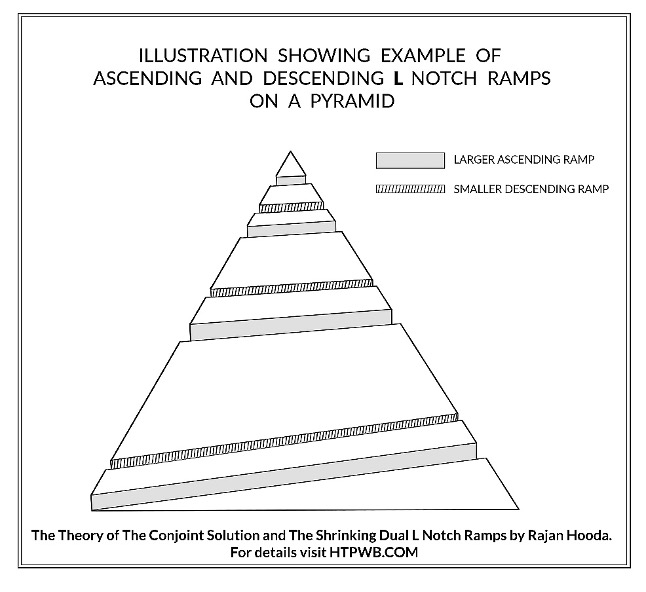
According to Hooda, this understanding led to the concept of the ‘L Notch Ramp,’ a design integrated into the pyramid’s structure. The ramp functioned as a cut-out notch within the footprint of each stone layer. Hooda describes the pyramid as being constructed like a “layer cake,” with 210 layers of stones.
He further elaborated that during the construction of the lowest layer, a small portion in one corner was left incomplete to form a rising ramp from the ground to the top of the first layer, a height of 4.5 feet. This ramp facilitated the transport of stones for the second layer. Similarly, a portion of the second layer was left unfinished to extend the ramp from the top of the first layer to the top of the second, and so on, throughout the construction process.
This was now used to transport stones to build the third layer. This process was repeated 209 times till the pyramid was finished. Then, starting from the top, the highest level of the ramp was removed, and the missing stones of level 209 were put into place to finish this level,” he added. “This reverse process of ramp removal and placement of missing stones was repeated 209 times ending in the lowest level being completed last. Because the ramp used is not an exterior ramp, nor an interior one, it is an ‘L Notch Ramp’ since it is built like a cut-out notch within the footprint of each layer of stones.”Hooda proposed that the ancient Egyptians likely used a dual “L Notch Ramp,” system for pyramid construction, with one ramp for moving stones upward and a smaller ramp for workers to descend. This method, which left no visible traces after the ramps were dismantled, helps explain the long-standing mystery of Egyptian pyramids logistics.His painstaking research also highlights evidence of this approach, such as the smaller stones used at the pyramid’s higher levels—a design compromise necessitated by the L Notch Ramp system. It also identifies eight interlocking components that form an integrated explanation for the construction, providing comprehensive proof of the method.
Remarkable Efficiency: No external construction needed.
Genius Simplicity: Requires only simple technology of small ramps.
Innovative L Notch Ramp: A unique dual-purpose interior/exterior design.
Elegant Logistics: Two ramps ensure one-way, efficient transport of stones and labor.
Methodological Invisibility: This technique leaves no evidence of its use/methodology.
Significant Design Compromise: Smaller stones at the top were essential; No other building method requires this compromise.
Shrinking L Notch Ramps: A necessity for the highest levels, forcing the design compromise.
Complete Problem Definition: The Conjoint Solution and The Shrinking Dual L Notch Ramps connect/resolve all the pieces of the pyramids puzzle.
“The solution cannot come together from a subset of these components. Since past researchers never recognized many of these components, they never saw the complete puzzle. By attempting to solve only part of the puzzle, the complete puzzle of the pyramid’s construction, as a result, became unsolvable,” emphasized Hooda.
Commerce and Industry Minister, Piyush Goyal has said that India and Africa are very much aligned in their desires, ambitions and aspirations. Addressing the Special Plenary Session with Trade Ministers of African nations at CII India Africa Business Conclave in New Delhi today, Mr Goyal said, India and African nations are striving for a better quality of life for the people of their countries, seeking greater investments to bring the fruits of increased trade, strengthen the economic profiles, and drive growth. He said, the efforts aim to enhance greater prosperity and a better quality of life for the people of India and Africa.
Reiterating the words of Prime Minister Narendra Modi, Mr Goyal said, India’s engagement with Africa will continue to be guided by 10 principles, with the first and foremost being that Africa will be at the top of the priorities. He said, various initiatives have been undertaken in this regard including bringing the African Union into the G20 as a full-fledged permanent member, raising issues of common interest across multilateral fora such as the WTO, protecting interests of the Global South and various forms of assistance through Lines of Credit, among others. India, Africa are striving for better quality life for their people
Opening batsman De Kock reached his 15th T20 international fifty off 26 balls in the opening game.
NEW YORK - Quinton de Kock hit a blistering half-century as South Africa made 194-4 against the United States in their opening T20 World Cup second round clash on Wednesday.
Opening batsman De Kock, his country's leading run-maker in the format, reached his 15th T20 international fifty off 26 balls in the opening game of the Super Eights stage at the Sir Vivian Richards Stadium.
He was eventually dismissed for 74 with seven fours and five sixes in a 40-ball innings which was comfortably his best performance of the tournament.
In four previous visits to the crease at the World Cup, the 31-year-old had a best of just 20 against Sri Lanka.
Skipper Aiden Markram also hit his tournament best of 46 from 32 balls with four boundaries and a six.
Markram and De Kock put on 110 for the second wicket and helped their team reach 101-1 off the first 10 overs.
Slow left-armer Harmeet Singh brought the United States back into the match by removing De Kock and fellow dangerman David Miller (0) in the space of two balls.
Markram's innings was ended by impressive fast bowler Saurabh Netravalkar who finished with 2-21 from his four overs.
Heinrich Klaasen (36 not out) and Tristan Stubbs (20 not out) added an undefeated 53 for the fifth wicket.
USA qualified for the Super Eights by finishing second behind India in Group A after notching a famous win over Pakistan in Dallas.
South Africa, who topped Group D with four wins from four, made one change from their last outing against Nepal with spinner Keshav Maharaj coming in for medium-pacer Ottniel Baartman.
Global demand for critical minerals, particularly lithium, is growing rapidly to meet clean energy and de-carbonisation objectives.
Africa hosts substantial resources of critical minerals. As a result, foreign mining companies are rushing to invest in exploration and acquire mining licences.
According to the 2023 Critical Minerals Market Review by the International Energy Agency, demand for lithium, for example, tripled from 2017 to 2022. Similarly, the critical minerals market doubled in five years, reaching US$320 billion in 2022. The demand for these metals is projected to increase sharply, more than doubling by 2030 and quadrupling by 2050. Annual revenues are projected to reach US$400 billion.
In our recent research, we analysed African countries that produce minerals that the rest of the world has deemed “critical”. We focused on lithium projects in Namibia, Zimbabwe, the Democratic Republic of Congo (DRC) and Ghana. We discovered these countries do not yet have robust strategies for the critical minerals sector. Instead they are simply sucked into the global rush for these minerals.
We recommend that the African Union should expedite the development of an African critical minerals strategy that will guide member countries in negotiating mining contracts and agreements. The strategy should draw from leading mining practices around the world. We also recommend that countries should revise their mining policies and regulations to reflect the opportunities and challenges posed by the increasing global demand for critical minerals.
Otherwise, African countries that are rich in critical minerals will not benefit from the current boom in demand.
What are critical minerals?
There is no universal consensus on what critical minerals are. Various regions and institutions have different lists of critical minerals, and the contents of these lists keep changing. For instance, Australia has classified 47 minerals as critical. The European Union has identified a list of 34 critical raw materials that are important to the EU economy and face a risk of disruption. The US critical minerals list contains 50 elements, 45 of which are also considered strategic minerals.
Each country or region has reasons why these minerals are classified as critical. For most western countries, minerals are critical if they
are essential for a low carbon economy or for national security
have no substitutes
are vulnerable to supply chain disruption.
Lithium projects in Africa
At the time of our research there were 18 lithium projects at various stages, from early-stage exploration to production, across Africa. We focused on those in Namibia, Zimbabwe, the DRC and Ghana.
Our research revealed that conversations on Africa’s critical minerals had largely been shaped by geostrategic and economic opportunities arising from demand from western countries and China. Less attention was paid to the supply chains African countries should secure for current and future industrial applications.
We realised that these countries contributed little to global carbon emissions and their economies were not driven by industrialisation. The current inadequate infrastructure and policies to deal with the repercussions of lithium mining, for example, underscored the lack of a clear agenda. Lithium mining has impacts on communities, biodiversity, water sources and energy usage.
We also discovered that with over 30% of the world’s critical minerals deposits, African countries could become major global suppliers. They could also trade among themselves to avoid potential supply chain disruption or even monopoly by countries outside Africa.
Our research also highlights that emerging lithium mining in Zimbabwe, the DRC and Namibia is reinforcing and breeding new forms of corruption and illegality in the resources sector. Ghana is still in the early stage of setting up its lithium sector.
What is the way forward?
Africa needs stronger resources governance: regulations, accountability and transparency. Mining policies and regulations must reflect the opportunities and challenges of meeting global demand for critical minerals. Mining companies operating in African countries should adhere to leading mining practices and national regulations to minimise the environmental and social impacts of their operations.
The claim that it is urgent to acquire critical minerals must not be an excuse for African governments and foreign mining companies to bypass mining and environmental regulations. Rather, the urgency claims should give African governments greater power to make mining deals that will benefit people and the environment.
For these countries to use the economic opportunities arising, there must be incentives for local companies to mine and process lithium before exporting it. Processing of lithium in the country of origin would increase local returns, create jobs, and drive the growth of other sectors of the economy.
There is a need for coordinated efforts in Africa to build local capacity along the mining chain, from exploration to the market. There’s an opportunity also to build industries to support the global de-carbonisation agenda. An example would be manufacturing electronic vehicle batteries. In this way, Africa would not only be a source of raw materials, but a competitive source of low carbon products.
By Kei Emmanuel Duku: Minister of General Education and Instruction, Awut Deng Acuil, confirmed on Friday that the Ministry has received a $100 million donation from the World Bank.
Dr. Jacob Korok Majiu, Deputy Minister of Information, told the media after the Council of Ministers meeting.
He said the funds would be used to improve teacher’s training and construct schools throughout the country.
“The money will be used to boost the capacity of the teachers and the construction of schools throughout the country,” Dr. Majiuk explained. He added that the Ministry is working with the World Bank to launch the initiative upon receiving the funds. This significant donation aims to address long-standing challenges in South Sudan’s education system. By enhancing teacher training and expanding school infrastructure, the World Bank’s contribution is expected to have a positive long-term impact on the country’s education sector.World Bank donates $100 Million to boost education sector
Phiona Nyamutoro addresses the IUPCR mission (Image: Government of Uganda/X)
The Government of Uganda is hosting an International Atomic Energy Agency (IAEA) Integrated Uranium Production Cycle Review mission as it reviews its potential to produce uranium to support its plans for 24,000 MWe of nuclear capacity.
IAEA Integrated Uranium Production Cycle Review (IUPCR) missions are designed to assist IAEA member countries in the development of infrastructure for national uranium production programmes, through all phases of the uranium production cycle. Carried out at the request of the country in question, the missions provide independent reviews based on IAEA safety standards, technical guidance, and international good practices, and also give representatives of the requesting country the opportunity for in-depth discussions with international experts about experiences and best practices in legal, regulatory and operational aspects specific to the uranium production cycle. The reviews enable countries to identify areas that require more focus or additional resources or to confirm their readiness to move forward with their uranium production cycle.
"This morning I welcomed experts from the International Atomic Energy Agency (IAEA) for the Integrated Uranium Production Cycle Review (IUPCR) Mission for Uganda," Minister of State for Energy and Mineral Development (Minerals) Phiona Nyamutoro said on X.
"Uganda's plans to develop nuclear power plants with a total output of 24,000 MW will require nuclear fuel. To this effect, Uranium exploration is ongoing in the country with the aim of discovering uranium deposits for sustainable nuclear fuel supply," she continued that the government "also plans to establish a centre for Nuclear Science and Technology for nuclear education, training, research and this … will require Uranium for Production of radioisotopes for industrial and medical applications".
Irene Bateebe, permanent secretary at Uganda's Ministry of Energy and Mineral Development, said the exploration and evaluation of uranium resources, supported by the IAEA, were vital to ensuring a sustainable supply of nuclear fuel for Uganda's planned nuclear power plants and research reactors.
Uganda's Vision 2040 roadmap, issued in 2013, incorporates the development of nuclear capacity as part of the country's future energy mix. In May 2022 it was reported that the government had acquired land on which to site a nuclear power plant, and in August last year, Ugandan President Yoweri Museveni announced that Russia and South Korea had been selected to build two nuclear power plants with a combined capacity of 15 GWe. Uganda launched its uranium exploration initiative in the district of Buhweju in November.
By Chilufya Sampa: Regional price distortions hurt small traders the most; as more states adopt competition rules, it's the traders and consumers who will win big.
National economies may reign supreme, but cross-border trade remains vibrant across Africa. Markets are interconnected. A drought in one country will impact the price of maize in a neighbouring country. Businesses understand this dynamic and often operate on a regional basis. Take an example: traders buy soybeans in Malawi and Zambia to then sell them in Kenya.
When markets work well, everyone benefits. Barriers to entry are lowered, benefiting micro and small business, while consumers can access a variety of goods at lower prices. But when large, and vertically integrated suppliers operate across borders and abuse their dominant market position, they earn excessive margins. Looking at soybeans again, the African Market Observatory showed that traders earned a mark-up of up to 91% by suppressing farmer prices in Malawi and Zambia and increasing prices to buyers in Kenya.
This is where competition authorities would ordinarily step in to enforce market rules. Yet, a recent report by the Shamba Centre for Food & Climate reveals that nearly half the countries in sub-Saharan Africa lack competition laws and institutions. This has dire consequences. Markets become pawns in the hands of a few businesses, which dictate how those markets operate, thus defeating the principles of open markets and competition. In many instances, such businesses determine prices - whether buying or selling - to their benefit.
In the agriculture sector, it leads to poverty and food insecurity. Small food producers are squeezed; they face higher prices for their supplies and lower prices for their goods and often exit these markets. Data confirms this sad reality. In African cities, food prices are on average more than 30% higher compared with low- and middle-income countries in other parts of the world.
But it is not all bad news.
In sub-Saharan Africa, a vibrant competition landscape is emerging. Nine countries have strong competition regimes in place with a history of enforcing case law while a further 17 countries have nascent competition authorities in place. Increasingly, these national authorities are turning towards regional competition organisations to strengthen their capabilities. Improved cooperation among competition organisations on advocacy and investigations is leading to better enforcement.
Leveraging regional African institutions and enforcement is a first step towards building a strong, continent-wide, competitive market. Better coordination and cooperation between regional competition authorities and national authorities is needed to help regulate cross-border anti-competitive behaviour and reinforce the capabilities of national authorities. This is of particular importance for countries that currently do not have competition laws or institutions in place.
A win-win situation
Regional economic communities, such as the Common Market for Eastern and Southern Africa (COMESA) and the West African Economic and Monetary Union (WAEMU), have an essential role in tackling regional anti-competitive conduct.
For example, the COMESA Competition Commission has demonstrated how it can regulate cross-border competition as well as support national authorities in their work. It recognizes that competition enforcement at the regional level cannot be effective if national authorities are weak. As such, it helps to develop national competition laws, strategic plans and internal capacity. It sponsors training and can, upon request, review competition conduct and mergers.
Yet, COMESA relies on national competition authorities to provide data and the knowledge to help other national regulators. Through COMESA, for example, the Zambian regulator provided support to national authorities in Ethiopia, Malawi, Seychelles and Eswatini. National authorities are the building blocks for regional competition enforcement.
Reviewing cross border mergers
COMESA has been active in regulating cross-border competition through the review of mergers with regional implications. In the past 10 years, 369 mergers and acquisitions have been assessed. It is notable that in the food and agriculture sector, these reviews have not blocked any mergers. Significant mergers, such as those between Bayer/Monsanto and ETG/SABIC Agri-Nutrient, have been allowed to proceed.
Is this a failure of COMESA to regulate the market? Most likely not. Rather, these mergers exemplify how regional authorities depend on national regulators for data. In these cases, the information received may not have been sufficient, leading to erroneous analysis. The strength of COMESA is reflected in the capabilities of national authorities.
Competition regulators at the national, regional and continental levels provide the building blocks for a thriving and competitive African economy. Effective competition policy and enforcement are prerequisites for open economies, fair trading conditions and a level playing field. In the agrifood sector, competition is essential. Our livelihoods, well-being and food security depend on it.
Mr. Sampa is the former head of the Competition and Consumer Protection Commission in Zambia from 2011 to 2022. He is an active member of the International Competition Network (ICN), the African Competition Forum (ACF) and the International Consumer Protection Enforcement Network (ICPEN) which he presided in 2018-19.
The longest marathon ironing record attempt was held at the Jabi Lake Mall in Abuja.
On Monday, Zahani Kuma, aka Mr Reliable, a Nigerian fashion entrepreneur, completed a 115-hour ironing marathon in a bid to set a new Guinness World Record (GWR).
Gareth Sanders, a cleaning company manager in Bristol, UK, achieved the longest marathon ironing, 100 hours, from 26 to 30 October 2015.
Mr Sanders attempted this record at a local Asda Superstore in the UK to raise funds for charity, and it took him over two weeks to fully recover.
Mr Reliable, who revealed his GWR application was approved in November 2023, began his quest to set the longest marathon ironing record at the Jabi Lake Mall in Abuja from 23 April to 28.
He said he was inspired to begin the record attempt because he hopes to support children experiencing academic challenges.
The fashion designer who is awaiting GWR confirmation said: "For five sleepless days and nights, I will be dedicating myself to resilience, endurance, and hard work with the utmost goal of raising a sum of money and supporting in my little way the educational challenges faced by many children within my locality through my profound NGO," he wrote on Instagram.
"As an orphan at a very young age, my desire for education was vast; even though there was no one to aid me, I persistently pushed my way through. Now, I've taken it upon myself to assist as many children as possible in reaching their full potential.
"This dream can only be achievable with your full support."
Mr Reliable's feat follows that of Nigerian Youtuber and social media entrepreneur Clara Kronborg, who broke the Guinness world record for the longest interviewing marathon with a time of 55 hours and 24 seconds last Wednesday.The previous record was 37 hours 44 minutes, achieved in 2022 by Rob Oliver from the United States of America.Guinness World Records - Nigerian Concludes 115-Hour Ironing Marathon
By Fani Zvomuya Correspondent: President Mnangagwa recently toured the Manhize Steel Plant, a bustling investment near Mvuma that is the face of steel manufacturing revival in Zimbabwe; and the lofty position the country will attain as Africa's giant.
The Manhize Steel Plant is owned by Chinese company Tsingshan Holding's local subsidiary, DINSON Iron and Steel. The steel plant has just begun production of pig iron and will in the course of the year manufacture steel billets and bars, all necessary for the steel industry which supports various sectors of the economy such as construction, agriculture, mining and so on.
Dinson's Manhize plant will be the biggest in Africa at its peak, according to its projected phases; and this fact bears quite some symbolism, as China helps Zimbabwe to rise from the ashes and become a shining example.
The country's own steel manufacturing had been battered because of the collapse of a State entity, Ziscosteel; and massive de-industrialisation that has taken place in the past two decades, mostly due to sanctions imposed on Zimbabwe by Western countries. Zisco was among entities initially put under the embargo.
While addressing stakeholders during the Manhize Steel Plant, the President underlined the importance of Chinese investments in the southern African nation.
He said: "I applaud companies from the People's Republic of China for the continued investments in our economy. This investment through Dinson Iron and Steel Company signifies more than just financial support; it represents a shared vision for a brighter future between Zimbabwe and China."
This article unpacks the significance of Chinese investments in Zimbabwe, and the benefits of greater cooperation between the two countries.
In particular, there are five key attributes of Chinese investments that underline the importance of Chinese foreign direct investment as a function of the comprehensive strategic partnership between the two sides.
From size and speed, to spreading tentacles in Africa
The first key attribute of Chinese investments in Zimbabwe, which Manhize steel project signifies is size.
China is one of Zimbabwe's major source of Foreign Direct Investment, and it is no surprise that the biggest projects that the country has set up have come from China to the Manhize steel project is worth US$1.5 billion.
What is important to note is that it is at the apex of a value chain comprising of production of ferrochrome and coking coal, which means that Dinson is the only company with such a well-knit business concept, worth close to US$3 billion.
Dinson sister companies, Afrochine (ferrochrome) and Dinson Colliery (coking coal) have been the major producers and exporters of their respective products in Zimbabwe.
The Dinson group also owns Gwanda Lithium as it pivots to new energy materials as part of its investment portfolio, which may include other minerals such as copper.
Size matters. The Tsingshan group, the largest steelmaker and a Fortune 500 company, is showing the extent of Chinese investments in the country.
There are a number of investments that are also big in size and scale.
These include two major mining projects in the lithium sector through Sinomine Bikita Lithium, and Zhejiang Huayou Cobalt's Prospect Lithium Zimbabwe which have opened over the past two years.
The projects were worth close to US$2 billion combined in investments.
The biggest future and prospective investments in Zimbabwe will likely to be Chinese.
These include a battery manufacturing plant in Mapinga, Mashonaland West; as well as the US$1 billion floating solar farm in Kariba.
The second key attribute of Chinese investments in Zimbabwe is speed.
Many projects done by Chinese companies have been completed in record time, as they have breezed through construction to begin operations quickly and efficiently.
Rapid progress seen on Chinese projects has been seen by many locals as a thing of marvel.
It is China speed. Projects such as Prospect Lithium Zimbabwe's Arcadia lithium plant, which was constructed in under one year, when ordinarily it would take at least 18 months, have attested to the sense of urgency and purpose as well as unmatched work ethic of the Chinese.
The third attribute is that Chinese investments are impactful.
The impact of Chinese investments has been huge. Zimbabwe has over 100 large and medium scale companies involved in various significant economic endeavours.
China has also become an employer across various sectors. Apart from providing jobs and steering the economy through revenue streams to the fiscus, Chinese investments have come with social impact through corporate social responsibility assisting communities with education, health and other social needs.
Sinomine Bikita Minerals has in the past year drilled nearly 40 boreholes in Masvingo Province, as well as upgrading roads. The company will also build a bridge in Manicaland.
Bikita Minerals has also brought electricity to local businesses and homesteads, which are benefiting from its investment in power infrastructure valued at millions, something similar to what Dinson Iron and Steel has also done through a 90 kilometre 400kva power line from Sherwood in Kwekwe to the plant.
Bikita Minerals has a football team that won promotion into Zimbabwe's top flight, the Premier Soccer League, underlining the diversity of its impact portfolio, as football is not just a social force but also an employer in itself.
Chinese companies have also had impact on activities that have enhanced local value chains, becoming a key cog in running Zimbabwe's economy. Add to this, the transfer of skills and technologies that are benefiting local people.
Fourth, Chinese companies are transformative. Chinese companies are assisting Zimbabwe modernise its economy and pushing industrialisation, with Manhize steel being the metaphor for the industrialisation drive as steel is at the centre of development.
Historically, steel is a key driver of industrialisation and a Chinese company is at the centre of it all.
Dinson Iron and Steel managing director, Mr Benson Xui -- captured it succinctly when he described the transformation power of the company's investment, relating that: "I saw mountains of iron ore and saw an opportunity for us to achieve the steel project in Zimbabwe and for Zimbabwe." (This was corroborated by President Mnangagwa stating that, "Over the years, the full potential of our iron ore resources and value chains have remained largely untapped.
"However, under the Second Republic, the milestones we are realising through exceptional teamwork, focus and determination from both public and private sector have seen the establishment of this national strategic project."
He also said it was pleasing that Zimbabwe's iron ore will be fully exploited, value added and beneficiated locally so as to realise maximum benefits from local natural resources, while also capitalising on the value chains including processing, manufacturing and the supply of high-value finished steel goods and products.)
Value addition is key to economic transformation and this is being driven by Tsingshan investments in Zimbabwe, which has lots of natural resources and a yet to be realised value of unmined assets, added to vast human resources, a perfect climate and a huge repository of human capital.
In this process, there is massive development of infrastructure and support services, which are set to impact on the whole of southern Africa, particularly in the south and south east where a value addition park will be established and attracting interest globally.
Lastly, Chinese investments in Africa and in Zimbabwe particularly are stimulating and diffusional. Zimbabwe is thus positioned to become a nodal country, placing it firmly at the centre of the region, and becoming the gateway to Africa for investors attracted to opportunities linked to the exploitation and utilisation of natural resources.
Zimbabwe and Africa are rising, and this fits neatly into the global economic matrices espoused in concepts such as China's Belt and Road Initiative and Global Development Initiative.
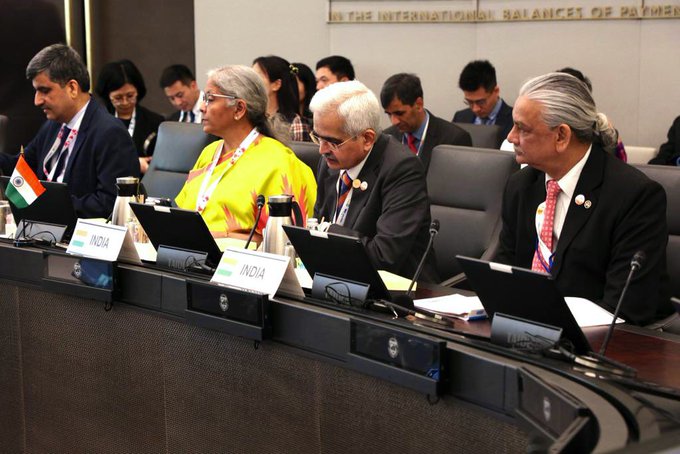
India’s Finance Minister Nirmala Sitharaman at the BRICS Finance Ministers and Central Bank Governors meeting in Washington, D.C. Photo: Twitter @nirmalasitharaman retweet of April 12, 2023 from Indian Ministry of Finance
The U.S. and its Western allies should take the pomp and posturing at this week’s BRICS summit in Johannesburg with a shaker’s worth of salt.
Sure, that “bloc” – Brazil, Russia, India, China and South Africa – represents more than 40% of the world’s population, and other countries in the Global South may yet join. The BRICS also like to present themselves as a sort of non- or anti-West geopolitical alternative to U.S. hegemony. But they’re not, and never will be.
For starters, it’s always a stretch when you launch something – a policy, institution, group or club – just because somebody came up with a great acronym. And that’s exactly how BRIC (later BRICS) began. Jim O’Neill coined the term in 2001 when he was an economist at Goldman Sachs and needed a snappy moniker for several markets that looked promising for investors but otherwise had nothing obvious in common.
The BRICS adopted the label because it fit two trends: the acronym vogue but also the fad for blocs. The latter, I think, came out of the progression from a bipolar world during the Cold War to a unipolar moment of U.S. hegemony and the presumptive return to multipolarity since then. In this more complicated world, countries assume they should belong to some sort of coalition, maybe several.
Today there’s a bewildering array of blocs to choose from. Just take Africa. The continent has (I won’t spell out the abbreviations) an AMU, Comesa, CEN SAD, EAC, Eccas, Ecowas and a few more, not to mention the African Union. That word “union,” in fact, is especially popular for blocs because it stipulates unity where there usually is none.
That’s true even for the European Union, which comes closest to being a true bloc, in the sense of confederation. In trade and regulation, the E.U. is a world power. In everything else, though, it’s a chaos club of nations that can’t agree on much, and that certainly couldn’t stand up to the world’s major powers in a pinch.
The rest of the world’s blocs have much less to offer. Latin America, for example, makes a sporting effort, with a SICA, Caricom, Mercosur and what not. And whenever one fizzles out, such as USAN (the Union of South American Nations), another takes its place, currently Prosur, the Forum for the Progress of South America. Don’t hold your breath.
Among all these aspiring confederates, the BRICS arguably have the least in common, aside from a dislike of U.S. clout in global finance, economics and geopolitics. They consist of three democracies in different stages of backsliding and two increasingly repressive autocracies. One pair, China and India, is as likely to fight each other as to cooperate. That’s quite different from, say, the G-7 (Group of Seven), a club of rich liberal democracies with a shared sense of custodianship for the world economy.
One thing all blocs, unions and forums excel at is generating paperwork. The E.U. clinches the title in this category, with either ten or eleven presidencies, depending on the count. But even lesser blocs boast their secretariats, rotating chairs and associated other bureaucracies. The BRICS, for example, launched the New Development Bank, a lender meant to duplicate the World Bank (again, because the latter is in Washington).
When blocs reach for loftier goals, though, they involuntarily become fodder for satirists. The BRICS have floated the idea of a joint currency – the better to topple the hated U.S. dollar from its global perch. But only one bloc, the E.U., has ever achieved monetary union, and even that at the cost of recurring near-death experiences. The notion that the BRICS would pool their money, central banks, fiscal and monetary policy is, as O’Neill the nomenclator puts it, “ridiculous.”
In reality, each of the five BRICS is in it for different reasons. Take China. It wants to displace the U.S. as a hegemon and keeps seeding blocs it thinks it can dominate for that purpose. Those include the Belt and Road Initiative, a transcontinental infrastructure program, the Shanghai Cooperation Organization, a Eurasian grouping, and the tellingly named 16+1 (formerly 17+1), a format in which China allegedly cooperates with Central and Eastern European countries. As the Europeans in that club have figured out, though, the +1 really just wanted to boss around the 16.
Given the aims of the C in BRICS, neither the B, R, I or S nor other countries that have expressed an interest in joining, such as Indonesia, can really be enthusiastic about becoming Beijing’s vassals just to teach Washington a lesson. That’s one reason the forum will struggle to project soft power, much less hard.
Another reason is the company it’s forced to keep. It never helps a club when one member can’t show up because the International Criminal Court has a warrant out for their arrest. In this case, that’s Russian President Vladimir Putin, facing war crimes charges for allegedly deporting children from occupied areas of Ukraine, who’ll participate via video link to avoid being handcuffed on arrival in Johannesburg.
How the hosts curate that delicate situation, and whether everyone in the room keeps a straight face, including Putin’s foreign minister, will be worth watching. But a new world order will be nowhere to be seen.
This column does not necessarily reflect the opinion of the editorial board or Bloomberg LP and its owners.Andreas Kluth is a Bloomberg Opinion columnist covering U.S. diplomacy, national security and geopolitics. A former editor in chief of Handelsblatt Global and a writer for the Economist, he is author of “Hannibal and Me.” The BRICS are neither the anti-West nor a bloc
Government of South Africa (Pretoria) The Minister of Public Enterprises, Mr Pravin Gordhan, will officially relaunch South African Airways (SAA) this Thursday, 26 October 2023, at an event that will also announce the restart of SAA's direct flights to Brazil.
The event, which will be co-hosted by DPE and SAA, will also mark two years since the return of SAA to the skies, as well as the official announcement of SAA's first intercontinental route following its successful business rescue.
The relaunch of the route to São Paulo, Brazil, underscores the progress that SAA has made since the airline narrowly averted liquidation.
"The upcoming event marks a very significant step in the resurgence of South African Airways. We look forward to the official relaunch of SAA, along with the introduction of its first intercontinental flight to São Paulo, Brazil," Minister Gordhan said.
SAA's inaugural flights to São Paulo will be departing from Cape Town on 31 October 2023, and from Johannesburg on 6 November 2023.
Event Details:
Date: Thursday, 26 October 2023
Venue: The Royal Yacht Club, Table Bay Harbour, Cape Town
President Obasanjo said the UK's proposals will lead to "huge cost increases for health systems and catastrophic delays in accessing medicines".
Former Nigerian President Olusegun Obasanjo has warned that a UK-India trade deal "will lead to huge cost increases for health systems and catastrophic delays in accessing medicines if British negotiating demands are met."
The UK wants India to implement sweeping changes to its intellectual property rules as part of any agreement, "threatening India's ability to supply inexpensive quality medicines to the rest of the world."
In an opinion piece published on devex, Mr Obasanjo describes Indian generics as "a lifeline" which he noted helped to make HIV medicines affordable for African countries.
He however said "a trade deal between India and the UK could cut short the lifeline."
"During my time as president of Nigeria, I saw the impact of Indian generics firsthand. In 1999, as I began my second term in office, Nigeria could not afford HIV treatment, even though we were experiencing one of the worst epidemics in Africa at the time," he said.
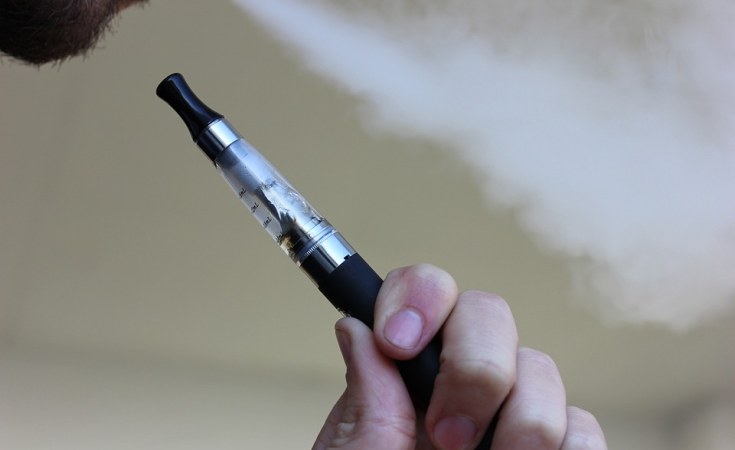
Young people continue to be "relentlessly" targeted with tobacco and nicotine products, the World Health Organization (WHO) warned on Tuesday, in a call to ban smoking and vaping "whether sitting in class, playing games outside or waiting at the school bus stop".
According to the UN health agency, the tobacco industry's approach has resulted in increased use of e-cigarettes, with nine out of 10 smokers starting before the age of 18 - and some as early as 11.
"Considering that children spend nearly one-third of their waking hours in school, and much of the peer pressure they encounter occurs within these educational environments, schools play a pivotal role," WHO said.
Schools are in "a uniquely powerful position to play a major role in reducing the serious problem of smoking and other tobacco and nicotine use by kids".
The appeal of e-cigarettes:
Although smoking has continued to decline among European teens, WHO reported that there has been a rise in novel and emerging tobacco and nicotine products - including electronic cigarettes.
The UN agency pointed out these products have been made more affordable for young people owing to the sale of single-use cigarettes and e-cigarettes, which also typically lack health warnings.
"If we don't take urgent action now, we risk seeing the next generation of tobacco and nicotine users recruited through tobacco industries' unethical practices," said Dr Hans Henri Kluge, Regional Director for WHO European Region.
The launch also coincided with a warning last month by regulators in the United States that companies must stop selling illegal e-cigarettes that appeal to youth by resembling school supplies, cartoon characters, and even teddy bears.
"Whether sitting in class, playing games outside or waiting at the school bus stop, we must protect young people from deadly second-hand smoke and toxic e-cigarette emissions as well as ads promoting these products," said Dr Ruediger Krech, WHO Director of Health Promotion.
"It is deeply concerning that the tobacco industry is still targeting young people and makes vast profits, harming their health", he continued.
Schools must be safe spaces for young people, where they are free from exposure to, or pressure to use nicotine products. Creating a smoke- and nicotine-free environment in school settings is fundamental to helping prevent young people from starting smoking".
The WHO guides also highlight countries that have successfully implemented policies in support of tobacco and nicotine-free campuses. They include India, Indonesia, Ireland, Kyrgyzstan, Morocco, Qatar, Syria, Saudi Arabia and Ukraine.
'Whole-of-school' approach
WHO emphasized a "whole-of-school" approach to creating nicotine and tobacco-free campuses. Input is needed from teachers, staff, students and parents, WHO maintained.
The UN health agency's documents include information on how to support students wanting to quit, education campaigns, implementing policies and how to enforce them.
Advice to educators and policymakers includes:
Banning nicotine and tobacco products on school campuses
Prohibiting the sale of products near schools
Banning direct and indirect ads and promotion of nicotine and tobacco products near classrooms
Refusing sponsorship or engagement with tobacco and nicotine industries, for instance for school projects.
Dangers of tobacco smoke
Speaking to journalists in Geneva, WHO medical officer Dr Kerstin Schotte warned that tobacco kills "eight million people every year, or one person every four seconds".
Meanwhile, 1.3 million people who die from tobacco smoke don't even use the product themselves but breathe in second-hand smoke.Dr Schotte noted that "half of the world's children breathe tobacco polluted air and as a consequence, 51,000 children die every year due to exposure to tobacco smoke"Ban Smoking and Vaping in Schools Worldwide Urges WHO




 Australia’s 1989 Newcastle earthquake wasn’t huge – but it caused great damage and 13 deaths. Australian Earthquake Engineering Society,



 This was now used to transport stones to build the third layer. This process was repeated 209 times till the pyramid was finished. Then, starting from the top, the highest level of the ramp was removed, and the missing stones of level 209 were put into place to finish this level,” he added. “This reverse process of ramp removal and placement of missing stones was repeated 209 times ending in the lowest level being completed last. Because the ramp used is not an exterior ramp, nor an interior one, it is an ‘L Notch Ramp’ since it is built like a cut-out notch within the footprint of each layer of stones.”Hooda proposed that the ancient Egyptians likely used a dual “L Notch Ramp,” system for pyramid construction, with one ramp for moving stones upward and a smaller ramp for workers to descend. This method, which left no visible traces after the ramps were dismantled, helps explain the long-standing mystery of Egyptian pyramids logistics.His painstaking research also highlights evidence of this approach, such as the smaller stones used at the pyramid’s higher levels—a design compromise necessitated by the L Notch Ramp system. It also identifies eight interlocking components that form an integrated explanation for the construction, providing comprehensive proof of the method.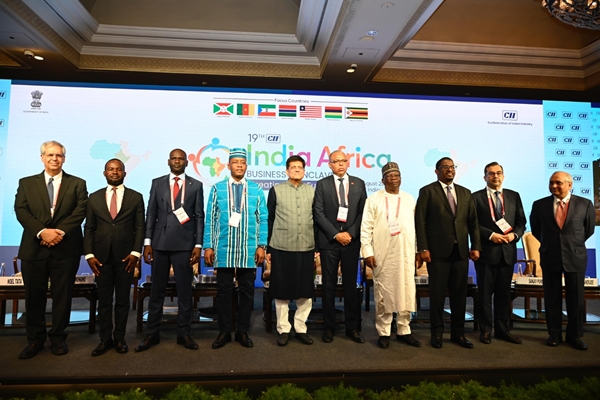



.jpg?ext=.jpg)
#/media/File:Tacoma-narrows-bridge-collapse.jpg)
