Thursday, 18 June 2026
Maruti unveils India’s 1st flex-fuel WagonR capable of running on 100 pc ethanol
Wednesday, 18 March 2026
Should e‑bike riders be required to have a driver’s licence?
E-bikes have been increasing in popularity – they make cycling more accessible than ever. However, they’ve also been linked to tragic accidents.
In response, the Queensland government has conducted a parliamentary inquiry on e-mobility devices, including e-scooters and e-bikes.
The inquiry aimed to improve safety and address community concerns. It examined benefits, risks (crashes or battery fires), existing regulations compared to other jurisdictions, enforcement approaches, and importation laws.
The resulting report recommends banning all e-bikes for riders under 16, and requiring at least a learner driver’s licence to operate them.
If implemented, Queensland would become only the second jurisdiction in the world to mandate a driver’s licence for riding a standard e-bike, joining New Jersey, which passed similar legislation in January to much condemnation.
If Queeensland adopts this rule, it will quickly become the worst state for cycling in Australia – and set a dangerous precedent.
How risky are legal e-bikes?
Legal e-bikes (also known as pedelecs, short for “pedal electric cycles”) don’t pose greater risks than conventional bicycles. On average, e-bike crashes are equally as likely and severe as conventional bike crashes. And research from Denmark even shows e-bike riders are more likely to follow traffic laws and are more safety oriented than conventional cyclists.
A pedelec is defined under the European Union EN 15194 standard as a bicycle in which the motor provides assistance only when the rider pedals, power is limited to 250 watts, and the maximum assisted speed is 25km/h. This is the standard recognised in Australia.
To be clear, 250 watts is roughly the power an avid cyclist can generate with their body. Professional cyclists easily produce well over 400 watts.
The injury stats only become troubling when these standard pedelecs get mixed in with more powerful devices that can have a max pedal-assisted speed of 45km/h or more. The problem of increased danger doesn’t lie with EN 15194 compliant e-bikes.
Who would be impacted by licensing requirements?
About 7.5% of Queenslanders aged 16 and over – more than 340,000 people – don’t hold a driver’s licence. Across Australia, an estimated 1.5 million adults are without a licence.
These include:
- people with certain types of disabilities (visual, neurological or cognitive)
- children under 16 riding to school
- migrant workers from countries with licences not recognised in Australia, or who are in the process of transferring overseas licences. Many delivery riders fall in this category
- urban youth, who increasingly rely on alternative transport and delay obtaining a learner’s permit
- older people who have given up driving for age-related reasons
- low-income people for whom the costs associated with lessons, testing, and car ownership are prohibitive
- Aboriginal and Torres Strait Islander people, particularly in regional and remote areas. These communities often face practical barriers to licensing, such as high cost, difficulties obtaining identity documents, and limited access to training
- individuals who are car-free by choice for lifestyle or environmental reasons
- people who have temporarily lost their driver’s licence, such as for speeding.
In short, legal e-bikes provide an important way to get around and maintain independence for many people. They can travel to work, education, or social activities without relying on a car.
For Queensland locals, even requiring a learner’s licence would impose a significant burden. Obtaining one costs about A$77 and requires passing an online test which typically takes four to six hours. Test questions focus on motor vehicle laws, not rules specific to cycling or e-mobility. The test is offered only in English and requires proof of identity and residency in Queensland.
Visitors from countries where driver’s licences are far less common than in Australia would be impacted too. For example, only about half of Chinese adults have a licence.
Queensland hosts more than 2 million international visitors annually, and Brisbane is expected to welcome more than 100,000 international visitors during the 2032 Olympic Games. Unless they hold a licence from their home country, these visitors would be forced to rely on ride-hailing services or risk penalties for using a legal e-bike.
What should be done instead?
A more effective approach would focus on clear vehicle classification, targeted regulation, safe cycling infrastructure, and education. This is the model used in the European Union.
Regulators should maintain a clear distinction between standard e-bikes and higher-powered devices.
EN 15194 compliant e-bikes should be legally treated as ordinary bicycles and integrated into everyday mobility. They shouldn’t require a driver’s licence, registration, or insurance. Riders should simply follow the same rules that apply to cyclists.
Only the more powerful models should require licensing and insurance. E-bikes that reach up to 45km/h should be classified as mopeds. In this way, regulation can reflect the actual risk level of the vehicle.
Enforcement is key. Authorities should focus on ensuring that devices sold in the market actually comply with power and speed limits. Regulators should keep targeting non-compliant imports and illegal modifications.
We all share the road
Beyond product standards, much more emphasis should be placed on infrastructure. Investments in protected bike lanes, traffic calming, and well-designed intersections are crucial to improving safety for all road users.
Finally, Australia should start investing heavily in education and communication campaigns. Cycling education should be provided through schools, local councils, and road safety programs. These should focus on responsible riding, interaction with pedestrians, and visibility in traffic.
Importantly, they should also encourage a mindset that moves away from an “us versus them” stance between drivers and cyclists. Children should learn early that, as adults, they may occupy both roles – sometimes driving, sometimes cycling.
In combination, these policy approaches would allow e-bikes to expand while remaining a safe, accessible and inclusive mobility option.![]()
Richard J. Buning, Research Lead, UQ Micromobility Research Cluster, The University of Queensland; Dorina Pojani, Associate Professor in Urban Planning, The University of Queensland, and Tyler Riordan, Postdoctoral Research Fellow, Strategic Management, The University of Queensland
This article is republished from The Conversation under a Creative Commons license. Read the original article.
Monday, 19 January 2026
Bogibeel Rail-Road Bridge transforms connectivity in Upper Assam, Arunachal
Maligaon, (MExN): The Bogibeel Rail-cum-Road Bridge over the Brahmaputra has emerged as a vital link transforming connectivity and daily life in Upper Assam and neighbouring Arunachal Pradesh.
Tuesday, 6 January 2026
Hyundai Motor chief vows AI-driven growth, faster decision-making
Saturday, 6 December 2025
IndiGo cancels all domestic flights departing from Delhi Airport till midnight today amid disruptions
Sunday, 30 November 2025
Airbus A320 software fix: India braces for short-term operational disruptions
Monday, 10 November 2025
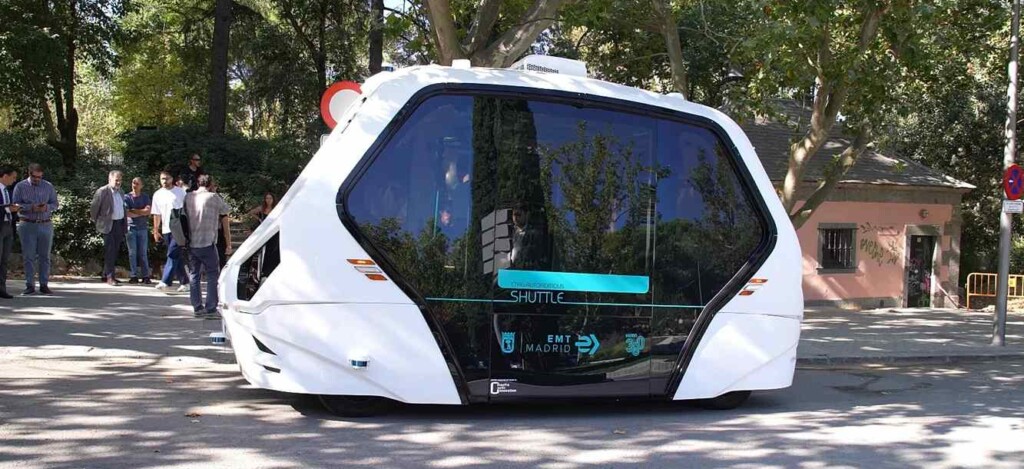
Driverless Electric Bus Eases Driver Shortages and Congestion In Madrid During Maiden Service

Monday, 6 October 2025
Hyundai India slashes car prices by up to Rs 2.4 lakh after GST cut, effective Sep 22
New Delhi: Hyundai Motor unveils the Creta Electric at the Bharat Mobility Global Expo 2025 in New Delhi on Friday, January 17, 2025. (Photo: IANS/Wasim Sarvar)
Wednesday, 24 September 2025
China’s electric vehicle influence expands nearly everywhere – except the US and Canada
A Wall Street Journal video explores a Chinese ‘dark factory’ – one so automated that it doesn’t need lights inside.
In 2025, 1 in 4 new automotive vehicle sales globally are expected to be an electric vehicle – either fully electric or a plug-in hybrid.
That is a significant rise from just five years ago, when EV sales amounted to fewer than 1 in 20 new car sales, according to the International Energy Agency, an intergovernmental organization examining energy use around the world.
In the U.S., however, EV sales have lagged, only reaching 1 in 10 in 2024. By contrast, in China, the world’s largest car market, more than half of all new vehicle sales are electric.
The International Energy Agency has reported that two-thirds of fully electric cars in China are now cheaper to buy than their gasoline equivalents. With operating and maintenance costs already cheaper than gasoline models, EVs are attractive purchases.
Most EVs purchased in China are made there as well, by a range of different companies. NIO, Xpeng, Xiaomi, Zeekr, Geely, Chery, Great Wall Motor, Leapmotor and especially BYD are household names in China. As someone who has followed and published on the topic of EVs for over 15 years, I expect they will soon become as widely known in the rest of the world.
What kinds of EVs is China producing?
China’s automakers are producing a full range of electric vehicles, from the subcompact, like the BYD Seagull, to full-size SUVs, like the Xpeng G9, and luxury cars, like the Zeekr 009.
Recent European crash-test evaluations have given top safety ratings to Chinese EVs, and many of them cost less than similar models made by other companies in other countries.
There are several factors behind Chinese companies’ success in producing and selling EVs. To be sure, relatively low labor costs are part of the explanation. So are generous government subsidies, as EVs were one of several advanced technologies selected by the Chinese government to propel the nation’s global technological profile.
But Chinese EV makers are also making other advances. They make significant use of industrial robotics, even to the point of building so-called “dark factories” that can operate with minimal human intervention. For passengers, they have reimagined vehicles’ interiors, with large touchscreens for information and entertainment, and even added a refrigerator, bed or karaoke system.
Competition among Chinese EV makers is fierce, which drives additional innovation. BYD is the largest seller of EVs, both domestically and globally. Yet the company says it employs over 100,000 scientists and engineers seeking continual improvement.
From initial concept models to actual rollout of factory-made cars, BYD takes 18 months – half as long as U.S. and other global automakers take for their product development processes, Reuters reported.
BYD is also the world’s second-largest EV battery seller and has developed a new battery that can recharge in just five minutes, roughly the same time it takes to fill a gas-powered car’s tank.
The real test of how well Chinese vehicles appeal to consumers will come from export sales. Chinese EV manufacturers are eager to sell abroad because their factories can produce far more than the 25 million vehicles they can sell within China each year – perhaps twice as much.
China already exports more cars than any other nation, though primarily gas-powered ones at the moment. Export markets for Chinese EVs are developing in Western Europe, Southeast Asia, Latin America, Australia and elsewhere.
The largest market where Chinese vehicles, whether gasoline or electric, are not being sold is North America. Both the U.S. and Canadian governments have created what some have called a “tariff fortress” protecting their domestic automakers, by imposing tariffs of 100% on the import of Chinese EVs – literally doubling their cost to consumers.
Customers’ budgets matter too. The average price of a new electric vehicle in the U.S. is approximately $55,000. Less expensive vehicles make up part of this average, but without tax credits, which the Trump administration is eliminating after September 2025, nothing gets close to $25,000. By contrast, Chinese companies produce several sub-$25,000 EVs, including the Xpeng M03, the BYD Dolphin and the MG4 without tax credits. If sold in America, however, the 100% tariffs would remove the price advantage.
Tesla, Ford and General Motors all claim they are working on inexpensive EVs. More expensive vehicles, however, generate higher profits, and with the protection of the “tariff fortress,” their incentive to develop cheaper EVs is not as high as it might be.
In the 1970s and 1980s, there was considerable U.S. opposition to importing Japanese vehicles. But ultimately, a combination of consumer sentiment and the willingness of Japanese companies to open factories in the U.S. overcame that opposition, and Japanese brands like Toyota, Honda and Nissan are common on North American roads. The same process may play out for Chinese automakers, though it’s not clear how long that might take.![]()
Jack Barkenbus, Visiting Scholar, Vanderbilt University
This article is republished from The Conversation under a Creative Commons license. Read the original article.
Thursday, 31 July 2025
5G Advanced powers world’s largest fleet of driverless coal mining trucks in China

Tuesday, 8 July 2025
Centre launches new scheme to make India global hub for making electric cars
Saturday, 14 June 2025
Above-average monsoon drives rural demand for Indian automobile sector: HSBC
Wednesday, 12 February 2025
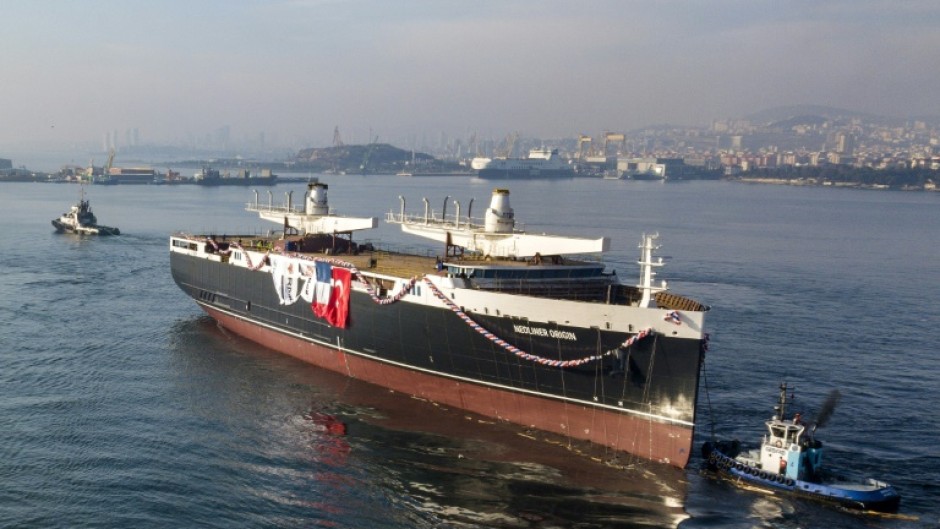
World's longest cargo sail ship launched in Turkey

Friday, 10 January 2025
Boeing adds new manufacturing quality control checks

Thursday, 9 January 2025
Air India launches inflight Wi-Fi services on domestic routes
Sunday, 10 November 2024
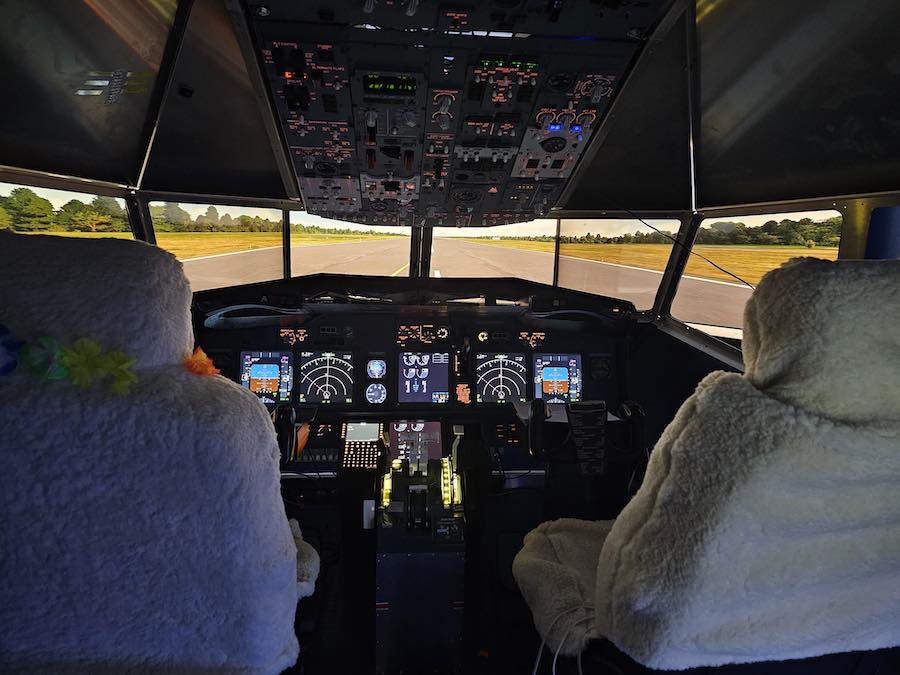
Dad Who Wanted to be a Pilot Builds Incredible Real-Life Simulator at Home–Now his Daughter’s Obsessed (Watch)
He took his maiden voyage about three months ago, saying, “I always wanted to be a pilot, but at school I was told I wasn’t clever enough.”
“My wife got me a Boeing 737 experience because she knew how much I wanted to do it. It was the best experience of my life—and on my way home, I was searching how to build one.
“I found bits and bobs all over the country and started building it in my spare room after work, in a bid that one day I could get it flying.
SWNSSunday, 13 October 2024
Japan auto show returns, playing catchup on EVs
Tuesday, 24 September 2024
EVs can drive Indian automotive industry reach Rs 134 lakh crore by 2047
Thursday, 19 September 2024
Air India to spend $400 million to revamp interiors of over half its fleet
FILE PHOTO: Branding for Air India is seen on an Airbus A350-900 at the Farnborough International Airshow, in Farnborough, Britain, July 24, 2024. REUTERS/Toby Melville/File PhotoSaturday, 29 June 2024
Formula One is moving towards hybrid engines and renewable fuel. Major environmental progress or just ‘greenwashing’?
For the millions of fans who tune into every race, Formula One (F1) is more than just a sport – it’s the apex of aerodynamics, skill and strategy.
Behind the scenes, a quieter but more crucial race against carbon emissions is unfolding.
Given the sport’s substantial carbon footprint, F1 has faced criticism from society and even from its own drivers.
For example, Sebastian Vettel, a four-time F1 world champion, expressed his concerns by stating:
When I get out of the car, of course I’m thinking as well, ‘is this something that we should do, travel the world, wasting resources?‘
In the pursuit of speed and sustainability, F1 teams committed in 2019 to achieving a net zero emissions goal by 2030.
As part of this goal, every team has expressed their intention to use 100% renewable fuel by 2026. F1 has also just announced it will mandate hybrid engines with a 50-50 split between electric and combustion power.
However, it is crucial to consider whether these promises to go greener are achievable or if this commitment is just an attempt to greenwash the sport.
Just how big is F1’s environmental footprint?
According to a report from F1, the sport releases around 256,000 tons of carbon dioxide into the atmosphere every season.
While cars are often the focus, in reality, the behind-the-scenes activities have a larger environmental impact, as a Grand Prix event involves much more than just the cars on the track.
This includes everything from the transportation of teams and equipment to various international venues, to the energy used in setting up and operating the event and waste management.
A Grand Prix event features ten teams, each operating two cars, which results in a total of 20 cars in each race.
F1 cars actually contribute the least to the sport’s emissions, accounting for only about 0.7%.
In 2013, each car used about 160kg of fuel per Grand Prix race. By 2020, this was reduced to 100kg. F1 is now committed to use as little as 70kg of fuel per car by 2026.
Are hybrid engines a potential solution?
The foremost priorities of hybrid engines in Formula One are efficiency and environmental sustainability.
They integrate an internal combustion engine, batteries and an energy recovery system.
Compared to conventional internal combustion engines, the inclusion of batteries allows F1 cars to deliver rapid power more efficiently. The instantaneous torque provided by electric power significantly enhances acceleration out of corners, contributing to overall performance improvements.
Hybrid engines also reduce fuel consumption compared to traditional engines.
The hybrid system includes the Motor Generator Unit-Kinetic (MGU-K) and the Motor Generator Unit-Heat (MGU-H). The MGU-K converts kinetic energy from braking into electrical energy and stored in the battery, which boosts acceleration and speed. The MGU-H uses heat energy from exhaust gases to increase engine power.
This configuration not only conserves fuel but also maximises energy use, thereby reducing carbon emissions and enhancing environmental sustainability.
Will these changes reduce the sport’s environmental impact?
To reduce the environmental impact of F1 cars, fuel plays a major role. F1 started with 10% sustainable fuel (“E10”) – a blend of 10% renewable ethanol and 90% fossil fuel.
From 2026, they are determined to shift from 10% to 100% renewable fuel, which is synthesised by municipal waste or non-food biomass.
However, renewable fuels still produce carbon emissions – burning renewable fuel does release carbon dioxide but the emissions are offset by the carbon dioxide absorbed from the atmosphere during the fuel’s production, rendering it carbon neutral overall.
While the hybrid system will remain in place in 2026, given the complexities and cap on engine-specific costs, modern F1 cars will scrap the MGU-H and solely rely on the MGU-K.
Moreover, F1 is committed to increasing the energy efficiency of MGU-K to harvest more braking energy. Consequently, it aims to increase power output of MGU-K from 120kW to 350kW by 2026, nearly tripling it.
As for its broader carbon footprint, F1 has also pledged to incorporate re-purposing and recycling options for race weekend materials, batteries, and MGU-K. This will help minimise waste and the sport’s carbon footprint.
Because the carbon footprint of F1 cars is relatively small, the sport should focus its efforts on reducing emissions in transportation, logistics and fan activities.
Likewise, hosting Grand Prix races in various countries across different continents requires extensive logistical arrangements and travel. For instance, the F1 racing series in 2023 visited 20 countries across five continents, resulting in significant carbon emissions.
Consequently, F1 should consider hosting races within a single country or at least within a single continent.
Can F1 cars go fully electric?
For the sustainability of the sport, a transition to 100% electric cars is likely in the future. This transition can benefit from the experiences gained with Formula E, which employs fully electric vehicles.
However, several factors must be considered before fully electrifying F1 cars, including regulation changes, battery weight, battery safety and charging infrastructure.![]()
Yasir Arafat, Senior Research Associate (Batteries for EVs and Batteries Recycling), Edith Cowan University; Muhammad Rizwan Azhar, Lecturer of Chemical Engineering, Sustainable Energy and Resources, Edith Cowan University, and Waqas Uzair, Research associate, Edith Cowan University
This article is republished from The Conversation under a Creative Commons license. Read the original article.