


Sunday, 13 September 2026

Thursday, 3 September 2026
Saturday, 4 July 2026

Sunday, 21 June 2026
Laugh your way to good health
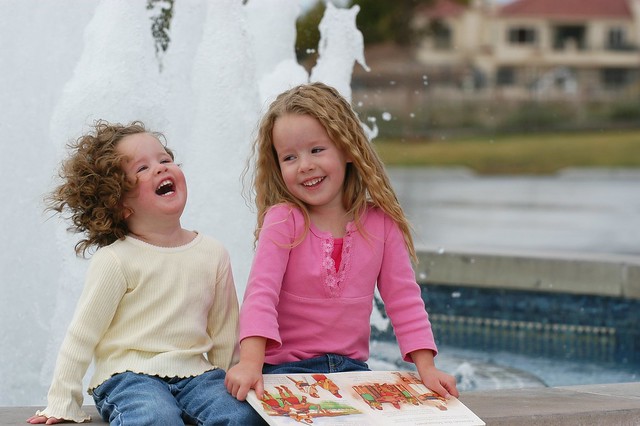
By Ch Saibaba: Every morning this laughing club risks amused glances and jibes when they look up at the sky, take a deep breath of clear, fresh air, and erupt into wild spontaneous laughter. Members of ABC Laughing Club practising hasya yoga The meetings of ABC Laughing Club are perhaps the most serious health activities happening in the city. The group meets at Picket Cantonment Garden at Secunderabad everyday between 6.45 am and 7.45.am. This is a group of more than 50 people so dedicated to preserving their sense of humour, and thereby their sanity, that they happily give up an hour of their sleep to practice hasya yoga, a workout for your funny bone.By simulating laughter and mirth, one can actually fool those endorphins into doing some overtime, says Madan Kataria, the founder of this unique form of exercise. “Feel-good chemicals are released in the brain when you laugh, but if you waited around for something funny to happen, you could go a whole day without cracking a smile. Now, isn't that a waste of a day?” he asks. Joining the group of merry people and taking a place in the laughing circle seems like a positive step towards health and happiness. Each session, with different kinds of laugh, lasts almost an hour, and consists of warm-up and breathing exercises as well. Then one undergoes the entire spectrum of delight: from grunts to giggles, from guffaws to crackles, from smirks to grins. The club consists mostly of people in the age group of 50 and above, and they say that they have derived real benefits from their morning ha-ha. Blood pressure has stabilised, stress-levels have been reduced and the heart is kept happy with this fantastic form of what they say amounts to "internal jogging". Sreenivasa Rao, an active member of the ABC Laughing Club says, “We have been doing this laughing exercise since1998. Since then, our membership has gone up to 70 and our aim is “Always be cheerful” and we are enjoying and experiencing the same.Source: The Hans India, Image: flickr.com

Thursday, 18 June 2026

Wednesday, 3 January 2024
Chekhov called The Seagull ‘a comedy’. The Sydney Theatre Company seems to forget it was a tragedy, too
 Prudence Upton/Sydney Theatre Company Alexander Howard, University of SydneyWhat is comedy?
This is the question I kept coming back to while watching Andrew Upton’s adaptation of Anton Chekhov’s The Seagull, which opened to warm applause – and a touch of controversy – at the Sydney Theatre Company on Saturday.
Theatre scholar Eric Weitz notes that comedy is a genre “with characteristic features”.
Laughter, humour, distraction. These are some of the terms associated with comedy.
Comedy is also restless. As Weitz acknowledges, comedy “embraces a range of subgenres” and often “cross-pollinates with other genres to form the likes of tragicomedy”.
These cross-pollinations can often confuse.
Consider the very first performance of The Seagull, subtitled “a comedy in four acts”.
The notorious performance at the Alexandrinsky Theatre in Saint Petersburg on October 17 1896 was an unmitigated failure. The audience jeered; the reviews were scathing.
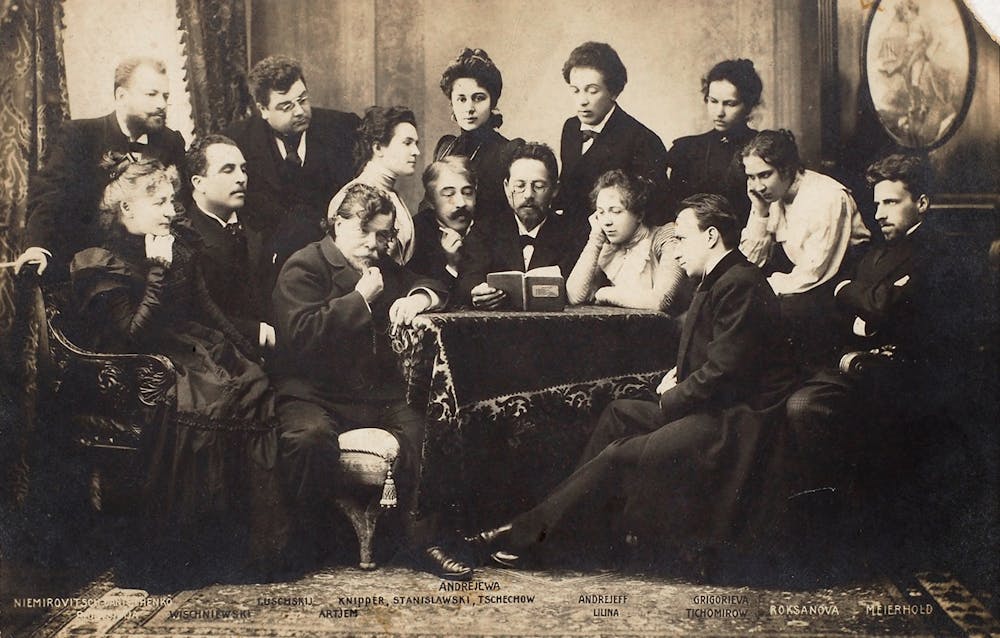 Chekhov reads The Seagull with the Moscow Art Theatre company, 1898. Wikimedia Commons
In a letter sent to the publisher Aleksey Suvorin the very next day, a wounded Chekhov declared he would never again “write plays or have them acted”.
The reason why the premiere went so badly has to do with audience expectations. As essayist Janet Malcolm explains, there were special circumstances on the night in question.
The performance was part of a benefit event for E. I. Levkeeva, a popular Russian comic actress, “and so the audience was largely made up of Levkeeva fans, who expected hilarity and, to their disbelief and growing outrage, got Symbolism.”
Primed for broad comedy, the audience didn’t know what to do with Chehkov’s groundbreaking spin on the genre, which broke with established realist modes and placed emphasis on metaphorical imagery and allegorical tropes.
While the play, which speaks to the themes of art and desire, has many funny moments, it simultaneously foregrounds discussions of mortality and depictions of madness. And it ends with a suicide.
Moreover, Chekhov’s play is one where, as the academic James Loehlin writes
the old win out over the young, where hope and the impulse for change are crushed, in part through their own fragility and lack of conviction, but in part by the proficient ruthlessness of the seasoned old campaigners, their elders.
I mention this because the serious and subtle aspects of The Seagull – many of which continue to resonate today – can get lost in modern takes on Chekhov’s play.
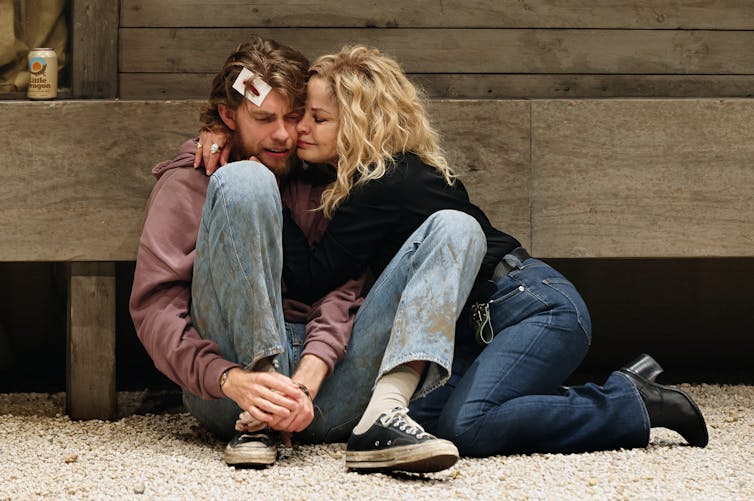
This is true of the Sydney Theatre Company’s production. Adapted by Upton and directed by Imara Savage, this version showcases the sound work of Max Lyandvert and features a meta-theatrical set designed by David Fleischer.
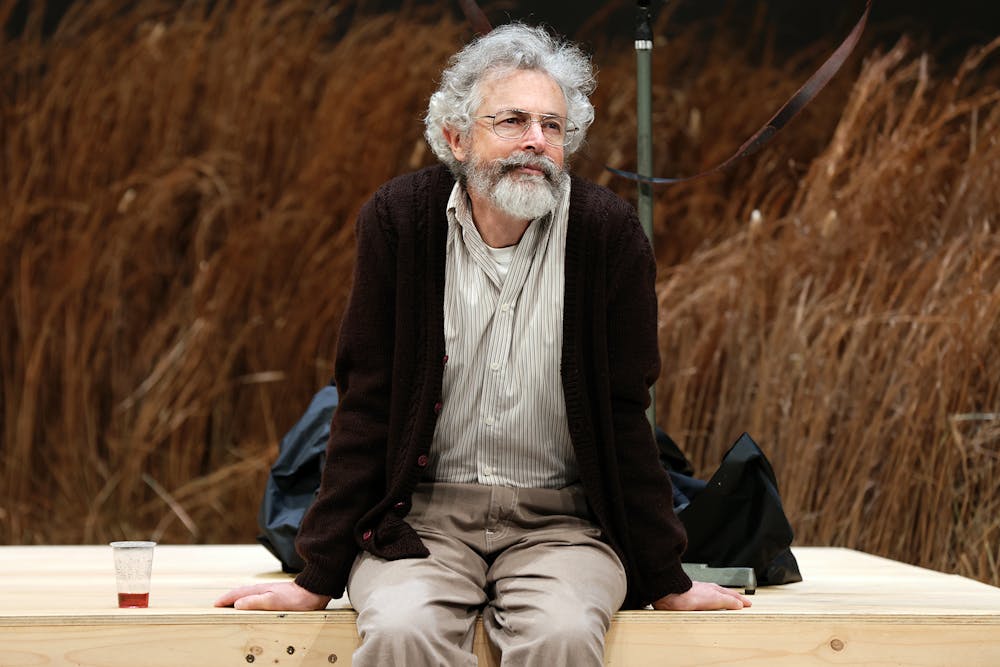 This version is set in contemporary rural Australia. Prudence Upton/Sydney Theatre Company
The adaptation is set in contemporary rural Australia and uses anglicised character names. Upton and Savage stick with Chekhov’s formal structure, but privilege the comedic at the expense of pretty much everything else when it comes to delivery.
This has ramifications for how the adaptation pans out.
Success beckons, tragedy befalls
The play comprises four acts and centres on four characters who mirror each other.
Constantine (Harry Greenwood) and Boris (Toby Schmitz) are writers. Boris is famous. Constantine – a college dropout who fancies his chances as an avant-gardist – is most definitely not.
Irina (Sigrid Thornton) and Nina (Mabel Li) are actors. Irina, who is Constantine’s mother and Boris’s lover, is a renowned stage star. The ingénue Nina, who is dating Constantine, desperately wants to make it.
Success beckons, but tragedy eventually befalls Nina – who leaves Constantine for Boris – in the two year gap between the play’s third and fourth acts.
These characters are joined by several others, including Irina’s ailing landowner brother Peter (Sean O'Shea), and a depressive young goth, Masha (Megan Wilding). With the exception of one, every character in the play is morose.
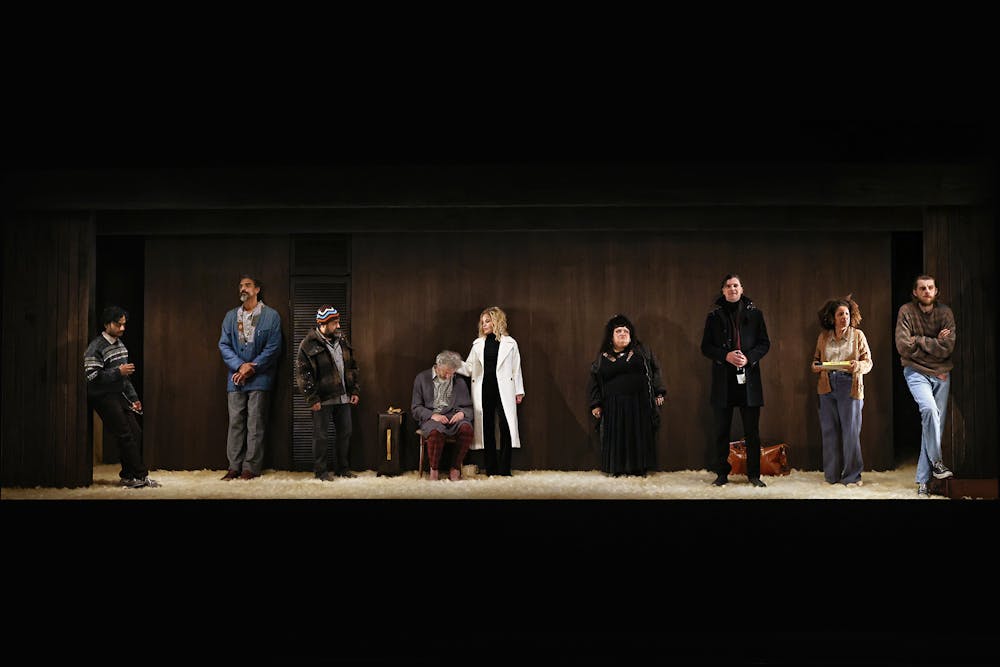 With the exception of one, every character in the play is morose. Prudence Upton/Sydney Theatre Company
The first act is structured around an abortive performance of an experimental theatre piece Constantine has worked up. Nina and Boris grow close in the second, while Irina holds court. At the start of the third act, it is revealed Constantine has tried to take his own life. Boris threatens to leave Irina for Nina. Hilarity ensues as Irina tries to win him back.
The atmosphere that the Sydney Theatre Company creative team establishes in each of these acts is lighthearted and largely humorous. Indeed, there are some moments, as when a gravely ill Peter convulses on the ground in the third act, when the onstage action almost tips over into outright farce.
As Chekhov himself insisted, different types of comedy – including farce – had roles to play in The Seagull. However, the overarching tonal emphasis in this adaptation causes problems in the play’s last act, which is set indoors during the Australian winter.
Peter, not long for the world, spends his time talking about how he regrets his entire life. The other characters fob him off. Constantine has made headway as a writer, but is deeply unhappy. He pines after Nina, who dropped off the radar somewhere between acts.
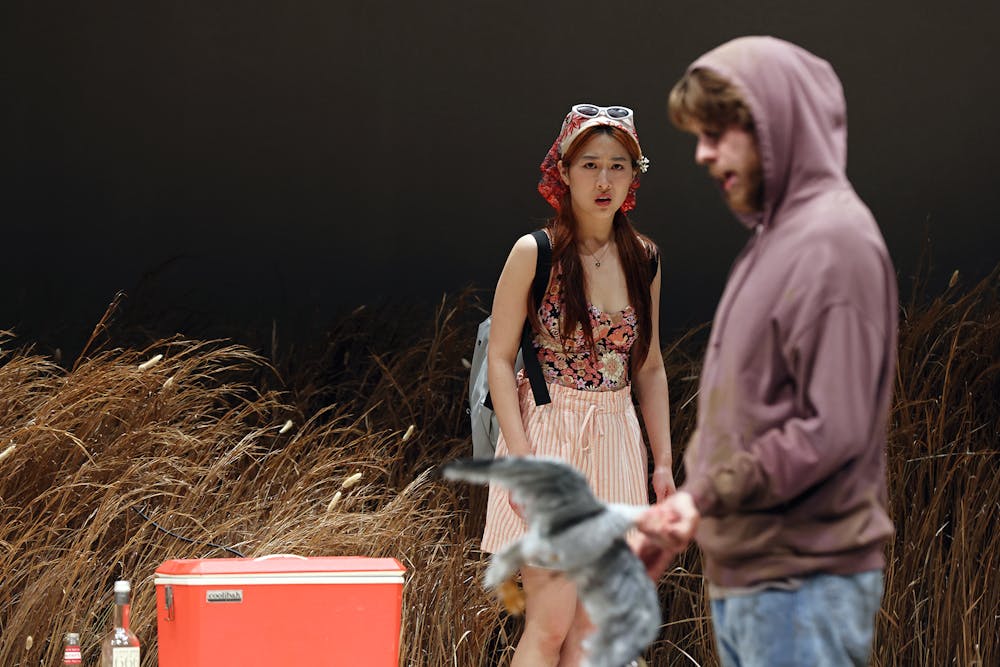 Mabel Li gives one of the standout performances. Prudence Upton/Sydney Theatre Company
Time passes, and trivialities exchanged. A bedraggled Nina reappears. The story she tells is one of sorrow and woe. A genuinely moving moment, the speech is delivered with real affective intensity – undoubtedly the high point of the production.
However, the tonal chasm between the final act and the preceding three is simply too great.
In keeping with Chehkov’s original, comedy ultimately gives way to tragedy, but something seems to have been lost along the way.
The Seagull is at the Sydney Theatre Company until December 16.
If this article has raised issues for you, or if you’re concerned about someone you know, call Lifeline on 13 11 14.
Alexander Howard, Senior Lecturer, Discipline of English, University of Sydney
This article is republished from The Conversation under a Creative Commons license. Read the original article.
Friday, 22 September 2023
Tunisia detains cartoonist over drawings mocking prime minister

Tunisian cartoonist Tawfiq Omrane
Tunisia’s public prosecutor yesterday detained the cartoonist Tawfiq Omrane over drawings mocking the prime minister, Omrane’s lawyer said, Reuters reported.
Omrane is well known for publishing satirical cartoons featuring President Kais Saied, who seized almost all powers two years ago after he shut down Tunisia’s elected parliament in a move that the opposition described as a coup.
“The police interrogated him [Omrane] for hours without the presence of lawyers on suspicion of insulting through social networks … over cartoons mocking the prime minister,” his lawyer, Anas Kadoussi, said. Kadoussi said the cartoonist could face one year in prison if convicted.
Interior Ministry officials declined to comment immediately.
In a Facebook update posted at 1pm GMT Omrane said he had been released.
Many Tunisians see free speech as a principal reform won after the 2011 revolution that toppled dictatorial President Zine El Abidine Ben Ali. But activists, journalists and politicians have warned this freedom is under threat.
“Omrane’s arrest reinforces authorities’ efforts to suppress critical voices of the president,” said Amira Mohamed, a senior official at the country’s Journalists’ Syndicate.
Saied strongly criticised state TV in a speech this week, including the arrangement of headlines in a bulletin, in a move that the Journalists Syndicate said was “blatant interference”.
Saied rejects accusations of targeting freedoms and has said he will never be a dictator.Police have detained more than 20 political figures this year, including opposition leader Rached Ghannouchi, head of Ennahda party, accusing some of plotting against state security. Tunisia detains cartoonist over drawings mocking prime minister
Sunday, 25 December 2022
How Santa Claus delivers toys around the world in just 1 night
 |
| Blogspot |
News Track India: Washington, (ANI): Scientists have explained how Santa Claus is able to deliver toys to good girls and boys around the world in one night. According to Larry Silverberg and his team at the Carolina State University, with his cherubic smile and twinkling eyes,Santa may appear to be merely a right jolly old elf, but he and his NPL staff have a lot going on under the funny-looking hats. Their advanced knowledge of electromagnetic waves, the space and time continuum, nanotechnology, genetic engineering and computer science easily trumps the know-how of contemporary scientists. "Children shouldn't put too much credence in the opinions of those who say it's not possible to deliver presents all over the world in one night," Silverberg said. Silverberg also said that Santa has a personal pipeline to children's thoughts, via a listening antenna that combines technologies currently used in cell phones and EKGs, which informs him that Mary in Miami hopes for a surfboard, while Michael from Minneapolis
Image Link Photobucket
wants a snowboard. A sophisticated signal processing system filters the data, giving Santa clues on who wants what, where children live, and even who's been bad or good. Later, all this information will be processed in an onboard sleigh guidance system, which will provide Santa with the most efficient delivery route. However, he adds that letters to Santa via snail mail still get the job done. "While he takes advantage of emerging technologies, Santa is, in many ways, a traditionalist," he said. Silverberg is not so naive as to think that Santa and his reindeer can travel approximately 200 million square miles, making stops in some 80 million homes, in one night Instead, he posits that Santa uses his knowledge of the space/time continuum to form what he calls "relativity clouds." "Based on his advanced knowledge of the theory of relativity, Santa recognizes that time can be stretched like a rubber band, space can be squeezed like an orange and light can be bent. "Relativity clouds are controllable domains - rips in time - that allow him months to deliver presents while only a few minutes pass on Earth. The presents are truly delivered in a wink of an eye," Silverberg said.
Image Link Photobucket
With a detailed route prepared and his list checked twice through the onboard computer on the technologically advanced sleigh, Santa is ready to deliver presents. His reindeer, genetically bred to fly, balance on rooftops and see well in the dark, don't actually pull a sleigh loaded down with toys. Instead, each house becomes Santa's workshop as he utilizes his "magic bag of toys", a nano-toymaker that is able to fabricate toys inside the children's homes. The presents are grown on the spot, as the nano-toymaker creates, atom by atom, toys out of snow and soot, much like DNA can command the growth of organic material like tissues and body parts. Therefore, there's really no need for Santa to enter the house via chimney, although Silverberg says he enjoys doing that every so often. Rather, the same relativity cloud that allows Santa to deliver presents in what seems like a wink of an eye is also used to "morph" Santa into people's homes. (ANI) Source: News Track India

Image Link Photobucket
wants a snowboard. A sophisticated signal processing system filters the data, giving Santa clues on who wants what, where children live, and even who's been bad or good. Later, all this information will be processed in an onboard sleigh guidance system, which will provide Santa with the most efficient delivery route. However, he adds that letters to Santa via snail mail still get the job done. "While he takes advantage of emerging technologies, Santa is, in many ways, a traditionalist," he said. Silverberg is not so naive as to think that Santa and his reindeer can travel approximately 200 million square miles, making stops in some 80 million homes, in one night Instead, he posits that Santa uses his knowledge of the space/time continuum to form what he calls "relativity clouds." "Based on his advanced knowledge of the theory of relativity, Santa recognizes that time can be stretched like a rubber band, space can be squeezed like an orange and light can be bent. "Relativity clouds are controllable domains - rips in time - that allow him months to deliver presents while only a few minutes pass on Earth. The presents are truly delivered in a wink of an eye," Silverberg said.

Image Link Photobucket
With a detailed route prepared and his list checked twice through the onboard computer on the technologically advanced sleigh, Santa is ready to deliver presents. His reindeer, genetically bred to fly, balance on rooftops and see well in the dark, don't actually pull a sleigh loaded down with toys. Instead, each house becomes Santa's workshop as he utilizes his "magic bag of toys", a nano-toymaker that is able to fabricate toys inside the children's homes. The presents are grown on the spot, as the nano-toymaker creates, atom by atom, toys out of snow and soot, much like DNA can command the growth of organic material like tissues and body parts. Therefore, there's really no need for Santa to enter the house via chimney, although Silverberg says he enjoys doing that every so often. Rather, the same relativity cloud that allows Santa to deliver presents in what seems like a wink of an eye is also used to "morph" Santa into people's homes. (ANI) Source: News Track India
Wednesday, 12 August 2015
Laughter is the Best Medicine: The Health Benefits of Humor

Humor is infectious. The sound of roaring laughter is far more contagious than any cough, sniffle, or sneeze. When laughter is shared, it binds people together and increases happiness and intimacy. In addition to the domino effect of joy and amusement, laughter also triggers healthy physical changes in the body. Humor and laughter strengthen your immune system, boost your energy, diminish pain, and protect you from the damaging effects of stress. Best of all, this priceless medicine is fun, free, and easy to use. Laughter is strong medicine for mind and body: “Your sense of humor is one of the most powerful tools you have to make certain that your daily mood and emotional state support good health.” ~ Paul E. McGhee, Ph.D. Laughter is a powerful antidote to stress, pain, and conflict. Nothing works faster or more dependably to bring your mind and body back into balance than a good laugh. Humor lightens your burdens, inspires hopes, connects you to others, and keeps you grounded, focused, and alert. With so much power to heal and renew, the ability to laugh easily and frequently is a tremendous resource for surmounting problems, enhancing your relationships, and supporting both physical and emotional health. Read Full Story At http://www.helpguide.org/, Image: photobucket.com
Tuesday, 3 March 2015

Wednesday, 2 April 2014
DGCA-Chopping Arms to Save the Legs
 By Neelam Mathews: India's DGCA's feeble attempt to prove to FAA how serious it is on its filling gaps on its inadequate regulatory oversight on safety can be seen in its release of information to the media, which, many consider inappropriate. Take the checks on the Challenger 605 in Delhi recently, for instance. This was a regular check and should have been the practice ever since Indian business aviation took off. However, to have overblown it in such a way, is a mistake on DGCAs part. Very clearly, it is causing damage to the business aviation industry as it tries to limp back to a saner business environment. At first glance, this story might look one-sided. Nevertheless, Aerospace Diary is known to give the dog its due. We in the industry know of the levels of safety recognized by regulators in which level one observations are serious as they impinge on safety. Level 2 can be mitigated as in the case of the Challenger, and such oversights are not meant for public consumption as the oversights
.jpg)
Hopefully the govt wont take a cue from this!
are to be handled by SOPs. So, why is DGCA creating this “awareness”? If it really wants to impress FAA, perhaps it should do something about the detailed IACO report gathering dust for the past two years. “Let us discuss our issues in-house as the general public does not understand the nitty gritties of issues faced by us,” R.K Bali, Gen Secy, BAOA, tells us. Bali might be conservative with his words, we are not. Let’s face it. Those who live in glass houses should not throw stones. Despite lack of a GA infrastructure and a crying report waiting to move out of the cobwebs of DGCAs laptops and by Minister Ajit Singh’s own confession that India has a better safety record than the US and inspite of DGCA’s lack of inspectors, India's GA industry has a good safety record. The credit for this goes to the industry and its pilots that view every passenger as a VVIP and whose lives vest in his hands. It is time that DGCA gets into the act of hiring manpower- we understand the limits- but please, do not cut your arms to save your legs. Either ways, it will be a loss to the country. Source: Aerospace Diary
Friday, 6 December 2013

Tuesday, 16 July 2013

Sunday, 21 April 2013

Tuesday, 26 March 2013
Are religion and football incompatible?

Religious symbols will be banned at the stadiums in Poland during the European football championship - 2012. The new rules of conduct at the matches, worked out by the Polish Football Union, include toughening of requirements to religious attributes. Fans, trying to ignore the ban, risk missing football. The Bible and crosses were banned at Polish stadiums along with vuvuzelas.
Religious symbols will be banned at the stadiums in Poland during the European football championship - 2012. The new rules of conduct at the matches, worked out by the Polish Football Union, include toughening of requirements to religious attributes. Fans, trying to ignore the ban, risk missing football. The Bible and crosses were banned at Polish stadiums along with vuvuzelas. The public, especially religious people, did not approve of the news (let me remind you that Poland is one of the most religious countries in Europe). A human rights defender and the head of the Center of legal protection "Moscow - Russians" Michael Yoffe considers the struggle with religious symbols at Polish stadiums to be a political trend of the European Union countries. "I think, that Poland has decided to support the part of the European community, which believes that people come to the stadiums to root for their teams. It is not at all connected with religion. Such a restriction was introduced in connection with this. In this situation Poland took the side of the part of the European society, France for example, which had limited the wearing of hijab in public places, on the street, in schools, etc. Thus they support the European Union policy." Though in a way, the prohibition of religious objects at the stadiums is a unique act, but it is not the first restriction for the fans. The history of world football knows several cases when some objects were banned, Honoured Master of Sports, football columnist Eugene Lovchev tells. "It happened in Portugal. The Russian group played in a town of Faro, near the border with Spain. Around the stadium (and it was all sand and clay everywhere) there were some sheds, where we had to leave our cameras, bags and everything. The most interesting thing is that afterwards one had to stand in an enormous queue to get it all back." According to the experts, the new set of rules will not come into effect. And even if it is adopted, it will be thoroughly revised. In the opinion of Eugene Lovchev, the news of the ban on religious objects for Euro-2012 is another attempt of the Polish authorities to draw additional attention to the country in anticipation of the Championship. According to some data, under the pressure of public opinion the Polish football Federation is not so strict in their demands anymore. And taking into account that it is still more than two months left until the start of the final part of the European Championship, the attitude of the Polish football functionaries can change a lot. Source: Voice of Russia
Tuesday, 29 January 2013

Sunday, 30 December 2012

Wednesday, 5 December 2012


Saturday, 18 August 2012
TV!

An excellent portrait of how TV has changed itself and all else in 20 years! Source: Comedy-Daze
Monday, 6 August 2012
Banking Bloopers
 I've come to believe that more damage has been done in more areas by human stupidity than by conspiracy. Source: The Dry Bones Blog