bloggggg

Home  |  Live  |  Science  |  Lifestyle  |  Entertainment  |  Broadcast  |  Games  |  eBooks  |  Astounds  |  Adbite  |  Cricbell  |  Cyber  |  Idea  |  Digital  |  Privacy  |  Publish  |  ePaper  |  Contact  .Subscribe.Subscribe.Subscribe.Subscribe.Subscribe.Subscribe.Subscribe.Subscribe.Subscribe
Subscribe

Friday, 10 April 2026

Milind Soman enjoys a 20km swim in Goa, calls it a 'beautiful experience'


(Photo: Milind Soman/ Instagram)

Mumbai, (IANS) Actor and fitness enthusiast Milind Soman loves to push his limits. Marking a new milestone, he recently completed a 20-kilometer swim during his visit to Goa.

Milind informed through his latest social media post that he was able to complete the distance within 8 hours.

Elated to have swam such a long distance for the first time, the 'Emergency' actor called it a "beautiful experience".

Milind's life and fitness partner, Ankita Konwar, also swam 8 kilometers.

Sharing a couple of snippets from the latest challenge, Milind penned on his official Instagram handle, "Swam 20km for the first time ! Took around 8hrs .. Super happy swimming long distance in the sea is one of the most beautiful experiences, so unpredictable, tides, weather, currents, all make it an epic adventure .. big thank you to @ankita_earthy who also swam 8km and my friends Elias, Nicole and Mihir from the Goa Open Water Swim Club for always being there #worldhealthday (sic)"

Reacting to the post, Ankita commented, "It was sooo much fun!! And you my love are a sight to behold".

Milind continues to be a poster boy for fitness even at the age of 60.

In March, the 'Bheja Fry' actor shared his thoughts on the growing desire among people to move out of Mumbai for more space, greenery, and a quieter lifestyle.

Pointing out the sudden shift in mindset, Milind told IANS during an exclusive conversation, “A lot of people feel that ‘I want my garden and I want trees, good space and those people move out.”

“In fact, a lot of people are moving out of the city, whoever can. They are buying land, they’re starting farming,” he went on to add.Nevertheless, he acknowledged that although Mumbai has its share of flaws, it continues to appeal to many of its residents. “There are people who love living in Mumbai because it’s crowded, because it’s exciting, because there’s so much energy,” shared Milind. Milind Soman enjoys a 20km swim in Goa, calls it a 'beautiful experience' | MorungExpress | morungexpress.com

Thursday, 9 April 2026

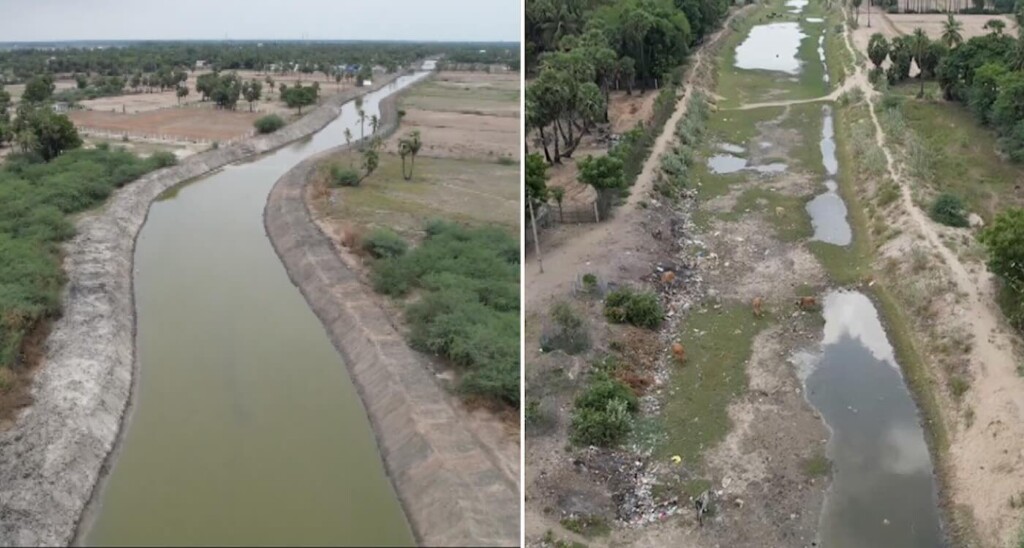
Once Dried up and Full of Plastic, Canal in India Is Now Clear and Lined with Mangroves

Canal in Tamil Nadu India (After and Before cleanup) by Supriya Sahu IAS via X @supriyasahuias

A canal in India has been transformed from a plastic-choked fetid mess into a growing mangrove forest.

The clean-up has restored the waterflow, and the 20,000 mangrove seedlings will help clean the water and reestablish fish stocks.

Along a 1.8-mile stretch of Buckingham Canal in India’s Tamil Nadu state, manual clean-up efforts began in Cuddalore district by some 600 paid volunteers.

This 494-mile-long fresh water canal was constructed during British rule, and ran from Andhra Pradesh to Tamil Nadu bringing water and navigation to millions.

Fewer countries are as thirsty as India can be during the dry season, but waterways in the country suffer heavily from pollution and buildup of plastic waste and invasive weeds, Buckingham Canal being a chief example of this trend.

Near the town of Pichavaram, Tamil Nadu’s Climate Resilient Village initiative organized the restoration of several stretches of the canal where pollution and waterflow were the worst. Local government agencies led the clean-up program.

Bravo Team Cuddalore !
What was once a plastic-choked and garbage-filled canal has bounced back in full force. An inspiring transformation in the village of Pichavaram under Tamil Nadu’s Climate Resilient Village initiative. We have rejuvenated 3 kms of the clogged village canal… pic.twitter.com/86l6QvXBmB— Supriya Sahu IAS (@supriyasahuias) March 14, 2026

750 kilograms—almost 2,000 pounds—of trash were pulled from the canal along with heaps of invasive prosopis plants. The embankments were strengthened to prevent erosion, before 3,000 mangrove trees were planted to improve the ability of the canal to keep the water clean and biodiverse, as well as slow storm waters that might flood the town and canal.

Other stretches further down the canal have seen similar rejuvenation. Near Chennai, the state capital, the Tamil Nadu Forest Department led the planting of another 20,000 mangrove seedlings along the canal banks, as well as in an island amid its flow.

This effort was supported with a grant from ICICI Bank’s sustainability initiatives, and involved carving a herring-bone pattern into the island. This allows for maximum mangrove anchorages across the small amount of available space, and for rising water levels to irrigate all equally.

Hello Chennai here comes your third Mangrove Magic !

Along the Buckingham Canal, the Chennai Forest Division has planted 20,000 mangrove seedlings across 20 hectares during 2025–26. What you see here is the fishbone structure to support healthy tidal flow. 8 main fishbone… pic.twitter.com/e01fhd0X5e— Supriya Sahu IAS (@supriyasahuias) March 9, 2026
Red, Indian, and tall-stilt mangroves were planted, and additional feeder canals and flow channels—over 180—were created to help keep the water circulating and the mangroves healthy.

“Step by step, TN Forest Department is building Chennai’s living coastal bioshield restoring mangroves that protect the city, nurture biodiversity and strengthen climate resilience,” said Tamil Nadu’s Chief Minister for Environment Supriya Sahu.Water has been a chief focus of Indian environmentalism this century. One of the sub-continent’s holiest places is a river, which makes it easy, said one NGO founder, to convince locals to help clean up water sources. Once Dried up and Full of Plastic, Canal in India Is Now Clear and Lined with Mangroves

Wednesday, 8 April 2026

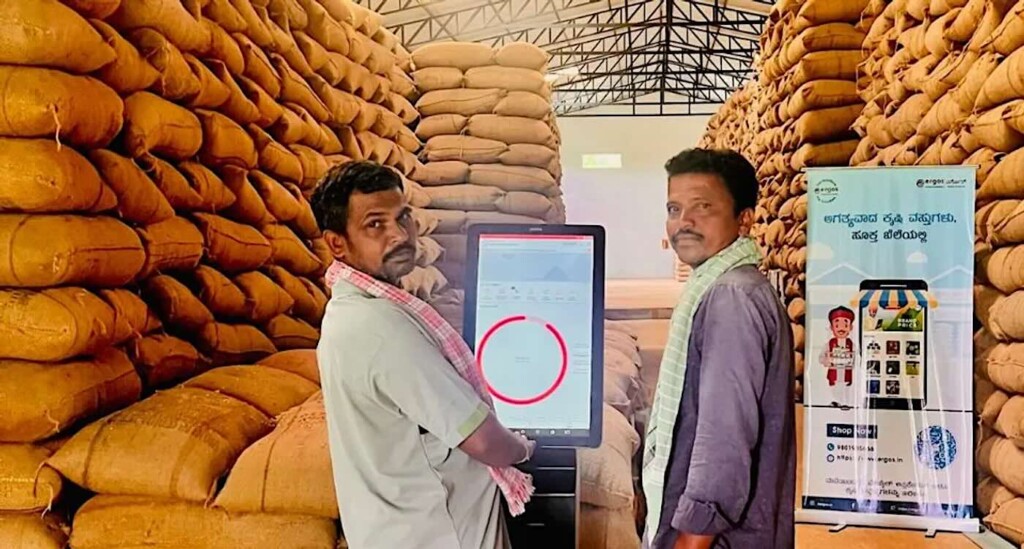
‘Grain Bank Accounts’ Free Indian Farmers from Middleman Through Online Marketplace

Ergos app reshapes how small farmers sell their crops in India – Courtesy of Kishor Kumar Jha / via Better India

From the Indian state of Bihar comes the story of a life-changing argi-tech application that’s giving farmers unprecedented control over the financial destiny of their crop.

Called Ergos, this digital “grain account” is linked to a network of “grain banks” where farmers can store their crops, monitor inventory and national prices, and sell when they’re ready too with the touch of their phone.

Farming is a hard job with no shortage of anxieties. No small landowning farmer has the hours to spare during harvest season to build a network of brokers, couriers, and sales teams that would be necessary to get their grain to market at a price that will reliably put food on their table.

That’s where that most infamous and mostly necessary figure in commerce comes in: the middle man. Before, one farmer said, middle men would quote prices, and farmers had little choice but to sell or risk their crop wasting away.

This status quo was something Kishor Kumar Jha and Praveen Kumar hoped to end. They founded Ergos, the system of grain banks and accounts to remove these middle men and allow farmers complete control of their sales decisions.

Ajay Kumar Chaudhary, a 66-year-old farmer from Bihar’s Kalyanpur, spoke to the Better India news outlet about his experience using Ergos, and how it transformed him from distressed seller to patient trader.

“If they said the price has fallen by 10 [rupees] today, we had to sell at that rate,” he explains. “Now we decide when to sell. If the price is not good today, we can wait. Maybe after a few days, the rate becomes better.”

“If we need money immediately,” Chaudhary says,” we can take a loan at about 1% interest and keep the grain stored The loan is automatically repaid when the grain is eventually sold.”

Borrowing money in the developing world can be extremely costly. If you think a 19.5% interest on your Discover card is a lot, try signing for some of the rates that these Bihari farmers are subjected to: often 50, 60%.

Undoubtedly some of that is predatory. On the other hand, consider the risks involved in lending money to a poor farmer who has little in the way of farm machinery, sanitary grain storage capacity, A-rated collateral, or effective pest control measures.

The farmer reiterated that in his profession, there are no shortages of uncertainties: weather, political decisions, pests and crop health, and of course, market pricing. But with the introduction of Ergos, at least one major dependency has been removed.The benefits, explains the business’s founder Jha, extend beyond the farmer and his finances, and indeed touch the whole nation. India loses approximately 18% of her harvested grain every year, Jha says, through improper storage facilities. The village grain banks operated by Ergos use scientific best-practices for keeping grain stored for long periods without rot. ‘Grain Bank Accounts’ Free Indian Farmers from Middleman Through Online Marketplace

Sunday, 5 April 2026

India’s renewable energy surge: Powering growth, security and global leadership


(IANS Analysis) (File Photo/IANS)

New Delhi, (IANS) India’s rapid transition toward renewable energy is no longer just an environmental priority—it has become a cornerstone of economic resilience, strategic autonomy, and long-term energy security.

As global energy markets face repeated disruptions, India’s aggressive push toward clean energy is positioning the country as one of the fastest-growing renewable powerhouses in the world.

The country has already crossed a critical milestone, with 51.93 per cent of its installed power capacity now coming from non-fossil fuel sources, surpassing its initial 50 per cent target ahead of schedule. This marks a decisive shift away from coal and imported oil, reflecting a structural transformation in India’s energy mix.

A decade of accelerated growth

India’s renewable energy capacity has more than tripled over the past decade—from 76.38 GW in 2014 to 253.96 GW by November 2025. The pace of expansion has only accelerated in recent years. During 2025–26 (up to December 2025), the country added 38.61 GW of renewable capacity, led overwhelmingly by solar energy (30.16 GW), followed by wind and hydro.

This surge has been driven by a combination of strong policy backing, private sector participation, and flagship schemes such as PM-KUSUM, PM Surya Ghar, CPSU solar programmes, and production-linked incentives (PLI) aimed at boosting domestic manufacturing.

Ambitious targets and strategic vision

India’s long-term goals remain highly ambitious. The country plans to increase solar power generation by 400% and wind energy by 300% by 2035, while targeting 500 GW of renewable capacity by 2030. Beyond this, India’s broader power sector transformation is expected to attract investments worth $2.2 trillion over the next two decades.

Globally, India now ranks fourth in total installed renewable energy capacity, behind China, the United States, and Brazil, according to the International Renewable Energy Agency (IRENA). This reflects not just scale, but growing influence in shaping global clean energy markets.

Beyond solar and wind: Diversifying the energy mix

India’s clean energy strategy is expanding beyond conventional renewables. The government is actively investing in:

• Green Hydrogen: Under the National Green Hydrogen Mission, India aims to produce 5 million tonnes annually by 2030, with hydrogen hubs planned at key ports.

• Nuclear Energy: The Nuclear Energy Mission targets 100 GW capacity by 2047, ensuring stable, low-carbon baseload power.

• Bioenergy and Small Hydro Projects: Decentralised energy systems are gaining traction, especially in remote and energy-deficient regions.

A notable development is the Small Hydro Power Development Scheme, with an outlay of ₹2,584.60 crore. This initiative is particularly significant for regions like Jammu & Kashmir and Ladakh, where untapped hydropower potential exceeds 20,000 MW. These smaller, decentralised projects offer faster execution, lower costs, and minimal environmental disruption, while boosting local employment and energy access.

Energy security in a volatile world

Global geopolitical tensions—particularly disruptions in critical oil supply routes like the Strait of Hormuz—have exposed the vulnerabilities of fossil fuel dependence. For import-dependent economies, rising oil and LNG prices translate into economic stress and inflation.

In this context, India’s renewable push is not just environmentally sound but strategically vital. By reducing dependence on imported fuels, India is insulating its economy from global shocks while enhancing energy self-sufficiency.

Innovation and grid transformation

To sustain this momentum, India is investing in next-generation energy solutions. The integration of Battery Energy Storage Systems (BESS) and Pumped Storage Hydropower (PSP) is becoming essential to address the intermittent nature of renewable sources. These technologies will ensure grid stability, efficient peak-load management, and reliable large-scale adoption of renewables.

At the same time, falling renewable tariffs and improved grid infrastructure are making clean energy increasingly competitive with fossil fuels.

Strengthening implementation for accelerated growth

India’s renewable energy journey continues to gain momentum, supported by proactive policy measures to address challenges such as capital requirements, land acquisition, and transmission infrastructure. Ongoing efforts to streamline regulations and enhance institutional coordination are paving the way for faster and more efficient project execution, including in the hydropower sector.

Sustaining momentum towards global leadershipWith the transition reaching a critical milestone, the government is now focused on consolidating gains by ensuring reliable, affordable, and sustainable energy at scale. Backed by consistent policy support, innovative financing, and strategic implementation, India is well-positioned to emerge as a global leader in renewable energy and a model for sustainable growth. India’s renewable energy surge: Powering growth, security and global leadership | MorungExpress | morungexpress.com

Wednesday, 1 April 2026

Operant AI launches ecosystem programme to secure India’s rapidly expanding AI infra

(File Photo/IANS)

New Delhi, (IANS) Operant AI on Tuesday announced the launch of its AI infrastructure ecosystem partnership programme, aiming to strengthen security for large-scale AI systems as India pushes to become a global AI hub.

The company said the new initiative focuses on embedding real-time security directly into the infrastructure that powers enterprise AI applications.

The move comes at a time when the use of AI agents, connected systems, and large-scale deployments is growing rapidly, creating new security challenges.

Many organisations are now running advanced AI systems that can access sensitive data and external tools, often without adequate safeguards.

Operant AI’s platform is designed to address this gap by providing a real-time security layer that works while AI systems are actively processing data.

India’s AI infrastructure is expanding quickly across both government and private sectors. Under the IndiaAI Mission, the government has already deployed tens of thousands of GPUs, with more capacity being added recently at the India AI Impact Summit 2026. Overall, the country now has over 80,000 GPUs in operation, with major investments shaping the future of AI development.

At the same time, data centre companies such as ST Telemedia Global Data Centres, CtrlS, Sify Technologies, Nxtra by Airtel, and Princeton Digital Group are expanding their infrastructure to support AI workloads.

Cloud and GPU providers like Yotta Data Services, NxtGen Datacenter & Cloud Technologies, and Neysa Networks are also building specialised platforms for AI computing.

Operant AI said its new programme will help infrastructure providers offer not just computing power but also secure environments where AI models and agents can run safely.

Vrajesh Bhavsar, Co-founder and CEO of Operant AI, said the rapid growth of AI has outpaced traditional security measures. He noted that as Indian organisations adopt AI across sectors like finance, healthcare, and public services, securing systems at the point where they operate is becoming critical.He added that the company’s goal is to make AI systems more trustworthy and safe to deploy, ensuring that India’s fast-growing AI ecosystem remains secure as it scales. Operant AI launches ecosystem programme to secure India’s rapidly expanding AI infra | MorungExpress | morungexpress.com

Tuesday, 31 March 2026

IPL 2026: Sooryavanshi’s blistering 52 helps RR register eight-wicket win over CSK


Guwahati: Rajasthan Royals' Vaibhav Sooryavanshi plays a shot during the Indian Premier League (IPL) 2026 match between Rajasthan Royals and Chennai Super Kings at Barsapara Cricket Stadium in Guwahati on Monday, March 30, 2026. (Photo: IANS)

Guwahati, (IANS) Vaibhav Sooryavanshi slammed a blistering 52 off just 17 balls as Rajasthan Royals launched their IPL 2026 campaign with a thumping eight-wicket victory over Chennai Super Kings at the ACA Stadium on Monday.

Sooryavanshi’s fifty came in only 15 deliveries, the third fastest in IPL history, to set up the win for RR. His knock, laced with four fours and five sixes, propelled RR to 74 without loss in the power-play, effectively sealing the contest in their favour.

Though he fell soon after, Yashasvi Jaiswal (38 not out) and skipper Riyan Parag (14 not out) calmly completed the formalities to complete the chase with 47 balls to spare and cap off a dominant performance that began with a disciplined bowling effort to bowl CSK out for 127.

RR had a flying start as Matt Henry’s opening over went for 18 runs, with Sooryavanshi pulling and driving for boundaries (including Kartik Sharma dropping him for zero) while Jaiswal glanced him fine for four.

Khaleel Ahmed thought he had Sooryavanshi lbw on the first ball of his spell, but review showed the ball going over leg stump. Jaiswal played watchfully even as Sooryavanshi continued to attack to keep the runs flowing.

Henry’s second over was taken apart by Sooryavanshi - slashing a slower ball over backward point for six, while Jaiswal muscled Khaleel straight over mid-off for four. Anshul Kamboj was greeted with three boundaries as Sooryavanshi ramped and tickled him over third man and fine leg before smashing a six over long-on, as RR crossed the fifty-run mark.

Noor Ahmad’s introduction did little to stem the flow as Sooryavanshi launched consecutive sixes over long-on to bring up a blistering fifty off just 15 balls, as 19 runs came off the sixth over to take RR to 74/0 at the end of the power-play.

But just after that, Sooryavanshi attempted to flay a length ball over cover but Sarfaraz Khan ran in from the deep and completed a diving catch at deep extra cover to dismiss him for 52.

Dhruv Jurel kept the tempo going with four quick boundaries, before dragging one back onto his stumps off Anshul Kamboj while trying to scoop off him. Parag lofted and reverse-swept to get his four and six, while Jaiswal thumped one over long-off for six before getting the winning single to launch RR’s campaign with a thumping win.Brief Scores: Chennai Super Kings 127 in 19.4 overs (Jamie Overton 43, Kartik Sharma 18; Ravindra Jadeja 2-18, Jofra Archer 2-19) lost to Rajasthan Royals 128/2 in 12.1 overs (Vaibhav Sooryavanshi 52, Yashasvi Jaiswal 38 not out; Anshul Kamboj 2-27) by eight wickets IPL 2026: Sooryavanshi’s blistering 52 helps RR register eight-wicket win over CSK | MorungExpress | morungexpress.com

Sunday, 22 March 2026

NFR reports significant growth in solar power generation

A solar panel installation under the Northeast Frontier Railway. As per the NFR, the total installed solar capacity across the zone has reached 31.890 MWp as of February 2026. Photo Courtesy: (CPRO NFR)

Maligaon, (MExN): The Northeast Frontier Railway (NFR) has reported significant progress in solar power generation, with a steady expansion of its renewable energy capacity across divisions

The total installed solar capacity across NFR has reached 31.890 MWp as of February 2026, since the launch of its solarisation initiative in 2011, informed a press release issued by the NFR Chief Public Relations Officer.

Of this, 22.734 MWp ((Megawatt-peak)capacity has been added during the current financial year 2025–26 alone, indicating an accelerated push towards green energy adoption, it added.

Among the divisions, Lumding (including the Guwahati portion) recorded the highest cumulative installation at 13.334 MWp, followed by Rangiya division with 8.941 MWp.

Other divisions, including Alipurduar, Katihar and Tinsukia, have also contributed to the overall capacity.

The NFR highlighted that the solar installations have yielded operational benefits.

During 2025–26 (till February 2026), the average monthly solar energy generation stood at around 9.18 lakh units, translating into an estimated monthly saving of approximately Rs 68.80 lakh, it said,
Further, NFR has 19.14 MWp of additional solar capacity under various stages of implementation across its divisions. Major upcoming projects are planned in Lumding, Rangiya, Katihar and Alipurduar divisions.The NFR stated that these initiatives reflect its commitment to sustainable development and align with Indian Railways’ broader goal of achieving net-zero carbon emissions, while also contributing to long-term cost efficiency.NFR reports significant growth in solar power generation | MorungExpress | morungexpress.com

Friday, 20 March 2026

Dia Mirza lauds Anubhav Sinha’s ‘Assi’, calls it ‘one of the most important films of our times’

(Photo : IANS/diamirza/insta)

Mumbai (IANS) Actress Dia Mirza has strongly praised filmmaker Anubhav Sinha for his recently released film ‘Assi’, and called it a powerful and significant cinematic effort.

Dia shared a video clip from the film on her social media account and expressed admiration for the director and the entire team behind the project.

Sharing the video clip from the movie, the actress wrote, “Thank you Anubhav Sinha. For going where no one else goes. For saying what no one else dare say. But most importantly, for listening to the voice in your heart.”

She added, “ASSI is one of the most important films of our times. Each word, each pause, each beat, creates a compelling feeling. Every single performance is pure TRUTH. So much gratitude to Team ASSI. @anubhavsinhaa Zindabad!”

Talking about the film ‘Assi’, it has been directed by Anubhav Sinha and features an ensemble cast including Taapsee Pannu, Manoj Pahwa, Kumud Mishra, Naseeruddin Shah and Supriya Pathak, among others.

The project also stars actors such as Mohd Zeeshan Ayyub and Revathy. The movie explores complex societal realities through powerful storytelling and performances.

Despite the the string storyline, the movie did not perform well at the box office.

Talking about the poor performance of the movie, trade analyst Girish Wankhede shared his views, stating that the film failed to connect with audiences despite its concept.

Speaking about the film’s underwhelming numbers, Girish Wankhede, in an exclusive conversation with IANS, said, “It’s a simple reason. When a film doesn’t do well, it means the audience didn’t like it. They didn’t understand what kind of film it was. If the marketing had been stronger, more people might have come to the cinemas, but the audience wasn’t fully aware.”

He further pointed to mixed critical reception and limited star pull as contributing factors. “Apart from that, the reviews were very mixed. Some people praised the film, some didn’t."He added, "Taapsee Pannu is the main lead actress of the film, but she is not capable of pulling a film entirely on her shoulders. There are many such reasons why the film didn’t perform well.” Dia Mirza lauds Anubhav Sinha’s ‘Assi’, calls it ‘one of the most important films of our times’ | MorungExpress | morungexpress.com

Saturday, 14 March 2026

'Love, happiness and beautiful memories…': Raina pens heartfelt message as Kuldeep sets for new beginning

Credit: Suresh Raina Instagram

New Delhi, (IANS) Former India cricketer Suresh Raina shared a heartfelt message for spinner Kuldeep Yadav and his bride-to-be Vanshika Chadha as the couple’s wedding celebrations gathered momentum in Mussoorie.

Raina took to Instagram on Saturday to post a picture from the festivities, where he was seen posing alongside Kuldeep, Vanshika and India spinner Yuzvendra Chahal, offering his best wishes to the soon-to-be-married couple.

Along with the photograph, Raina penned a caption celebrating the couple’s new journey. He wrote, “Wishing Kuldeep and Vanshika a lifetime of love, happiness and beautiful memories together. God bless this beautiful journey ahead.”

The post quickly gained attention, giving fans a glimpse into the vibrant pre-wedding celebrations ahead of the ceremony. Kuldeep, who recently played a key role in India’s triumphant campaign at the ICC Men's T20 World Cup 2026, is set to marry his childhood friend Vanshika Chadha in the hill town of Mussoorie on Saturday.

The wedding is being hosted at the iconic WelcomHotel The Savoy, which has reportedly been reserved for several days to accommodate the festivities and guests.

Photos and videos circulating on social media have offered glimpses of the colourful sangeet ceremony held on Friday evening. In the images shared by Raina and Chahal, the bride and groom are seen dressed in coordinated traditional outfits that drew considerable attention online.

Vanshika opted for an intricately embellished lehenga set that shimmered under the lights. The ensemble featured a flowing layered skirt paired with a matching blouse and a delicate embroidered dupatta. She completed the look with statement jewellery, including a choker-style necklace that added a regal touch to the attire.

Kuldeep, meanwhile, chose a royal navy-blue velvet sherwani adorned with subtle embroidered motifs. The outfit was paired with classic black trousers, while a richly embroidered multi-coloured shawl draped over one shoulder added a traditional flourish to his appearance.

Earlier, Chahal also shared clips from the Haldi ceremony on social media. The videos showed several members of the Indian cricket fraternity enjoying the festivities, including India’s assistant coach T Dilip, as music and dance became central to the celebrations.

The wedding is expected to see several prominent figures from Indian cricket in attendance. Reports suggest that players such as Virat Kohli, Rohit Sharma and Jasprit Bumrah are among the high-profile guests likely to attend the ceremony.Meanwhile, fellow Indian cricketer Rinku Singh also shared glimpses from the sangeet ceremony on his Instagram story, posing with T Dilip as the celebrations continued late into the evening. 'Love, happiness and beautiful memories…': Raina pens heartfelt message as Kuldeep sets for new beginning | MorungExpress | morungexpress.com

Thursday, 12 March 2026

Teacher Wins $1M Prize for Turning India's Slums Into Hundreds of Open-Air Classrooms

Rouble Nagi – submitted to GEMS Education 2026 Global Teacher Prize

An Indian teacher who has established more than 800 learning centers across India for children who have never attended school has been named the winner of the $1 million Global Teacher Prize from GEMS Education.

Located in over 100 slums and villages, Rouble Nagi’s classrooms offer safe, inspiring spaces to help overcome the challenging conditions shaped by poverty—child labour, early marriage, irregular attendance, and a lack of infrastructure.

Rather than seeing these realities as barriers, Ms. Nagi designs education around real life: flexible schedules for working children, hands-on learning using recycled materials, and practical skills that demonstrate immediate value to families.

As a result, her programs have reduced dropout rates by more than 50% and significantly improved long-term school retention.

Rouble plans to use the $1 million prize money to build a free vocational institute and digital literacy training program to help transform the lives of millions more marginalized young people.

It all started after she was asked to do an art workshop as an artist in her early 20s. “I met a child who’d never seen a pencil, and it was the turning point of my life.” (Watch the video below…)

Rouble Nagi drawing with children – Credit: Apeksha Roy (CC BY-SA 4.0)

Over the last two decades, she has helped bring more than one million children into the formal education system—and one of her not-so-secret weapons is art.

She has transformed abandoned walls into large interactive murals that teach everything from reading, math, and science, to hygiene, history, environmental awareness, and social responsibility.

The murals, funded through her nonprofit Rouble Nagi Art Foundation, are not decorative artworks, but open-air classrooms that draw children into learning, engage parents, and turn entire neighborhoods into partners in education.

“Rouble Nagi represents the very best of what teaching can be – courage, creativity, compassion, and an unwavering belief in every child’s potential,” said Sunny Varkey, who founded the annual Global Teacher Prize and GEMS Education.

Slums of Jaffer Baba Colony were painted bright colors by Rouble Nagi’s Misaal Mumbai project – by Pburka (CC BY-SA 4.0)

“By bringing education to the most marginalized communities, she has not only changed individual lives, but strengthened families and communities.”

Now in its tenth year, the Global Teacher Prize—which collaborates with UNESCO—is the largest award of its kind, with Nagi selected from over 5,000 nominations and applications from 139 countries.

“This moment reminds us of a simple truth: teachers matter. UNESCO is honored to celebrate teachers like you, who, through patience, determination, and belief in every learner, help children into school—an act that can change the course of a life,” said Stefania Giannini, UNESCO Assistant Director-General for Education.

Rouble, who is also the author of the book, The Slum Queen, travels extensively across India, working directly with children in the learning centers and mentoring the teachers who lead them.

She has recruited and trained more than 600 volunteer and paid educators, creating a scalable model that meets children where they are—academically, socially, and economically.

Alongside her work in education, Rouble is an internationally recognized artist. Through the Rouble Nagi Design Studio, she has created more than 850 murals and sculptures and exhibited in 200 shows worldwide, with her work selected for the President of India’s permanent collection.“Her work reminds us that teachers are the most powerful force for progress in our world.” Teacher Wins $1M Prize for Turning India's Slums Into Hundreds of Open-Air Classrooms

New Baby Boom for Cheetahs in India After First-in-the-World Reintroduction

Jwala the cheetah and her 5 cubs – credit, @byadavbjp

A female cheetah named Jwala in India’s Madhya Pradesh state has given birth to a litter of 5 cubs, the third since she arrived in the country.

India’s Minister for the Environment wrote on X that the birth increases “the number of Indian-born thriving cubs has risen to 33, marking the 10th successful cheetah litter on Indian soil.”

There have been highs and lows for the growing cheetah population in India, reintroduced in 2022 via several groups of animals from African strongholds of Namibia, Botswana, and South Africa.

Their first destination was Madhya Pradesh’s Kuno National Park, where they were historically located before going extinct in the mid-20th century.

Though iconic to Africa, much like the lion and leopard, these cats spanned the Asian landmass as well, and in fact still live today as an isolated, Critically-Endangered population in Iran.

In India they were hunted for centuries for their pelts, and for sport. The government of long-serving Prime Minister Narendra Modi made “Project Cheetah” a keystone demonstration of his administration’s commitment to the environment.

However, mortality among the reintroduced cats has been high—a consequence typical of these sorts of projects—yet one which Modi has nevertheless taken substantial criticism over. 28 cheetahs were brought from Africa, but more than half have passed away. Some ecologists warned that they would have difficulty adapting to the predator density in Kuno, which harbors a robust leopard population.

There are now 53 cheetahs living in the wild and semi-wild habitats in both Kuno and Gandhi Sagar Wildlife Sanctuary. They total 11 animals remaining that were translocated from Africa, and 33 India-born cubs, some of which are reaching sexual maturity.

“This achievement reflects the dedicated efforts, skill, and commitment of the veterinarians, field staff and all involved who continue to work tirelessly on the ground,” said Minister Bhupender Yadav on X.

The birth follows a mid-February litter of 3 cubs to another Namibian female cat named Gamini, the second since she arrived in India.

“A moment of pride for Kuno, and for India—may Gamini and her three little sprinters grow strong and carry the nation’s cheetah revival story forward with speed and grace,” Yadev said at the time.

According to Japan Times which reported on Gamini’s litter, the National Tiger Conservation Authority of India, which oversees the cheetah project, said that survival rates and hunting successes are “comparable to other international cheetah reintroduction efforts, with recorded wild prey kills confirming successful adaptation to the Indian landscape.”Another cheetah reintroduction program is taking place in Saudi Arabia, where cheetahs also once lived but went extinct. New Baby Boom for Cheetahs in India After First-in-the-World Reintroduction

Monday, 9 March 2026

T20 WC: Samson, Bumrah star as India clinch third title, beat New Zealand by 96 runs

Ahmedabad: India's Hardik Pandya celebrates after India won the ICC Men's T20 World Cup 2026 at the Narendra Modi Stadium in Ahmedabad on Sunday, March 08, 2026. (Photo: IANS)

Ahmedabad, March 8 (IANS) Fast bowling spearhead Jasprit Bumrah picked 4-15 as India became the first team to retain the Men’s T20 World Cup title and win the crown for a record three times after beating New Zealand by 96 runs in front of 86,824 fans at the Narendra Modi Stadium in Ahmedabad on Sunday.

Sanju Samson’s blistering 89 off 46 balls, laced with five fours and eight sixes, powered India to 255/5, the highest total in a T20 World Cup final, before Bumrah and Axar Patel (3-27) ripped through New Zealand’s top order to seal victory. The visitors were dismissed for 159 in 19 overs, with only Tim Seifert offering resistance through a fighting 52.

Samson, in prime form after scores of 97 not out and 89 in his previous innings, shared a 98-run opening stand with Abhishek Sharma (52 off 21 balls) while Ishan Kishan added 54 off 25 deliveries. James Neesham briefly checked the charge with three wickets in an over, but Shivam Dube’s unbeaten 26 off eight balls pushed India past 250.

India’s bowlers then ensured there was no repeat of the semi-final scare against England, reducing New Zealand to 52/3 inside the powerplay. The win broke two hoodoos - India’s first victory over New Zealand in a T20 World Cup and their first ICC white-ball triumph in Ahmedabad after defeats in the 2023 ODI final and earlier in this tournament.

Captain Suryakumar Yadav is now the fourth Indian skipper to lead the side to a men’s cricket World Cup title after having not lost a single series since taking charge after the trophy triumph in Barbados in June 2024 - a remarkable record that highlights India's dominance in the shortest format. Head coach Gautam Gambhir also gets his second ICC title, as India completed their two-peat of Men’s T20 World Cup titles via their high-risk and reward approach.

On a flat mixed soil pitch, India’s imposing total was built on an explosive platform laid by their top three, all of whom attacked from the outset with strike rates that underlined their dominance. Samson finished on a strike rate of 193.47, while Abhishek struck at 247.61 and Kishan hit his runs at a strike-rate of 216.

The early overs had set an ominous tone for New Zealand before the tactical decision to introduce fast bowler Jacob Duffy in the third over backfired badly. Runs and boundaries flowed from there like an avalanche, as New Zealand's bowlers were sent on a leather hunt via depending too much on slower balls and bowling away from stump-to-stump lines.

Inserted into batting first, Samson defended solidly off Matt Henry for the first four balls, before opening up with an elegant swing over long-on for six. After Glenn Phillips gave away five runs in the second over, Abhishek announced himself with an ugly heave off Jacob Duffy for four, before sweetly timing a lofted off-drive for another boundary.

Samson, meanwhile, pumped a Duffy inswinger back over the bowler's head for four. The pitch was a belter, and both batters were beginning to sense it as the fourth over opened the floodgates for India. Lockie Ferguson endured a nightmare introduction - two wides, with Abhishek and Samson taking him for a pair of four and six each, as the duo plundered 24 runs.

Henry's second over saw Abhishek launch a slower ball over mid-off for six before Samson rocked back to pull a bouncer for another maximum, even as four wides in the over told its own story. New Zealand's plans were clearly unravelling against batters who simply refused to stick to a blueprint.

Abhishek reached his half-century off just 18 balls in the sixth over, swatting and swinging his way to the milestone with nonchalance via three fours and a six, as India plundered 92 runs in power-play. Though Santner brought himself on in the seventh over, Samson cracked a cut off him for four.

Abhishek's fine innings ended in the eighth over when Rachin Ravindra pushed it wide, and the opener feathered an edge behind to the keeper to depart for 52. Ishan Kishan walked in and immediately fitted the template, as an on-drive for two brought up India's hundred in 7.2 overs. With an off-drive and a muscular four through mid-wicket being the standout from his four quick boundaries, Kishan maintained India’s tempo.

Samson, after raising his third successive fifty, was on an altogether different level – smacking Ferguson for two sixes and a four before smashing three consecutive sixes off Ravindra in the 14th over. By the 15th over, India had already surpassed the highest team total in a T20 World Cup final, even as Kishan’s audacious strokeplay got him his fifty off 23 balls.

But Neesham struck thrice in quick succession - Samson slapped a full toss to long-on and departed for 89, then Kishan holed out to long-on for 54, and skipper Suryakumar Yadav jabbed to deep backward square leg for a golden duck.

Hardik Pandya smacked Henry for a six and four, before the pacer dismissed him on a slower bouncer and cover taking the catch. Shivam Dube ensured India got a great finishing kick by lofting Neesham for four, before smashing the next delivery over midwicket for six and clearing cover for another maximum.

Dube then pulled Neesham for four and finished the innings with a cross-bat drive through cover, as India went past 250, thanks to 24 runs coming off the final over. In defence of 256, Arshdeep Singh found swing early on to keep Seifert and Finn Allen in check.

After Allen was dropped on two by Dube at mid-off, Tim Seifert launched Hardik Pandya for two sixes and two fours in the second over, yielding 21 runs. India's response was swift and ruthless, as Axar, introduced in the third over, had the dangerous Allen holing out to long-on. Bumrah was summoned in the fourth over and struck with his very first ball, as Rachin Ravindra chipped an off-cutter to Ishan Kishan, who took a brilliant diving catch.

Axar then castled Glenn Phillips with a perfectly disguised arm ball in the fifth over, the ball slipping past his bat to peg back leg stump, as New Zealand ended power-play at 52/3. Seifert marched forward to bring up a half-century off 23 balls by carting Varun Chakaravarthy for two sixes.

But India continued to chip away - Mark Chapman chopped onto his stumps off Pandya, while Seifert miscued the pull and Kishan tossed the ball in the air and regained balance to complete a solo relay catch in the deep.

The crowd was briefly silenced when Daryl Mitchell struck successive sixes off Arshdeep Singh, who later fielded off his own bowling and threw the ball back at the batter, invoking an angry reaction from him.

The umpire intervened, with Suryakumar Yadav offering an apology and Arshdeep following with a handshake at the end of the over. Despite the steep asking rate, Mitchell and skipper Mitchell Santner, dropped on 26 by Pandya, continued to smash boundaries.

But Axar came back to have the former hole out to deep mid-wicket off a full toss, while Bumrah castled James Neesham, Matt Henry, and Neesham with slower balls, before Tilak Varma completed a solo relay catch of Jacob Duffy off Abhishek Sharma’s bowling, as India lived up to their pre-tournament hype and made the history they were destined to make in blistering style.

Brief scores:India 255/5 in 20 overs (Sanju Samson 89, Ishan Kishan 54, Abhishek Sharma 52; James Neesham 3-46, Rachin Ravindra 1-32) beat New Zealand 159 in 19 overs (Tim Seifert 52, Mitchell Santner 43; Jasprit Bumrah 4-15, Axar Patel 3-27) by 96 runs T20 WC: Samson, Bumrah star as India clinch third title, beat New Zealand by 96 runs | MorungExpress | morungexpress.com

Monday, 2 March 2026

Over $200 billion to be infused in creating AI-related infra in India

New Delhi, March 2 (IANS) Over $200 billion in AI-related investments are expected across infrastructure, foundation models, hardware and applications, as the ‘India AI Impact Summit 2026’ concluded with the adoption of forward-looking commitments and strategic partnerships that advance a shared global vision for responsible, inclusive and development-oriented artificial intelligence, an official statement said on Monday.

While Adani Group announced plans to invest $100 billion by 2035, Reliance Industries pledged $110 billion over seven years towards AI-focused infrastructure.

Tata Group announced a partnership with OpenAI to scale AI-ready data centres. General Catalyst announced a $5 billion investment commitment over five years, while Lightspeed Venture Partners announced $10 billion in investments.

Sundar Pichai, CEO of Alphabet and Google, announced investments including new India–US subsea cable routes and a $15 billion AI hub in Visakhapatnam. Google will train 20 million civil servants, support 11 million students, and expand AI research collaborations, said the statement.

A key announcement at the Summit was the expansion of India’s sovereign compute capacity. In addition to more than 38,000 GPUs already provisioned under the IndiaAI Mission, an additional 20,000 GPUs will be added in the coming weeks, further strengthening national AI infrastructure.

Notably, the Summit witnessed extensive participation, with approximately 6 lakh attendees in person and over 9 lakh cumulative views through live virtual streaming. Delegations from more than 100 countries and 20 international organisations participated in the proceedings.

During the Summit, India achieved a Guinness World Record for the “Most pledges received for an AI responsibility campaign in 24 hours,” with over 2.5 lakh validated pledges reaffirming public commitment towards responsible AI adoption.
Moreover, the ‘India AI Impact Summit Declaration’ was endorsed by 92 countries and international organisations. The Declaration acknowledges the work undertaken by seven thematic working groups during the Summit. The ‘AI Impact Expo’ emerged as one of the largest AI exhibitions globally, with over 850 exhibitors across 10 thematic pavilions. Over $200 billion to be infused in creating AI-related infra in India | MorungExpress | morungexpress.com

Wednesday, 18 February 2026

India overtakes Japan as world’s fourth-largest economy at $ 4.18 t


India has surpassed Japan to become the world’s fourth-largest economy with a size of $ 4.18 trillion, and is poised to overtake Germany to become the third-largest by 2030, the Indian Government said.

With continuing good growth numbers, India is also the world’s fastest-growing major economy.

India’s real GDP grew 8.2% in the second quarter of 2025-26, up from 7.8% in the first quarter and 7.4% in the fourth quarter of the last fiscal.

“With GDP valued at $ 4.18 trillion, India has surpassed Japan to become the world’s fourth-largest economy, and is poised to displace Germany from the third rank in the next 2.5 to 3 years with a projected GDP of $ 7.3 trillion by 2030,” according to an Indian Government release providing a snapshot of reforms in 2025.

The US is the world’s largest economy, and China occupies the second spot.

The growth momentum further surprised on the upside, with GDP expanding to a six-quarter high in 2Q of 2025-26, reflecting India’s resilience amid persistent global trade uncertainties, it said.

Domestic drivers, led by robust private consumption, played a central role in supporting this expansion.

The release further said international agencies have echoed this optimism and cited projections made by various entities.

The World Bank has projected a 6.5% growth in 2026; Moody’s expects India to remain the fastest-growing G20 economy with a growth of 6.4% in 2026 and 6.5% in 2027.

The International Monetary Fund (MF) has raised its projections to 6.6% for 2025 and 6.2% for 2026; the Organisation for Economic Co-operation and Development (OECD) forecasts 6.7% growth in 2025 and 6.2% in 2026.

“India is among the world’s fastest-growing major economies and is well-positioned to sustain this momentum. With the ambition of attaining high middle-income status by 2047 – the centenary year of its independence – the country is building on strong foundations of economic growth, structural reforms, and social progress,” the Indian Government said.

The release also highlighted that inflation remains below the lower tolerance threshold, unemployment is on a declining trajectory, and export performance continues to improve.

Furthermore, financial conditions have stayed benign, with strong credit flows to the commercial sector, while demand conditions remain firm, supported by a further strengthening of urban consumption. (The Hindu Business Line) India overtakes Japan as world’s fourth-largest economy at $ 4.18 t | Daily FT

Thursday, 12 February 2026

The Tiger Population Doubled in India in Just Ten Years

Panna Tiger Reserve

Conservation in India successfully doubled the native population of tigers in the decade before the COVID-19 pandemic, a new study reveals.

In 2010, the nations that make up the remaining range countries of the tiger set a target to double the number of wild tigers worldwide—a goal called Tx2—10 at the St. Petersburg International summit on tiger conservation.

The idea was that by 2022—the Year of the Tiger in the Chinese zodiac, the countries across the Indo-Pacific, East and South Asia, and Russia, would have enough time to effectively support tiger conservation.

By 2022, the objective was estimated to have been achieved when measured across the animal’s whole range, but within that achievement were several localized triumphs even more impressive—Nepal, but also India, had seen their native populations of tiger double.

Despite being the world’s most populous state, Indian governments were able to make room for tigers across 53,360 square miles. By 2018, India’s native tiger population clawed its way above 3,600. Along with being 75% of the world’s tiger population, it was twice as many as the best estimates guessed in 2006.

Published in a study in Science recently, extensive monitoring of the big cat across 20 Indian states every 4 years revealed this increase in the number of tigers, but also the amount of protected-tiger habitat.

As well as there being twice as many tigers since 2006, there is 30% more habitat where they live. The study presents findings that tigers do better in areas of higher economic development where locals and visitors can afford tiger-tourism and governments compensate for tiger-related losses. In contrast, poorer states see increases of human-tiger conflict that make it difficult for the world’s largest cat to endure.

Sharing land with the growing Indian population is increasingly difficult for both man and tiger, but conflict isn’t as common as you might think.

“We lose 35 people to tiger attacks every year, 150 to leopards, and the same number to wild pigs. Additionally, 50,000 people die from snake bites,” Yadvendradev Vikramsinh Jhala, the study’s lead author, told the BBC. “In fact, within tiger reserves, you’re more likely to die from a car accident than from a tiger attack.”

The WWF, which was very involved with the Tx2 goal, published an article late last year entitled “5 reasons for hope for Tigers in 2025, detailing how the cats were spreading naturally into the forests of northern Thailand, northeast China, and northern Myanmar, as well as the extensive preparations made by Kazakhstan for the reintroduction of the tiger in the south of that country where it has been extinct for over a century.They didn’t include that camera traps in Sumatra recently recorded 3-times as many sightings of the Sumatran tiger subspecies than ever before. The Tiger Population Doubled in India in Just Ten Years

Wednesday, 28 January 2026

India’s life sciences leaders scaling AI, digital transformation: Report


IANS Photo

New Delhi, Life sciences leaders in India are scaling artificial intelligence (AI) and digital transformation, said a report on Friday.

The report by KPMG, which surveyed 110 global Life Sciences leaders, noted that life sciences CEOs in India are also investing in enhancing workforce skills, and the country is on track for sustainable growth in the sector.

“India’s life sciences sector is moving from aspiration to execution. CEOs are scaling AI and digital transformation, pursuing M&A with strategic clarity, and investing in workforce skills,” said Vijay Chawla, Partner and Head – Life Sciences, KPMG in India.

“By combining innovation with efficiency and leveraging India’s talent base, the industry is positioning itself for sustainable growth and global leadership in a rapidly evolving healthcare and Life Sciences ecosystem,” he added.

Globally, over 80 pc global life sciences CEOs believe AI is crucial for growth, reducing emissions, and improving energy efficiency.

The report showed that leaders are decisively shifting from experimentation to execution, focusing on integrating AI, strategically transforming their businesses through M&A, and reshaping their workforce to unlock a new era of innovation and efficiency.

While 86 per cent of CEOs reported a moderate-to-high appetite for M&A over the next three years, signaling a continued drive for transformation, 80 per cent noted adjusting their growth strategies to navigate interrelated market challenges.

Notably, 73 per cent of global leaders reported plans to allocate between 10 per cent and 20 per cent of their technology budgets specifically to AI initiatives. 65 per cent of CEOs anticipate measurable returns on these investments within the next three years.

However, as AI adoption accelerates, cybersecurity remains a critical concern for 84 per cent of CEOs.

Further, the report said CEOs are making talent development a central focus, acknowledging that 85 per cent believe workforce readiness for AI is crucial to achieving their goals.

For life sciences CEOs, executing ESG initiatives also ranks as the second-most important operational focus over the next three years.About 80 per cent of CEOs believe that AI will play a significant role in reducing emissions and enhancing energy efficiency. As a result, sustainability objectives are increasingly translating into tangible operational improvements and financial gains, signaling a promising path forward for the industry India’s life sciences leaders scaling AI, digital transformation: Report | MorungExpress | morungexpress.com

Monday, 26 January 2026

3rd T20I: Abhishek, Suryakumar shine as India clinch series with 3-0 lead

Guwahati: India's Ishan Kishan and Abhishek Sharma during the third T20I match between India and New Zealand at the Barsapara Cricket Stadium, in Guwahati on Sunday, January 25, 2026. (Photo: IANS)

Guwahati, January 25 (IANS) With the T20 World Cup just days away, Team India sent a clear warning to their rivals, crushing New Zealand by eight wickets in the third T20I here at the Barsapara Cricket Stadium. The comprehensive victory also sealed the five-match series 3-0 in India’s favour, leaving the BlackCaps reeling.

While the Suryakumar Yadav-led side was handed an early setback in their chase when Matt Henry dismissed Sanju Samson in the very first ball of the second innings, opener Abhishek Sharma, Ishan Kishan and the skipper made sure that the team wasn’t affected by the blow and led the hosts to a brilliant victory.

The trio was ruthless and aimed to hit every ball they faced as the white Kookaburra soared across the ground, with India finishing off the chase before even drinks were taken.

Abhishek and Kishan shared a 53-run partnership in just 19 balls before the latter was dismissed, scoring an explosive 13-ball 28, hitting three fours and a couple of sixes.

But what followed next was absolute carnage as Abhishek and Suryakumar lit up the stadium and unleashed the beat within. While the opening batter hit the second-fastest fifty ever by an Indian, the skipper continued his fine form with the bat, sending positive signs heading into the World Cup as defending champions.

Abhishek remained unbeaten, scoring 68 off just 20 deliveries, while Surya remained unbeaten at 57 off 26 deliveries, helping India to chase down an average target in just 10 overs.

Earlier, bowlers Jasprit Bumrah, Ravi Bishnoi, and all-rounder Hardik Pandya turned the game against New Zealand on its head as the BlackCaps collapsed to 153/9 in 20 overs.

India began strongly, restricting New Zealand to 36/3 in the powerplay. Hardik Pandya made an immediate impact, helping Harshit Rana remove Devon Conway (1) in the first over with a brilliant diving catch and then picked Rachin Ravindra (4) himself after taking charge of the second over. Jasprit Bumrah followed by dismissing Tim Seifert (12) on his first delivery, giving India three early wickets.

Glenn Phillips and Mark Chapman tried to rebuild with boundaries in the middle overs as Kuldeep Yadav and Shivam Dube conceded runs, failing to stem the flow. However, Ravi Bishnoi broke the partnership, bowling Chapman (32) through a well-flighted googly and later removing Phillips (48), triggering a batting collapse.

Pandya struck again to remove Daryl Mitchell (14), while Bumrah’s fiery spell claimed Kyle Jamieson (3) and Mitchell Santner while Matt Henry (1) was run out as the visitors barely survived through the innings.Brief Scores: New Zealand 153/9 in 20 overs (Glenn Phillips 48, Mark Chapman 32; Jasprit Bumrah 3-17, Ravi Bishnoi 2-18) lost to India 155/2 in 10 overs (Abhishek Sharma 68, Suryakumar Yadav 57; Matt Henry 1-28, Ish Sodhi 1-28) by eight wickets. 3rd T20I: Abhishek, Suryakumar shine as India clinch series with 3-0 lead | MorungExpress | morungexpress.com

Friday, 23 January 2026

Centre sanctions 24 chip design projects in big push to India's semiconductor industry

IANS File Photo

New Delhi, (IANS): As many as 24 chip design projects have been sanctioned across areas such as video surveillance, drone detection, energy meters, microprocessors, satellite communications, and broadband and IoT Systems-on-Chip (SoCs) under the Centre's Design Linked Incentive Scheme (DLI) scheme, according to an official statement issued on Sunday.

Additionally, 95 companies have received access to industry-grade Electronic Design Automation (EDA) tools, significantly reducing design and infrastructure costs for Indian chip design startups.

Semiconductor chip design is the main value driver in the supply chain, contributing up to 50 per cent of value addition and 30–35 per cent of global semiconductor sales via the fabless segment.

DLI-supported projects are scaling rapidly, with 16 tape-outs, 6 ASIC chips, 10 patents, 1,000+ engineers engaged, and over 3× private investment having been leveraged, the statement said.

The Design Linked Incentive (DLI) Scheme is being implemented by the Ministry of Electronics and Information Technology (MeitY) with an outlay of Rs 76,000 crore. The programme supports investments in semiconductor and display manufacturing as well as the design ecosystem. The DLI Scheme operates under this programme, ensuring end-to-end backing for design, fabrication and productisation. C-DAC, a premier R&D organisation of the MeitY, is responsible for the implementation of the DLI Scheme as the nodal agency.

The Semicon India Programme aims to catalyse a strong, self-reliant chip design ecosystem by providing financial incentives and access to advanced design infrastructure for domestic startups and MSMEs.

The scheme is now driving the transition from design validation to productisation, enabling start-ups and MSMEs to move toward volume manufacturing, system integration, and market deployment. This evolving ecosystem not only strengthens India’s domestic semiconductor capabilities but also positions the country as a credible player in global chip design and innovation, the statement said.

India’s semiconductor ecosystem is being strengthened through a coordinated institutional framework that combines policy leadership, investment support, capacity building, and indigenous technology development. The key programmes and agencies provide end-to-end backing -- from incentivising chip design and manufacturing to developing skilled talent and fostering open-source microprocessor architectures -- ensuring India’s progression toward a self-reliant and globally competitive semiconductor design ecosystem.

The Chips to Startup (C2S) Programme, being implemented, is an initiative aimed at academic organisations spread across the country to generate 85,000 industry-ready manpower at B.Tech, M.Tech, and PhD levels, specialised in semiconductor chip design.

The DLI scheme aims to offset the existing disabilities in India’s domestic semiconductor design industry. It seeks to help Indian companies move up the semiconductor value chain.Without strong fabless capability, a nation remains dependent on imported core technologies even if electronics are manufactured locally. Building a robust fabless ecosystem, therefore, enables India to own the most critical layer of the value chain, retain intellectual property, reduce imports, attract manufacturing, and establish long-term technological leadership, the statement further said. Centre sanctions 24 chip design projects in big push to India's semiconductor industry | MorungExpress | morungexpress.comn

Monday, 19 January 2026

Bogibeel Rail-Road Bridge transforms connectivity in Upper Assam, Arunachal

Photo Courtesy: NFR

Maligaon, (MExN): The Bogibeel Rail-cum-Road Bridge over the Brahmaputra has emerged as a vital link transforming connectivity and daily life in Upper Assam and neighbouring Arunachal Pradesh.

Stretching 4.94 km, the bridge is among the longest river bridges in the country and connects Dibrugarh with Dhemaji, replacing decades of dependence on ferries and seasonal river crossings. The all-weather bridge supports both rail and road traffic, significantly reducing travel time and improving year-round access.

Dedicated to the nation by Prime Minister Narendra Modi, the bridge marked a major milestone in modern infrastructure development in the Northeast, a region long challenged by difficult terrain and monsoon disruptions.

Residents north of the Brahmaputra now enjoy easier access to Dibrugarh, a key centre for healthcare, education and commerce. The improved connectivity has benefited students, patients, traders and workers, while small businesses and farmers have gained faster access to markets and essential services.

The bridge has also strengthened economic activity by supporting tourism, smoother supply chains and increased commercial and industrial movement across Assam and Arunachal Pradesh. Areas once considered remote have become better integrated into regional and national economic networks.

Strategically, the Bogibeel Bridge enhances mobility along the eastern frontier, contributing to national security preparedness and disaster response. Its dual-use rail and road design ensures reliable transport even during adverse weather conditions.More than an engineering achievement, the Bogibeel Bride stands as a symbol of the Northeast’s ongoing transformation, fostering regional integration and offering new opportunities for growth and development across Assam and beyond. Bogibeel Rail-Road Bridge transforms connectivity in Upper Assam, Arunachal | MorungExpress | morungexpress.com

Saturday, 17 January 2026

Meet five women who became entrepreneurs by choice, not by chance

IANS Photo

SAHANA SITARAMAN: In the last 15 years, Romita Ghosh, a scientist by training and an entrepreneur by passion, has co-founded and successfully sustained four companies. She built them from scratch, developing ideas into products and services that touch peoples lives daily. Sadly, she is an exception in the world of business.

According to the Economic Survey, 2019-2020, India ranks third on the global entrepreneurial scale. However, when you tease apart this growth, you notice that women are only contributing a minute percentage towards this ranking. They make up only about 13% of entrepreneurs, of which those with a STEM (science, technology, engineering and maths) focus are even less. This is obviously not because of a lack of aptitude or interest. The problem lies with systemically strengthened stereotypes enmeshed within the fabric of society.

Experiments conducted by researchers at the University of Illinois have showed that six-year-old girls start avoiding games for 'really, really smart' children and exhibit gendered beliefs about intelligence, which tend to have a cascading effect on other choices, such as study of subjects like science and maths that are for 'smart people'.

That is exactly the kind of stereotype that BioPrime AgriSolutions founder Dr Renuka Karandikar tries to avoid while bringing up her child.

"I want people to make gender neutral choices very early on in their child's life. Please give your girls mechanical toys and dinosaurs to play with. Do not give them glitters, clips, dolls and kitchen sets. And if you do, then make sure you give it to your boys as well," says

Of all the scientists, engineers and technologists employed in research institutions in the country, women make up only 14%. With such a low representation, it is no wonder that young girls (or even adults) find themselves dissociated from the sciences. Even those who push past these hurdles to enter the field do not get a welcoming embrace. Despite similar or even better credentials, women are constantly paid lower salaries, given smaller lab spaces, awarded fewer grants and cited fewer times than their male counterparts. Their voices are muted and their contributions ignored. And this is not limited to academia.

Entrepreneurial circles cater to the needs and lifestyles of men as they dominate that space. Women mostly have responsibilities of family and childcare and hence are excluded from these spaces. The system does not make it easy for them to juggle home and work. Dr Srishti Batra (founder, QZense Labs), Dr Aridni Shah (founder, ImmunitoAI) and Dr Shambhavi Naik (founder, CloudKrate Solutions) stress the importance of family support that enabled them to balance work and home life.

Srishti became a mother this year and resumed work 10 days after her delivery. This would not have been possible without the support of her husband, parents and in-laws, each of whom pitched in to take care of the newest member of the family. She believes "the biggest barrier for a woman entering the entrepreneurial field is lack of family support."

Shambhavi has also been extremely lucky in this department. Holding her six-month-old baby in her lap during the interview, Shambhavi told me the story of how a stern, but encouraging talking-to from her dad about being financially independent, even when her husband was earning well, was the "swift kick in the butt she needed to get her company off the ground".

Aridni recounts how encouragement from her husband was key to her starting a business.

"To be very honest, I would have probably not taken that risk if it was just me. His continuous support and encouragement made me fearless. It made me think 'yes, I can try this, there's no harm in trying'," she says with pride.

Women's professional growth is usually affected by lack of childcare facilities, exclusion from networking events outside of working hours, gender bias and workplace harassment and a general dismissive attitude towards them. The victims might be only women, but the repercussions of their exclusion are felt by everyone.

Responses to the ovid-19 pandemic by heads of different countries showed that women-led countries had significantly better outcomes and half as many deaths on average, as compared to those led by men. This was attributed to the fact that women leaders showed more willingness to listen to diverse voices and incorporated suggestions from experts when formulating their strategies. With a gender balanced staff and a majority of women led departments, qZense sets a great example for a diverse and inclusive enterprise. These ratios happened organically, clearly demonstrating that hiring and promoting women is not something to be mandated but celebrated.

A great example is the invention of sanitary belt by Mary Beatrice Davidson Kenner in 1957, long before disposable pads entered the scene. The belt was used to keep the cloth pad in place and prevented blood from leaking and staining garments. I cannot think of a man coming up with such a product, simply because they don't have the need for it.

Despite the wealth of benefits that come with female leadership, somehow, their presence is still not accepted in the business world. An experiment done by researchers at Harvard University and the Massachusetts Institute of Technology showed that most investors preferred to invest in a pitch presented by a male voice. Carol A Nacy, founder of Sequella, Inc., a pharmaceutical company, recounts in this Atlantic article, how on many occasions, ideas explained by her have not inspired confidence in male venture capitalists, but the same words repeated by her male colleague resulted in happy and satisfied faces.

Renuka speaks from experience when she says that "if it takes X effort for a man to earn trust, a woman might have to do 1.5 times of that."

Romita, who founded iHeal HealthTech Pvt Ltd, faced hurdles at multiple stages, including from her parents who were 'ashamed of her leaving a job to start a business', to seeing biased behaviour from investors. In an email interaction, she said, "I have seen investors question women entrepreneurs about the future of their businesses if they decide to marry or become a mother."

She has also seen employees questioning her abilities but has managed to turn them around through her work. Shambhavi says "she never experienced blatant gender bias. But there are benefits to having a male co-founder to deal with situations populated by men."

About her experience of getting funding, Srishti says, "I think acquiring funding, in general, is very hard. But it is difficult to find out if gender bias played any role. More often than not, an investor is just looking for a good business."

Srishti believes that women-led companies could benefit from more female venture capitalists, so that they have someone who understands their point of view.

"Every time I am talking to investors, it is mostly men. There are certain challenges that only women will understand," she sighs.

One of the strategies that has worked for Renuka in convincing VCs to invest is to include them in the scientific process from the first day, even before she actually needed the funds, instead of bombarding them with dense technical data all at once.

A common thread among these trailblazing entrepreneurs is the initial support they received from different sources, giving them room to make mistakes and learn from them. Srishti and Aridni met their respective co-founders at Entrepreneur First, which not only facilitated their collaboration, but also provided them with a starter fund. Shambhavi was selected for the first ever iteration of the IIMB-Goldman Sach's Woman Start up Programme at NSRCEL, which provided her with a stipend and valuable mentorship that helped launch her company.

These women are only five out of the small but growing pool of brilliant women entrepreneurs in the country. Surely, the world needs to know about them. "We need to highlight more women entrepreneurs running small businesses. I do not know if I want a Rs 100-crore company. But I want to make CloudKrate sustainable, help the community and take care of my child. I want to run my business on a small scale and be happy. That is something the business community needs to celebrate," says Shambhavi.To those women who aspire to be an entrepreneur, but are held back by barriers, Srishti says, "Whenever in doubt, just take that first step. And once you do, you will find an ocean of opportunities before you." Meet five women who became entrepreneurs by choice, not by chance | MorungExpress | morungexpress.com