A photograph from the dancer and her avatar’s December performance at OBA Theater in Amsterdam – credit, Dentsu Lab, supplied to the BBC
Brain interface technology allowed a dancer suffering from ALS to project her imagination onto the stage in the form of a mixed reality avatar that pranced around a theater in Amsterdam as part of a first-of-its-kind performance.
Whether tense or free, timid or morose, the avatar encapsulated all the long years of training that saw Breanna Olson become a successful dancer before the disease confined her to a wheelchair.
The incredible moment gave Olson a chance to dance again, something she had not been able to do for years after being diagnosed with amyotrophic lateral sclerosis, the most common form of motor neuron disease.
“I never dreamed that I would be able to dance on stage again,” she said. “It was just a beautiful and memorable moment I will remember for the rest of my life.”
ALS affects the nerves, brain, and spinal cord, weakening and stiffening them over time which can lead to difficulty talking, breathing, and swallowing. There is no known cure and the disease is fatal.
Breanna Olson – credit, Dentsu Lab
A subsidiary of the Japanese conglomerate Dentsu, Dentsu Lab gave Olson the opportunity to become involved in its “Waves of Will” project that sought to use advanced brain interface technology to help those living with disabilities recapture their personal expression and identity.
Their new brain interface which the Lab developed in concert with a data tech firm NTT uses an electroencephalogram headset that captures the brain activity of Olson, and translates certain electrical signals into dance moves. Olson envisions how she would execute a movement, and the interface delivers it through normal computer instructions to a projected avatar which then performs the motion.
Olson told the BBC that it requires extreme focus and concentration to imagine the precise details of any particular movement for the avatar. She said that it did exactly what the project’s aim was: to give personal expression back to someone like her who had lost that freedom.
The AiryString Zipper – credit, YKK, provided to Wired
For a company that makes half the world’s zippers, new ideas have big impacts.
At Japan’s YKK, they’ve debuted a zipper sans fabric tape—the typically black-colored strip of material that separates the back of the zipper teeth from the garment.
Descente Japan was among the first to prototype AiryString® in 2022. The North Face has selected the system for use in its new Summit Series Advanced Mountain Kit, and the reception is positive—with users testifying to flexibility, lighter weight, a more unifying design, and a better, more natural fit. The secret behind is that zipper teeth are actually more bendy and twisty than the fabric tape they attach to, and that if you attach them directly to the garment, these properties are conferred to it.
But how can a zipper attach directly to fabric?
Don’t worry, all your questions can be answered in the pair of videos below. But for now, have a read about the impressive potential this upgraded zipper can bring the world.
The beforementioned YKK has an unusual level of market dominance. It owns not only patents and/or trademarks on its finished products in 180 countries, but also on a suite of sewing machines that the company manufactures itself. In addition to this, it designs and makes its own molds for zippers, and even spins its own thread.
With so much supply chain security, YKK can afford to innovate in a way that others can’t. In fact, one could be applauded for pointing out that YKK is as much if not more of a monopoly than Standard Oil ever was.
Since the modern zipper’s debut in 1910, there’s been little need for innovation. Textile and garment fabrication, however, rarely rests, and today brands wield “smart fabrics” featherweight nylon blends, and other extremely innovative fabrics that have left the zipper, in the words of Wired Magazine writer Amy Francombe, “out of sync with what surrounds it.”
It’s ironic to think of a zipper being out of sync, but indeed the stiff stitching along the tape-teeth seam makes for a less-flexible bind than do the newly redesigned teeth on the AiryString.
Without that tape though, YKK had to redesign everything. New machinery had to be developed to sew and close the garment. The resulting tapeless zipper seems impossible, but it’s anything but.
The sewing room floor has benefited by the change, as has the planet. Thousands of yards of fabric tape scraps are generated during zipper production, as well as gallons of water used with dye to color the tape—all of which have been removed. Add in shorter labor hours, and the result is a more efficient, eco-friendly product.
It’s attached to the garment via a sewing machine that feeds each half of the zipper along two gears made of the same zipper teeth as the AiryString.
YKK representatives told Francombe that adoption will take time, as the machines are not readily available, even if the zipper can fit into regular workflows. This has limited it to high-end brands, but if it proves popular, there’s virtually no limit to its future.
The number of births in Japan last year fell below 700,000 for the first time on record, government data showed Wednesday.
The fast-ageing nation welcomed 686,061 newborns in 2024 -- 41,227 fewer than in 2023, the data showed. It was the lowest figure since records began in 1899.
Japan has the world's second-oldest population after tiny Monaco, according to the World Bank.
Prime Minister Shigeru Ishiba has called the situation a "quiet emergency", pledging family-friendly measures like more flexible working hours to try and reverse the trend.
Wednesday's health ministry data showed that Japan's total fertility rate -- the average number of children a woman is expected to have -- also fell to a record low of 1.15.
The ministry said Japan saw 1.6 million deaths in 2024, up 1.9 percent from a year earlier.
Ishiba has called for the revitalisation of rural regions, where shrinking elderly villages are becoming increasingly isolated.
In more than 20,000 communities in Japan, the majority of residents are aged 65 and above, according to the internal affairs ministry.
The country of 123 million people is also facing increasingly severe worker shortages as its population ages, not helped by relatively strict immigration rules.In neighbouring South Korea, the fertility rate in 2024 was even lower than Japan's, at 0.75 -- remaining one of the world's lowest but marking a small rise from the previous year on the back of a rise in marriages. Japan births in 2024 fell below 700,000 for first time
Nearly three fourths of Earth is covered by oceans, making the planet look like a pale blue dot from space. But Japanese researchers have made a compelling case that Earth’s oceans were once green, in a study published in Nature.
The reason Earth’s oceans may have looked different in the ancient past is to do with their chemistry and the evolution of photosynthesis. As a geology undergraduate student, I was taught about the importance of a type of rock deposit known as the banded iron formation in recording the planet’s history.
Banded iron formations were deposited in the Archean and Paleoproterozoic eons, roughly between 3.8 and 1.8 billion years ago. Life back then was confined to one cell organisms in the oceans. The continents were a barren landscape of grey, brown and black rocks and sediments.
Rain falling on continental rocks dissolved iron which was then carried to the oceans by rivers. Other sources of iron were volcanoes on the ocean floor. This iron will become important later.
The Archaean eon was a time when Earth’s atmosphere and ocean were devoid of gaseous oxygen, but also when the first organisms to generate energy from sunlight evolved. These organisms used anaerobic photosynthesis, meaning they can do photosynthesis in the absence of oxygen.
It triggered important changes as a byproduct of anaerobic photosynthesis is oxygen gas. Oxygen gas bound to iron in seawater. Oxygen only existed as a gas in the atmosphere once the seawater iron could neutralise no more oxygen.
Eventually, early photosynthesis led to the “great oxidation event”, a major ecological turning point that made complex life on Earth possible. It marked the transition from a largely oxygen free Earth to one with large amounts of oxygen in the ocean and atmosphere.
The “bands” of different colours in banded iron formations record this shift with an alternation between deposits of iron deposited in the absence of oxygen and red oxidised iron.
The case for green oceans
The recent paper’s case for green oceans in the Archaean eon starts with an observation: waters around the Japanese volcanic island of Iwo Jima have a greenish hue linked to a form of oxidised iron - Fe(III). Blue-green algae thrive in the green waters surrounding the island.
Despite their name, blue-green algae are primitive bacteria and not true algae. In the Archaean eon, the ancestors of modern blue-green algae evolved alongside other bacteria that use ferrous iron instead of water as the source of electrons for photosynthesis. This points to high levels of iron in the ocean.
Photosynthetic organisms use pigments (mostly chlorophyll) in their cells to transform CO₂ into sugars using the energy of the sun. Chlorophyll gives plants their green colour. Blue-green algae are peculiar because they carry the common chlorophyll pigment, but also a second pigment called phycoerythrobilin (PEB).
In their paper, the researchers found that genetically engineered modern blue-green algae with PEB grow better in green waters. Although chlorophyll is great for photosynthesis in the spectra of light visible to us, PEB seems to be superior in green-light conditions.
Before the rise of photosynthesis and oxygen, Earth’s oceans contained dissolved reduced iron (iron deposited in the absence of oxygen). Oxygen released by the rise of photosynthesis in the Archean eon then led to oxidised iron in seawater. The paper’s computer simulations also found oxygen released by early photosynthesis led to a high enough concentration of oxidised iron particles to turn the surface water green.
Once all iron in the ocean was oxidised, free oxygen (0₂) existed in Earth’s oceans and atmosphere. So a major implication of the study is that pale-green dot worlds viewed from space are good candidates planets to harbour early photosynthetic life.
The changes in ocean chemistry were gradual. The Archaean period lasted 1.5 billion years. This is more than half of Earth’s history. By comparison, the entire history of the rise and evolution of complex life represents about an eighth of Earth’s history.
Almost certainly, the colour of the oceans changed gradually during this period and potentially oscillated. This could explain why blue-green algae evolved both forms of photosynthetic pigments. Chlorophyll is best for white light which is the type of sunlight we have today. Taking advantage of green and white light would have been an evolutionary advantage.
Could oceans change colour again?
The lesson from the recent Japanese paper is that the colour of our oceans are linked to water chemistry and the influence of life. We can imagine different ocean colours without borrowing too much from science fiction.
Purple oceans would be possible on Earth if the levels of sulphur were high. This could be linked to intense volcanic activity and low oxygen content in the atmosphere, which would lead to the dominance of purple sulphur bacteria.
Red oceans are also theoretically possible under intense tropical climates when red oxidised iron forms from the decay of rocks on the land and is carried to the oceans by rivers or winds. Or if a type of algae linked to “red tides” came to dominate the surface oceans.
These red algae are common in areas with intense concentration of fertiliser such as nitrogen. In the modern oceans, this tends to happen in coastline close to sewers.
As our sun ages, it will first become brighter leading to increased surface evaporation and intense UV light. This may favour purple sulphur bacteria living in deep waters without oxygen.
It will lead to more purple, brown, or green hues in coastal or stratified areas, with less deep blue colour in water as phytoplankton decline. Eventually, oceans will evaporate completely as the sun expands to encompass the orbit of Earth.
At geological timescales nothing is permanent and changes in the colour of our oceans are therefore inevitable.
OSAKA - World Expo opened on Sunday with 160 countries and regions showcasing their technology, culture and food, with host Japan hoping to provide the world with some much-needed hope.
Highlights at the show in Osaka until mid-October include a Mars meteorite, a beating artificial heart grown from stem cells and Hello Kitty figures in algae form.
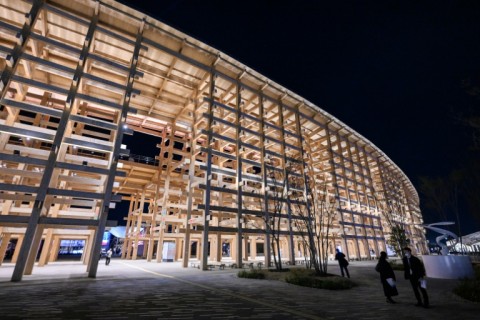
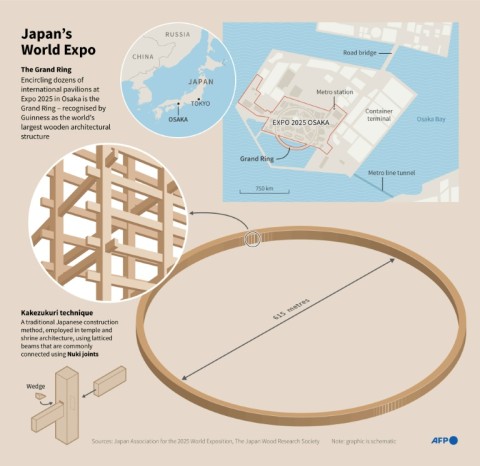
Surrounding most of the pavilions -- a chance for architects' fancies to run wild -- is the world's largest wooden structure, the "Grand Ring".
Its creator Sou Fujimoto told AFP that Expo is a "precious opportunity where so many different cultures... and countries come together in one place to create diversity and unity".
AFP | Richard A. Brooks
Prime Minister Shigeru Ishiba also said the event would help bring a sense of unity in a "divided society."
"Through Expo, we would like to restore a sense of unity in the world once again," Ishiba told reporters.
But with conflicts raging and US President Donald Trump's tariffs causing economic turmoil, that may be optimistic.
"Not for sale" states a yellow and blue sign over Ukraine's booth -- echoing defiant comments from leader Volodymyr Zelensky about the war with Russia, which is absent at Expo 2025.
"We want the world to know more about our resilience. We are the ones who create, not the ones who destroys," Tatiana Berezhna, deputy minister of economy of Ukraine, told AFP.
Yahel Vilan, head of Israel's equally compact pavilion -- there is also a Palestinian one -- featuring a stone from Jerusalem's Western Wall, told AFP that "we came with a message of peace".
AFP | Richard A. Brooks
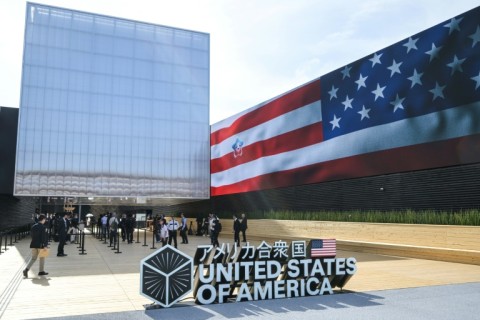
The US building has the theme "America the Beautiful", but with no mention of Trump's trade policies.
Instead it focuses on the country's landscapes, AI tech and space, including a simulated rocket launch where dry-ice blasters appear to ignite above visitors' heads.
The nearby Chinese pavilion, evoking a calligraphy scroll, focuses on green technology and lunar samples brought by the Chang'e-5 and Chang'e-6 probes.
Human washing machine
AFP | Richard A. Brooks
After enjoying the view and sea breeze atop the Grand Ring's "skywalk", hungry visitors can stop by the world's longest sushi conveyor belt or meet many-eyed Expo 2025 mascot Myaku-Myaku.
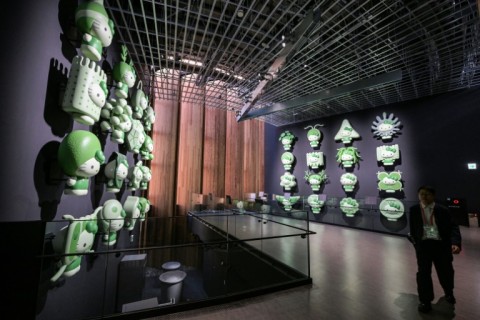
Among the more bizarre displays are 32 sculptures of Hello Kitty dressed as different types of algae -- to symbolise the plant's many uses -- and a "human washing machine" that shows imagery based on the bather's heart rate.
Elsewhere are demonstrations of drone-like flying vehicles, and the tiny artificial heart made from induced pluripotent stem cells (iPS) shown in public for the first time.
AFP | Nicholas SHEARMAN
"It has an actual pulse," Byron Russel of Pasona Group, which runs the exhibit, told AFP.
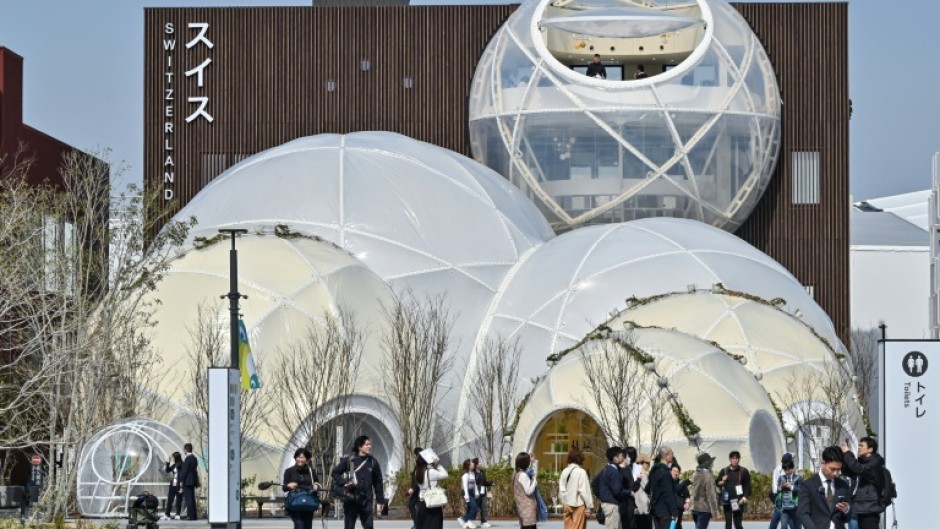
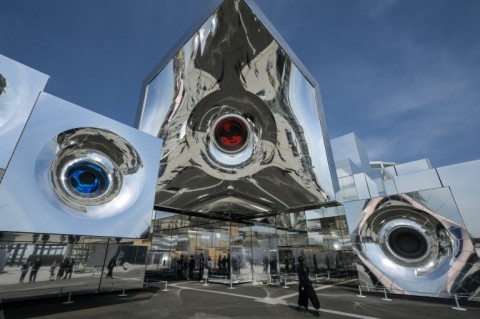
Themes of sustainability run through the Expo, including at the bauble-like Swiss pavilion, which aims to have the smallest ecological footprint.
But Expos have been criticised for their temporary nature, and after October Osaka's man-made island will be cleared to make way for a casino resort.
According to Japanese media, only 12.5 percent of the Grand Ring will be reused.
Slow ticket sales
Expo is also known as a World's Fair, and the phenomenon, which brought the Eiffel Tower to Paris, began with London's 1851 Crystal Palace exhibition and is held every five years.
AFP | Richard A. Brooks
The 2020 edition in Dubai was postponed by the Covid-19 pandemic, so Osaka Expo organisers say it will "restore much-needed connections" and "provide the opportunity to create a better tomorrow".
Osaka last hosted the Expo in 1970 when Japan was booming and its technology the envy of the world. It attracted 64 million people, a record until Shanghai in 2010.
But 55 years on, Japan is less of a trendsetter and opinion polls show low levels of enthusiasm among the public for the Expo, particularly after it went 27 percent over budget.
AFP | Richard A. Brooks
So far 8.7 million advance tickets have been shifted, below the pre-sales target of 14 million.
Japan is also experiencing a record tourism boom, meaning accommodation in Osaka -- near hotspot Kyoto -- is often fully booked with prices sky-high.
But early visitors at the venue voiced their excitement. Local resident Emiko Sakamoto, who also visited the region's last Expo more than five decades ago, was determined to return to the site repeatedly to see all the pavilions.
"I think the Expo is meaningful" in this chaotic time, she said. "People will think about peace after visiting the venue."By Natsuko Fukue And Caroline Gardin World Expo opens in Japan in rocky times
Kansai Electric Power Company has received approval from Japan's Nuclear Regulation Authority to operate unit 1 at its Takahama nuclear power plant - the country's oldest operating reactor - beyond 50 years.
The utility applied to the NRA in November last year to operate the 780 MWe (net) pressurised water reactor (PWR), which entered commercial operation on 14 November 1974, for a further ten years after conducting an ageing technical evaluation and formulating a long-term facility management policy.
At that time, Kansai said: "As a result of the ageing technical evaluation conducted this time, we have confirmed that the plant can be maintained in a sound manner even 50 years after the start of operation by implementing additional maintenance measures for some equipment and structures as a long-term facility management policy, in addition to the current maintenance activities for equipment and structures that are important for safety."
At a 16 October meeting, the NRA approved Kansai's plan for ageing countermeasures at the unit over the next ten years.
"We will continue to actively incorporate the latest knowledge from Japan and abroad and reflect it in plant design and equipment maintenance, thereby striving to improve the safety and reliability of nuclear power plants," Kansai said.
Under regulations which came into force in July 2013, Japanese reactors had a nominal operating period of 40 years. One extension to this - limited to a maximum of 20 years - could be granted, requiring among other things, a special inspection to verify the integrity of reactor pressure vessels and containment vessels after 35 years of operation.
However, in December 2022, the NRA approved a draft of a new rule that would allow reactors to be operated for more than the current limit of 60 years. Under the amendment, the operators of reactors in use for 30 years or longer must formulate a long-term reactor management plan and gain approval from the regulator at least once every 10 years if they are to continue to operate. The new policy effectively extends the period reactors can remain in operation beyond 60 years by excluding the time they spent offline for inspections from the total service life.
The legislation was approved by Japan's Cabinet in February last year and enacted in May 2023. It comes into full effect in June next year.Takahama 1 - which was restarted in July 2023 after being offline since January 2011 - becomes the first Japanese unit to be approved for operation beyond 50 years. Japanese reactor cleared for use beyond 50 years
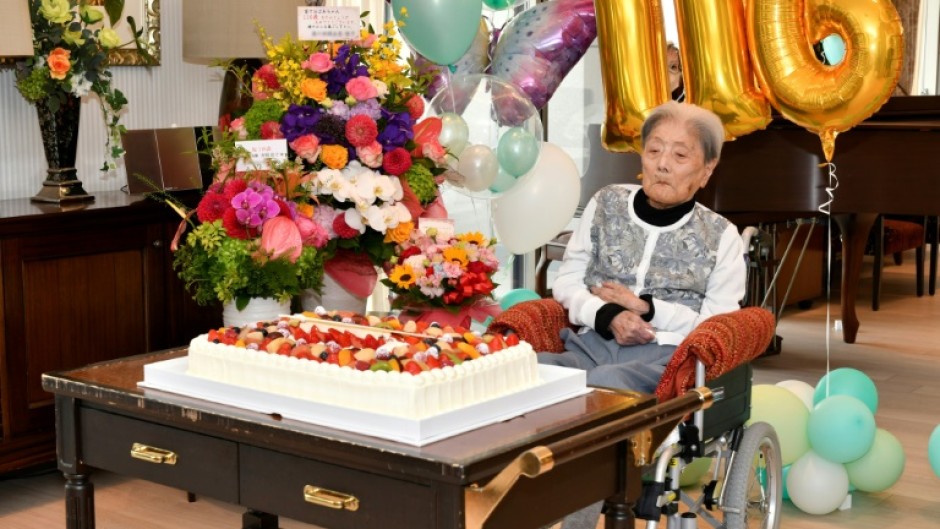
Tokyo, (IANS) Japanese media on Saturday reported that 116-year-old Tomiko Itooka, recognised as the world's oldest person, has died of old age.
Itooka died earlier this week at a nursing home in the city of Ashiya in western Japan where she resided, the city government in Hyogo Prefecture said, reported Kyodo News.
The Japanese woman was born on May 23, 1908, in Osaka as the eldest of three siblings.
"At the special nursing home in the city where she resided, she enjoyed drinking her favourite lactic acid beverages and often said Thank you to the staff," reported Japanese daily 'The Mainichi' on Saturday.
Ashiya Mayor Ryosuke Takashima commented, "Through her long life, she gave us great courage and hope. I express my deepest condolences."
Itooka became the oldest living person in Japan in December 2023 following the death of Fusa Tatsumi, a 116-year-old in Kashiwara, Osaka Prefecture.
Fusa Tatsumi was born on April 25, 1907, and had spent most of her last days in bed at a nursing home in Kashiwara.
Tatsumi had become the oldest living person in Japan in April 2022 following the death of a 119-year-old woman in Fukuoka.
Itooka was subsequently recognised as the world's oldest living person by Guinness World Records in September 2024, following the death of the previous holder, Maria Branyas Morera, a 117-year-old from Olot, Catalonia, Spain.
Morera was born on March 4, 1907, according to the Guinness World Records.
Japanese average life expectancy had peaked in 2020, at 87.71 years for women and 81.56 years for men.
The average life spans had decreased in 2021 and 2022, due to rising death tolls from the coronavirus.
The average life expectancy of Japanese people rose in 2023 for the first time in three years, due to a decline in deaths from the Covid-19 pandemic, a government data had showed.The average life expectancy of women in Japan came to 87.14 years, up 0.05 from 2022, while for men it stood at 81.09, up 0.04, revealed the data released by the Ministry of Health, Labour and Welfare in July 2024. World's oldest person dies in Japan at 116 | MorungExpress | morungexpress.com
A ruthless Japan moved to the brink of qualifying for their eighth straight World Cup after beating old rivals China 3-1 away on Tuesday.
Headers from Koki Ogawa and Ko Itakura put runaway group leaders Japan two goals up at half time before Lin Liangming pulled one back for China early in the second half.
Ogawa snuffed out China's hopes of a comeback with his second of the game six minutes later to silence the crowd of 45,000 in Xiamen.
Loud booing greeted the Japanese national anthem before kick-off and the game was briefly stopped in the first half when a fan invaded the pitch.
"It was tough at times and we knew that the opening goal was going to be key," said Dutch-based striker Ogawa.
Japan were playing their first senior international in China in nine years and there is a long history of rivalry between the two countries.
There was a heavy police presence outside the Xiamen Egret Stadium, where about 750 Japan fans were expected to be in attendance.
"All the players got us this win today," said Japan coach Hajime Moriyasu.
"The players on the pitch, the players on the bench and those that weren't on the bench today -- it was down to their energy that we won."
The convincing victory gave Japan five wins and a draw in Asian qualifying Group C and took them to within touching distance of a place at the 2026 World Cup.
The top two teams in each of the three groups will reach the showpiece in the United States, Canada and Mexico.
Second place in Group C is wide open after Indonesia stunned Saudi Arabia 2-0 in Jakarta with Marselino Ferdinan scoring either side of half time.
It left Australia, Indonesia, Saudi Arabia and China all on six points ahead of the Socceroos' visit later Tuesday to Bahrain, who have five.
- Short-lived joy -
Japan made several changes to the team that beat Indonesia 4-0 on Friday with Brighton's Kaoru Mitoma and Crystal Palace's Daichi Kamada among those dropping to the bench.
Ogawa opened the scoring in the 39th minute, planting a firm header past goalkeeper Wang Dalei direct from a corner.
Japan doubled their lead just before the half-time whistle and again it came from a corner.
Koki Machida flicked on Junya Ito's delivery and Itakura was unmarked at the back post to nod the ball home.
Despite being behind China gave a much-improved performance after losing 7-0 to Japan in Saitama in their opening group game.
The hosts pulled a goal back three minutes after the break.
Xie Wenneng cleverly dummied Wei Shihao's pass and Lin slotted the ball past goalkeeper Zion Suzuki.
China's joy lasted just six minutes before Ogawa headed in another Ito cross to restore Japan's two-goal cushion.
Japan are home to Bahrain and Saudi Arabia in their next fixtures in March, with the World Cup within grasp.
"These last two games were difficult as we expected, but it was really positive to get two wins," said Itakura."There are lots of things we need to improve but it was positive and we'll get ready for the next games." Ruthless Japan beat China to move to brink of World Cup qualification
Toyota Motor President Koji Sato showcased new electric vehicle concepts at the Japan Mobility Show, but the country is well behind its rivals in the fast-growing market
ShareFacebookTwitterEmail
TOKYO - Tokyo's rebranded auto show returns this weekend just as China looks set to overtake Japan as the world's biggest car exporter after Toyota, Nissan and others got stuck in the electric vehicle slow lane.
Since the last edition in 2019, the EV market in Japan has been sluggish and the country's automakers have been late to tap a growing appetite elsewhere.
Just 1.7 percent of cars sold in Japan were electric in 2022, compared with around 15 percent in western Europe, 5.3 percent in the United States and nearly one in five in China.
Japanese firms fared badly in a recent Greenpeace ranking on phasing out internal combustion engines, with Suzuki last and Toyota -- the world's biggest carmaker by revenue -- third from bottom.
Fewer than one in 400 Toyotas sold are EVs, the environmental group said.
Japanese manufacturers have long bet instead on hybrids that combine battery power and internal combustion engines, an area they pioneered with the likes of the Toyota Prius.
Foreign EVs "feel like products from the previous generation", Chinese car industry employee Gao Yulu, 32, told AFP at a recent auto show in Beijing.
"For Japanese brands, there are very few products to begin with. And their product strength isn't strong in terms of price and performance," she said.
For Mitsubishi Motors, the debacle in China is such that this week it announced it was halting production there.
Like in Europe and North America, Chinese EV makers are now even trying to gain a foothold in Toyota and Nissan's backyard.
- Teaming up with 'Godzilla' -
One of the only three foreign auto firms exhibiting in Tokyo will be BYD, which is vying with Elon Musk's Tesla to become the world's top-selling EV maker.
Although export figures are skewed by Japanese companies having major factories abroad, becoming number-two to China this year, as expected, will still hurt for an industry that itself was once the disruptor, experts said.
"It's kind of reminiscent of what happened to Japan in the 1980s, when they started exporting a lot of automotives," said Christopher Richter, an auto analyst at CLSA.
Japanese automakers have vowed to up their game, with Toyota aiming to sell 1.5 million EVs annually by 2026 and 3.5 million by 2030. It has invested heavily in battery technology.
On show in Tokyo will be a number of new Japanese EVs, although they will mostly be concepts such as a car and motorbike from Honda made of recyclable acrylic resin.
The show has also been reborn as the Japan Mobility Show to expand its scope beyond cars to include areas such as robots, software and batteries.
This has more than doubled the number of exhibitors in the show, which opens to the public on Saturday, to 475 including an armada of start-ups.
The trade show will also feature a special "Emergency and Mobility" zone devoted to transport solutions after natural disasters, with displays of robots, drones and self-propelling stretchers.
To hammer home the point, organisers have teamed up with the new "Godzilla" movie.
"In Japan, we have... many natural disasters in Japan, and people's lives and towns have been destroyed," said Jun Nagata from the organising committee.
"Because of global warming this year, it's like Godzilla coming to cities," he said.
TOKYO - The number of people in Japan aged 100 or older has hit a record high of more than 95,000 -- almost 90 percent of them women -- government data showed on Tuesday.
The figures further highlight the slow-burning demographic crisis gripping the world's fourth-biggest economy as its population ages and shrinks.
As of September 1, Japan had 95,119 centenarians, up 2,980 year-on-year, with 83,958 of them women and 11,161 men, the health ministry said in a statement.
On Sunday separate government data showed that the number of over-65s has hit a record high of 36.25 million, accounting for 29.3 percent of Japan's population.
The proportion puts Japan at the top of a list of 200 countries and regions with a population of over 100,000 people, the Ministry of Internal Affairs and Communications said.
Japan is currently home to the world's oldest living person Tomiko Itooka, who was born on May 23, 1908 and is 116 years old, according to the US-based Gerontology Research Group.
The previous record-holder, Maria Branyas Morera, died last month in Spain at the age of 117.
Itooka lives in a nursing home in Ashiya, Hyogo prefecture in western Japan, the ministry said.
She often says "thank you" to the nursing home staff and expresses nostalgia about her hometown, the ministry said.
"I have no idea at all about what's the secret of my long life," Japan's oldest man, Kiyotaka Mizuno, who is 110, told local media.
Mizuno, who lives in Iwata, Shizuoka prefecture in central Japan with his family, gets up at 6:30 am every morning and eats three meals a day -- without being picky about his food.
His hobby is listening to live sports, including sumo wrestling, the ministry said.
Japan is facing a steadily worsening population crisis, as its expanding elderly population leads to soaring medical and welfare costs, with a shrinking labour force to pay for it.
The country's overall population is 124 million, after declining by 595,000 in the previous, according to previous government data.
The government has attempted to slow the decline and ageing of its population without meaningful success, while gradually extending the retirement age -- with 65 becoming the rule for all employers from fiscal 2025.kh/stu/fox More than 95,000 Japanese aged over 100, most of them women
Tokyo Electric Power Company (Tepco) has suspended the first attempt to extract fuel debris from within the primary containment vessel of unit 2 at the damaged Fukushima Daiichi nuclear power plant after an error in the setup of the debris retrieval device was identified.The push pipes to be used in the fuel debris extraction operation (Image: Tepco)
On 19 August, Tepco announced that it planned to remove a few grams of melted fuel debris from unit 2 on August 22. The operation was expected to last about two weeks using a telescopic device equipped with a gripper tool. The device can extend up to 22 metres and access the debris through a penetration point in the primary containment vessel (PCV). The removal technique, which is being used for the first time in unit 2, will then be gradually extended to unit 3, where a large-scale recovery is expected in the early 2030s.
"Unit 2 was selected as the first block for the recovery of the fuel debris because we take into account the situation in terms of safety, reliability, speed and progress in the removal of the used fuel elements," Tepco said.
Workers at the plant today began inserting the guide pipe of the telescopic debris retrieval device into the PCV penetration point. The guide pipe was inserted to the front of the isolation valve and the first of five 1.5-metre-long push pipes to be used was prepared to be connected. The pipes are used to push the device inside the PCV and pull it back out when the operation is completed.
However, it was then noticed during the final checking process that the order of the first push pipe was different from the planned order. The workers had in fact prepared the second push pipe for insertion instead of the first one. It was confirmed the push pipe that should have been in the first position was in the fourth position. The incorrect order of the pipes meant they could not be connected correctly.
"Today's work will be limited to just before the isolation valve," Tepco said. "We are currently investigating the cause of the matter. We will confirm and organise the necessary work and procedures going forward. We will provide further information about the future actions."
"It is better to carry on with the work safely and steadily rather than rushing," Tepco President Tomoaki Kobayakawa was quoted as saying by the Kyodo news agency.
A pre-investigation of the area directly below the pressure vessel - known as the pedestal - was carried out in January 2017 at Fukushima Daiichi 2 using a remotely operated camera on a telescopic probe. Photos taken during that investigation showed a black mass and deposits near a grating in the pedestal area, possibly melted nuclear fuel.
The following month, Tepco sent a "scorpion-shaped" robot into the PCV of unit 2. Although the robot was unable to reach the part of the vessel directly under the reactor pressure vessel, the company said the information it gathered would help it determine how to decommission the unit.
In January 2018, an internal investigation of the PCV of unit 2 using a suspended pan-tilt camera attached to a telescopic guiding pipe identified deposits and fuel assembly components at the bottom of the pedestal area.
The utility carried out a survey in February 2019 of the debris - much of it resembling pebbles - that has accumulated in the bottom of the unit's PCV using a remotely-operated probe. The probe was able to pick up debris in five of the six areas surveyed. No samples were removed from the containment vessel during the survey.In Fukushima Daiichi units 1 to 3, the fuel and the metal cladding that formed the outer jacket of the fuel rods melted, then re-solidified as fuel debris. To reduce the risk from this fuel debris, preparations are under way for retrieving it from the reactors. The current aim is to begin retrieval from unit 2 and to gradually enlarge the scale of the retrieval. The retrieved fuel debris will be stored in the new storage facility that will be constructed within the site. Fuel debris removal attempt halted at Fukushima Daiichi : Waste & Recycling - World Nuclear News
Japan’s Kaori Sakamoto has become the first woman to win three straight titles at the Figure Skating World Championships since 1968.
The 2022 Olympic bronze medalist staged a nearly flawless routine featuring multiple triple jumps in her free skate. 17-year-old American Isabeau Levito won Silver while Kim Chae-yeon of South Korea took bronze.Sakamoto has dominated the season, sweeping the Grand Prix Series and claiming a fourth Japanese national title. Figure skating: Japan’s Kaori Sakamoto wins 3rd straight world title
Despite having a faulty metal detector and having to use an old back-up, a treasure hunter discovered the largest gold nugget ever found in England.
Richard Brock traveled three-and-a-half hours from his home in Somerset to join an organized expedition on farmland in the Shropshire Hills.
Upon arrival, he found he had difficulty with his detecting device and had to resort to using a dodgy older machine that was not even working properly.
But minutes later, the 67-year-old, who has been metal detecting for 35 years, discovered the biggest find of his life—unearthing a golden nugget weighing 64.8 grams.
“I actually arrived about an hour late, thinking I’d missed the action,” said the father-of-four who’s been detecting since 1989.
“Everyone there had all this up-to-date kit and I bowled up with three old machines, and one of them broke down there and then.
“After only 20 minutes of scanning the ground with this back-up detector that had a fading screen display, I found this nugget buried about five of six inches down in the ground.
By Richard Brock via SWNS
“I was a perhaps bit too honest and started showing people, and then all of a sudden I had swarms of other detectorists scanning the same area.
“The machine I was using was pretty much kaput and only half working. It just goes to show that it doesn’t really matter what equipment you use.
“If you are walking over the find and are alert enough to what might be lurking underneath the soil, that makes all the difference.
“I couldn’t look for anything else as I had the land owner, the organizer of the dig and every other detectorist around me trying to get a look at this nugget.”
Just what a gold nugget was doing in the Shropshire Hills, near Much Wenlock, remains somewhat of a mystery, although the area is believed to have been an old track or road with railway lines running through, containing stone likely distributed from Wales, a country known to be rich in gold.
Richard Brock via SWNS
The only examples of gold nuggets bigger than Richard’s in Britain have been found in either Wales or Scotland.
“The last one which claimed to be bigger in England was 54 grams but mine is 64.8 grams, so we’re pretty confident its the biggest found on English soil.
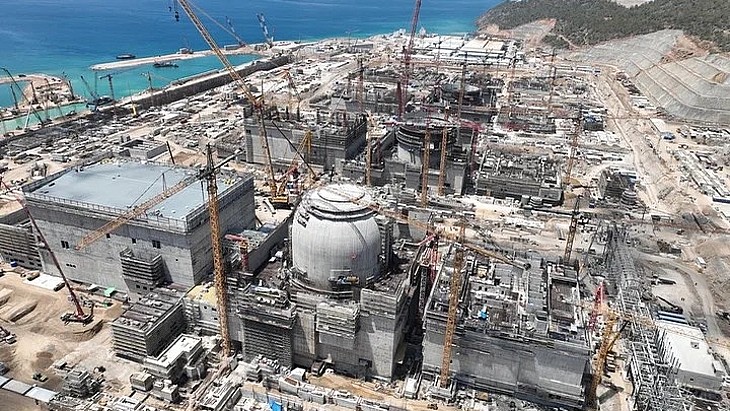
Unit 1 of Turkey's Akkuyuy plant is due to start up later this year (Image: Akkuyu NPP)
Global nuclear power generation is forecast to grow by almost 3% annually on average through to 2026, reaching a new record high by 2025, according to the International Energy Agency (IEA). More than half of new reactors expected to become operational during the outlook period are in China and India.
According to the IEA's Electricity 2024, which provides forecasts for electricity demand, supply and CO2 emissions up to 2026, global electricity demand is expected to grow at a faster rate over the next three years as the clean energy transition gathers speed, with all the additional demand forecast to be covered by technologies that produce low-emissions electricity.
While global growth in electricity demand eased slightly to 2.2% in 2023 due to falling electricity consumption in advanced economies, it is projected to accelerate to an average of 3.4% from 2024 through to 2026. About 85% of the increase in the world's electricity demand through to 2026 is expected to come from outside advanced economies - most notably China, India and countries in Southeast Asia.
However, record-setting electricity generation from low-emission sources - including nuclear power - should reduce the role of fossil fuels in providing power for homes and businesses. Low-emission sources are expected to account for almost half of the world's electricity generation by 2026, up from a share of 39% in 2023.
By 2025, nuclear power generation is forecast to reach an all-time high globally - exceeding the previous record set in 2021 - as output from France climbs, several plants in Japan are restarted, and new reactors begin commercial operations in many markets, including in China, India, South Korea and Europe. The IEA expects global nuclear generation to be almost 10% higher in 2026 compared with 2023.
Between 2024 and 2026, an additional 29 GW of new nuclear capacity is expected to come online globally. Asia remains the main driver of growth in nuclear power, with the region's share of global nuclear generation forecast to reach 30% in 2026.
The IEA says the increase in electricity generation from renewables and nuclear "appears to be pushing the power sector's emissions into structural decline". Over the next three years, low-emissions generation is set to rise at twice the annual growth rate between 2018 and 2023. Global emissions from electricity generation are expected to decrease by 2.4% in 2024, followed by smaller declines in 2025 and 2026.
"The power sector currently produces more CO2 emissions than any other in the world economy, so it's encouraging that the rapid growth of renewables and a steady expansion of nuclear power are together on course to match all the increase in global electricity demand over the next three years," said IEA Executive Director Fatih Birol. "This is largely thanks to the huge momentum behind renewables, with ever cheaper solar leading the way, and support from the important comeback of nuclear power, whose generation is set to reach a historic high by 2025. While more progress is needed, and fast, these are very promising trends."
In its updated Net Zero Roadmap, released in September last year, the IEA revised upwards the role of nuclear power. In the updated net-zero emissions (NZE) scenario, nuclear generating capacity more than doubles to reach 916 GWe in 2050.
At the COP28 climate change conference that concluded in December 2023, more than 20 countries signed a joint declaration to triple nuclear power capacity by 2050. Globally, that would mean an addition of 740 GW of nuclear capacity to the current stock of 370 GW.
According to the IEA, achieving this goal will require tackling the key challenge of reducing construction and financing risks in the nuclear sector. It also notes that momentum is also growing behind small modular reactor (SMR) technology. While technology's development and deployment "remains modest and is not without its difficulties", R&D is starting to pick up, it said.Researched and written by World Nuclear News. Nuclear output to reach new record by 2025, says IEA : Energy & Environment - World Nuclear News
The 13th World Trade Organization (WTO) ministerial conference in Abu Dhabi has failed to resolve any issues of significance, raising the inescapable question of whether the global trade body has a future.
The three-day meeting was due to end on February 29. But late into a fourth extra day, the 164 members were struggling to even agree on a declaration, let alone the big issues of agriculture, fisheries and border taxes on electronic commerce.
The closing ceremony was sombre, and the ministerial declaration bland, stripped of the substantive content previously proposed. Outstanding issues were kicked back to the WTO base in Geneva for further discussions, or for the next ministerial conference in 2026.
Briefing journalists in the closing hours, an EU spokesperson noted how hard it would be to pick up the pieces in Geneva after they failed to create momentum at the ministerial conference. She predicted:
[Trade] will be more and more characterised by power relations than the rule of law, and that will be a problem notably for smaller countries and for developing countries.
Restricted access
That imbalance is already evident, with power politics characterising the conference from the start.
There were accusations of unprecedented restrictions on non-governmental organisations (NGOs) registered to participate in the conference. These bodies are crucial to bringing the WTO’s impacts on farmers, fishers, workers and other communities into the negotiation arena.
A number of NGOs have submitted formal complaints over their treatment by conference host the United Arab Emirates. They say they were isolated from delegations, banned from distributing papers, and people were arbitrarily detained for handing out press releases.
Critical negotiations were conducted through controversial “green rooms”. These were where the handpicked “double quad” members – the US, UK, European Union, Canada, China, India, South Africa and Brazil – tried to broker outcomes to present to the rest for “transparency”.
Influence of power politics
These powerful countries largely determined the outcomes (or lack of them). The US, historically the agenda-setter at WTO ministerial conferences, appeared largely disinterested in the proceedings, with trade representative Katherine Tai leaving early.
The final declaration says nothing about restoring a two-tier dispute body, which has been paralysed since 2019 by the refusal of successive US Republican and Democratic administrations to appoint new judges to the WTO’s appellate body.
The EU failed to secure progress on improvements to the appeal process. Likely Republican presidential nominee Donald Trump has already announced he would impose massive WTO-illegal tariffs on China if elected.
China, Japan, the US and EU – all big subsidisers of distant water fishing fleets – blocked an outcome aiming to protect global fish stocks, an issue already deferred from the last ministerial meeting.
The six Pacific Island WTO members lobbied tirelessly for a freeze and eventual reduction in subsidies. But the text was diluted to the point that no deal was better than a bad deal.
The EU, UK, Switzerland and other pharmaceutical producers had already blocked consensus on lifting patents for COVID-19 therapeutics and diagnostics, sought by 65 developing countries. A deal brokered in 2021 on COVID vaccines is so complex no country has used it.
Domestic and global agendas
India’s equally uncompromising positions also reflected domestic priorities. The 2013 Bali ministerial conference promised developing countries a permanent solution to prevent legal challenges to India’s subsidised stockpiling of food for anti-hunger programmes.
A permanent solution was a red line for India, which faces an election next month and mass protests from farmers concerned at losing subsidies.
Agricultural exporters, including New Zealand, tabled counter-demands to broaden the agriculture negotiations. The public stockpiling issue remains a stalemate, without any real prospect of a breakthrough.
The concerns were less with the agreement itself and more with the precedent it would create for sub-groups of members to bypass the WTO’s rule book. This would allow powerful states to advance their favoured issues while developing country priorities languish.
Crisis and transformation
The face-saver for the conference was the temporary extension of a highly contested moratorium on the right to levy customs duties at the border on transmissions of digitised content.
Securing that extension (or preferably a permanent ban on e-commerce customs duties) on behalf of Big Tech was the main US goal for the conference. Developing countries opposed its renewal, so they could impose tariffs both for revenue and to support their own digital industrialisation.
The moratorium will now expire in March 2026, so the battle will resume at the next ministerial conference scheduled to be held in Cameroon that year.
But there is every likelihood the current paralysis at the WTO will continue, and the power politics will intensify. As the previously quoted EU spokesperson also mused:
Perhaps the WTO needed a good crisis, and perhaps this will lead to a realisation that we cannot continue like this.
Ideally, that would result in a fundamentally different international institution – one that provides real solutions to the 21st century challenges on which the WTO is unable to deliver.
Smartphone with Chinese applications is seen in front of a displayed Indian flag and a “Banned app” sign in this illustration picture taken July 2, 2020. REUTERS/Dado Ruvic/Illustration/File Photo
28 February 2024, (Bloomberg) — India is chipping away at China’s dominance in electronics exports in some key markets as manufacturers diversify supply chains away from the world’s factory to other parts of Asia, a new study shows.
The impact is most pronounced in the UK and US, where geopolitical tensions with China have increased in recent years.
India’s electronics exports to the US as a ratio of China’s increased to 7.65% in November last year from 2.51% in November 2021, according to London-based Fathom Financial Consulting. In the UK, the share rose to 10% from 4.79%.
India’s government is luring electronics manufacturers to the country with heavy incentives, such as tax cuts, rebates, easier land acquisition and capital support. The aim is to expand the domestic manufacturing industry in order to export more, and help businesses grow to global scale through partnerships.
India houses Samsung Electronics Co.’s biggest mobile phone factory, while Apple Inc. makes at least 7% of all its iPhones in India through its contract manufacturer Foxconn Technology Group and Pegatron Corp.
The rise in electronic exports is “likely the result of Foxconn’s increasing investment in India,” Andrew Harris, an economist at Fathom Financial Consulting, wrote in a note last week.
India’s progress in gaining market share has been more limited in Europe and Japan, “suggesting a move towards dual supply chains (China plus one) rather than a complete abandonment of China-based production, at least for now,” Harris said. The report shows that India’s electronics exports as a ratio of China’s was 3.38% in Germany and 3.52% globally.
Indian companies have been touting their role in multinationals’ ‘China plus one’ strategy, which sees manufacturers developing back-up capacity in other countries.India’s rising market share is a boost for Prime Minister Narendra Modi, who has touted his ‘Make in India’ plan as a way of creating jobs, expanding exports and making the economy more self reliant by reducing the need for imports. He’s widely expected to win a third term in office in elections due within a few months. India slowly taking export market share from China, study shows
Female research scientists are more productive than their male colleagues, though they are widely perceived as being less so. Women are also rewarded less for their scientific achievements.
The study, part of the project “Science, Technology and Innovation Gender Gaps and their Economic Costs in Latin America and the Caribbean”, was financed by the Gender and Diversity Fund of the Inter-American Development Bank (IDB).
The ‘productivity puzzle’
The study, which looked at women’s status in 42 public universities and 18 public research centres, some managed by Mexico’s National Council of Science and Technology (CONACYT), focused on a question that has been widely investigated: why are women in science less productive than men, in almost all academic disciplines and regardless of the productivity measure used?
The existence of this “productivity puzzle” is well documented, from South Africa to Italy, but few studies have sought to identify its possible causes.
Our findings demonstrate that, in Mexico at least, the premise of the productivity puzzle is false, when we control for factors such as promotion to senior academic ranks and selectivity.
Using an econometric modelling approach, including several macro simulations to understand the economic costs of gender gaps to the Mexican academic system, our study focused on researchers within Mexico’s National System of Researchers.
We found that women produce higher quality research than men, often publishing in more prestigious scholarly journals with longer term impacts in the field.
Additionally, despite the common belief that maternity leaves make women less productive in key periods of their careers, female researchers in fact have only between 5% to 6% more non-productive years than males. At senior levels, the difference drops to 1%.
Nonetheless, in the universities and research centres we studied, Mexican women face considerable barriers to success. At public research centres, women are 35% less likely to be promoted, and 89% of senior ranks were filled by men in 2013, though women comprised 24% of research staff and 33% at non-senior levels. Public universities do slightly better (but not well): female researchers there are 22% less likely to be promoted than men.
Overall, 89% of all female academics in our sample never reached senior levels in the period studied (2002 to 2013).
In some ways this data should not be surprising. Mexico ranks 66th out of 144 in the World Economic Forum’s 2016 Global Gender Gap Report and a 2015 report by the Organisation of Economic Co-operation and Development (OECD) showed that among OECD countries Mexico has the widest overall gender gap in labour participation rates.
Some efforts are being made to improve gender equality in research. In 2013 Mexico amended four articles of its Science and Technology Law to promote gender equality in those fields, adding provisions to promote gender-balanced participation in publicly funded higher education institutions and collect gender-specific data to measure the impact of gender on science and technology policies.
Several CONACYT research centres have launched initiatives to promote gender equality among staff, but many of these internal programmes are limited to anti-discrimination and sexual harassment training.
More aggressive programmes include: the Research Centre on Social Anthopology’s graduate scholarship programme, in collaboration with CONACYT and the National Commission for the Development of Indigenous Peoples, to promote higher education and training among indigenous women; and policies to increase women’s participation in higher academic ranks and management at the CIATEQ technological institute, which also gives childcare subsidies to female staff.
But such examples are rare. Overall, women hoping to succeed in Mexican academia must work harder and produce more than their male colleagues to be even considered for promotion to senior ranks.
This persistent inequality has implications not just for women but for the country’s scientific production: if Mexico were to eliminate gender inequality in promotions, the national academic system would see 17% to 20% more peer-reviewed articles published.
A global glass ceiling
Mexico is not alone. Our previous research in France and South Africa, using the same econometric model, found that gender inequalities there also prevent women scientists from being promoted to higher academic ranks.
Examining French physicists working in the Centre National de la Recherche Scientifique (CNRS) and in French public universities, we learned that female physicists in CNRS are as productive as their male colleagues or more so. Yet they are 6.3% less likely to be promoted within CNRS and 16.3% within universities. This is notable in a country that ranks 17th in the world in gender equality, according to the World Economic Forum.
In South Africa, race plays an important role in explaining gender inequalities in science. Examining the career paths of researchers from 2002 to 2011, we observed that there are not large differences in the promotion patterns of white researchers by gender: 60.1% of white men were not promoted (even in cases where they applied for promotion), compared to 60.6% of women in the same period. But the gap widens dramatically when you account for ethnicity: 70.4% of non-white men and 69.2% of non-white women are not promoted.
In Uruguay the same IDB gender gaps project identified a glass ceiling as well. There women are underrepresented in the highest academic ranks and have a 7.1% less probability than men of being promoted to senior levels.
Moreover, from Mexico and Uruguay to France and South Africa, a vicious cycle between promotion and productivity is at play: difficulties in getting promoted reduce the prestige, influence and resources available to women. In turn, those factors can lead to lower productivity, which decreases their chances of promotion.
This two-way causality creates a source of endogeneity biases when including seniority as a variable to explain productivity in an econometric model. Only when we control for this, as well as for a selectivity bias (that is, publishing occurrence), do we find that female researchers are more productive than their male counterparts. Without these corrections, a gender productivity gap of 10% to 21% appears in favour of men.
The view that women are failing at science is commonly held, but evidence shows that, across the world, it’s science that’s failing women. Action must be taken to ensure that female researchers are treated fairly, recognised for their work, and promoted when they’ve earned it.
Japan’s economy is under pressure from rising energy prices and defence costs and the impact of the pandemic. Plummeting birth rates and an ageing population further threaten the sustainability of its labour market. A 2023 study by independent thinktank the Recruit Works Institute points to a labour supply shortage of 3.41 million people by 2030, and over 11 million by 2040. Gender inequality is another significant pressure point. Research shows that a gender-inclusive society and workforce leads to innovation and economic growth. However, Japan has one of the lowest levels of gender equality among G7 countries. It has slipped to its lowest ranking yet in the World Economic Health Forum’s latest Global Gender Report, particularly in terms of women in leadership positions. Prime Minister Fumio Kishida recently declared that Japan needs to urgently raise its birth rate. He also vowed to increase the percentage of women executives in Tokyo stock exchange-listed companies, from 11.4% to 30% or more, by 2030. A policy draft released in June indicates that this will be achieved through
leadership quotas legally imposed on listed companies. Japan has tried this countless times, however, and largely failed. As my research shows, this is because gender norms are deeply embedded in Japanese society. Socialisation of gender norms: Gender norms in Japanese society are tightly connected to patriarchal hierarchies that have evolved historically from the influence of Confucianism. The role of a man is linked to being the breadwinner and head of the family. Women, by contrast, are seen as wives and caregivers, ultimately subservient to the head of the family. Children are taught these norms from an early age. Research shows that Japanese preschool teachers position children in various gender roles by encouraging gendered speech and behavioural patterns. Girls speak softly and act in a cute, non-threatening way. Boys, by contrast, use more dominant language and behaviour. Children’s books and TV programmes often perpetuate these hierarchical linguistic patterns and behaviour. These beliefs and values influence hiring practices and organisational behaviour within the Japanese workplace, which is still based on the male-based
breadwinner/female-dependent model. From 1945 to 1991, a period which economists refer to as the economic miracle years, most Japanese women were isolated from the leadership career path. This resulted in low levels of Japanese women in key decision-making positions. Today, leadership is still seen as a male-dominated environment – even when the topic is about female empowerment. Japan was the only country to send a male delegate to the recent G7 delegation on gender equality and female empowerment. Gaining promotions to higher-paid positions relies on long hours and commitment to the company, regardless of gender. Gendered norms therefore result in a significant double burden on Japanese women. Despite having one of the most generous paternity-leave provisions in the world, only 14% of Japanese men took paternity leave in 2021, compared with Sweden’s 90% rate of uptake. Japanese men also spend the lowest amount of time doing unpaid housework (41 minutes a day) among OECD countries. Both the highly gendered workplace and unequal division of household labour mean that women are more likely than men to miss out on promotions, take on lower-paid irregular jobs, and/or only consider
having one child. Work-life expectations are unrealistic. And in the workplace, women face discrimination and harassment, as well as restrictive expectations of gendered behaviour and appearance. Yoshiro Mori stepped down as head of the Tokyo Olympics organising committee in 2021, after sexist remarks he had reportedly made in a Japanese Olympic committee meeting caused an international furore. Mori was quoted as saying women talk too much, and that when “allowed into” high-level meetings, they take up too much time. Failed solutions: Previous Japanese government initiatives to raise the birth rate and improve gender equality have focused on introducing quotas for female leadership and executive boards, more childcare places, and enhanced parental leave. However, these have either failed to reach their target or have become tokenistic. In fact, recent initiatives are reported to have exacerbated gender inequality and driven some women into poverty. Singapore recently embarked on a similar mission as part of a national gender equality review. Its government has gathered ideas and feedback from women’s and youth groups, private organisations, academics, policymakers and the wider public. This has resulted in a policy wishlist and report, the findings of which will be implemented into both policy and education. Improving gender
equality must start with early-years education. My research shows that this approach would work for Japan, too. It could allow people to voice their opinions and wishes in an open debate – which chimes with Japan’s cultural preference for decision-making achieved through consensus – rather than making direct criticisms of the patriarchal order. Such a review would need to look at all stages of life and aspects of society that are involved in the socialisation of gender roles, and the impact these have, from both a human rights and an economic perspective. There is already evidence that gender inequality is leading to mental health issues in Japan, especially for divorcees and single mothers. This review would also offer an opportunity for feedback from the younger generation. Research shows that many younger Japanese are becoming disenchanted with traditional gender roles. They are looking at new ways of living by choosing careers outside the echelons of power within Japanese society. They are also rejecting the institution of marriage. Japan has the opportunity to rewrite its gender equality trajectory. Doing so would hopefully include other representations of gender and diversity that have so far not been widely accepted within Japanese society, or protected within the law. Same-sex marriage is still unconstitutional in some prefectures. Societal change at this level will take a generation. The conversation needs to start now.Sarah Parsons, Senior Teaching Fellow and Lecturer in East Asian Business, SOAS, University of London This article is republished from The Conversation under a Creative Commons license. Read the original article.









_49215.jpg)


.jpg?ext=.jpg)






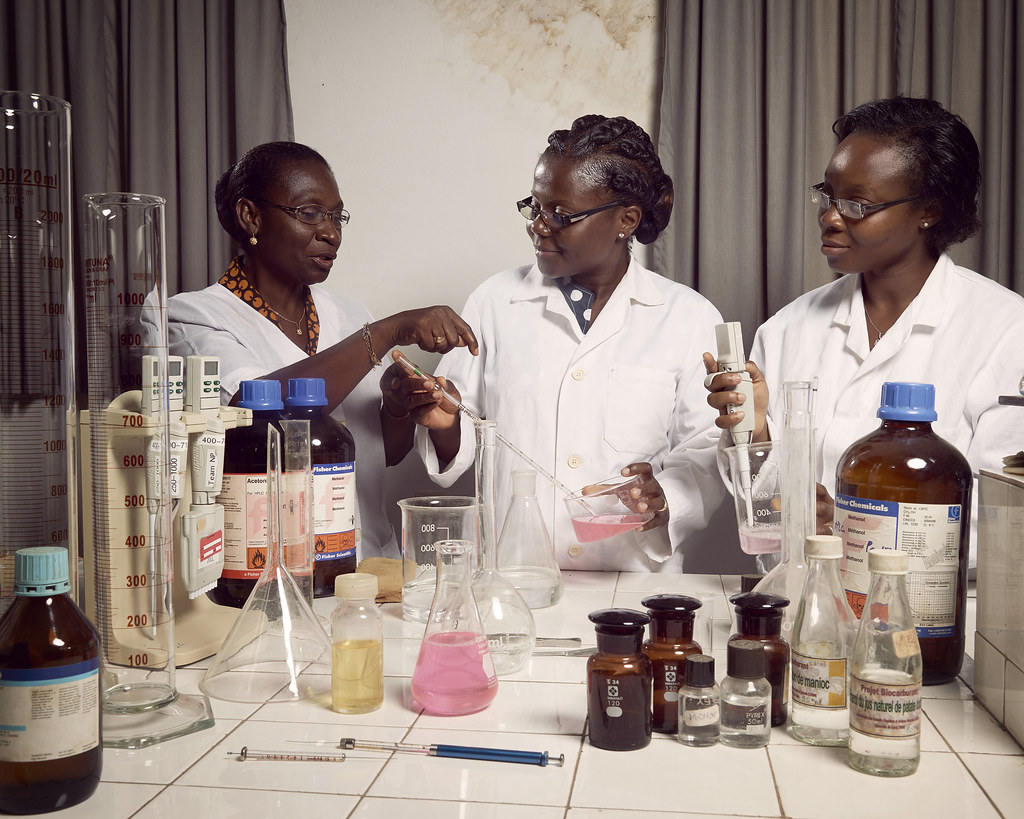
 Female scientists are often more productive than their male colleagues but much less likely to be recognised for their work.
  A presentation on Mexican government funding for scientific investment. How many women can you count?
 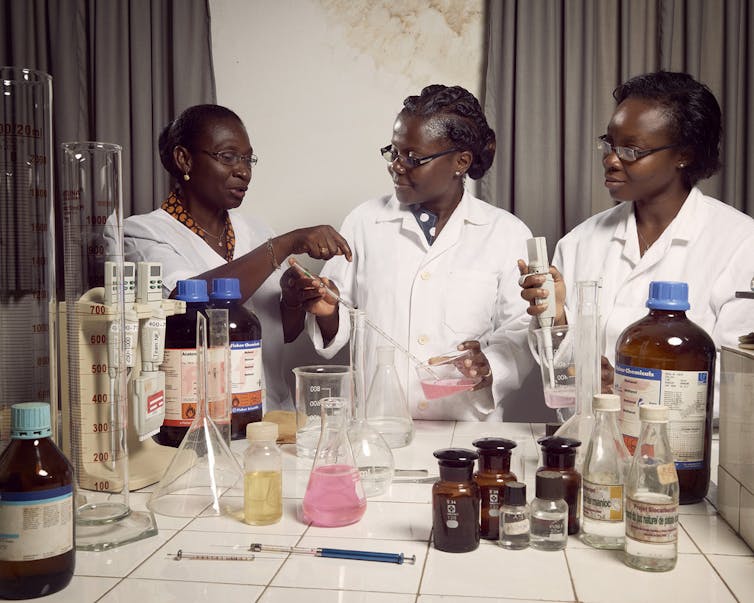 Black women face more barriers to advancement in the sciences than white women.