bloggggg

Home  |  Live  |  Science  |  Lifestyle  |  Entertainment  |  Broadcast  |  Games  |  eBooks  |  Astounds  |  Adbite  |  Cricbell  |  Cyber  |  Idea  |  Digital  |  Privacy  |  Publish  |  ePaper  |  Contact  .Subscribe.Subscribe.Subscribe.Subscribe.Subscribe.Subscribe.Subscribe.Subscribe.Subscribe
Subscribe

Monday, 4 May 2026

Indian study shows school programmes can cut junk food intake by 1,000 calories daily


(Photo: AI generated image/IANS)

New Delhi, (IANS) Even as India is seeing a rapid rise in childhood obesity, diabetes, and heart-disease risk, a new study showed how school-based behavioural interventions can help reduce consumption of ultra-processed foods (UPFs) that are rich in salt and sugar among adolescents.

The scientific study led by researchers from the Post Graduate Institute of Medical Education and Research (PGIMER), Chandigarh, found that simple school-based behaviour programmes can dramatically reduce junk food consumption by over 1,000 calories per day.

Higher intake of UPFs, including fast foods and sugary drinks, is a known factor for increasing health issues such as diabetes, hypertension, obesity, and cancers in adolescents and teenagers.

“This study demonstrates the potential of school-based behavioural interventions to reduce ultra-processed food (UPF) consumption among Indian adolescents, addressing a critical gap in public health research and practice in low-and middle-income countries (LMICs),” said the researchers, including those from Imperial College London, UK, and Public Health Foundation of India, in the paper published in the international journal BMJ Global Health.

In the study, the team tested a structured nutrition and behaviour-change programme in schools using a controlled scientific trial design.

A cluster-randomised controlled trial was conducted across 12 public schools in Chandigarh, targeting Grade 8 adolescents and their parents. About 11 sessions were held for adolescents over six months.

In addition, a single educational session was conducted for parents to enhance their awareness of reducing UPF consumption and encouraging healthier dietary behaviours. Dietary intake data were collected at baseline and endline using two non-consecutive 24-hour dietary recalls.

“Students who participated consumed more than 1,000 fewer calories per day from UPF, such as packaged snacks, sugary drinks, and fast food. Intake of other processed foods dropped by about 270 calories per day, showing a consistent move away from unhealthy diets,” the researchers said.

While junk food fell, the study showed that students did not significantly increase fruit or home-cooked food intake, indicating that cutting unhealthy food is easier than building healthy habits.

Even with family involvement, parents’ eating patterns showed little change -- underlining the unique influence of schools on teenage behaviour.The study suggests that schools could become frontline institutions for preventing future lifestyle diseases, using low-cost education and behaviour strategies, the team said. Indian study shows school programmes can cut junk food intake by 1,000 calories daily | MorungExpress | morungexpress.com

Monday, 27 April 2026

How to model good eating and body image habits for your kids

Courtney P. McLean, Monash University and Chelsea Arnold, Monash University

Raising children to have a good relationship with food and their bodies is one of the best ways to promote good self-esteem and protect them from developing disordered eating.

But this can be tricky if you struggle with eating and body image yourself. So, what should you aim for, and what should you avoid?

First, what is disordered eating?

Disordered eating describes a range of problematic behaviours and attitudes towards eating, weight and the body. It can include dieting, cutting out foods or food groups, skipping meals, fasting, binge eating or exercising excessively.

Not all disordered eating will lead to an eating disorder. But eating disorders are usually preceded by disordered eating, particularly dieting.

Concerns about eating and body image are common and can begin from a young age. Globally, 22% of children and adolescents engage in disordered eating, with higher rates among girls.

Lots of factors influence how kids feel about food and their body, including expectations from media, self-esteem and family attitudes.

Given children observe and model how parents talk about their bodies and food, it can help to model positive or neutral language and eating behaviours. Here are some tips.

4 things to avoid

1. Framing food as ‘good’ or ‘bad’

Don’t talk about dieting, weight loss and “good” or “bad” food, as this can make food a moral issue. For example, saying you’ve “been bad today” for eating something sweet, or “good” for sticking to your diet, can perpetuate shame and guilt around eating.

Instead, aim to talk about how different foods nourish our bodies, or how some foods taste good and are satisfying.

2. Commenting on other people’s bodies

Talking about other people’s bodies, weight or eating habits – whether they’re family, strangers or celebrities – can teach kids to compare and judge themselves against other people.

If your child does comment on another person’s body, you could respond by saying something like, “everyone is different. Some people are taller, shorter, have larger bodies, smaller bodies, and different skin colours”. Celebrating people of all shapes and body sizes can teach kids that weight isn’t a measure of worthiness.

3. Giving appearance-based compliments

When praising your child, focus on things that aren’t related to weight, appearance or eating. For example, “it was generous how you shared your toys today” or “I saw how hard you worked on your homework”.

And when you’re talking to a child you don’t know, an appearance-based compliment (“you look pretty”) may often come to mind first. Instead you might want to comment on their energy, humour, style or creativity (“I love your sense of style” or “you have such good energy”).

4. Criticising your own body

Being a positive body image role model for your children is important. Research shows hearing others criticise their own bodies can lead kids to engage in more negative self-talk about their own bodies. Changing the conversation from appearance to strength, health or function can help (“these arms let me hug you” or “my legs are strong for walking”).

3 things to try

1. Trust your kid knows how much they need

Although it can be difficult, try to trust that your child will eat as much or as little as they need. Children can mostly self-regulate to meet their bodies’ needs. So teaching your child to listen to their body’s physical cues – such as hunger and fullness – can help them build a positive relationship with food.

Parents often want their kids to eat all the food on their plate before they leave the table. But this can lead to struggles over food and teach children to ignore physical cues.

You can still make sure your kids sit until the mealtime is finished, without making it about eating itself.

It can also be reassuring to look at a child’s whole week of eating, rather than focusing on any particular meal or day (which can fluctuate in amount and nutritional value).

2. Find your own pleasure in eating

Eating a variety of foods yourself, and enjoying and appreciating food can provide important role modelling to your child.

If you struggle with your own body image or eating, this might require unlearning diet rules about when, what, and how much to eat. If you find this challenging it could be beneficial to seek professional help.

3. Aim for neutral

For many people, body positivity (“I feel good about my body”) might not be possible, so you might like to aim for body neutrality. This mindset means accepting and respecting your body just how it is.

Body neutrality can involve reframing thoughts and feelings about your body. For example, “I have put on weight” may become “my body is allowed to change”.

What to look out for

Understanding the signs of disordered eating can also be useful to recognise in your children. If you notice drastic changes in your child’s eating or weight, or have other concerns, it could be worth starting a conversation.

Talking about food and bodies can start at any age. Encourage open conversations and invite your child to share their feelings and thoughts about their body and weight.

If your child makes a negative comment about their body, eating, or weight, try to understand what might be driving it and listen without judgement.

And if you’re concerned, reaching out for support can be a crucial step for improving your kids physical and mental health. This could include your kids’ regular GP, or health professionals such as dietitians or psychologists who specialise in eating disorders.


Butterfly Foundation is Australia’s national eating disorder charity and helpline. For free and confidential support between 8am and midnight you can call 1800 334 673, chat online or send an email.The Conversation

Courtney P. McLean, Research Fellow, School of Psychological Sciences, Monash University and Chelsea Arnold, Clinical Psychologist and Research Fellow (Lead Clinician), Monash University

This article is republished from The Conversation under a Creative Commons license. Read the original article.

She Found Her Soulmate 4 Months After Deciding to Start a Family On her Own With IVF

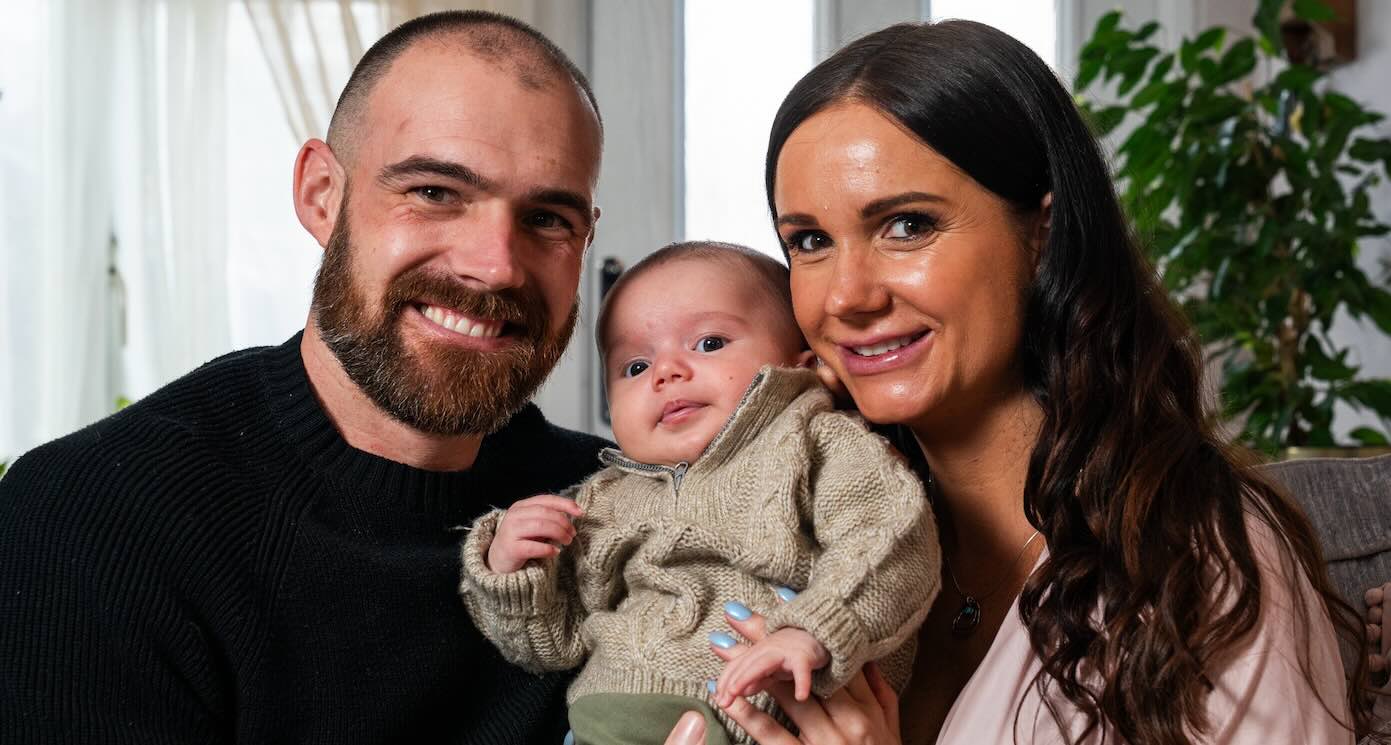
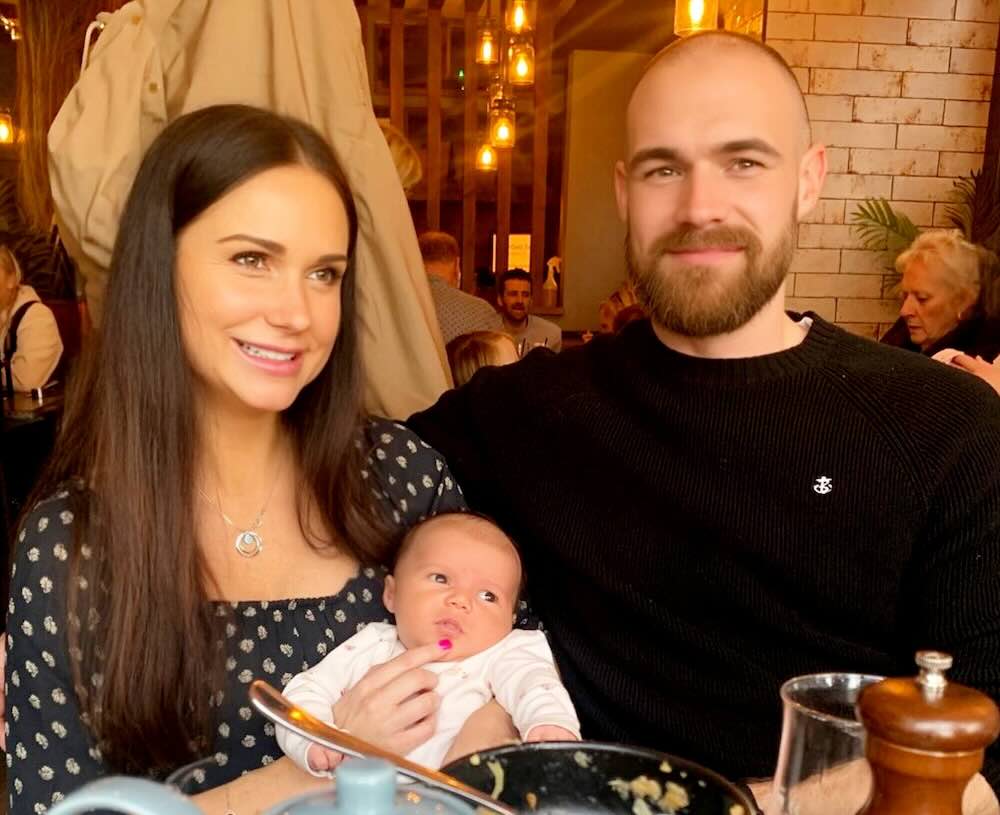
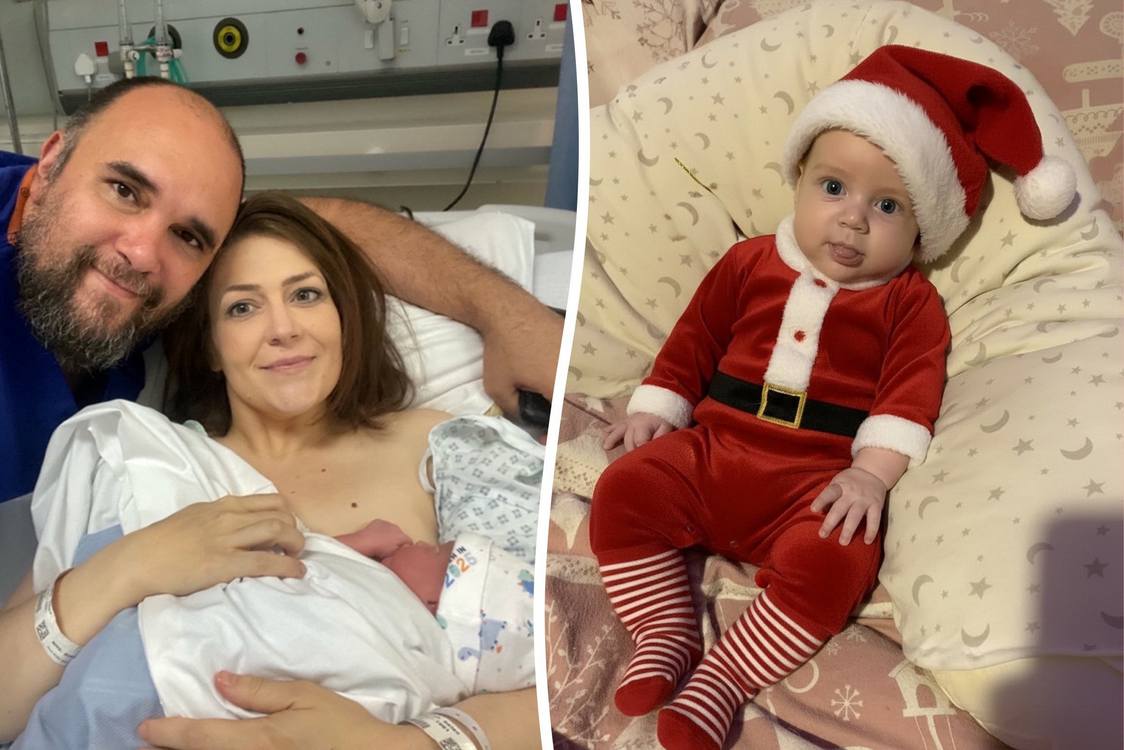
Adam Rice and Natalie Le Prevost with baby Zavi – SWNS

A nurse who gave up on dating decided to pay for IVF treatment to have a baby on her own, before meeting her soulmate four months later—who became a devoted father.

The 39-year-old always dreamed she’d be married by age 30 and have a big family—but after a failed engagement and six years of unsuccessful dating she still hadn’t found her match.

Desperate to become a mother, Natalie Le Prevost decided to go it alone and paid thousands to undergo IVF in Spain, and got pregnant after her first IVF attempt.

More luck came her way at three months pregnant when she unexpectedly met Adam Rice—and the couple really hit it off.

“I had given up on love. I didn’t want to settle for something that didn’t feel right,” said the new mom from Devon, England.

“There was no chemistry,” she told Talk To The Press. “I gave up on love and just decided to go it alone.”

“I’m strong and independent and this was my life-long dream. Everything I’ve always wanted has fallen into place.”

Natalie had her first round of IVF in March 2025, and with the support of her parents welcomed her little boy Zavi-Emilio on Christmas Eve.

“I was on cloud nine,” she said. “I loved being pregnant.

SWNS

Then, while she was four months pregnant, she went on a date with Adam, the electrician in the senior care home where she worked. From their first, she knew instantly that he was her soulmate.

Adam fully supported Natalie’s dream to be a mother, and even came to the hospital just after Zavi’s birth.

“I feel so lucky. Zavi is my little miracle. It’s amazing.”

The trio see each other five nights a week now.

“We’re soulmates. No relationship has felt like this before. We’re even born two-days apart.”

Adam found out Natalie was pregnant half way through our first date.

“I was surprised, but her honesty, her strength, the quiet courage in the way she told me, made me want to stay.

“With every date I felt myself falling for her more deeply.

“Watching her bump grow felt incredibly special, like I was witnessing the beginning of a story I somehow already belonged in.

“The first time I met Zavi, everything inside me just settled; I felt calm, steady and certain. I knew in that moment I was meant to be in his life.

“She was brave enough to choose motherhood on her own, strong enough to follow her heart without waiting for the “right” circumstances. And somehow, life brought us together anyway.“She thought she would be doing this alone, but she won’t be. I feel unbelievably lucky to love them both.” She Found Her Soulmate 4 Months After Deciding to Start a Family On her Own With IVF

Wednesday, 15 April 2026

8-year-old's 'Sweet Monsters' Drawing Chosen as Winning Design to Decorate Real Train

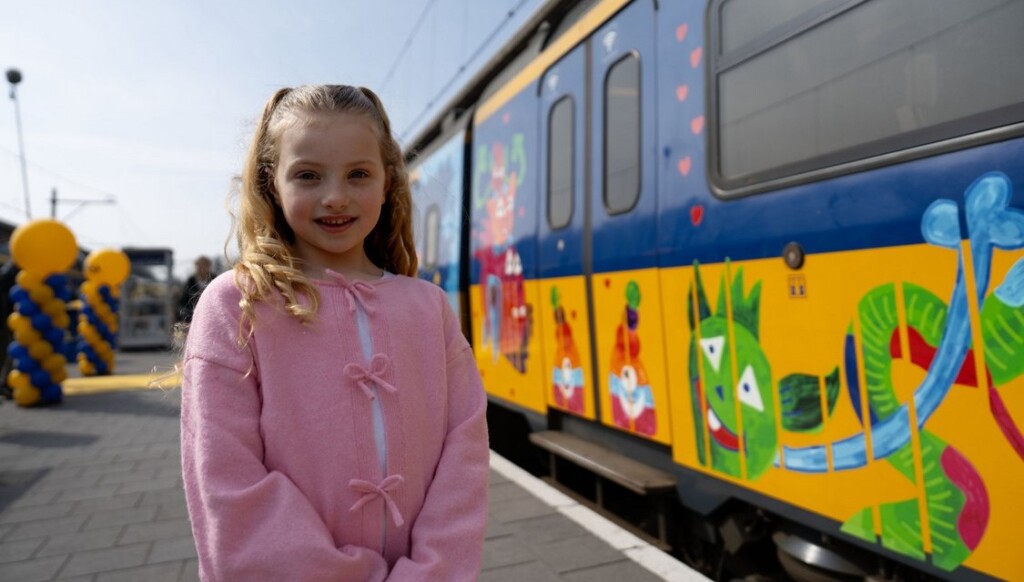
Phileine next to her Sweet Monster Train – credit, NS released

Now from the Netherlands comes the delightful story of an 8-year-old’s dream design made reality on the carriages of a very special train.

Hosted by the national train operator NS, the NS Drawing Competition invites children all over the country to submit drawings to be used as an exterior design for one of the operator’s trains.

8-year-old Phileine from Zutphen, near Utrecht, won the competition’s 2025 edition which experienced a record number of entries: over 1,200 children took place.

“From jungle trains full of animals to flying locomotives and fantasy creatures that move along the track, all drawings combined humor, fantasy and adventure,” NS wrote in a statement.

Phileine’s concept was the “Sweet Monster Train,” which she got to see first hand at the competition’s conclusion in Utrecht’s Maliebaan station.

Phileine worked with a professional illustrator Jip Piet to cover the train cars in friendly monsters, deliberately designed to be impossible to scare anyone as they crawl and slither along the exterior.

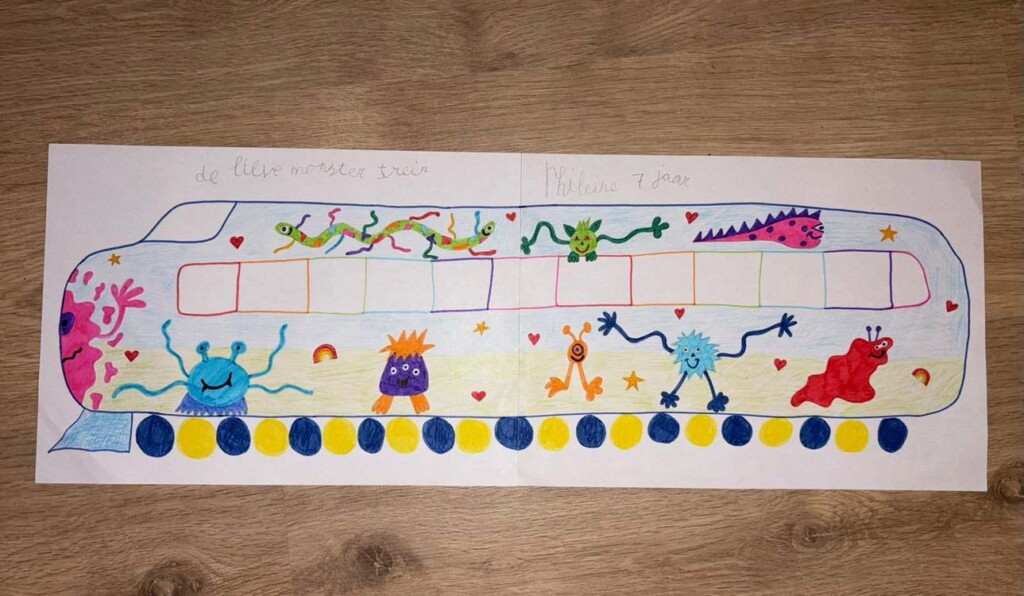
Phileine’s original design – credit, NS released

Her entry was presented as an ingenious design that would allow the operator to print the design out at scale on large decal stickers, no paint needed.

Then, Phileine arrived with her family to cut the ribbon at the opening of the intercity train next to competition judge Daan Schutt, a board member of NS.

“With the drawing competition, NS wants to inspire children in a playful way for train travel,” the translated statement from NS said.

“Children often experience a train journey as an adventure, much more than we sometimes realize as adults. By focusing on their imagination and really bringing one dream train to life, we show how special travel can be through children’s eyes.”8-year-old's 'Sweet Monsters' Drawing Chosen as Winning Design to Decorate Real Train


Tuesday, 10 February 2026

Miranda Kerr says all of her kids have been 'taught Vedic meditation'


(Photo : IANS/mirandakerr/insta)

Los Angeles, (IANS) Model Miranda Kerr has shared how she practices Vedic rounding, a technique that combines yoga poses and breathing techniques, with her children.

Kerr has son Flynn, 15, with her ex-husband Orlando Bloom and sons Hart, seven, Myles, six, and Pierre, two, with her current spouse Evan Spiegel, reports femalefirst.co.uk.

She told LYMA's Power Women series: "Each of my kids, except the baby, have been taught Vedic meditation and they each have their own mantra. It's something I've been practicing since I was 17 and it's key to my connection and devotion.

"As an adult you do it for 20 minutes but for my children, my six year old does it for six minutes, seven year old seven minutes and so on."

She added: "This New Year, he (Flynn) said: 'Mum, I want to meditate with you every morning at 6am and do it for 20 minutes. On the days he does it... he's like, 'I really noticed a difference. I felt much calmer the days I did it.'"

Kerr also said that she wakes up at 5.30am every morning as she has become an "early bird" since she started dating Snapchat co-founder Spiegel.

She said: "I wake up every morning between 5am and 5.30am, I'm quite an early bird. I naturally wake up so it's been years of practice because I was naturally a night owl before I met my husband and we've been together 12 years this year.

"I remember one of the first Friday nights we spent together and he's like, 'Okay, let's go to bed'. I'm like, 'It's like 8.30pm'. And he's like, 'Yeah, let's go to bed.' Now I absolutely love it."

Kerr explained that she fits looking after her children into her daily routine as she sends them to bed early before having a round of laser therapy when she retires to the bedroom.

She said: "I get them into bed early and then I have time for myself. I put relaxing music on throughout the whole house at like 5pm and dim the lights so I can naturally help my kids wind down.“I put the baby down at 5.30pm because it's getting dark. The kids and I eat at 4.30pm which is a little bit early. And then I get into bed and put on two mats - a cell optimising mat and my web laser device mat. I do this routine for 15 minutes with the Lyma laser. I then put on the milky mushroom mask and it really plumps the skin, it's an overnight mask.” Miranda Kerr says all of her kids have been 'taught Vedic meditation' | MorungExpress | morungexpress.com

Tuesday, 30 December 2025

Couple Who Started IVF Last Christmas Day Welcomed a Baby After 11 Year Battle

Helen Delgard and husband Stephane with baby Noah – family photo, via SWNS

A couple who started IVF last Christmas Day has given birth to a baby boy after 11 years of trying to conceive.

Helen Delgard was warned she may never be able to conceive naturally with her husband Stephane, but following a January surprise, they’re getting to celebrate Christmas with little Noah, who’s now 14 weeks old.

The couple started trying for a baby soon after they got together in 2014, but Delgard already had a complex medical history. She had undergone abdominal surgery to remove much of her bowel and been told she might never conceive naturally as a result

“I was very unwell when Stephane and I first met, so he was aware of my issues and we thought we’d just see where life took us,” Delgard told Britain’s Southwest News Service.

After a few years of trying, Delgard underwent a surgery to try and remove some of the scar tissue from previous surgeries which was believed to be potentially blocking her fallopian tubes. They were referred to Bristol fertility clinic for help after the surgery failed to make a difference.

After starting treatment on Christmas day, Delgard found out she was pregnant in January.

“However, despite all the care that had got us to that point, I became quite ill and experienced heavy bleeding at the end of the third week of pregnancy which led us and the medical team to anticipate that I might have lost the baby,” she told SWNS.

“My six-week scan was therefore carried out with the greatest delicacy, mindful of our potential loss, and the radiologist very sensitively positioned the screen so the image was not in our line of vision.”

“But then, with a huge smile, she turned it back and showed us Noah’s tiny heartbeat. We both broke down, and the team were crying too. After that it was a relatively uncomplicated pregnancy and our beautiful boy was born at 37 weeks, weighing 6lbs. 10oz.”“The support from the clinic throughout our journey was incredible… We thank the whole team and wish them a very merry Christmas.” Couple Who Started IVF Last Christmas Day Welcomed a Baby After 11 Year Battle

Thursday, 25 December 2025

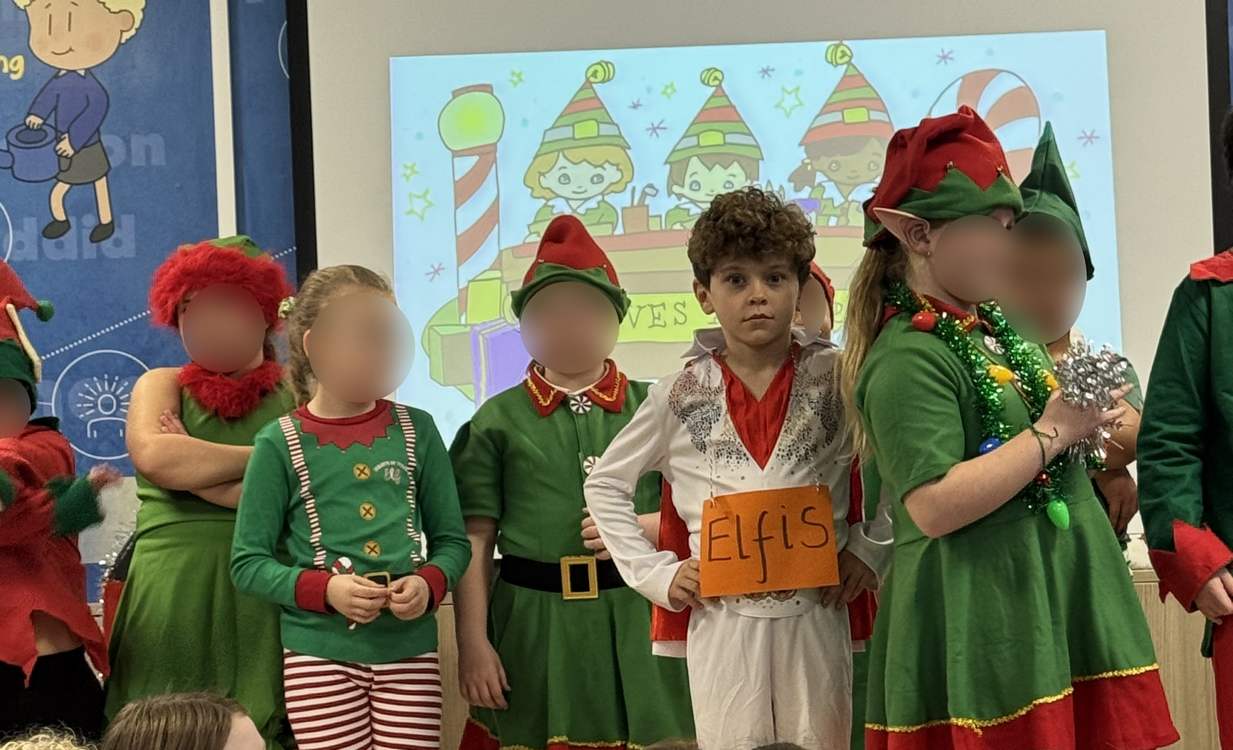
Boy Sent to Christmas Nativity Show as Elvis Instead of Elf After Family Mix-up

credit – Jade Smith / SWNS

When 9-year-old Oscar Wilkins heard he’d been given the role of ‘Elvis the Elf’ in the nativity play at his primary school last week, the alliteration left him confused over what to tell his parents.

Coming home, Oscar’s sister said neither he nor the school had been able to communicate the ‘elf element’ to his bemused family; the boy simply told them he had been cast as Elvis.

They then sought out a costume of the Graceland star and only realized the error when he stepped out on stage.

But hardly letting it become an error, Oscar embraced his starring role and found the whole thing hilarious. His older sister Jade Smith said the audience couldn’t help falling in love with the absurdity of it all.

“We asked him if he was sure he meant Elvis and he said yes, ‘with a sparkly costume.’ He did not mention anything about an elf,” she told Southwest News Service, in England. “His letter said a sparkly Elvis costume. It did not say Elvis the Elf so we all just stupidly thought it was Elvis Presley.”

Jade said the family then looked online for a kid’s Elvis outfit and found one that fitted Oscar perfectly.

“We sent him to school in the wrong costume and they all saw the funny side. But did not say it was wrong.”

The two performances on Wednesday and Thursday last week at Penrhiwpeier Primary School in Wales were also in front of his parents Stephen and Sarah Wilkins.

Smith said they only realized their error during the first performance of the show.

“We only found out the mistake when we were watching the show and they all walked out—out of 12 kids, they were all dressed as elves except for Oscar,” she said. “It was so funny. A week before they had all met up in costume for a dress rehearsal but didn’t tell us anything was wrong.”

“It was no drama though. Oscar embraced it all and loved that people were all laughing at him. He really enjoyed all the attention.”

“We thought Elvis might come into it somewhere in the storyline but there was no relation to him at all.”

Smith said Oscar’s reaction to it all had meant everyone had seen the funny side,
“within seconds we realized what had happened.”“You never want you child to feel awkward but Oscar totally embraced it and that helped us all see the funny side of it. He’s still got the outfit and has now been introduced to Elvis’ music. He loves older music anyway so we can see him becoming a bit of a fan.” Boy Sent to Christmas Nativity Show as Elvis Instead of Elf After Family Mix-up

Tuesday, 4 November 2025

A 9-Year-Old Son Saves His Father from Leukemia by Donating Stem Cells

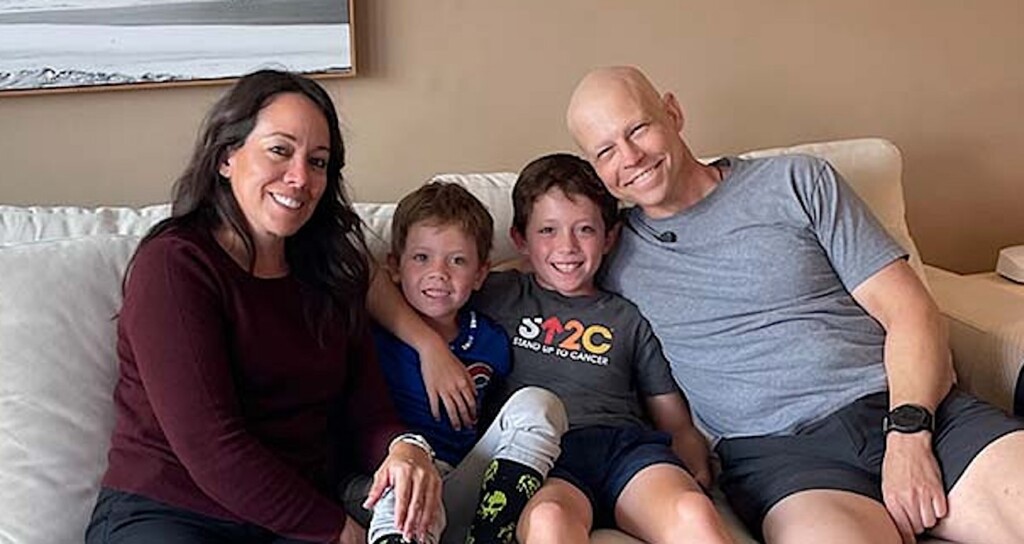
Nick Mondek with his family after the stem cell procedure – Credit: Cedars-Sinai

A boy in California may have saved his father from a deadly returning cancer by becoming one of if not the world’s youngest stem cell donor.

9-year-old Stephen Mondek from Torrance loves playing catch with his dad, Nick, who himself loves nothing more than being a father.

In 2022 Mr. Mondek was diagnosed with acute myeloid leukemia, and had to be treated rapidly with an injection of donor stem cells from his older brother who was a perfect genetic match.

He went into remission but the cancer came back “ferociously fast,” and Mondek’s only option was that he had to find another stem cell donor. This form of leukemia affects the blood-forming cells in the bone marrow, but an injection of stem cells can form the basis of a new immune arsenal that can locate and attack the leukemia tumors.

A search through the National Bone Marrow Registry failed to turn up a match, but remembering the case of a friend of his, Mondek went into Cedars-Sinai Cancer center in April with a question to his doctors. He was remembering the case of a friend of his who received a lifesaving stem cell donation from his 18-year-old son to cure lymphoma.

“As my doctor came in the room, I said, ‘Could a 9-year-old who’s 70 pounds give us enough stem cells?’” Mondek said to NBC Nightly News.

Ronald Paquette, the clinical director of the Stem Cell and Bone Marrow Transplant Program at Cedars-Sinai Cancer, confirmed that Stephen Mondek who turned 10 back in August, was a possible donor. A child receives half of their DNA from each parent, so Stephen would naturally be a half-match.

Reporting on the story itself, Cedars-Sinai wrote that Paquette said a half-match might make the transplant more effective. A half-matched immune system might more easily recognize and kill the cancer cells in Mondek’s bone marrow, and transplants from younger donors tend to be most successful.

“The conversation with Stephen was pretty simple,” Mondek said. “I said, ‘Hey, Buddy, Dad’s sick and they need someone to give me stem cells, and they want to know if you want to get tested to see if you can do it.’”

Stephen’s response: “When do we go?”

“I wanted to make my dad’s cancer go away, and if I was sick, I would think he would do the same thing for me,” Stephen said.

After confirming that Stephen was a suitable match, he had the procedure explained to him so that he could give his own informed consent before visiting Cedars-Sinai Guerin Children’s Hospital for the donation that required general anesthesia. The stem cells were collected via a process of blood cycling over 6 hours.

A week later, Mondek underwent pre-donation chemotherapy to suppress his own immune system before eventually receiving the stem cells. After 6 weeks in the hospital, he was back home, but not before arriving in time to watch the final inning of Stephen’s little league game.

“Stephen was very brave, and our team made sure everything went perfectly so that this young boy could help his father,” said Hoyoung Chung, DO, a critical care pediatrician at Cedars-Sinai Guerin Children’s.“He donated six million stem cells to save my life, so it’s not just an honor to call him my son, I’m proud to call him my hero,” Mondek said. A 9-Year-Old Son Saves His Father from Leukemia by Donating Stem Cells

Thursday, 10 July 2025

Dozens of Free Summer Camps Opened By Paul Newman Give Sick Kids and Their Families ‘Serious Fun’


June marks the start of summer camps opening their doors to kids who want fun in the wild—and for children with an illness or disability, there’s a camp that provides ‘serious fun’ for those who need it most.

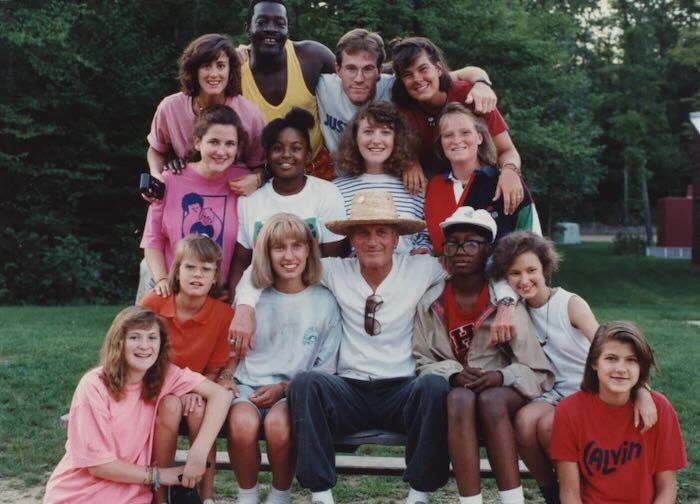
The legendary actor Paul Newman started it all with a single summer camp for sick kids back in 1988.


He called it the “Hole in the Wall” camp, a reference to the sharpshooting gang from his iconic Oscar-winning film Butch Cassidy and the Sundance Kid.

He wanted to provide an escape for children facing serious illnesses—but one that would include their parents and siblings too—where, as Paul liked to say, families could “kick back, and raise a little hell.”


Most important of all, everything was always free.

Since then, the camps have gained a new name—SeriousFun—and have grown into a network of 30 camps across the world. In all, they have provided two million incredible experiences for kids facing medical challenges in 19 different countries.
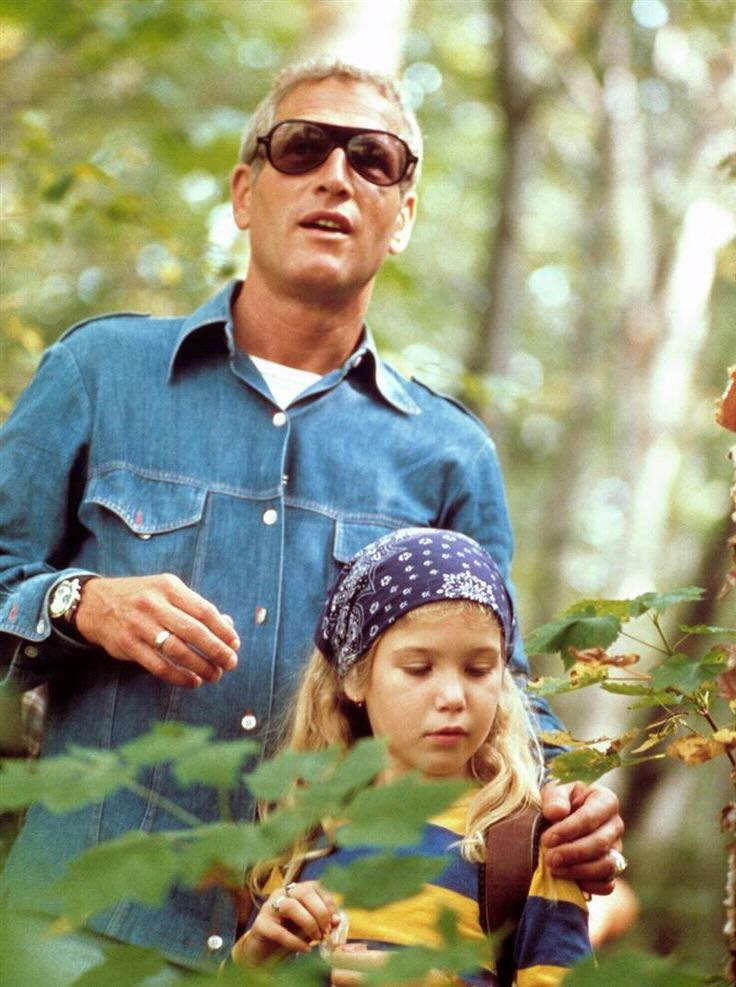
Paul Newman with his daughter Clea – Credit: Serious Fun

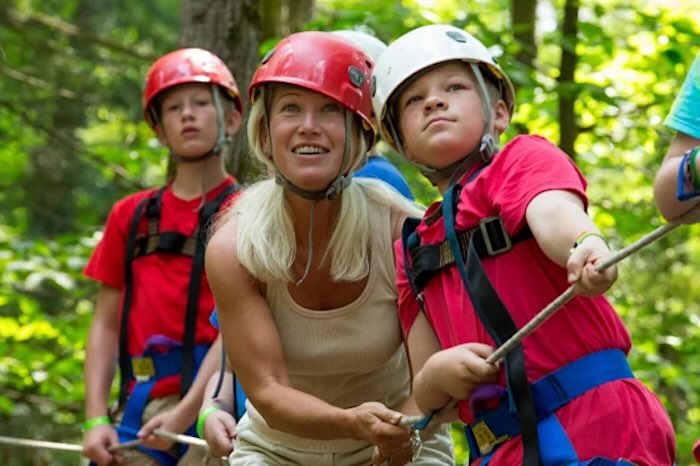
Each of the 30 SeriousFun camps is fully equipped for pediatric care, with a staff that administers medication in a manner that doesn’t disrupt the fun. Camp activities include boating and swimming—but also high-end excitement like high-ropes courses and zip lines. (See the video at the bottom.) Best of all, kids love it…

“You automatically click (with everyone) because you have something in common. You’re not alone in this,” said Alex, a child with Sickle Cell Disease that has attended the SeriousFun Flying Horse Farms Camp in Ohio. “It puts a smile on so many people’s faces. It makes them feel connected. It definitely is the highlight of my year, every year.”

Clea Newman—the youngest daughter of Paul and his wife of 50 years, actress Joanne Woodward—has dedicated the last 12 years of her life to the beloved organization, working enthusiastically to continue her father’s legacy.

Clea Newman – Credit: Serious Fun

“I am so passionate about this work. Our kids and our families are just the most extraordinary people. I learn from them every day, so it’s a gift,” Clea said.


“My father believed in the importance of giving back. He always said we are committed to giving these children one hundred percent… and, in return, the joy of these kids gives back one thousand percent to everyone who works with and supports them.”

All those efforts are paying off for the kids, too. According to surveys conducted by SeriousFun, more than 80% of campers reported that their experience played a role in the development of lasting traits that they use in their everyday adolescent and adult lives. These attributes include a willingness to try new things, self-confidence, perseverance, empathy, compassion, and an appreciation for diversity.

Other benefits for families may be too great to even measure.

“It’s brought the family unit back together,” a parent at the SeriousFun camp at Barretstown in Ireland said.

“It was bringing back an element of fun that had been missing for a long time because all we’d been used to was going in and out of hospitals. It helped heal the kids’ souls. It helped us find that new normal… it’s all about maximum fun in minimum time.”

Proceeds from the Newman’s Own food brand partially fund the camp (along with corporate and private donations), so the next time you’re shopping for frozen pizza, pasta sauce, salad dressing, lemonade, or popcorn, look for Paul’s face and the slogan ‘All profits to charity’. (You can buy their products in the grocery store or on Amazon.)Now you know you’ll always be supporting a seriously fun charity. Check out the heartwarming camp in the video below… Dozens of Free Summer Camps Opened By Paul Newman Give Sick Kids and Their Families ‘Serious Fun’

Tuesday, 8 July 2025

Rescued Crow Is Boy’s Best Friend, Waiting for Him to Get Home from School Every Day: ‘We’re his flock’

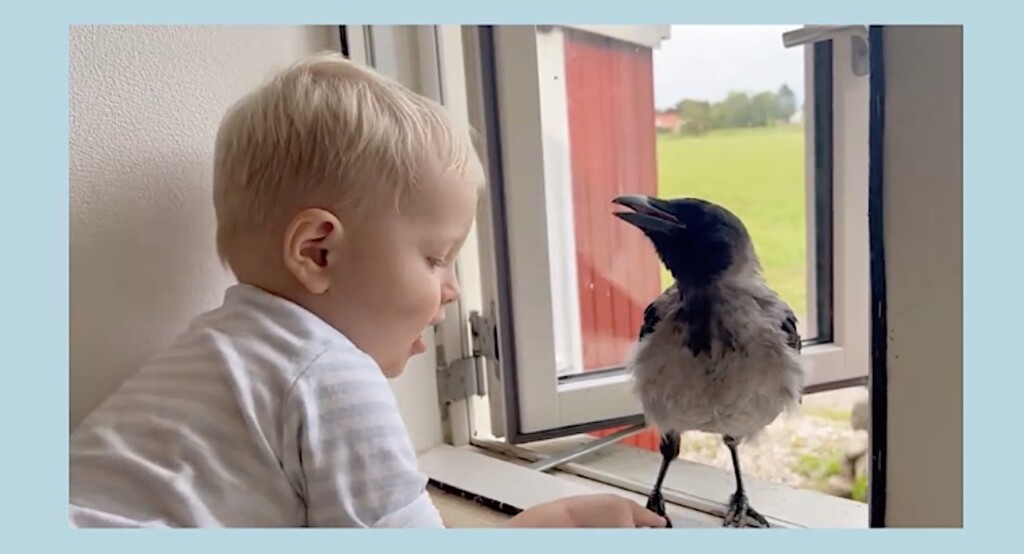
Otto and Russell the crow – Courtesy Lærke Luna / Instagram

Get ready to drop your jaw when you see the images that a Danish family has shared on Instagram of how a wild Eurasian crow has become part of their flock.

The crow will come and visit all of them, including the dog and the cats, but it’s for the little boy Otto whom Russell reserves the vast majority of his love—and their friendship is like nothing you’ve ever seen before.

Russell is no caged corvid. He disappears from the family’s property in Denmark often.

However, whether it’s pecking at the door, flying through the window onto the couch, or waiting for Otto on top of the house when he gets home from Kindergarten, the bird is never far away.

After finding the orphaned juvenile bird, Otto’s mom and dad were not able to find anyone in the area to rehabilitate him, so while nursing him back to health, and then into its fledging stage, the crow grew to trust the family.

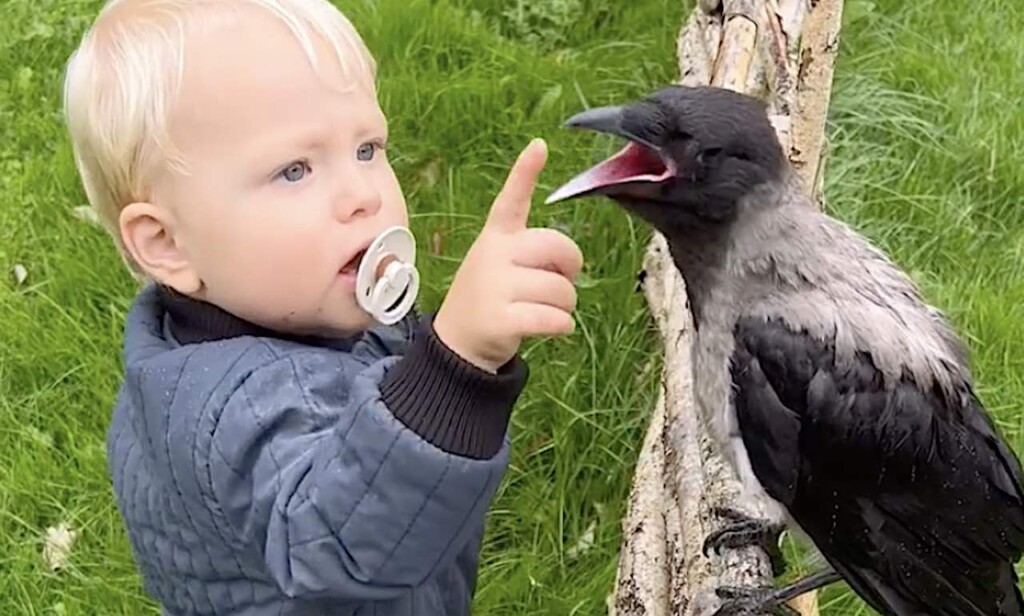
Otto and Russell – Courtesy of @laerke_luna on Instagram

He’s been with them a while now, and has been nearby to welcome the couple’s second child, Hedwig, into the world.In fact, too often he tries to steal the baby’s pacifier. Rescued Crow Is Boy’s Best Friend, Waiting for Him to Get Home from School Every Day: ‘We’re his flock

Saturday, 28 June 2025

Four-year-old Credited with Saving Her Teacher’s Life at Tennessee Daycare

The lifesaver, Kyndal Bradley – credit, family photo

4-year-old Kyndal Bradley knows how to use a phone to call her mother, but how to call 911, or even when to do so, has not been talked about.

So imagine the surprise of her mother and the teaching staff at a Tennessee daycare when, during a medical emergency, it was Kyndal who took action.

Witnesses say that the teacher at the daycare in Clarksville collapsed and suffered a seizure. She had been the only adult in the room, and while the rest of the class stood there confused, Kyndal ran to get help.

“I told the teacher,” Kyndal told local news. “I said the other teacher; she was sick”.

Paramedics on scene found out that the teacher had stopped breathing twice, and rushed her to the hospital where WSMV reports she is recovering.

Shortly after, the staff at the daycare arrived at the door of Taylor Moore, Kyndal’s mother for a deserved bit of show (off) and tell.

“They were like, ‘She’s our hero for the day,’ and I’m kind of looking like, what happened?” said Moore. “If she hadn’t have gone and got the assistance, this story could have gone a totally different way.”

“I never thought to introduce what to do if an emergency arises, so it was a shock to me to see that she knew exactly what to do in a situation like that,” Moore told WSMV over a videocall, with Kyndal in her arms smiling from ear to ear. Four-year-old Credited with Saving Her Teacher’s Life at Tennessee Daycare

Monday, 16 June 2025

UK to Lift 100,000 Kids From Poverty With Free School Lunches for All Low Income Households

– credit Curated Lifestyle for Unsplash +

The UK government has announced that 500,000 additional children will receive a free school lunch following a major expansion in the program that provides it.

Previously, the free meal was available only to students who come from the lowest of low-income households. Following the expansion, most low and middle-class citizens will be able to qualify, and the government says it will lift 100,000 students out of poverty from the cost savings which will amount to around £500 per month, corresponding to nearly $700.

Despite having a ceiling of £7,400-per year for eligibility, last year an estimated 2.1 million students received a free school meal.

A rather arbitrary cut-off point, someone making £8,000 per year hardly possesses greater means to pay for the school meal than someone making below the cutoff point.

Under the new plan, any students from households on the UK’s universal credit will be eligible to receive one free meal a day. The universal credit replaced a number of British welfare programs, and provides a monthly cost of living assistance handout to people living in a variety of situations with a net worth of less than $20,000.

Set to begin at the outset of the 2026 scholastic year, the new expansion will also address food quality, and will be fully, rather than partially funded, to ensure there’s no delay in getting the expansion moving.

“Today’s historic step will help us to deliver excellence everywhere, for every child and give more young people the chance to get on in life,” the UK’s education secretary Bridget Phillipson said, adding “background shouldn’t mean destiny.”

The decision comes amid a record-high level of childhood poverty in one of Europe’s largest economies. The new Labor government under Prime Minister Sir Keir Starmer has vowed to drive down poverty levels in the UK, and the expansion of the student meal program was a part of that.

Free school lunches became a hot topic during the administration of Boris Johnson, when the young black Manchester United star Marcus Rashford decided to criticize Johnson for reducing the size of the free school lunch program.

While some sport pundits believed Rashford’s aim was noble, they also felt he should focus on his soccer. But he persevered and the government relented. Through this and his work with hunger charities in the city of Manchester, he was presented with an MBE, the British order of merit below a knighthood, for his advocacy work on behalf of England’s poorest students. UK to Lift 100,000 Kids From Poverty With Free School Lunches for All Low Income Households

Wednesday, 28 May 2025

Whatever happened to Barbie’s feet? Podiatrists studied 2,750 dolls to find out

What do you get when a group of podiatrists (and shoe lovers) team up with a Barbie doll collector? A huge opportunity to explore how Barbie reflects changes in the types of shoes women wear.

It all started with the blockbuster Barbie movie in 2023. In particular, we discussed a scene when Barbie was distressed to find she didn’t have to walk on tip-toes. She could walk on flat feet.

Soon, we had designed a research project to study the feet of Barbie dolls on the market from her launch in 1959 to June 2024. That’s 2,750 Barbies in all.

How this scene from the Barbie movie inspired our research project.

In our study published today, we found a general shift away from Barbie’s iconic feet – on tip-toes, ready to slip on high-heeled shoes – to flat feet for flat shoes.

We found, like many women today, Barbie “chooses” her footwear depending on what she has to do – flats for skateboarding or working as an astronaut but heels when dressing up for a night out.

We also question whether high heels that Barbie and some women choose to wear are really as bad for your health as we’ve been led to believe.

The movie that sparked the #barbiefootchallenge

Barbie’s feet – in particular her tip-toe posture – triggered TikTok’s #barbiefoottrend and #barbiefootchallenge. When the movie was released, fans made videos to re-create how Barbie stepped out of her high-heeled shoes, yet stayed on tip-toes. Margot Robbie, the Australian actor who played Barbie in the movie, was even interviewed about it.

Despite the obvious interest in Barbie’s iconic foot stance, there had been no specific research on her feet or choice of footwear.

So our research team decided to look at how Barbie’s feet had changed over the years to reflect the kinds of shoes she’s worn, and how that ties in with her different jobs and growing diversity.

What we did

One of our research team has an extensive Barbie doll collection. This guided our search through online catalogues to examine the foot positions of 2,750 Barbie dolls.

Our custom-made audit tool allowed us to classify Barbie’s foot posture as tip-toe (known as equinus) or flat.

We also looked at when the dolls were made, whether they were diverse or inclusive (for instance, represented people with disabilities), and whether Barbie was employed.

What we found

We were surprised that Barbie’s high-heel wearing foot posture was no longer the norm. Barbie does, however, still wear high heels when dressed for fun.

We found, just like Barbie in the movie, she’s made a transition from high heels (equinus foot posture) to flat shoes (flat foot posture), especially when employed.

We suggest this mirrors broader societal changes. This includes how women choose footwear according to how much they have to move in the day, and away from only wearing high heels in some workplaces.

Barbie ditched her high-heel wearing foot posture as she climbed the career ladder. In the 1960s, all Barbies tip-toed around, but by the 2020s, only 40% did.

Meanwhile, her resume expanded, going from not being represented as having a job to 33% representing real-world jobs.

She was an astronaut in 1965, before the Moon landing, and a surgeon when the vast majority of doctors in the United States were men.

US laws changed in the late 80s, supporting women to own businesses without a man’s permission. And Barbie mirrored this.

She started trading stilettos for flats and strutting into male-dominated fields. Barbie didn’t just break the mould, she kicked it off with low-heeled shoes.

Barbie also evolved to better reflect the population. We found a moderate link between her having flat feet and representing diversity or disability.

For example, she chooses a stable flat shoe when using a prosthetic limb. But it was also great to see her break footwear stereotypes by wearing high heels when using a wheelchair.

Are high heels so bad?

Some celebrities, the media and public health advice warn against wearing high heels. But we know women (and Barbie) choose to wear them from time to time. In fact it’s discussions about women’s shoe choices that also gave us the idea for this fun research.

For instance, health professionals often link high-heeled shoes with developing bunions, knee osteoarthritis, back pain or being injured.

However bunions, and knee and back pain are just as common in people who don’t wear high heels.

Studies exploring the risk of high heels are also often performed with people who don’t usually wear high heels, or during competitive sports.

We couldn’t find any investigations exploring the long-term effect of wearing high heels.

Research does show that high-heeled shoes make you walk slower and make it harder to balance.

But high heels have different features, such as heel height or shape. So different types of high heels probably present a different risk. That risk also probably differs from person to person, including how often they walk in heels.

Lessons for all shoe lovers

But back to Barbie and lessons we learned. We know Barbie is a social construct that reflects some aspects of the real world. She chooses heels when fashion is the goal and flat shoes when needing speed and stability.

Rather than demonise high heels, messages about footwear need to evolve to acknowledge choice, and trust women can balance their own priorities and needs.

As Barbie’s journey shows, women already make thoughtful shoe choices based on comfort, function and identity.The Conversation

Cylie Williams, Professor, School of Primary and Allied Health Care, Monash University and Helen Banwell, Senior lecturer in Podiatry, University of South Australia

This article is republished from The Conversation under a Creative Commons license. Read the original article.

Thursday, 22 May 2025

Child Born with Heart Outside Chest Becomes Solitary Survivor Thanks to Surgical Procedure Invented for Her

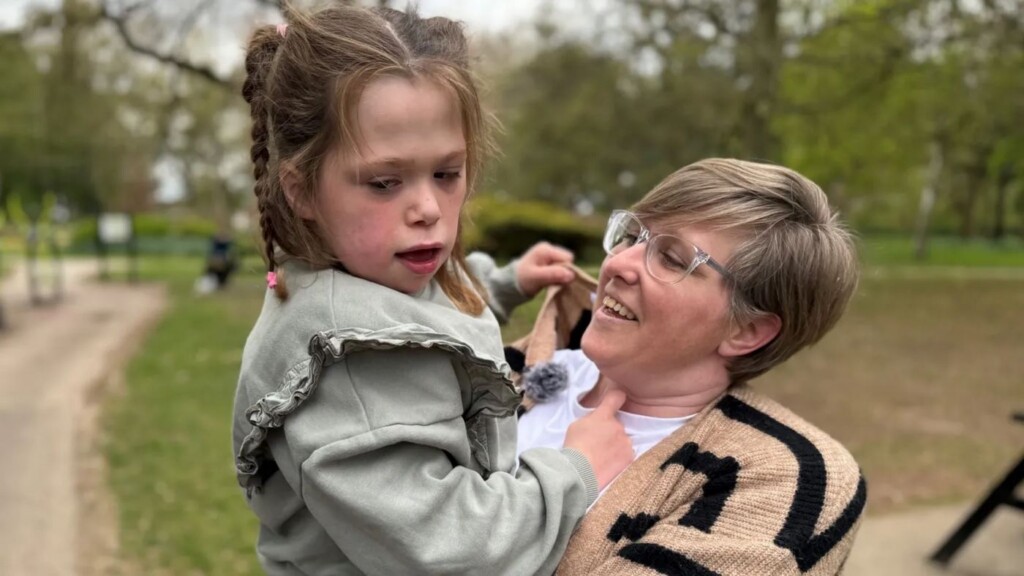
Vanellope with her mom – credit, supplied by the family

Last Wednesday, a team of English surgeons and attendants arrived in the city of Leicester to be briefed on an upcoming surgery never before attempted or imagined in the history of the country.

Their patient was Vanellope Wilkins, the solitary survivor known to British medicine of ectopia cordis, a condition where a fetus develops with its heart outside its body.

Over a period of 9 hours, the team which included visiting surgeons from London would form a protective cage around Vanellope’s heart by reforming her ribs, and though her team included some of the best pediatric surgeons in the country, the procedure had never been done before, and was invented specifically for Vanellope’s case.

Born in November 2017, the child had to be kept in intensive neonatal care for the first 14 months of her life.

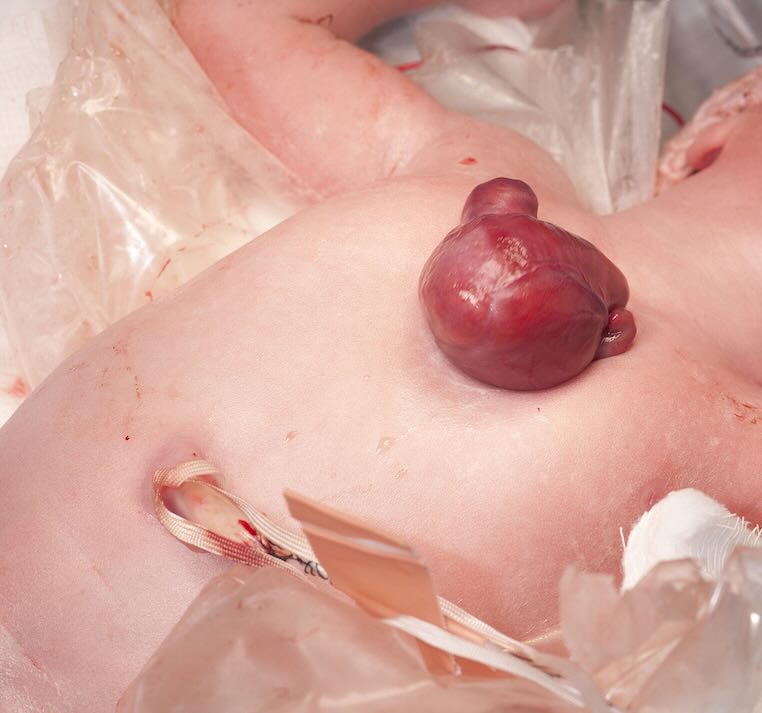
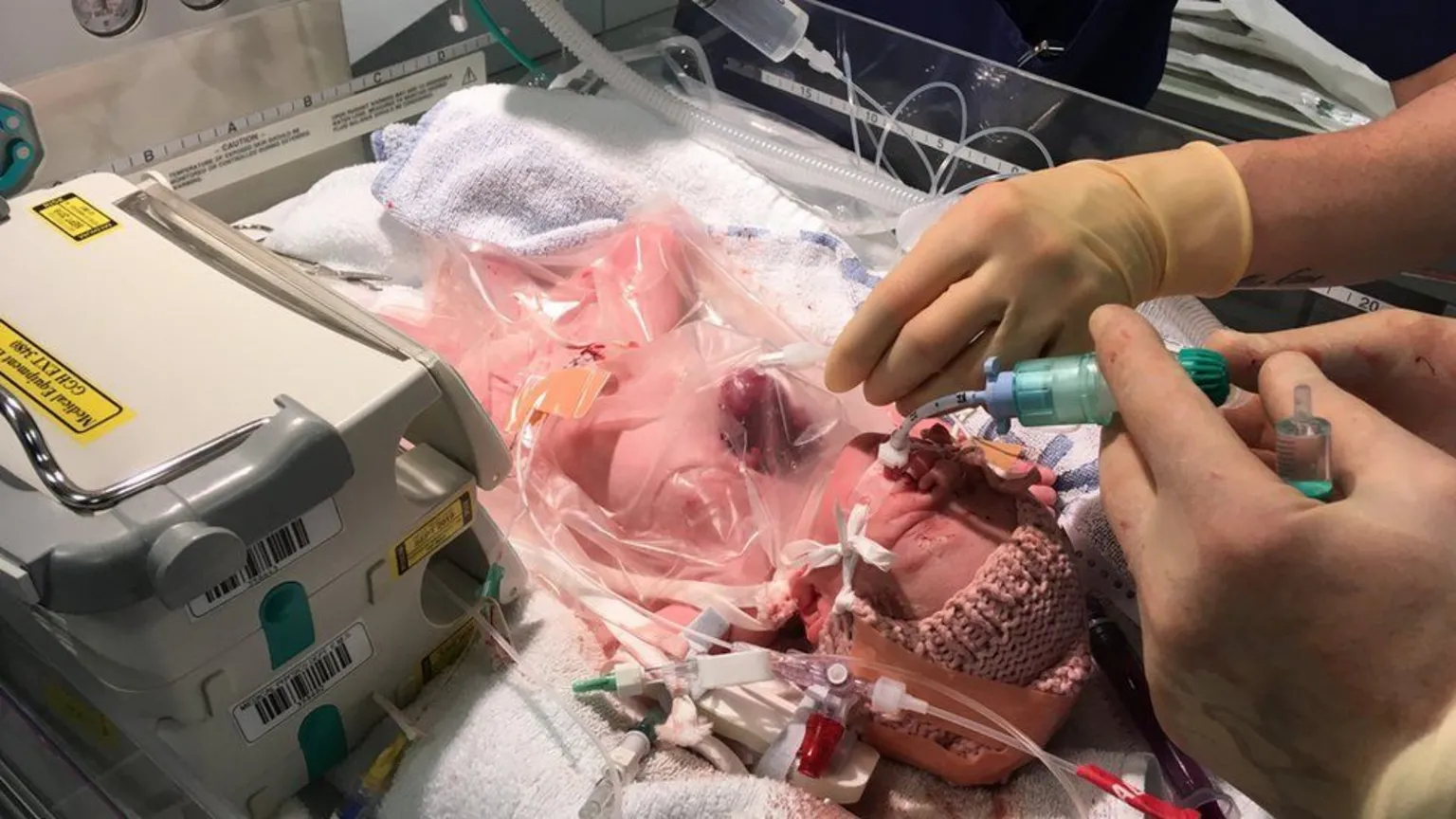
Requiring a large amount of medical supervision, she is both autistic and nonverbal. Graphic imagery obtained by the BBC shows Vanellope—her heart exposed in the center of her chest after it got caught and then fused onto her skin during development.

Ectopia cordis occurs in just a few babies per million births and has a low survival rate, and Vanellope required surgery immediately upon entering the world, a process which itself required 50 people to oversee.
SWNS

Consultant pediatric surgeon Nitin Patwardhan was there when it happened, and was one of the surgeons who recently stitched Vanellope’s heart back behind her chest bone.

“I’d lie if I say I don’t get nervous,” Dr. Patwardhan told the BBC on the morning of the surgery. “But having been in this profession for so many years, you actually look forward to it because at the end of the day, you’re doing something that will change somebody’s life.”

A handful of children in the US have also survived this condition, and now at 7 years of age, Vanellope has been deemed suitable for a permanent solution to her unique medical hazard.

Placed on a bypass machine, Dr. Patwardhan and his team detached her right ventricular outflow tract and pulmonary artery from where they were attached to the skin, before breaking her ribs and reforming them in a protective cage around the heart’s new location.

A sense of history and anticipation was present in the theater before and during the procedure, BBC reports. The operation was a success, and when the team was allowed to retire from the day’s work, they dubbed Vanellope “one of a kind,” in the truest sense of the word.

“The best satisfaction we derive from this is when you get a text message from the mom to say ‘thank you, you guys are amazing’,” Ikenna Omeje, another of the surgical team who also operated on Vanellope when she was born, told the BBC.

“I think personally, I have just done my job, but it has made a difference to someone and that is very satisfying.”Naomi Findlay, Vanellope’s mother, says that in the past, bringing her into the hospital has always been a frightful episode, but now, with her daughter recovering in the pediatric intensive care unit, she’s become quietly confidant, and can’t wait to take her back home to see her brothers and younger sister. Child Born with Heart Outside Chest Becomes Solitary Survivor Thanks to Surgical Procedure Invented for Her

Wednesday, 14 May 2025

How to learn a language like a baby

Learning a new language later in life can be a frustrating, almost paradoxical experience. On paper, our more mature and experienced adult brains should make learning easier, yet it is illiterate toddlers who acquire languages with apparent ease, not adults.

Babies start their language-learning journey in the womb. Once their ears and brains allow it, they tune into the rhythm and melody of speech audible through the belly. Within months of birth, they start parsing continuous speech into chunks and learning how words sound. By the time they crawl, they realise that many speech chunks label things around them. It takes over a year of listening and observing before children say their first words, with reading and writing coming much later.

However, for adults learning a foreign language, the process is typically reversed. They start by learning words, often from print, and try to pronounce them before grasping the language’s overall sound.

Tuning in to a new language

Our new study shows that adults can quickly pick up on the melodic and rhythmic patterns of a completely novel language. It confirms that the relevant native-language acquisition mechanism remains intact in the adult brain.

In our experiment, 174 Czech adults listened to 5 minutes of Māori, a language they had never heard. They were then tested on new audio clips from either Māori or Malay – another unfamiliar but similar language – and asked to say if they were hearing the same language as before or not.

The test phrases were acoustically filtered to mimic speech heard in the womb. This preserved melody and rhythm, but removed the frequencies higher than 900 Hz which contain consonant and vowel detail.

Listeners correctly distinguished the languages more often than not, showing that even very brief exposure was enough for them to implicitly grasp a language’s melodic and rhythmic patterns, much like babies do.

However, during the exposure phase, only one group of participants simply listened – three other groups listened while reading subtitles. The subtitles were either in the original Māori spelling where speech sounds consistently map onto specific letters (similar to Spanish), altered to reduce sound-letter correspondence (like in English, for example “sight”, “site”, “cite”), or they were transliterated to a script unknown to any of the participants (Hebrew).

The results showed that reading alphabetic spellings actually hampered the adults’ sensitisation to the overall melody and rhythm of the novel language, reducing their test performance. As complete beginners, the participants were able to learn more Māori without textual aids of any kind.

Initial illiteracy helps learning

Our research builds on previous studies, which have found that spelling can interfere with how learners pronounce individual vowels and consonants of a non-native language. Examples among learners of English include Italian learners lengthening double letters, or Spaniards confusing words like “sheep” and “ship” due to how “i” and “e” are read in Spanish.

Our study shows that spelling can even hinder our natural ability to listen to speech melody and rhythm. Experts looking for ways to reawaken adults’ language-learning capabilities should therefore consider the potentially negative impact of premature exposure to alphabetic spelling in a foreign language.

Early studies have proposed that a putative “sensitive period” for acquiring the sound patterns of a language ends around age 6. Not coincidentally, this is the age when many children learn to read. There is also research on infants that shows that starting with the global features of speech, such as its melody and rhythm, serves as a gateway to other levels of the native language.

A reversed approach to language learning – one that begins with written forms – may indeed undercut adults’ sensitisation to the melody and rhythm of a foreign language. It affects their ability to perceive and produce speech fluently and, by extension, other linguistic competences like grammar and vocabulary usage.

A study with first- and third-graders confirms that illiterate children learn a new language differently from literate children. Non-readers were much better at learning which article went with which noun (like in the Italian “il bambino” or “la bambina”) than at learning individual nouns. In contrast, readers’ learning was influenced by the written form, which puts a space between articles and nouns.

Learn like a baby

Listening without reading letters may help us to stop focusing on individual vowels, consonants and separate words, and instead absorb the overall flow of a language much like infants do. Our research suggests that adult learners might benefit from adopting a more auditory-focused approach – engaging with spoken language first before introducing reading and writing.

The implications for language teaching are significant. Traditional methods often place a heavy emphasis on reading and writing early on, but a shift toward immersive listening experiences could accelerate spoken proficiency.

Language learners and educators alike should therefore consider adjusting their methods. This means tuning in to conversations, podcasts, and native speech from the earliest stage of language learning, and not immediately seeking out the written word.The Conversation

Kateřina Chládková, Assistant professor, Charles University; Šárka Šimáčková, assistant professor, Palacky University Olomouc, and Václav Jonáš Podlipský, Assistant Professor of English Phonetics, Palacky University Olomouc

This article is republished from The Conversation under a Creative Commons license. Read the original article.

Children in need of ‘rescuing’: challenging the myths at the heart of the global adoption industry

Korean adoptees worldwide are grappling with a devastating possibility: they were not truly orphans, but may have been made into orphans.

For decades, adoptees were told they were “abandoned”, “rescued” or “unwanted”. Many were told their Korean families were too “poor” or “incapable” to raise them – and they should only ever feel grateful for being adopted.

But these long-held stories are now under scrutiny.

Our recent research interrogates the narratives that have obscured the darker realities of intercountry adoption. Rather than viewing adoption solely through the lens of “rescue”, our work examines the broader power structures that facilitated the mass migration of Korean children to western countries, including Australia.

South Korea’s reckoning with its adoption history

In March, South Korea’s Truth and Reconciliation Commission released its preliminary findings after collecting records and testimony from a coalition of overseas Korean adoptee-led organisations (including the Australia–US Korean Rights Group).

The preliminary report revealed a disturbing pattern of human rights violations in the country’s adoption industry, including:

  • forced relinquishments
  • falsified records
  • babies switched at adoption
  • inadequate screening processes, and
  • deep-rooted institutional corruption.

The commission’s chair described finding

serious violations of the rights of adoptees, their biological parents – particularly Korean single mothers – and others involved. These violations should never have occurred.

The commission is expected to release its final report soon, but due to the upcoming presidential election and political uncertainty in South Korea, the timeline remains unclear.

Chilling cases

This is not the first time intercountry adoption has made headlines for irregularities, human rights abuses, or illicit and illegal practices.

While Australia was expanding the number of children for intercountry adoption from South Korea in the 1980s, Park In-keun – director of South Korea’s infamous Brothers Home, an illegal detention facility that sent children overseas for adoption – was arrested for embezzlement and illegal confinement.

He was ultimately acquitted of the most serious charges in South Korea before escaping to Australia. He was then charged again in 2014 for embezzlement, including government subsidies and wages of inmates forced into slave labour in South Korea. He died two years later.

Other allegations of human rights violations and abuses came to light around the same time with the arrest of Julie Chu.

She was accused of facilitating a “baby export” syndicate. Children were believed to have been kidnapped from Taiwan to send to Western countries, including Australia, in the 1970s and 80s. She was convicted of forgery, but denied being involved in trafficking.

Since then, other cases have continued to emerge involving countries such as Chile, Sri Lanka, India, Ethiopia and Guatemala.

What is the adoption industrial complex?

Intercountry adoption is not just a social practice. It’s also an economic and political system sometimes known as the transnational adoption industrial complex.

This network of organisations, institutions, government policies and financial systems created a globalised adoption economy worth billions of dollars. According to numerous investigations, Western nations, as “receiving” countries, drove the demand for the continuous sourcing of children.

As Park Geon-Tae, a senior investigator with South Korea’s Truth and Reconciliation Commission, said:

To put it simply, there was supply because there was demand.

Australia received an estimated 3,600 Korean children from the 1970s to the present, as part of more than 10,000 intercountry adoptions.

Prospective parents typically paid between US$4,500 and $5,000 to facilitate acquiring a child in Australia in the 1980s, equivalent to A$21,000 today.

Since colonisation, Australia has had a long and painful history of child removal. From the Stolen Generations involving First Nations children to the forced adoption of children born to unwed mothers, child separation has been deeply embedded in the nation’s social policy.

While national apologies have acknowledged the irreparable harms caused by these policies, the same ideologies and structures were repurposed as the blueprint for intercountry adoption.

In recent years, other western nations, such as Denmark, Norway, the Netherlands, Sweden and Switzerland, have begun to investigate their own roles in the intercountry adoption industry. These nations have either suspended their adoption programs, issued formal apologies or launched formal investigations.

Thus far, Australia and the United States have not.

Challenging the ‘rescue’ myth

Intercountry adoption has long been framed as a humanitarian act. The central idea was that children needed “rescuing” and any life in a Western country would be “better” than one with their families in their home country.

Many adoptees and their original families were expected to just move on or be grateful for being “saved”.

However, research shows this gratitude narrative disregards the deep trauma caused by forced separation.

Studies have reported that adoptees experience lifelong ruptures due to cultural, familial and ancestral displacement. Forced assimilation makes reconnection with family and culture complex or nearly impossible.

Many intercountry adoptees have also voiced concerns about abuse, violence and mistreatment in adoptive homes.

Questioning the ‘orphan crisis’ myth

The myth of a global orphan crisis has also been a powerful driver of intercountry adoption.

Adoption groups often reference outdated UNICEF estimates that there are 150 million orphans globally. However, this figure obscures the fact most of the children classified as “orphans” are children of single parents, or children currently living in homes with extended family or other caregivers.

This was the case in South Korea. Most children sent for adoption were not true orphans, but children who had at least one parent or extended family they could have stayed with if they were adequately supported.

The belief that millions of children of single parents were “orphans” in need of “rescue” was used to justify calls for faster, less regulated adoptions.

Labelling these children as “orphans” also helped attract millions of dollars in philanthropic donations. However, donors were rarely interested in supporting children to stay with their families and communities in their home countries.

Instead, the focus was often on removing and migrating them for the purpose of intercountry adoption.

The question then emerges: was this about finding families for babies or finding babies for Western families?The Conversation

Samara Kim, PhD Candidate & Researcher, Southern Cross University; Kathomi Gatwiri, Associate Professor, Southern Cross University, and Lynne McPherson, Associate Professor, Southern Cross University

This article is republished from The Conversation under a Creative Commons license. Read the original article.

Tuesday, 1 April 2025

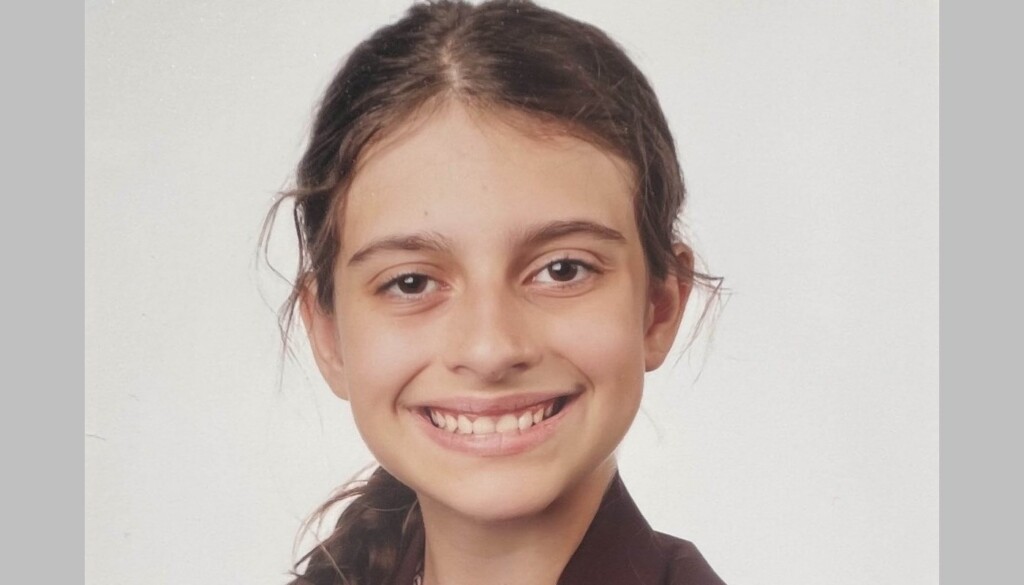
Girl Joins Mensa at 13 After Scoring Higher Than Albert Einstein–Even with No Exam Prep

SWNS

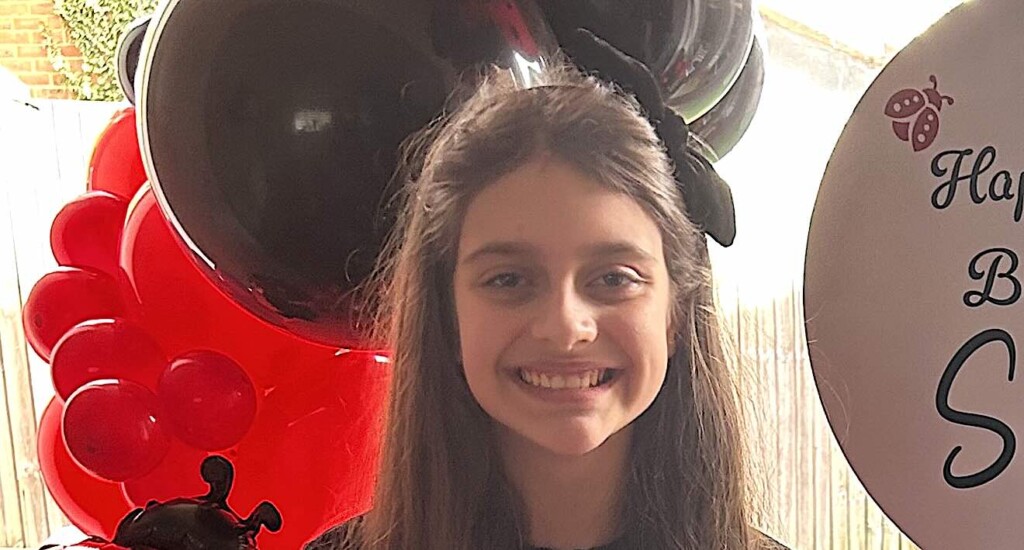
A 13-year-old girl has been invited to join the Mensa society after getting the maximum score on the IQ test—higher than Albert Einstein and Stephen Hawking.

Sofia Kot Arcuri has been accepted into the club after achieving 162, the highest possible score for a girl of her age.

Proud mom Cecylia Kot Arcuri said she always knew Sofia was smart, but didn’t expect her to ace the test without any preparatory work.

“She just walks around throwing random facts at you,” Mrs. Arcuri said, adding that she has been top of her class from the moment she started school. “When you think of someone of high intelligence, you’d think they’d be quite geeky, but really, she’s a normal girl.”

“She’s got loads of friends, is bubbly, and loved by everyone.”

The Mensa High-IQ Society has been around for over 100 years, and focuses on welcoming those extremely gifted minds among us into a space of collaboration and camaraderie. The American chapter of Mensa boasts 50,000 members of the over 150,000, located in 90+ countries worldwide.

Isaac Asimov, Commander Chris Hadfield, Steve Martin, and John McAfee were all members of Mensa, along with the inventor of the mobile phone and author of The Clan of the Cave Bear novels.

Due to Sofia’s intense workload from school, she “didn’t have time to prepare” for the Mensa test in January, and hadn’t practiced any Mensa tests prior to the big day.

Her mother said she was over the moon after receiving her results on March 14th.

Sofia is top of her class in computer science and wants to pursue a career in coding when she grows up.

“She came home one day and said, ‘there was a bug the teacher didn’t even know how to solve, and I did it,” said the understandably proud Cecylia.

SWNS

“She’s also a ballet dancer and performs in shows with her dance school. She loves musical theatre and is always playing the piano.”

Cecylia’s father and Sophia’s grandfather, Antoni Kot, was a head teacher and mathematician who was very well known in his homeland of Poland, tutoring students until age 86 when he died.“His brain was sharp even in his last minutes, and we believe Sofia inherited her love of math and coding from him,” she said. Girl Joins Mensa at 13 After Scoring Higher Than Albert Einstein–Even with No Exam Prep

Tuesday, 11 March 2025

10-Year-old Paramedic Teaches Adults Lifesaving Skills and CPR as ‘The Mini Medic’

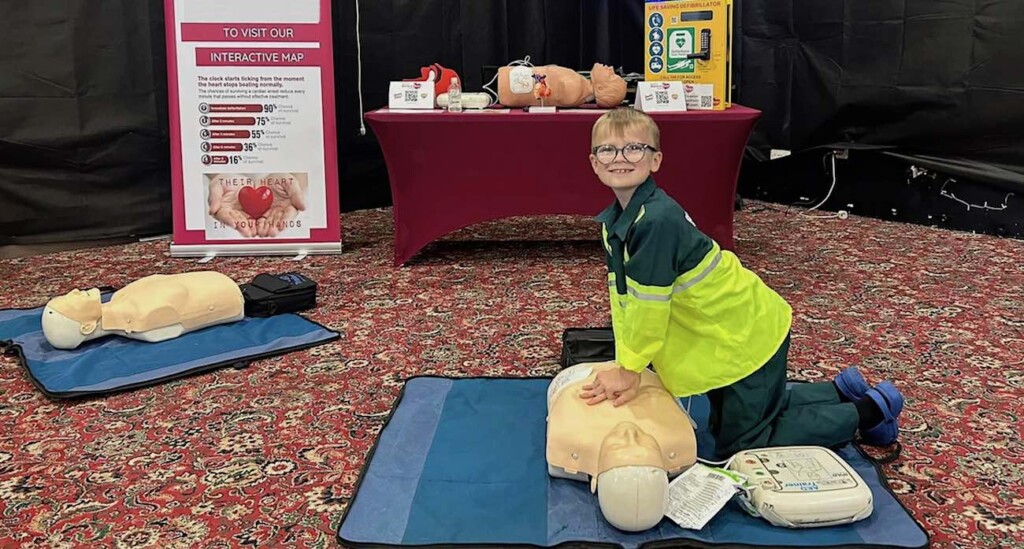
10-yo paramedic Jack Dawson teaches lifesaving skills – SWNS

Meet the 10-year-old paramedic who teaches adults life-saving procedures as an in-demand mini-medic.

Jack Dawson was just two-years-old when it became obvious he was interested in becoming a paramedic.

His grandfather owns a first response company in Staffordshire, England, and Jack would ride along in his ambulances with the flashing blue lights. By age three, he would start “randomly performing CPR on his teddies, pumping the bear’s chest”.

“So, at the same time he was learning to speak, my husband and I decided to teach him first aid,” said his mother, Danielle. “He was like a sponge. He just picked everything up so quickly.”

Jack, quickly grasped the act of CPR, understanding the different recovery positions, and learned how to use a defibrillator.

Then, at age seven, the youngster started to lead workshop sessions of his own, overseen by his father and other trainers for their charity, Tamworth Have A Heart, which aims to make automatic defibrillators publicly accessible and train people to use them confidently.

Jack teaches both children and adults how to perform CPR and use defibrillators, while also patrolling his town centre and checking that the public defibrillators’ pads and batteries are up to date and fit for use. (Watch a demonstration at the end of the article…)

“His motto was ‘if I can save a life, then you can’,” says Danielle.

The sessions often draw 20-40 people and sometimes Jack gives presentations teaching in front of 100 people.

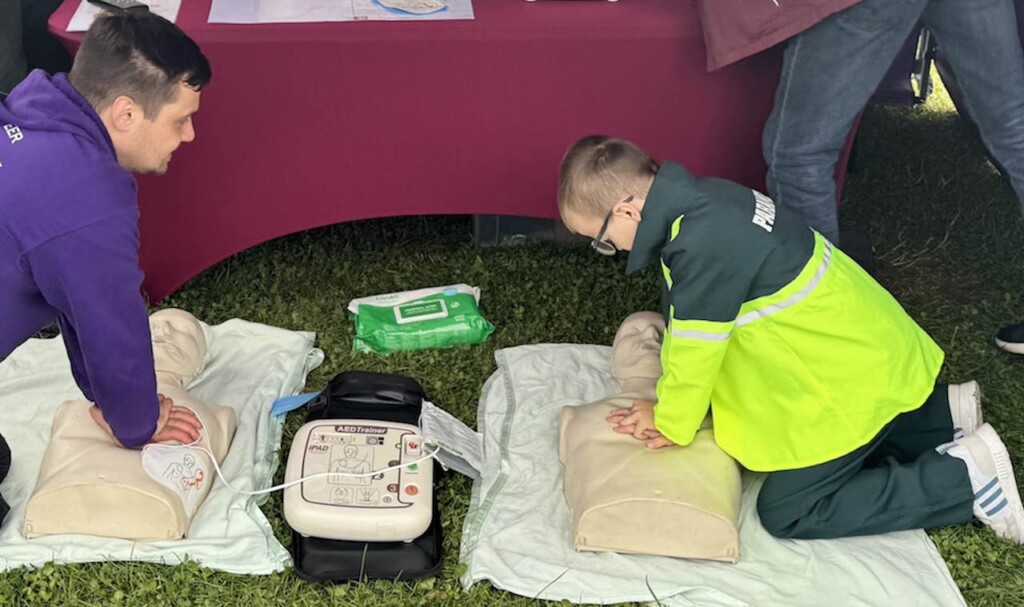
10-yo mini-medic Jack Dawson teaches lifesaving skills to adults – SWNS

He does step-by-step walkthroughs on how to perform CPR with practice dummies laid on the floor, informing people about the dangers—including “looking into patients airways before pumping, in case of vomit or blood”. He gives tutorials on how to operate defibrillators which are used to revive someone from sudden cardiac arrest.

“He absolutely loves teaching,” Danielle told SWNS news agency. “I’ve never seen him so confident before and the fact he’s helping people to save a life determines him even more.”

“People are very surprised. He gets a lot of positive feedback and even special requests to teach people.

“I think people appreciate the information coming from a child, as it makes them think that if a 10-year-old can do it, then they can.”

Under the name ‘Mini Medic’, Jack has a YouTube channel and a page on TikTok posting medical tutorials and training nights for those unable to attend.

As a result of his community work, the 10-year-old is a finalist for Children of Courage Birmingham Awards.

Looking forward, Danielle said he’s enthusiastic about going to university and being a paramedic. “It’s all he thinks about!”WATCH the video below from the news agency SWNS.com… 10-Year-old Paramedic Teaches Adults Lifesaving Skills and CPR as ‘The Mini Medic’