bloggggg

Home  |  Live  |  Science  |  Lifestyle  |  Entertainment  |  Broadcast  |  Games  |  eBooks  |  Astounds  |  Adbite  |  Cricbell  |  Cyber  |  Idea  |  Digital  |  Privacy  |  Publish  |  ePaper  |  Contact  .Subscribe.Subscribe.Subscribe.Subscribe.Subscribe.Subscribe.Subscribe.Subscribe.Subscribe
Subscribe

Friday, 4 September 2026

Zero‑alcohol drinks are rising in popularity. What do young people think about them?

Ann-Marie Kennedy, University of Canterbury; Jennifer Smith, University of Canterbury; Johnpaul Smith, Swinburne University of Technology, and Rachael Dixon, University of Canterbury

Over the past decade, zero-alcohol drinks have gone from a relatively niche product to a staple of our supermarket aisles, bottle stores and pubs.

Their rising appeal in New Zealand and around the world isn’t difficult to understand. Patrons can enjoy the closest thing there is to beer or wine, but without the alcohol, they don’t need to worry about taxi fares or hangovers.

But how do young people view these products? Might they offer an alternative for teenagers as they begin navigating social situations where their peers are drinking?

Or, more concerningly, could products designed to look, taste and feel like alcoholic drinks simply reinforce long-standing problems with New Zealand’s drinking culture?

Our recently published research suggests these booze-free options can indeed fulfil some of the social and symbolic roles young people associate with drinking.

But there are important limits to what they can replace.

Why do young people drink?

The health harms of alcohol are well established – and they rarely stop with the drinker, extending outward to affect partners, families and entire communities.

Globally, this harm contributes to an estimated 2.6 million deaths each year and is linked to more than 200 diseases, injuries and other health conditions.

In New Zealand, its economic toll – through lost productivity, road crashes, healthcare and other impacts – has been calculated at more than NZ$9 billion a year.

The risks of drinking from a young age are known too. Around half of young New Zealanders drink alcohol, with 6.3% drinking at hazardous levels. This early exposure can increase the risk of harmful drinking and dependence later in life.

But it’s also important to remember that young people drink for many reasons other than just getting drunk. It can be part of bonding with others, fitting in or expressing identity. They can drink to celebrate, to feel better or to regulate emotions.

So, if zero-alcohol drinks are going to provide an alternative, can they fulfil these emotional, social, and symbolic roles too?

There are also concerns they could have the opposite effect, potentially creating a gateway to alcohol consumption later on. With relatively little known about how young people perceive these products, we sought to gain a clearer picture.

In our research, we spoke to 52 Year 11 students aged 15 and 16 from three secondary schools across New Zealand.

Using creative, art-based techniques, they shared with us what alcohol and zero-alcohol drinks symbolised for them and whether they thought zero-alcohol could replace alcohol for young people.

We found zero-alcohol drinks could be used to fit in socially. They could also communicate something positive about the person drinking them, such as being responsible for themselves and others.

However, even at this young age, participants recognised that zero-alcohol could not provide the same emotional crutch as alcohol.

For instance, they recognised that zero-alcohol couldn’t “make boring things fun”. In situations they considered inherently fun – going to the beach, weddings or concerts – they could imagine zero-alcohol replacing alcohol.

But in “boring” settings, or situations where they felt socially anxious, they saw regular alcohol as serving a different purpose.

Changing what drinking represents

Our findings suggest several ways health promotion, regulation and education could potentially reduce alcohol harm among young people.

Health promotion could pair zero-alcohol drinks with fun settings normally associated with alcohol, encouraging the idea that there are alternatives to drinking at these occasions.

Restricting alcohol advertising and product placement that link alcohol with fun, could also help reduce that association between alcohol, socialising, and having fun.

As well, young people could be given more education around social skills, coping mechanisms, and emotion regulation, alongside alternative messages to those presenting alcohol consumption as normal.

Ultimately, the symbolic meaning young people attach to zero-alcohol drinks may determine how useful they are as an alternative.

We found evidence that zero-alcohol can be used to fit it, but if it is seen as less valuable than full-strength alcohol, and doesn’t provide the same social status or acceptance, young people may continue to choose alcohol.

But if zero-alcohol gains equal value as a way of socialising and fitting in, it could challenge the idea that drinking alcohol is necessary to be accepted.The Conversation

Ann-Marie Kennedy, Professor or Marketing, Business School, University of Canterbury; Jennifer Smith, Senior Lecturer, Faculty of Education, University of Canterbury; Johnpaul Smith, Lecturer of Marketing, Swinburne University of Technology, and Rachael Dixon, Senior Lecturer, University of Canterbury

This article is republished from The Conversation under a Creative Commons license. Read the original article.

Sunday, 21 June 2026

Laugh your way to good health

Laughing
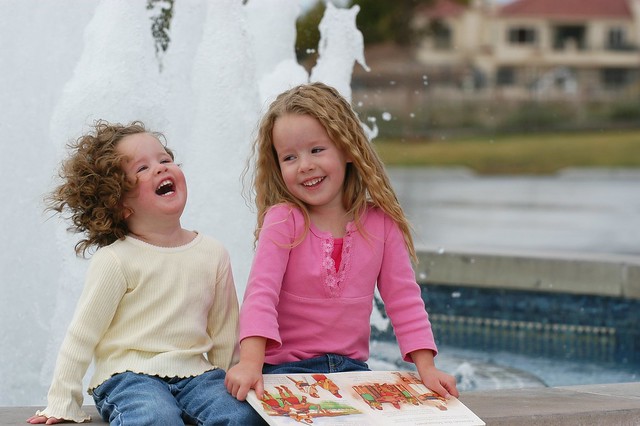
By Ch Saibaba: Every morning this laughing club risks amused glances and jibes when they look up at the sky, take a deep breath of clear, fresh air, and erupt into wild spontaneous laughter. Members of ABC Laughing Club practising hasya yoga The meetings of ABC Laughing Club are perhaps the most serious health activities happening in the city. The group meets at Picket Cantonment Garden at Secunderabad everyday between 6.45 am and 7.45.am. This is a group of more than 50 people so dedicated to preserving their sense of humour, and thereby their sanity, that they happily give up an hour of their sleep to practice hasya yoga, a workout for your funny bone.By simulating laughter and mirth, one can actually fool those endorphins into doing some overtime, says Madan Kataria, the founder of this unique form of exercise. “Feel-good chemicals are released in the brain when you laugh, but if you waited around for something funny to happen, you could go a whole day without cracking a smile. Now, isn't that a waste of a day?” he asks. Joining the group of merry people and taking a place in the laughing circle seems like a positive step towards health and happiness. Each session, with different kinds of laugh, lasts almost an hour, and consists of warm-up and breathing exercises as well. Then one undergoes the entire spectrum of delight: from grunts to giggles, from guffaws to crackles, from smirks to grins. The club consists mostly of people in the age group of 50 and above, and they say that they have derived real benefits from their morning ha-ha. Blood pressure has stabilised, stress-levels have been reduced and the heart is kept happy with this fantastic form of what they say amounts to "internal jogging". Sreenivasa Rao, an active member of the ABC Laughing Club says, “We have been doing this laughing exercise since1998. Since then, our membership has gone up to 70 and our aim is “Always be cheerful” and we are enjoying and experiencing the same.Source: The Hans India, Image: flickr.com

Monday, 27 April 2026

How to model good eating and body image habits for your kids

Courtney P. McLean, Monash University and Chelsea Arnold, Monash University

Raising children to have a good relationship with food and their bodies is one of the best ways to promote good self-esteem and protect them from developing disordered eating.

But this can be tricky if you struggle with eating and body image yourself. So, what should you aim for, and what should you avoid?

First, what is disordered eating?

Disordered eating describes a range of problematic behaviours and attitudes towards eating, weight and the body. It can include dieting, cutting out foods or food groups, skipping meals, fasting, binge eating or exercising excessively.

Not all disordered eating will lead to an eating disorder. But eating disorders are usually preceded by disordered eating, particularly dieting.

Concerns about eating and body image are common and can begin from a young age. Globally, 22% of children and adolescents engage in disordered eating, with higher rates among girls.

Lots of factors influence how kids feel about food and their body, including expectations from media, self-esteem and family attitudes.

Given children observe and model how parents talk about their bodies and food, it can help to model positive or neutral language and eating behaviours. Here are some tips.

4 things to avoid

1. Framing food as ‘good’ or ‘bad’

Don’t talk about dieting, weight loss and “good” or “bad” food, as this can make food a moral issue. For example, saying you’ve “been bad today” for eating something sweet, or “good” for sticking to your diet, can perpetuate shame and guilt around eating.

Instead, aim to talk about how different foods nourish our bodies, or how some foods taste good and are satisfying.

2. Commenting on other people’s bodies

Talking about other people’s bodies, weight or eating habits – whether they’re family, strangers or celebrities – can teach kids to compare and judge themselves against other people.

If your child does comment on another person’s body, you could respond by saying something like, “everyone is different. Some people are taller, shorter, have larger bodies, smaller bodies, and different skin colours”. Celebrating people of all shapes and body sizes can teach kids that weight isn’t a measure of worthiness.

3. Giving appearance-based compliments

When praising your child, focus on things that aren’t related to weight, appearance or eating. For example, “it was generous how you shared your toys today” or “I saw how hard you worked on your homework”.

And when you’re talking to a child you don’t know, an appearance-based compliment (“you look pretty”) may often come to mind first. Instead you might want to comment on their energy, humour, style or creativity (“I love your sense of style” or “you have such good energy”).

4. Criticising your own body

Being a positive body image role model for your children is important. Research shows hearing others criticise their own bodies can lead kids to engage in more negative self-talk about their own bodies. Changing the conversation from appearance to strength, health or function can help (“these arms let me hug you” or “my legs are strong for walking”).

3 things to try

1. Trust your kid knows how much they need

Although it can be difficult, try to trust that your child will eat as much or as little as they need. Children can mostly self-regulate to meet their bodies’ needs. So teaching your child to listen to their body’s physical cues – such as hunger and fullness – can help them build a positive relationship with food.

Parents often want their kids to eat all the food on their plate before they leave the table. But this can lead to struggles over food and teach children to ignore physical cues.

You can still make sure your kids sit until the mealtime is finished, without making it about eating itself.

It can also be reassuring to look at a child’s whole week of eating, rather than focusing on any particular meal or day (which can fluctuate in amount and nutritional value).

2. Find your own pleasure in eating

Eating a variety of foods yourself, and enjoying and appreciating food can provide important role modelling to your child.

If you struggle with your own body image or eating, this might require unlearning diet rules about when, what, and how much to eat. If you find this challenging it could be beneficial to seek professional help.

3. Aim for neutral

For many people, body positivity (“I feel good about my body”) might not be possible, so you might like to aim for body neutrality. This mindset means accepting and respecting your body just how it is.

Body neutrality can involve reframing thoughts and feelings about your body. For example, “I have put on weight” may become “my body is allowed to change”.

What to look out for

Understanding the signs of disordered eating can also be useful to recognise in your children. If you notice drastic changes in your child’s eating or weight, or have other concerns, it could be worth starting a conversation.

Talking about food and bodies can start at any age. Encourage open conversations and invite your child to share their feelings and thoughts about their body and weight.

If your child makes a negative comment about their body, eating, or weight, try to understand what might be driving it and listen without judgement.

And if you’re concerned, reaching out for support can be a crucial step for improving your kids physical and mental health. This could include your kids’ regular GP, or health professionals such as dietitians or psychologists who specialise in eating disorders.


Butterfly Foundation is Australia’s national eating disorder charity and helpline. For free and confidential support between 8am and midnight you can call 1800 334 673, chat online or send an email.The Conversation

Courtney P. McLean, Research Fellow, School of Psychological Sciences, Monash University and Chelsea Arnold, Clinical Psychologist and Research Fellow (Lead Clinician), Monash University

This article is republished from The Conversation under a Creative Commons license. Read the original article.

She Found Her Soulmate 4 Months After Deciding to Start a Family On her Own With IVF

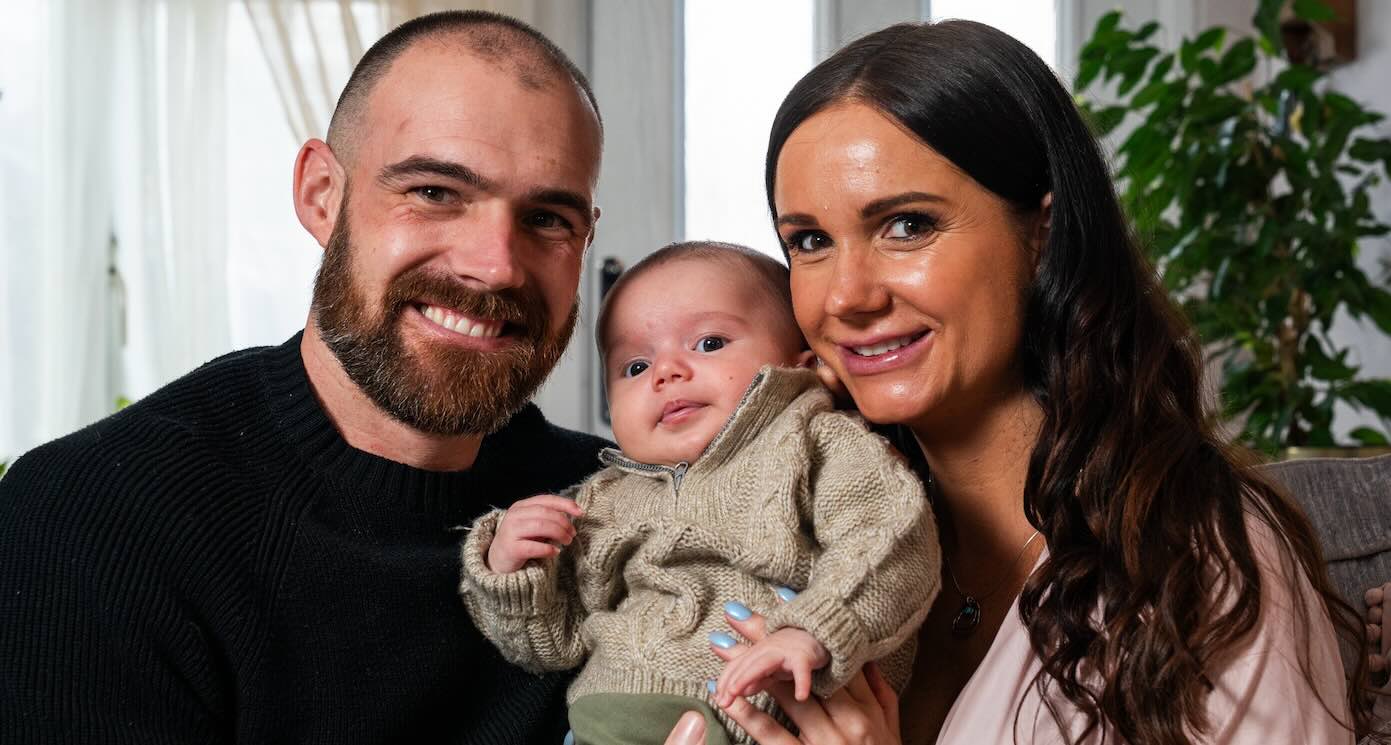
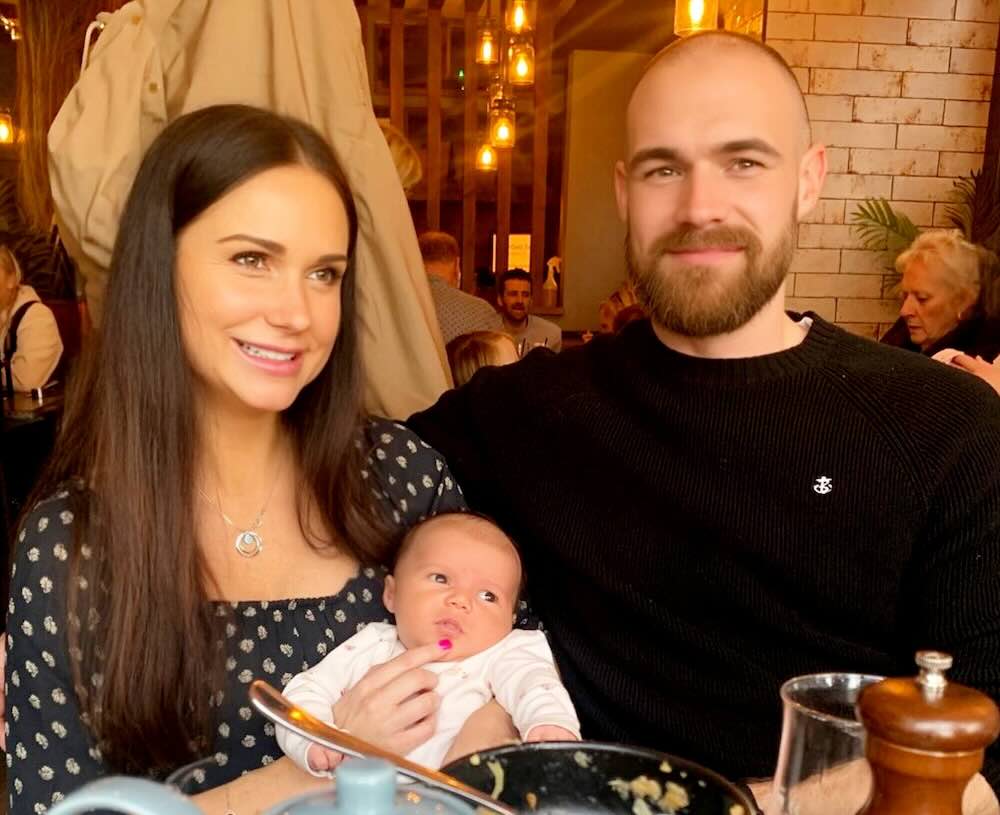
Adam Rice and Natalie Le Prevost with baby Zavi – SWNS

A nurse who gave up on dating decided to pay for IVF treatment to have a baby on her own, before meeting her soulmate four months later—who became a devoted father.

The 39-year-old always dreamed she’d be married by age 30 and have a big family—but after a failed engagement and six years of unsuccessful dating she still hadn’t found her match.

Desperate to become a mother, Natalie Le Prevost decided to go it alone and paid thousands to undergo IVF in Spain, and got pregnant after her first IVF attempt.

More luck came her way at three months pregnant when she unexpectedly met Adam Rice—and the couple really hit it off.

“I had given up on love. I didn’t want to settle for something that didn’t feel right,” said the new mom from Devon, England.

“There was no chemistry,” she told Talk To The Press. “I gave up on love and just decided to go it alone.”

“I’m strong and independent and this was my life-long dream. Everything I’ve always wanted has fallen into place.”

Natalie had her first round of IVF in March 2025, and with the support of her parents welcomed her little boy Zavi-Emilio on Christmas Eve.

“I was on cloud nine,” she said. “I loved being pregnant.

SWNS

Then, while she was four months pregnant, she went on a date with Adam, the electrician in the senior care home where she worked. From their first, she knew instantly that he was her soulmate.

Adam fully supported Natalie’s dream to be a mother, and even came to the hospital just after Zavi’s birth.

“I feel so lucky. Zavi is my little miracle. It’s amazing.”

The trio see each other five nights a week now.

“We’re soulmates. No relationship has felt like this before. We’re even born two-days apart.”

Adam found out Natalie was pregnant half way through our first date.

“I was surprised, but her honesty, her strength, the quiet courage in the way she told me, made me want to stay.

“With every date I felt myself falling for her more deeply.

“Watching her bump grow felt incredibly special, like I was witnessing the beginning of a story I somehow already belonged in.

“The first time I met Zavi, everything inside me just settled; I felt calm, steady and certain. I knew in that moment I was meant to be in his life.

“She was brave enough to choose motherhood on her own, strong enough to follow her heart without waiting for the “right” circumstances. And somehow, life brought us together anyway.“She thought she would be doing this alone, but she won’t be. I feel unbelievably lucky to love them both.” She Found Her Soulmate 4 Months After Deciding to Start a Family On her Own With IVF

Wednesday, 4 March 2026

How to live a long and healthy life, according to the ancients


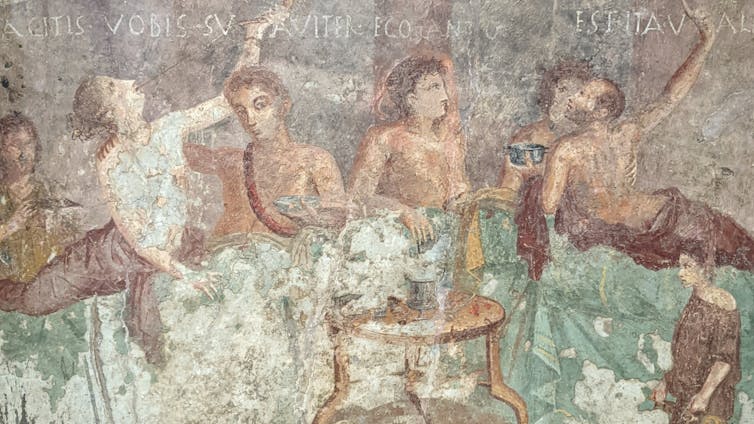
Just like in the modern world, people in ancient times wanted to know how to live a long and healthy life.

Greeks and Romans heard fantastic tales of far-away peoples living to well beyond 100.

Greek essayist Lucian (about 120–180 CE) writes:

Indeed, there are even whole nations that are very long-lived, like the Seres [Chinese], who are said to live 300 years: some attribute their old age to the climate, others to the soil and still others to their diet, for they say that this entire nation drinks nothing but water. The people of Athos are also said to live 130 years, and it is reported that the Chaldeans live more than 100, using barley bread to preserve the sharpness of their eyesight.

Greek essayist Lucian had lots to say about how to live a long and healthy life, as did ancient doctors. Library of Congress, Washington DC/Wikimedia

Whatever the truth of these tales, many ancient Greeks and Romans wanted a long and healthy life.

This is how they thought this could happen.

An ancient doctor’s perspective

Ancient doctors were interested in what people who lived long lives were doing every day and how this might have helped.

The Greek physician Galen (129–216 CE), for example, discusses two people he knew personally in Rome who lived to old age.

First, there is a grammarian (someone who studies and teaches grammar) called Telephus, who lived to almost 100.

According to Galen, Telephus ate just three times a day. His diet was simple:

gruel boiled in water mixed with raw honey of the best quality, and this alone was enough for him at the first meal. He also dined at the seventh hour or a little sooner, taking vegetables first and next tasting fish or birds. In the evening, he used to eat only bread, moistened in wine that had been mixed.

Galen also tells us Telephus had some bathing habits that might seem unusual to us today. Telephus preferred to be massaged with olive oil every day and only have a bath a few times a month:

He was in the habit of bathing twice a month in winter and four times a month in summer. In the seasons between these, he bathed three times a month. On the days he didn’t bathe, he was anointed around the third hour with a brief massage.

Second, there was an old doctor named Antiochus, who lived into his 80s.

According to Galen, Antiochus also had a simple diet.

In the morning, Antiochus usually ate toasted bread with honey. Then, at lunch, he would eat fish, but usually only fish “from around the rocks and those from the deep sea”. For dinner, he would eat “either gruel with oxymel [a mix of vinegar and honey] or a bird with a simple sauce”.

Alongside this simple diet, Antiochus went for a walk every morning. He also liked to be driven in a chariot, or had his slaves carry him in a chair around the city.

Galen also said Antiochus “performed the exercises suitable for an old man”:

There is one thing you should do for old people in the early morning as an exercise: after massage with oil, next get them to walk about and carry out passive exercises without becoming fatigued, taking into account the capacity of the old person.

Galen concludes that Antiochus’ routine probably contributed to his good health well into advanced age:

Looking after himself in old age in this way, Antiochus continued on until the very end, unimpaired in his senses and sound in all his limbs.

Galen stresses that Telephus and Antiochus had some obvious things in common. They ate just a few times a day; their diet was of wild meats, whole grains, bread and honey; and they kept active every day.

An eye exam is under way. But there was more to staying healthy in ancient times. Rabax63/Wikimedia, CC BY-SA

What can you do?

Not all of us can live to 100 or more, as the Greeks and Romans were well aware.

However, Lucian offers us some consolation in his essay On Octogenarians:

On every soil and in every climate people who observe the proper exercise and the diet most suitable for health have been long-lived.

Lucian advised that we should imitate the lifestyles of people who have lived long and healthy lives if we want to do the same.

So, if you lived in Rome in the 2nd century CE, people like Telephus and Antiochus, who had a simple diet and kept active all their lives, would be good role models.The Conversation

Konstantine Panegyres, Lecturer in Classics and Ancient History, The University of Western Australia

This article is republished from The Conversation under a Creative Commons license. Read the original article.

Tuesday, 10 February 2026

Miranda Kerr says all of her kids have been 'taught Vedic meditation'


(Photo : IANS/mirandakerr/insta)

Los Angeles, (IANS) Model Miranda Kerr has shared how she practices Vedic rounding, a technique that combines yoga poses and breathing techniques, with her children.

Kerr has son Flynn, 15, with her ex-husband Orlando Bloom and sons Hart, seven, Myles, six, and Pierre, two, with her current spouse Evan Spiegel, reports femalefirst.co.uk.

She told LYMA's Power Women series: "Each of my kids, except the baby, have been taught Vedic meditation and they each have their own mantra. It's something I've been practicing since I was 17 and it's key to my connection and devotion.

"As an adult you do it for 20 minutes but for my children, my six year old does it for six minutes, seven year old seven minutes and so on."

She added: "This New Year, he (Flynn) said: 'Mum, I want to meditate with you every morning at 6am and do it for 20 minutes. On the days he does it... he's like, 'I really noticed a difference. I felt much calmer the days I did it.'"

Kerr also said that she wakes up at 5.30am every morning as she has become an "early bird" since she started dating Snapchat co-founder Spiegel.

She said: "I wake up every morning between 5am and 5.30am, I'm quite an early bird. I naturally wake up so it's been years of practice because I was naturally a night owl before I met my husband and we've been together 12 years this year.

"I remember one of the first Friday nights we spent together and he's like, 'Okay, let's go to bed'. I'm like, 'It's like 8.30pm'. And he's like, 'Yeah, let's go to bed.' Now I absolutely love it."

Kerr explained that she fits looking after her children into her daily routine as she sends them to bed early before having a round of laser therapy when she retires to the bedroom.

She said: "I get them into bed early and then I have time for myself. I put relaxing music on throughout the whole house at like 5pm and dim the lights so I can naturally help my kids wind down.“I put the baby down at 5.30pm because it's getting dark. The kids and I eat at 4.30pm which is a little bit early. And then I get into bed and put on two mats - a cell optimising mat and my web laser device mat. I do this routine for 15 minutes with the Lyma laser. I then put on the milky mushroom mask and it really plumps the skin, it's an overnight mask.” Miranda Kerr says all of her kids have been 'taught Vedic meditation' | MorungExpress | morungexpress.com

Friday, 26 December 2025

Vani Maharaj’s world of warmth – where Xmas is a way of life

Interior designer Vani Maharaj at the showroom of Divine Living, Stone Street, Port of Spain. -

Bavina Sookdeo

For anyone who knows Vani Maharaj, Christmas and the cosy beauty of its décor immediately bring her to mind.

Christmas has always held a certain magic for Maharaj. Not the glittering, commercial kind, but the warm, deeply nostalgic magic that – if you’re lucky – begins in childhood and never fades.

For Maharaj, an interior designer and creative entrepreneur, the season has been an important part of her personal and professional life from childhood to motherhood, shaping the joyful spaces she creates at home and through her company, Divine Living.

Maharaj, who has a BBA in finance and a master’s in marketing from the Arthur Lok Jack Global School of Business, has designed and decorated homes throughout TT, the Caribbean and even the US.

In 2010, she started decorating as a hobby, and in 2019, she registered the company, which now has two locations – a showroom at Stone Street, Port of Spain, and a design studio and offices in Lange Park, Chaguanas.

In her family home, she says, there was “warmth, discipline, and quiet beauty” – long before Divine Living became a familiar name in local luxury design.

-

“I grew up in a loving, supportive home where my parents encouraged me to follow whatever path felt meaningful,” she recalled. “Our space was always warm, intentional and well cared for, (but) it wasn’t about luxury, it was about the feeling a home could evoke.”

That atmosphere shaped her instinctive pull toward all things beautiful.

“Without realising it then, that environment nurtured my appreciation for beauty and the power of a thoughtfully designed home. I loved transforming ordinary things into something lovely; it was instinctive, not learned.”

But just as important was the example set by her parents, whose work ethic taught her that effort creates opportunity. Her dad retired after years in the corporate world.

Interior designer Vani Maharaj bring the spirit of Christmas to your home. -

“Through school, university, and my early career, I learned one consistent truth: the more effort I put in, the more I achieved.”

Those lessons carried her into adulthood, when design became both her calling and her contribution to the world.

Beneath the professional triumphs and creative ventures – from interior design to cake artistry, mentoring young creatives and dance – one thing has lasted: her love for bringing joy to others.

That’s why interior design has a deep meaning for Maharaj. Handing over a completed home and seeing a client’s joy – sometimes tears, excitement and relief – is something she finds indescribable. What moves her even more are the messages and photos she receives, sometimes years later, especially at Christmas, showing homes still lovingly maintained, often just as she designed them.

“Knowing something I created continues to bring peace and happiness long after the project is finished makes every bit of effort worthwhile.”


As for what Christmas means to her personally, Maharaj explained it is more than décor – it is emotion, memory and the feeling of being enveloped in love.

“Christmas is pure magic. It’s a season filled with family traditions, togetherness and the warmth I grew up with – gathering around the tree, sharing drinks, listening to music and celebrating with the people I love most.

“It represents the joy my parents and grandparents created for me, and the same magic I’ve passed on to my own child.” Those experiences were also shared with her brother.

Her memories are vivid: calling her grandparents on Christmas morning, waiting patiently for everyone to gather before opening gifts, listening to familiar music as her father prepared warm drinks and savouring her mother’s Christmas Eve dinners, made with devotion year after year.

“As a mother, those memories deepened even further.”

Her own Santa-Claus rituals became nothing short of theatrical. She poured her creativity into making Santa feel real for her son, now a teenager. Each year, she created a new experience – handwritten scrolls that seemed to have come straight from the North Pole, a custom “Santa sack” made just for him, and gifts carefully placed inside, especially the one he wished for most.

“I would tell him Santa saved him for last because he was such a special boy, and he was entrusting him with his magical bag,” Maharaj laughed.

After the excitement of opening his presents, her son would write Santa a thank-you letter and put it back in the sack.

“By the next morning, I always made sure the bag was gone – so he believed Santa had returned for it – and the magic stayed alive.”

Christmas evolved into something Maharaj not only celebrated but crafted with intention.

“It became a way to build memories for my family and bring beauty and imagination into our home, in north Trinidad. In many ways, my creative side has shaped the holiday just as much as the holiday has shaped me.”

Maharaj approaches her own Christmas décor by focusing on creating a warm, inviting, quietly magical atmosphere, layering texture, colour, lighting and small personal touches.

“I always start with the mood.”

Pearls, orchids and her signature white-and-neutral palette appear every year, with a touch of festive sparkle. She also insists Christmas décor should be playful, imaginative and full of little surprises.

“For me, decorating is less about perfection and more about creating moments of delight – small touches that make people smile, spark curiosity and turn everyday spaces into a celebration of creativity and joy. It’s about infusing personality into every corner and letting the home tell its own festive story.”

Soft throws, natural elements and layered textures all work together in her home to create an immersive experience. Even scent plays a role. Her favourite is Fraser Fir, a candle from her own Divine Living collection.

“Its fresh, pine-y fragrance instantly evokes Christmas. It’s joyful, comforting and full of nostalgia.”

Maharaj says people often tell her she herself radiates the qualities naturally associated with the holiday season. She takes the compliment lightly, but appreciates it.

“If I do give off that Christmas spirit, it comes from my love for creating joy, comfort and meaningful experiences for others. That feeling people get at Christmas – the warmth, the beauty, the sense of being cared for – that’s something I try to bring into everything I do, every single day. Christmas isn’t limited to one season – it is a way of living and expressing love throughout the year.”

Her most cherished tradition is one she created herself: an annual Gratitude Letter.

“Each Christmas season, when the year settles and reflection comes naturally, my family and I sit together and write everything we’re thankful for. Moments, lessons, joys, the people who supported us…

“We save them in a keepsake box. Over time, it has become a beautiful archive of appreciation, growth and love – quiet reminders of what truly matters.”

She said it is a tradition that reflects exactly who she is – intentional, reflective and heartfelt – and one she hopes will shape the values she instils in her son.

Beyond design and décor, Maharaj is committed to mentorship and supporting other women, creatives and entrepreneurs. She often shares her experiences through talks, forums and informal mentorship. She also supports charitable initiatives year-round, especially over Christmas.

As she put it, “Giving back is one of the most powerful ways to use my skills, time, resources, connections and experiences to uplift others and make a positive difference.”

Christmas strengthens that sense of purpose.

“The past few years taught me resilience and the importance of love and connection. Purpose is born from uplifting others.”

Asked what her ideal future Christmas looks like, Maharaj described it as a celebration that grows with her family, filled with traditions old and new.

“Ultimately, my dream Christmas isn’t about perfection. It’s about creating moments that feel real, heartfelt and unforgettable, with the people I love most.”

Beyond Christmas, she’s looking forward to the year ahead.

“Innovation has always been the heartbeat of my business,” she said. “I’m looking ahead to introducing new ideas, refining my systems, and adding more structure so I can continue delivering exceptional experiences.”

Soon, she plans to offer classes in interior design, and to open another design studio, with certified in-house designers, at the Port of Spain location.

What advice would she give to women trying to build a life that feels authentic, beautiful and aligned with their passions?

Maharaj stressed that there is real strength in “showing up “as your true self – being honest, grounded, and fully present in every moment.

“Begin with understanding yourself – your passions, values and the things that genuinely bring you joy,” she said. “Don’t shy away from taking bold steps toward what excites you, even if it feels unfamiliar or unconventional.

“Surround yourself with people who uplift and inspire you and stay open to learning and growing along the way.”

She urged women to embrace creativity in whatever form it comes to them, and to remember that creating a life that feels authentic and beautiful is a journey.

“It takes intention, self-belief and the courage to make choices that align with who you truly are.

But it’s not all about you.

“Above all, find ways to give back and uplift others as you rise; living authentically isn’t just about your own fulfilment – it’s about the positive impact you leave on the people around you.”

With a busy season ahead of her, Maharaj makes a point of carving out quiet, meaningful moments amidst all the activity, something she advises everyone to do.“Even with decorating, baking and celebrations, I make time to pause and truly experience the season.” Vani Maharaj’s world of warmth – where Xmas is a way of life - Trinidad and Tobago Newsday

Friday, 28 November 2025

Eva Longoria: You have more wisdom, patience when you become a mother in your 40s

(Photo : IANS/evalongoria/insta)

Los Angeles, (IANS) Actress Eva Longoria thinks becoming a mom later in life was "perfect" for her as there is so much more “wisdom and patience in your 40s”.

The actress and her husband Jose Baston welcomed their son Santiago when she was aged 43.

Longoria told The Sunday Times' Culture Magazine: "You have so much more wisdom and patience when you become a mother in your 40s.

"It was all about me for so long. 40 years of me was enough time, so I was really blessed to have my child later in life because I had travelled, I’d done everything I needed to do for my career. Now everything I do is just icing on the cake, and I get to do that with my son.”

The Desperate Housewives actress will only agree to roles if it is fulfilling because her family comes first, reports femalefirst.co.uk.

Longoria said that her family is her priority, “so if I’m saying yes to something and it’s taking time away from them, it’s got to be something I’m really going to enjoy and people I really want to work with."

The actress, who was previously married to the late actor Tyler Christopher and 43-year-old former professional basketball player Tony Parker and Jose were introduced by mutual friends in 2013, and he popped the question to her during a romantic getaway to Dubai, United Arab Emirates, in 2015.

In 2016, they tied the knot in front of 200 guests during their sunset garden ceremony on May 21, 2016, at his lakeside home outside Mexico City.

Eva, who is stepmom to Jose's daughter Natalia and twins Mariana and Jose, from a previous relationship, feels lucky to have him in her life.The Christmas Karma actress gushed: “I’m busy and my career is very important to me, but I’m really fortunate that I met my match in that. He’s totally supportive of my dreams and my goals and what I want to get done.” Eva Longoria: You have more wisdom, patience when you become a mother in your 40s | MorungExpress | morungexpress.com

Monday, 29 September 2025

Priyanka Chopra Jonas’ African holiday is all about wildlife, good food

Mumbai, (IANS) Actress Priyanka Chopra Jonas is sharing what her life has been like, “lately”. On Saturday, the actress took to her Instagram, and shared a bunch of pictures from her vacation in Africa.

The pictures show the actress enjoying her holiday, gorging on some lip-smacking food, shedding the extra pounds in the gym, capturing the wildlife in her lens, sitting under the night sky, and enjoying some breathtaking views.

She simply wrote in the caption, “Lately”. The actress geo-tagged Africa in her location. She also shared an overhead shot of the Nile river in Africa.

The River Nile, which runs through several countries in East and North Africa, is regarded as the longest river on Earth, running nearly 6,700 kilometers from its source in Lake Victoria to its mouth in the Mediterranean.

Earlier, the actress celebrated 16 years of her film ‘Kaminey’, and reminisced about how the film became a turning point in her career after Vishal Bhardwaj offered her the role in the film.

She took to Instagram, where she shared a string of stills from the film, which stars Shahid Kapoor in a dual role and is set against the backdrop of the Mumbai underworld. The actress recalled how the role of Sweety Bhope was offered to her while she was filming ‘Dostana’ in Miami.

“Sweety Bhope. I was filming for Dostana in Miami, Florida with @tarun_mansukhani directing and @bachchan and @thejohnabraham starring. One cool evening after we wrapped up the shoot , I saw a missed call from Vishal Bhardwaj. What?? I had wanted to work with him forever and never thought he would cast me because of my ‘commercial’ image at the time”.

She added, “He said he’d like to come see me, and he did. To Miami. I remember him telling me the story and I said, ‘Well, she has approximately 8 scenes’. And he said, ‘With us working on it, it will end up being so much more. Trust me’. And I did, he promised he would make something incredible for me after this in appreciation for doing the part”.The actress also said that she was just “greedy to work with him”. Priyanka Chopra Jonas’ African holiday is all about wildlife, good food | MorungExpress | morungexpress.com

Thursday, 29 May 2025

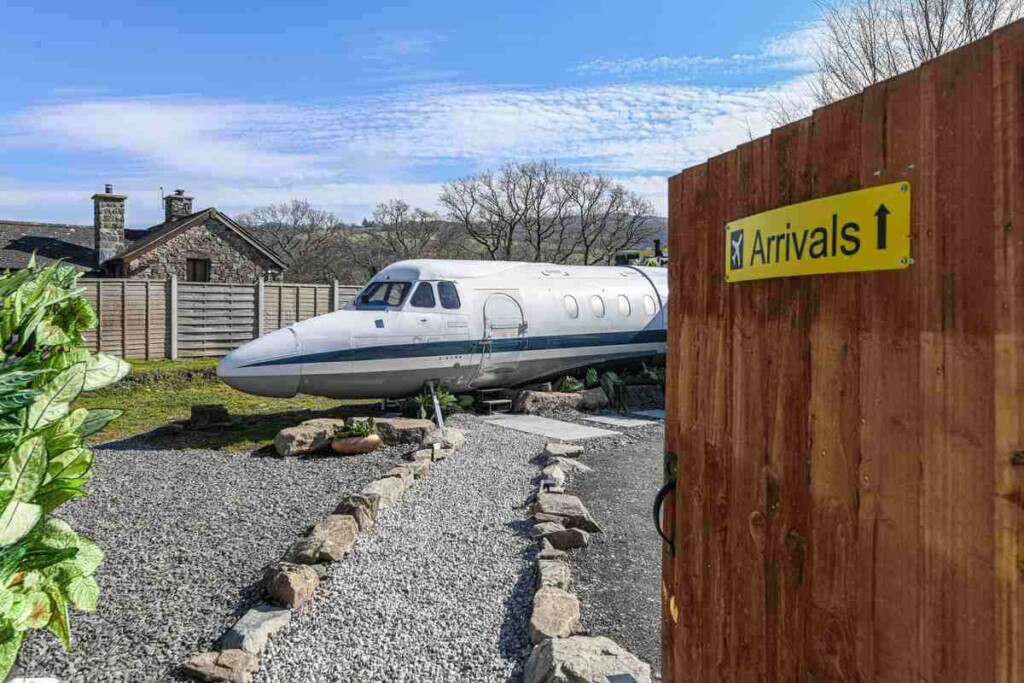
Dad Turns 1970s Private Jet into Airbnb Rental Complete with Original Cockpit–Take a PEEK Inside

credit Tamir Ali via SWNS

A man has turned a 1970s private jet into a tiny home and listed it on Airbnb.

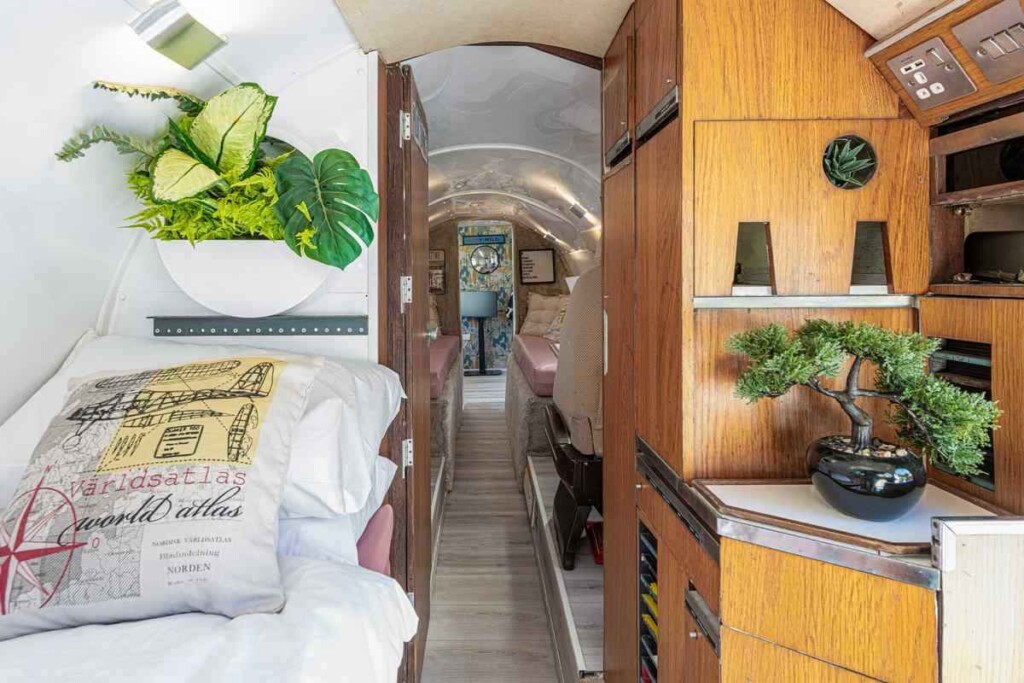
Aviation enthusiasts are sure to love the original cockpit maintained as it was from the days it flew oil executives to and from countries and meetings.\

credit Tamir Ali via SWNS

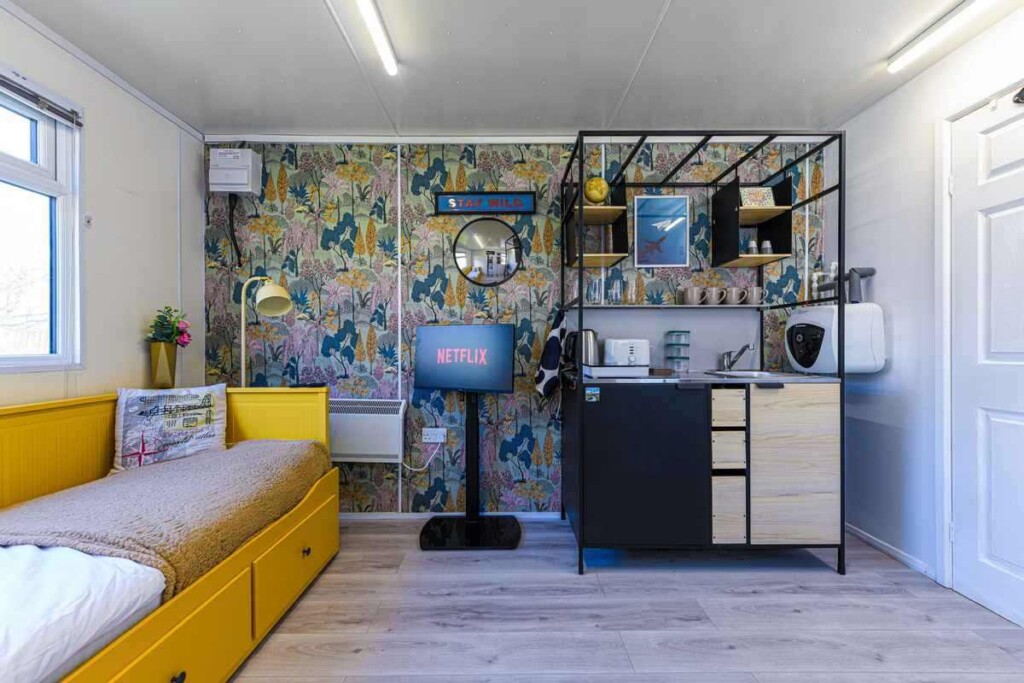
The unique home is complete with two bedrooms, sleeps two adults and two children, and has a fully functioning kitchen, a bathroom with a shower, and outdoor seating area.

The passion project belongs to Airbnb host and antique car renovator Tamir Ali, who acquired ‘half’ of a 1970s Hawker jet in December 2023, from an acquittance who deals in oddities.

After being decommissioned in the 80s, it was cut in half and had the wings removed for ease of transport.

Ali spent seven months and nearly $120,000 transforming the jet into a rental property in Gwynedd, Wales.

“It’s awesome—when people walk in they say it’s much bigger than it seems on the outside,” said Ali. “It’s a unique experience, not many people get to sit in the cockpit of 70’s private jet.”
\
The interior of the fuselage – credit Tamir Ali via SWNS
The interior of the attached cabin – credit Tamir Ali via SWNS

The restoration and renovation process included replacing the carpets with wooden floors, rewiring the electrics, and getting a custom-made door fitted. Ali then secured a location for the plane in Dolgellau and fitted a 16ft by 9ft cabin onto it to make enough space for a double bed, kitchen, and bathroom.


Reflecting on the project, Ali said that in his work restoring cars he’s always brushed up with “eccentric people—people who deal with the weird and wonderful.”

“I know a chap in Essex, who said he had something that was up my street. It was looking a bit worse for wear, the nose cone was hanging off and there was no door,” said Ali, according to SWNS. “There was lots of mold and moss inside, but I immediately envisioned what I wanted it to be.”

Available for £170 per night, “it’s a very, very cool experience.” The pet friendly property has only been on Airbnb for three weeks, but is already at 70% occupancy.“The feedback so far has been good, people seem to love it.” Dad Turns 1970s Private Jet into Airbnb Rental Complete with Original Cockpit–Take a PEEK Inside

Tuesday, 15 April 2025

in an uncertain world, ‘green relief’ offers respite, healing and beauty

Carol Lefevre, University of Adelaide

Have you ever sat with a cup of tea at the end of a weeding session, with a feeling close to happiness? Or returned from the local garden centre with a bag of potting mix and some plants – and soon the sight of your newly planted herbs or flowers makes your heart feel inexplicably lighter?

Perhaps you’re in hospital recovering from surgery, as I was only a little time ago. I regained consciousness in an advanced recovery unit, a dimly lit space with no windows where everything felt slightly surreal and too intense.

I was receiving the best possible care, yet I had a desperate sense of having been cut loose from my life, and even from my body, as it was monitored and medicated throughout the night. Who knows where things might go from here, I thought. Yet I almost didn’t care.

In the morning, I was wheeled away to a room on an upper floor. It was a space flooded with natural light and with a view of a wintry, cloudy sky and distant treetops.

When a friend arrived with a posy of flowers, I found myself smiling for the first time since leaving home. As well as the pleasure of her company, there was a surge of delight at the presence of flowers. Their soft colours soothed something in me that had been clutched tight in fear since my first glimpse of the stark, frankly terrifying operating theatre.

A history of healing

Perhaps now, more than ever, we could all use some green relief, as we deal with a world that seems to only grow more anxiety-inducing and uncertain.

In May, Australians will vote in what has been called “the cost-of-living election”. Housing prices (and homelessness) have soared, too, with one study putting the rise in housing value between March 2020 and February 2024 at 32.5%.

Elsewhere, war rages in Ukraine, Gaza, and other countries, and the world order is wobbling in the wake of the US elections – particularly this week, when Donald Trump’s tariffs sparked a stock market crash not seen since COVID (until he changed his mind yesterday and it recovered) and led to predictions of a recession.

What evidence is there that the natural world can have a healing effect?

In most cultures throughout history, medicine and botany have been closely entwined, and gardens have been associated with healing the body, mind, and spirit. From around the 4th century BCE, Greece had healing centres known as “asclepieia”, after the god of medicine, Asclepius.

In medieval Europe, monasteries kept medicinal gardens. In England, hospitals and asylums were set within landscaped grounds in the belief the tranquillity of the setting played an important role in lifting patients’ mood. Both male and female inmates of 19th-century asylums often worked in the gardens, in what was seen as a healing process administered by the place itself.

Inevitably, the creep of urbanisation saw the garden landscapes of many such institutions greatly reduced, yet the health benefits to patients of connecting with nature remains undiminished.

Flowers and healing

An explanation for the uplifting effect of those flowers in my hospital room may be found in numerous studies that have shown, post-surgery, patients in rooms with plants and flowers have shorter recovery times, require fewer analgesics, and experience lower levels of anxiety. Partly, it is a response to beauty.

As psychiatrist Sue Stuart-Smith writes in The Well Gardened Mind, the human response to beauty involves brain pathways “associated with our dopamine, serotonin, and endogenous opioid systems and damp down our fear and stress responses”. She continues: “Beauty calms and revitalises us at the same time.” We humans have an affinity for patterns and order, she writes. “The simple geometrics we find in nature are perhaps most concentrated and compelling in the beauty of a flower’s form.”

There has been a trend towards banning flowers from hospital wards, on health grounds. Reasons include a suspicion bacteria lurk in the flower water, as well as safety concerns around patients or nursing staff knocking over vases during night shifts.

Florence Nightingale, in her Notes on Nursing, commented on the beneficial effects of flowers on her patients. She added that they recovered more quickly if they could spend time outside, or at least had a room with adequate natural light. “It is a curious thing to observe how almost all patients lie with their faces turned to the light, exactly as plants always make their way towards the light.” Even if lying on a particular side caused pain, patients still preferred it, Nightingale noted – because “it is the side towards the window”.

Our compulsion to turn towards the natural world is known as “biophilia”. The term was first coined in the 1960s, by German–American social psychologist and psychoanalyst, Erich Fromm. He described it as “the passionate love of life and all that is alive”, speculating that our separation from nature brings about a level of unrecognised distress.

In the 1980s, biologist and ecologist Edward O. Wilson, in his book Biophilia, asserted that all humans share an affinity with the natural world. “The urge to affiliate with other forms of life is to some degree innate,” he wrote.

In hospital, as my body began its tentative recovery from the shock of surgery, I remembered a line popularly attributed to the French Impressionist painter, Claude Monet: “What I need most are flowers, always, and always.” Through his paintings, notably his studies of waterlilies, and the garden he established at Giverny, which welcomes visitors to the present day, Monet’s flowers continue to calm and revive us with their transcendent beauty.

Perhaps the simplest way to forge a connection with nature lies in our own suburban gardens, if we are lucky enough to have them. Aside from the pleasure of creating pleasing spaces, contact with the soil bacteria Mycobacterium vaccae has been shown to trigger the release of serotonin in the brain. Serotonin, a natural antidepressant, strengthens the immune system. An added bonus is that when we harvest edible plants, our brain releases dopamine, flushing our systems with a gentle rush of satisfaction and pleasure.

Regular doses of serotonin and dopamine were never more needed than during the pandemic, when lockdowns unleashed a sudden fervour for gardening.

In her book The Garden Against Time, Olivia Laing writes that “over the course of 2020, three million people in Britain began to garden for the first time, over half of them under forty-five”. And it wasn’t just in Britain, where garden centres ran out of plants and compost as people set to work transforming the spaces where they were confined.

Australia experienced a similar surge in interest, with the ABC reporting sales of herb and vegetable plants shot up 27%, joining toilet paper and pasta on the list of panic buys. In the United States, Laing writes, 18.3 million people started gardening, “many of them millennials”. American seed company W. Atlee Burpee “reported more sales in the first March of lockdown than at any other time in its 144-year history”.

Laing writes:

crouched on the threshold of unimaginable disaster, death toll soaring, no cure in sight – it was reassuring to see the evidence of time proceeding as it was meant to, seeds unfurling, buds breaking, daffodils pushing through the soil; a covenant of how the world should be and might again.

It is precisely this “evidence of time proceeding as it was meant to” that has the power to hold humans calmly in place. We may imagine we want more than this from life; despising dullness, we think we crave excitement and change. But given the option, few would choose to wake to an Orwellian “bright cold day in April” to find “the clocks were striking thirteen”, which is how it felt during those nightmarish early days of the COVID-19 crisis.

Life on earth does still feel somewhat bright and cold, its future somewhat bleak; it is as if Orwell’s dystopian vision is at last catching up with us.

Who would believe an activity so apparently humble as gardening could come to the rescue of millions of stressed and fearful people? Yet gardeners seem to know this instinctively.

Tending ourselves

In the book In Kiltumper: a Year in an Irish Garden, co-written with her husband, Niall Williams, Irish writer and gardener Christine Breen describes the ordeal of undergoing cancer treatment through the Irish healthcare system. Following an oncology appointment in Galway, the couple drives home towards west Clare, or as Christine puts it: “back to the garden, where there is safety”.

Christine’s husband Niall confirms that, although the medical community might dismiss the healing power of working in a garden as “airey-fairy”, in Christine’s case, even while weak from chemotherapy, “going about the flower beds, trying to do exactly the same work she had always done” meant continuity.

It represented “carrying on living, because that is one of the prime lessons any garden teaches you: the garden grows on”. He speculates that after many years together, garden and gardener become one: “when we tend it, we tend some part of ourselves”.

If we know this, we too often forget. Consequently, garden centres rarely top the list of most desirable destinations, and gardening has been traditionally represented as fussy and domestic. Weeding and mowing are seen as chores that, if possible, are to be avoided.

In her book Why Women Grow, Alice Vincent writes that gardening has “so many associations, of neatness and nicety; a prissiness that feels deeply removed […] from the sex and death and life on show in every growing thing.” She writes: “When we garden, we change how a small part of the world works.”

Doubtless, it was this sense of being able to change one’s world, of seizing control, that appealed to so many of us during the pandemic. And if we got our hands into the soil, we were rewarded with much-needed infusions of serotonin.

In literature, too, people suffering physically or mentally, or both, have often sought refuge or found solace in a garden.

For many readers, their first encounter with the transformative nature of gardening was Frances Hodgson Burnett’s classic children’s book, The Secret Garden. In it, a spoilt yet neglected child, Mary Lennox, is orphaned in India when her parents and their servants succumb to cholera. She is bundled off to Yorkshire, England, to a daunting atmosphere of secrecy and neglect at Misselthwaite Manor, into the care of an uncle she has never met. There, Mary soon discovers the key to a garden that has been locked for years following her aunt’s death.

In her efforts to restore life to the neglected garden, Mary herself is restored, gradually shedding the lonely, helpless persona of her Indian childhood. When she discovers the manor’s other tightly held secret – her sickly, bedridden cousin, Colin – Mary manages to get him, too, out of the house and into the garden. The outcome is healing for the children, and eventually for Mary’s grieving uncle.

Green prescriptions

For a real-life example of green relief, in The Well Gardened Mind, Sue Stuart-Smith describes how her grandfather – a submariner in the first world war – was taken prisoner during the Gallipoli campaign. After a series of brutal labour camps in Turkey, the last of them in a cement factory, he eventually escaped.

But after the long journey home he was so severely malnourished he was given only a few months to live. Crucial to regaining his health was the devoted nursing by his fiancée, followed by a year-long horticultural course set up to rehabilitate ex-servicemen.

A psychiatrist as well as a gardener, Stuart-Smith writes of the therapeutic effects of working with our hands in a protected space. She describes how gardening allows our inner and outer worlds “to coexist free from the pressures of everyday life”.

Gardens, she writes, are an “in-between space which can be a meeting place for our innermost, dream-infused selves and the real physical world”. In a garden, we are able to hear and process our own, sometimes turbulent, thoughts.

In 1986, after being diagnosed HIV positive, the English artist and filmmaker Derek Jarman retreated to the Kent coast near the nuclear power station at Dungeness. In The Garden Against Time, Olivia Laing writes that at Prospect Cottage, Jarman

began with stones, not plants: the grey flints he called dragon’s teeth, revealed by the tide on morning walks.

Gradually he established a garden in the inhospitable soil, seeing it as “a therapy and a pharmacopoeia” – and “a place of total absorption”.

It was this capacity to slow or stop time, as much as its wild and sportive beauty, that made it such a paradise-haunted place.

The pandemic spread waves of turbulence across the globe. In April 2021, as part of its post-COVID recovery plan, the government of the United Kingdom launched a two-year green social prescription pilot.

Project-managed by the National Health Service, the program worked across seven test sites: areas disproportionately affected by the pandemic. These included people living in deprived areas and people with mental health conditions, many of them from ethnic minority communities.

Over the course of the two-year program, more than 8,500 people were referred to a green social prescribing activity. Green networks were established in all seven test sites. Findings showed positive improvements in mental health and wellbeing – and green social prescribing is ongoing, proof of the program’s lasting impact.

In recent times, doctors in some countries are writing green prescriptions, rather than scripts for medication. And not just for mental health problems, but for physical conditions such as high blood pressure, diabetes and lung diseases.

In the late 1990s, New Zealand became one of the first countries where GPs used green prescriptions to encourage patients to increase their levels of physical activity. Japanese clinicians have been advocating “shinrin-yoku”, or forest bathing for decades. In Finland, with its long dark winters, five hours a month is regarded as a “minimum dose” of contact with nature.

Aside from the physical benefits, time spent in a garden can provide a mood boost for those of us who feel oppressed by calendars, and by clock time’s relentless march. In her 2018 memoir Life in the Garden, Penelope Lively writes:

To garden is to elide past, present and future; it is a defiance of time. You garden today for tomorrow, the garden mutates from season to season, always the same but always different.

Perhaps no group of people stands in greater need of time-defiance than those of us entering the final decades of our lives. Time is short, and we know it. But as now 92-year-old Lively wrote seven years ago: “A garden is never just now; it suggests yesterday and tomorrow; it does not allow time its steady progress.”

Gardening as defiance

My mother pottered in her garden until she was in her early 90s, pruning roses, pulling weeds, planting annuals and throwing down fertiliser. She’d wrestle her walker across the lawn to perch on its seat while she did the watering, before retreating to an armchair in the back room of her house, from where she could admire her achievements.

Gardening in extreme old age was, for her, an act of defiance – against time, and against her children, who nagged about the possibility of a fall and insisted she wear an emergency call button. It was a defiance, too, of the common view that old people should relinquish their homes with gardens and move into something more manageable.

On the face of it, not having a garden to maintain in old age makes perfect sense, but it may come at the expense of our human impulse to seek connection with living things, specifically those in the natural world. So ingrained is our instinct to connect with nature, it appears to survive even when other systems and connections have broken down.

A friend whose Alzheimer’s-afflicted husband is in residential care reports he is constantly finding odd containers, filling them with soil, and planting cuttings gathered from the care home’s garden. He crams them onto his windowsill, even planting in teacups when there is nothing else to hand.

Accustomed to gardening throughout his adult life, his impulse to work with living things persists in defiance of dementia. My friend reflects her mother used to do the same, only she would take pieces from the home’s fake indoor plants, then complain bitterly when they did not grow.

In the care facility my friend visits daily, women pick flowers in the grounds to decorate their walkers, and when there are no flowers they’ll use pictures of flowers cut from magazines. Cutting out paper flowers seems like the action of someone whose garden has been lost, but who still feels a powerful desire to connect with beauty and the natural world.

Imagined gardens

The theories of 20th-century historian Theodore Roszak, in his book The Voice of The Earth, founded the ecopsychology movement.

He believed “humans connect with nature through the ecological unconscious, which is the core of human identity”. Human nature, he wrote, is “densely embedded in the world we share with animal, vegetable, mineral”. He believed reconnecting with nature helps people become more aware of their connection to all living things.

So what are we to do if the garden has been lost?

The French writer Colette, whose books were full of botanical detail, did not cease gardening even when age and arthritis kept her bedridden. Rather than physical gardens, Colette roamed imagined gardens.

There is nothing so terrible about not having a garden any more. The worrying thing would be if the future garden, whose reality is of no importance, were beyond my grasp. But it is not.

Colette planned her “tomorrow garden”, specifying pansies “with wide faces, beards, and moustaches – that look like Henry VIII”. Nothing is too difficult for the imaginative gardener. “An arbour? Naturally I shall have an arbour. I’m not down to my last arbour yet.”

Imagining a garden may seem fanciful. Yet it is less so if considered in the context of embodied semantics – a process where brain connectivity during a thought-about action mirrors the connectivity that occurs during the actual action. (For example, thinking about running or swimming can trigger some of the same neural connections as the physical actions.)

It’s been shown that habitual negativity rewires the brain. Ultimately, it damages it by shrinking the hippocampus: one of the main areas destroyed by Alzheimer’s disease.

But gardens, with their earth-centred sense of time and season, are optimistic places. Watching things grow, deadheading spent flowers and saving seed for the return of spring, are just some of the forward-looking aspects of gardening and perhaps it works as well if the plants and flowers are imagined.

It is logical to go further and ask whether a positive habit, such as imagining a garden, has the potential to help rewire one’s brain in a good way. Imagined gardening is really a form of self-guided imagery, a practice with many applications in the treatment of pain, stress, anxiety and depression.

As we age, ideally we would find ways of getting our hands into the healing soil. Suggestions for gardening in old age, and extreme old age, include introducing raised beds to reduce bending, or working with potted plants.

A friend in her late 70s, with an enviable garden, swears by her Garden Group. Around a dozen friends come together for working bees in each other’s gardens. “You can get a huge amount done in an hour-and-a-half,” she says. Afterwards, they share morning tea – so it is a social as well as practical endeavour. My own best tip is to garden little and often. Committing to half an hour a day, or even 15 minutes, adds up nicely over the course of a week.

American poet May Sarton wrote of gardening as “an instrument of grace”. She regarded the natural world as the great teacher. From the Benedictine Monastery of Saint Paul de Mausole at Saint-Remy-de-Provence, Vincent Van Gogh wrote to his mother: “But for one’s health, as you say, it is very necessary to work in the garden and see the flowers growing.”

Like Monet, Van Gogh needed flowers. We all do. It’s just that many of us forget this during the push and pull of daily life. And in forgetting, we lose touch with our biophilic natures.The Conversation

Carol Lefevre, Visiting Research Fellow, Department of English and Creative Writing, University of Adelaide

This article is republished from The Conversation under a Creative Commons license. Read the original article.

Thursday, 20 March 2025

Some ancient Romans got to retire with a pension at 42, but retirement’s changed a bit over the centuries

Over the ages, there have been broadly three reasons why people have retired.

Some are forced to by poor health – theirs or someone they care for. Others have alternative income sources, meaning they don’t rely on a regular pay cheque. And some are made to retire by an employer who wants to overhaul staffing.

But where did the idea of retirement come from? And how was it handled in ancient times?

Origins of support

Retirement support – which these days comes in the form of superannuation or a government pension – dates back to ancient history in various forms.

Some forms of retirement support were funded by local taxes or tithes, others by donations. Some systems were corrupt and the coverage was patchy.

Records are not readily available from other cultures, but we know a little about ancient Rome and English history since then.

Emperor Augustus, who ruled after Julius Caesar died, set up a scheme for Roman soldiers more than 2,000 years ago. The scheme aimed to ensure they retired while still strong and healthy, and would be less likely to cause trouble.

The scheme paid a decent amount for soldiers after 25 years of service, so retirement age could be as young as 42.

Pensions for older people in need also have ancient origins. The New Testament Bible records the churches had schemes for needy widows right from the beginning.

In the early Middle Ages, monasteries often provided for the needy, but Henry VIII famously closed them and took their assets. A fair share of their assets ended up with high government officials after the king’s takeover.

Industry funds can also be seen to date back at least to the Middle Ages, where the trade guilds provided for members and their families who fell on hard times.

Retail funds mainly began as mutual life insurance companies that began more than 200 years ago.

In the 18th century, the East India Company and the Bank of England began offering pensions. These were at first discretionary based on need and loyalty, but later covered all employees. This idea then spread to other larger companies such railways and banks.

As modern states developed the capacity to collect income taxes, it became feasible to provide comprehensive retirement benefits funded by central government.

Beginning with Germany in 1889, developed countries began introducing universal national age pension arrangements.

Unfortunately, a number of countries, such as Papua New Guinea, still do not have the capacity to provide a universal safety net to cover older people.

Retirement in Australia

Three Australian states began schemes in 1900, and the federal government provided a universal (but means tested) scheme from 1909.

Most Australian retirees seem to enjoy a favourable standard of living. The Grattan Institute finds that the poorest 30% are, in fact, better off in retirement.

Massive house price and rental inflation in the last 30 years, however, has gutted the living standards of those who don’t own their own homes. This gap in the safety net needs to be addressed.

Retirement ages

The Roman army model persists in some countries to this day: retirement from the US military is available after 20 years of service.

Retirement this early is obviously very expensive. The church scheme mentioned in the New Testament had a minimum age of 60, which is still the normal retirement age in many countries.

The OECD reports the average age of retirement in their 38 member countries is just under 64 for women, and just over 64 for men.

Australians now qualify for the age pension at 67, which is slightly older than average.

Retirement ages are, however, rising to allow for “population ageing”, a longer life expectancy and lower birth rates. Life expectancy at retirement age is the important number when calculating the cost of pensions.

In ancient Rome it was about seven years and was about the same in Sweden in the middle of the 18th century.

In Australia, the life expectancy of a 65 year old woman has risen from 12 years in 1895 to 23 years on average.

Earnings-related pensions

The 1889 German scheme paid a minimum pension, plus an earnings-related component. Workers had a book for stamps for each week’s earnings.

The Australian age pension has always just paid a minimum “liveable” amount. This has been subject to different means tests over time, but retirees have been able to supplement it with their own savings.

Until 1987, only 40% of Australian employees were covered by employer sponsored schemes. Then in 1992, the Superannuation Guarantee Scheme was introduced. Under this, employers were required to contribute 3% into all exployees’ super.

The standard rate will rise to 12% in July next year.

The future

A growing ageing population will mean the Australian government and superannuation industry will need to adjust current support systems.

Over the next decade, about 2.5 million Australians will move from accumulation (where you’re building up your super) to join the 1.6 million already receiving super benefits.

We can expect more people to be living into their nineties and needing pensions for life.

One government priority is to make lifetime pensions as much part of the Australian system as they are in the rest of the world

And after 30 years of growing complexity in the rules covering superannuation, regulators are counting the cost, and planning some simplification.


This article is part of The Conversation’s retirement series, in which experts examine issues including how much money we need to retire, retiring with debt, the psychological impact of retiring and the benefits of getting financial advice. Read the rest of the series here.The Conversation

Anthony Asher, Associate Professor in the UNSW Business School, UNSW Sydney

This article is republished from The Conversation under a Creative Commons license. Read the original article.