Tuesday, 15 September 2026
Tejasswi Prakash: AI can never replace the human element
Monday, 24 March 2025
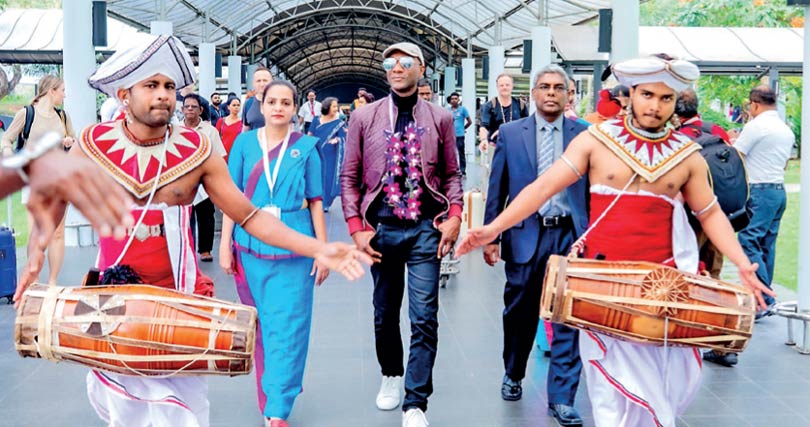
Aloe Blacc keen to promote Sri Lanka as attractive investment destination

- Arrives in Colombo for two-day visit through an invitation by GoSL, Sri Lanka Tourism
- Expects to engage with local entrepreneurs, artists, fostering collaborations to benefit both cultural and scientific communities
- Meetings scheduled with local entrepreneurs specialising in cashew and coconut-based products, organic goods, natural energy drinks, and food and agriculture, authentic Ceylon Cinnamon
- Senior Adviser to the President on Science and Technology Prof. Gomika Udugamasooriya says Blacc is prepared to invest in Sri Lanka, including tourism sector
Wednesday, 1 January 2025
Drug companies pay doctors over A$11 million a year for travel and education. Here’s which specialties received the most
Drug companies are paying Australian doctors millions of dollars a year to fly to overseas conferences and meetings, give talks to other doctors, and to serve on advisory boards, our research shows.
Our team analysed reports from major drug companies, in the first comprehensive analysis of its kind. We found drug companies paid more than A$33 million to doctors in the three years from late 2019 to late 2022 for these consultancies and expenses.
We know this underestimates how much drug companies pay doctors as it leaves out the most common gift – food and drink – which drug companies in Australia do not declare.
Due to COVID restrictions, the timescale we looked at included periods where doctors were likely to be travelling less and attending fewer in-person medical conferences. So we suspect current levels of drug company funding to be even higher, especially for travel.
What we did and what we found
Since 2019, Medicines Australia, the trade association of the brand-name pharmaceutical industry, has published a centralised database of payments made to individual health professionals. This is the first comprehensive analysis of this database.
We downloaded the data and matched doctors’ names with listings with the Australian Health Practitioner Regulation Agency (Ahpra). We then looked at how many doctors per medical specialty received industry payments and how much companies paid to each specialty.
We found more than two-thirds of rheumatologists received industry payments. Rheumatologists often prescribe expensive new biologic drugs that suppress the immune system. These drugs are responsible for a substantial proportion of drug costs on the Pharmaceutical Benefits Scheme (PBS).
The specialists who received the most funding as a group were cancer doctors (oncology/haematology specialists). They received over $6 million in payments.
This is unsurprising given recently approved, expensive new cancer drugs. Some of these drugs are wonderful treatment advances; others offer minimal improvement in survival or quality of life.
A 2023 study found doctors receiving industry payments were more likely to prescribe cancer treatments of low clinical value.
Our analysis found some doctors with many small payments of a few hundred dollars. There were also instances of large individual payments.
Why does all this matter?
Doctors usually believe drug company promotion does not affect them. But research tells a different story. Industry payments can affect both doctors’ own prescribing decisions and those of their colleagues.
A US study of meals provided to doctors – on average costing less than US$20 – found the more meals a doctor received, the more of the promoted drug they prescribed.
Another study found the more meals a doctor received from manufacturers of opioids (a class of strong painkillers), the more opioids they prescribed. Overprescribing played a key role in the opioid crisis in North America.
Overall, a substantial body of research shows industry funding affects prescribing, including for drugs that are not a first choice because of poor effectiveness, safety or cost-effectiveness.
Then there are doctors who act as “key opinion leaders” for companies. These include paid consultants who give talks to other doctors. An ex-industry employee who recruited doctors for such roles said:
Key opinion leaders were salespeople for us, and we would routinely measure the return on our investment, by tracking prescriptions before and after their presentations […] If that speaker didn’t make the impact the company was looking for, then you wouldn’t invite them back.
We know about payments to US doctors
The best available evidence on the effects of pharmaceutical industry funding on prescribing comes from the US government-run program called Open Payments.
Since 2013, all drug and device companies must report all payments over US$10 in value in any single year. Payment reports are linked to the promoted products, which allows researchers to compare doctors’ payments with their prescribing patterns.
Analysis of this data, which involves hundreds of thousands of doctors, has indisputably shown promotional payments affect prescribing.
US research also shows that doctors who had studied at medical schools that banned students receiving payments and gifts from drug companies were less likely to prescribe newer and more expensive drugs with limited evidence of benefit over existing drugs.
In general, Australian medical faculties have weak or no restrictions on medical students seeing pharmaceutical sales representatives, receiving gifts, or attending industry-sponsored events during their clinical training. They also have no restrictions on academic staff holding consultancies with manufacturers whose products they feature in their teaching.
So a first step to prevent undue pharmaceutical industry influence on prescribing decisions is to shelter medical students from this influence by having stronger conflict-of-interest policies, such as those mentioned above.
A second is better guidance for individual doctors from professional organisations and regulators on the types of funding that is and is not acceptable. We believe no doctor actively involved in patient care should accept payments from a drug company for talks, international travel or consultancies.
Third, if Medicines Australia is serious about transparency, it should require companies to list all payments – including those for food and drink – and to link health professionals’ names to their Ahpra registration numbers. This is similar to the reporting standard pharmaceutical companies follow in the US and would allow a more complete and clearer picture of what’s happening in Australia.
Patients trust doctors to choose the best available treatments to meet their health needs, based on scientific evidence of safety and effectiveness. They don’t expect marketing to influence that choice.![]()
Barbara Mintzes, Professor, School of Pharmacy and Charles Perkins Centre, University of Sydney and Malcolm Forbes, Consultant psychiatrist and PhD candidate, Deakin University
This article is republished from The Conversation under a Creative Commons license. Read the original article.
Friday, 17 May 2024
J&K Sports Council, Senior Hockey Players promote Hockey among Toddlers

Thursday, 24 August 2023
How gender inequality is hindering Japan’s economic growth
Sarah Parsons, Senior Teaching Fellow and Lecturer in East Asian Business, SOAS, University of London This article is republished from The Conversation under a Creative Commons license. Read the original article.Tuesday, 10 April 2018
Raising transparency in the online advertising ecosystem
Sunday, 8 April 2018
Facebook moves to make electoral ads transparent and accountable
- Facing widespread criticism for the handing over of personal data of 87 million users to a political consultancy, Facebook has decided to increase transparency and accountability for electoral and issue ads.
- CEO Mark Zuckerberg will appear before the US Congress next week to address queries relating to the harvesting of personal data of 87 million users by Cambridge Analytica, the British political consultancy, which worked for President Donald Trump's campaign.
- The company announced important changes to the way it manages ads and pages on Facebook and Instagram, its photo and video-sharing social networking service. “These are designed to increase transparency and accountability, as well as prevent election interference,” said Facebook.
- "Advertisers will be prohibited from running political ads electoral or issue-based until they are authorised, Facebook said, announcing plans to make advertisements on its platform more transparent.
- Last October, FB had allowed only authorised advertisers to run electoral ads. It has now decided to extend the requirement “to anyone that wants to show ‘issue ads’ — like political topics that are being debated across the country.”
- It is working with third parties to develop a list of key issues, which will be refine over time. Advertisers will be prohibited from running political ads — electoral or issue-based — until they are authorised. The ads will also be clearly labelled ‘political.’
- The company said it is investing in artificial intelligence and adding more people to help find advertisers who should have gone through the authorisation process. “We realise we won’t catch every ad that should be labeled, and we encourage anyone who sees an unlabeled political ad to report it,” said an FB statement. ”Source: https://www.domain-b.com/
Saturday, 12 November 2016
Kraftly, Ministry of Textiles sign deal to promote handlooms
Wednesday, 13 January 2016
10 fresh restaurant marketing ideas for 2016
- Take loyalty seriously — Did you know it costs a business 5-7 times more to acquire a new customer than it does to sell to an existing one? Not only that, but on average loyal customers spend 10 times more over their lifetime. By taking customer loyalty seriously and offering customers the ability to earn rewards for visiting your business, you'll be able to retain your most profitable customers and allocate resources you might have wasted on customer acquisition, to more value-add activities.
- Build a simple, elegant website — Almost 50 percent of restaurant website traffic takes place on mobile devices, according to a Gourmet Marketing.com article. Restaurants that offer responsive mobile websites convert up to 64 percent of searchers. There are many high quality DIY websites that enable restaurants to build their own mobile friendly websites like Squarespace and Wix. Website content about you, your restaurant and your multitude of seasonal menus should be limited to only a few, clearly defined options (e.g. menu, order, contact, locations). Mixed Greens, a local business in Chicago, gets an A+ for website functionality and design.
- Grow your customer review bank — Your reputation can make or break your business. The sheer volume of reviews doesn't really matter. Instead, the number of positive reviews becomes your restaurant's lifeblood. Sites such as Yelp, Urbanspoon and Zagat provide a medium for customers to express their likes and dislikes about your food, ambience and customer service. According to a survey conducted by Dimensional Research, people who had a poor interaction were 50 percent more likely to share it on social media than those who had a good experience, and 52 percent were more likely to share it on an online review site such as Yelp. Be sure to stay on top of your business's reputation by responding publicly to all reviews. You should also give your most loyal customers the ability to review your business on Yelp — increasing the likelihood that they'll leave a positive review!
- Become a social media medium — The number of social media outlets customers' have available rivals the number of Crest toothpaste options found at your local grocery store (last count was 38 at my local store). It's important not to get lost in the myriad of options but instead, remain focused on nurturing the ones that matter the most. Once you've created a Facebook page and Twitter handle for your restaurant, focus on gathering more "Likes” and "Tweets" by driving customers to talk about their visit online. There are also quite a few social media management tools available to help you manage your social media presence, including Sprout Social, Hootsuite and Buffer.
- Gather data on your customers — It is not 1995, yet some restaurants continue to have customers drop their business cards in a fishbowl or hand write their email addresses on a piece of paper at the register. Or better yet, some restaurants collect absolutely no information about their customers. Gathering data about your customers is no longer optional in today's highly competitive, online world. Offering a digital loyalty program brings traditional offline data-gathering methods online by allowing your restaurant to collect actionable data on your customers and make decisions that positively impact your business.
- Participate in the on-demand economy — According to Mike Jaconi, contributor for Business Insider, the on-demand economy is defined as "the economic activity created by technology companies that fulfill consumer demand via the immediate provisioning of goods and services." Companies such as Postmates, GrubHub and Caviar are worth considering because of their ability to extend the existing reach of local restaurants and to have a positive impact on labor allocation toward food delivery and on-demand ordering.
- Use mobile to gamify customer experience — It's no secret that we all love our smartphones. As customers, we live in a much more mobile world compared to a decade ago. By embracing the mobile trend, restaurants that partner with loyalty apps or offer their own app are seeing an increase in engagement and activity that can lead to stickiness, deeper connections and greater loyalty. For example, Tropical Smoothie was able to decrease time between customer visits by 50 percent by surprising and delighting their customers. Using their loyalty program, they emailed their customers to visit for a chance to win a free smoothie.
- The farm-to-table and local fresh wave is here to stay — By not offering your customers locally sourced food products, you're missing out on a two-sided advantage on which other restaurants that do offer local are capitalizing. From a food perspective, providing locally sourced ingredients means you're offering customers fresh, high quality ingredients that generally command higher prices and better margins. From a marketability perspective, offering farm-to-table ingredients means the perception of your food quality is much higher than it otherwise would be. Additionally, you create the perception that you're building goodwill within the local community by supporting small local farmers. Restaurants that offer farm-to-table options and that source many menu items locally include Farmhouse in Chicago and Redbird in Montana.
- Offer online reservations — If you currently don't offer a way for customers to book reservations online, you should consider signing up for an online reservation like OpenTable. Online reservation tools provide new and existing customers with a fast and easy way to book new reservations, change reservations and share their experiences.
- Allergen friendly and gluten-free — The point here is to expand your audience — continue to cater to the majority of us without food allergies — but now find select partners to source allergen-friendly options that make it possible for the family of four who has a child with celiac disease to enjoy food at your restaurant. You offer whole-wheat pasta on your menu, so why not also offer brown rice pasta? Offering allergen-friendly and gluten-free options doesn't have to be a yes or no, black or white decision. It is possible to safely provide alternatives either made in-house or sourced from certified allergen or gluten-free partners such as Sweet Ali's Gluten Free Bakery or Defloured. Source: http://www.qsrweb.com/
Monday, 23 November 2015
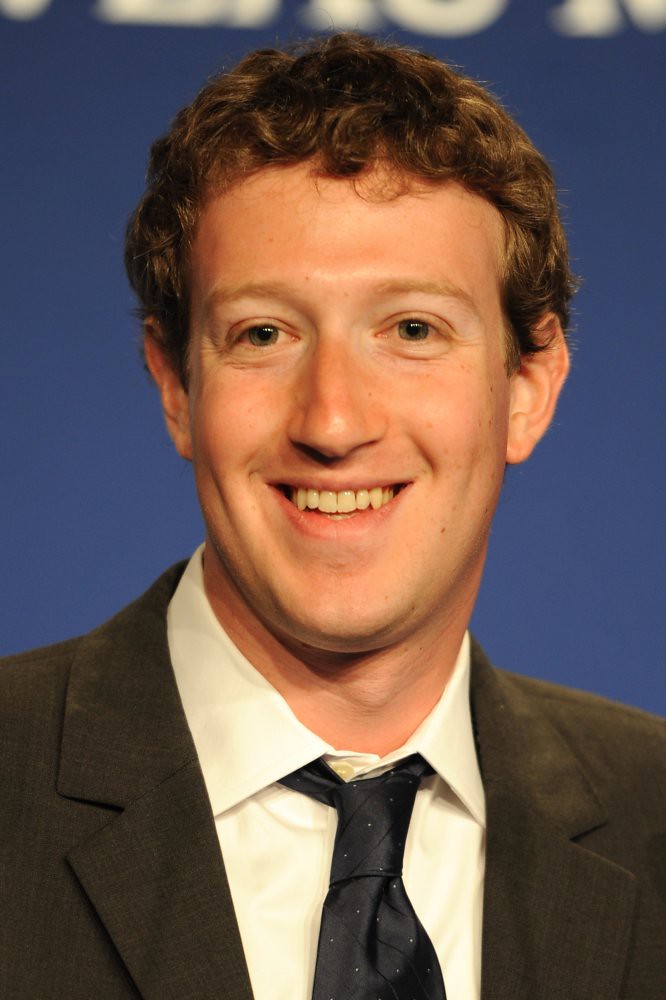
Facebook chief Mark Zuckerberg to take two months of paternity leave

Facebook CEO Mark Zuckerberg said on Friday he would take two months paternity leave after the birth of his daughter. Silicon Valley technology firms had rushed to extend parental leave allowances as also other benefits as they attempted to recruit and retain talent, though many workers choose not to take advantage for fear of falling behind at work or missing out on promotions. Facebook, the world's biggest online social network, allowed its US employees to take up to four months of paid maternity or paternity leave, which could all be availed at once or throughout the first year of their child's life, a policy which was generous by US standards. Zuckerberg announced in July that he and his wife, Priscilla Chan, were expecting a baby girl. According to a 2015 study by the Society for Human Resource Management 21 per cent of employers it surveyed offered paid maternity leave, and 17 per cent provided paid paternity leave. "This is a very personal decision," Zuckerberg wrote on his Facebook page, along with a picture of a stroller, a yellow baby carrier and his dog, Beast. Zuckerberg wrote on Facebook, "Priscilla and I are starting to get ready for our daughter's arrival. We've been picking out our favorite childhood books and toys. "We've also been thinking about how we're going to take time off during the first months of her life. This is a very personal decision, and I've decided to take two months of paternity leave when our daughter arrives. "Studies show that when working parents take time to be with their newborns, outcomes are better for the children and families. At Facebook we offer our US employees up to 4 months of paid maternity or paternity leave which they can take throughout the year. "Every day things are getting a little more real for us, and we're excited to start this next stage in our lives." Source: Article, Image: flickr.com
Friday, 20 November 2015
Raymond invests Rs 61.68 cr in RLCL
Sujata Sachdeva, Suiting fabric maker Raymond has invested Rs 61.68 crores in Raymond Luxury Cottons (RLCL) by subscribing to equity shares. As speculated earlier, the company also confirmed appointment of Sanjay Bahl as Chief Financial Officer (CFO) after M Shivkumar resigned from the post. “RLCL has allotted the equity shares and the investment of Raymond Limited in the equity share capital of RLCL now stands at Rs 127.68 crores constituting 75.69 percent of the equity capital,” Raymond said in a BSE filing. Bahl's appointment was effective from November 16, 2015. Bahl, a chartered accountant has over 25 years of experience in FMCG, fertilisers, construction products and retail. Of late, Raymond is shifting its energies to refurbish its stores, while investing in marketing and advertising initiatives to drive margins and woo the young audience. The company’s focus on ‘Made to Measure’ personalised clothing stores are also expected to contribute positively to the company’s bottomline in future. Though costs on these new initiatives may pressure margins in this segment in the short term, according to the analysts, improved performance could boost sales and profitability in the long-term. Source: Article
Wednesday, 8 July 2015
Steffi Graf appointed brand ambassador of Ayurveda in Kerala
Sunday, 19 April 2015
Synthetic Fibres: a New Trend in China
Saturday, 27 December 2014
Smart Korea,Smart Culture,Smart Tourism
Kwang-shik Choe, Minister of Culture, Sports and Tourism (MCST)
work and school week expand, and to encourage more talent donation programs – contributing individual talents to public welfare. Personally, I started to learn Danso, a Korean short bamboo flute, and it provides me with immense refreshment. Now, I am proud of being able to play ‘Arirang’, a Korean folk song,“ the minister said. ‘One Day, Two Nights’ is another slogan the minister has advocated to foster a more productive and creative leisure environment. “The MCST is promoting domestic tourism for the public to travel to various places throughout the country for one day and two nights, and also to boost regional economies. Korea has many beautiful tourist attractions that are not well known, so the MCST has selected ’99
Must-Visit Tourist Attractions’. The list, compiled by local travel experts after a thorough examination of tourist attractions across Korea, will be useful for both Korean and foreign travelers alike.” Smart Tourism: “With the rapid penetration of smart devices – reaching 30 million - and the advanced digital infrastructure, the MCST is stimulating smarter tourism. Tourists can reserve hotels, purchase train and airline tickets in real time via their smart phones, as well as share travel information and experiences with social
Besides, the ‘Korea Smart Tour Guide’application provides audio services and digital contents for the tourists to better enjoy the stories behind Korea’s major historical heritages, as well as national museums,” he said. For foreign tourists, the language barrier which is the biggest obstacle for travels, can be removed with the help of ‘Genietalk’, the Korean-English interpretation application, developed by Electronics and Telecommunications Research Institute (ETRI). Providing 270,000 Korean
words and 65,000 English words, it boasts over an 80% successful interpretation rate in a real-life situation. It is expected to add six more languages including Japanese, Chinese, and Spanish by 2018. For a tourist to report a complaint, visitors can call 1330, which is offered in four languages, Korean, English, Japanese and Chinese. Smart Cultural
Exchange: “The MCST also took an initiative in promoting a global cultural exchange with the advancement of smart technology. As seen from the huge ripple effect of Psy’s “Gangnam Style”, SNS has become an effective channel for the fast and easy delivery of content. We have been running
Korea Culture Centers across the world to exchange diverse cultures through Facebook, Twitter, YouTube, and Flickr. They allow local people to experience the traditions and history of Korea through specialized programs, events, and multiple learning resources. On top of this, Korean cultural arts are promoted and shared in collaboration with Google Art Project, an online
platform through which the public can access high-resolution images of artwork housed in the initiative’s partner museums. Currently, around 5,000 pieces of Korean art are posted on the website.” The advancement of personal smart devices has had an influence on the Korean content industry – games, film, music, and animation – which has steadily grown for the past few years. The amount of content exported increased to USD 4.3 billion in 2011, an increase of 35% from the previous year. Korean game companies
such as NEXON and NCsoft account for around 60% of the total content exported and ranked 6th in global market share. Keeping pace with the smart trends, they are now focusing on developing games transcending the boundaries of the Internet, mobile, and game consoles. K-pop and Korean
dramas, which used to center around Asian regions, are now expanding into other continents through social media. Psy’s “Gangnam Style”was viewed on YouTube throughout 222 countries. Promoting Korean culture overseas has helped improve the perception of Korean people, as well as the economy. Minister Choe also emphasized the importance of global content exchange. Quality content is created based on cultural diversity and
Indeed, personnel exchange of producers and actors have been on the rise recently. It is essential for the government to enable more diverse content to be introduced across the border.Under the vision of ‘Envisioning a greater tomorrow through culture’, the Ministry of Culture, Sports, and Tourism is now aiming for enjoyment, harmony, and progress through cultural promotion. “The MCST is aiming to re-energize life as well as the creativity of work by fostering cultural activities and increasing global cultural exchange, along with the help of the increasing number of smart devices,” he said. Visit Korea 2.0, Source: Koreaittimes
Saturday, 25 October 2014
CMI named as a finalist for the PMA Impact Award in packaging
- Steve Lutz , CMI, Tel: +1 509-888-3401.,
- Email: SteveL@cmiapples.com,
Monday, 20 October 2014
4 things you should know if you think you have no money for marketing
- he can develop a better offer than his competitors' for final consumers: innovative products, new product varieties, better and more attractive packaging, a more inspiring brand. All things that do not demand huge investments but can deliver meaningful results
- he can develop a better offer than his competitors' for trade channels: this means using a trade marketing approach, crafting his offer on his customers' (wholesalers, for example) and the customers of his customers needs (restaurants, for example).
- he can invest his little marketing budget in, in-store activities in the shops that carry his products: these activities (for example, POS materials placements or extra displays) are the ones that can bring faster returns in terms of additional sales
- he can create and develop his online presence: these days, and this will be even more the case in the future, consumers are more and more online. Some companies have been able to build successful brands by being great online, with no investments in traditional advertising at all. Indeed the online world has still costs that are accessible to almost anyone. This way, blogging, content marketing, social media can help James and similar business with getting their products and brand known, potentially all over the world.
- For more info: Maurizio Pisani
- maurizio@pisaniproducemarketing.com
- www.pisaniproducemarketing.com
- Publication date: 9/22/2014
Sunday, 5 October 2014
Pantaloons associates with ‘Bang Bang’
Saturday, 27 September 2014
Sophie Choudry At Country Club Press Conference

Wednesday, 2 July 2014
Advanced Hair Studio "A Grand Solution For The World Cricketing Icons