Wednesday, 25 February 2026
‘Mushroom Mining’ Could Be Cheap Way to Recover Rare Earth Minerals from Industrial Waste

Saturday, 29 June 2024
Formula One is moving towards hybrid engines and renewable fuel. Major environmental progress or just ‘greenwashing’?
For the millions of fans who tune into every race, Formula One (F1) is more than just a sport – it’s the apex of aerodynamics, skill and strategy.
Behind the scenes, a quieter but more crucial race against carbon emissions is unfolding.
Given the sport’s substantial carbon footprint, F1 has faced criticism from society and even from its own drivers.
For example, Sebastian Vettel, a four-time F1 world champion, expressed his concerns by stating:
When I get out of the car, of course I’m thinking as well, ‘is this something that we should do, travel the world, wasting resources?‘
In the pursuit of speed and sustainability, F1 teams committed in 2019 to achieving a net zero emissions goal by 2030.
As part of this goal, every team has expressed their intention to use 100% renewable fuel by 2026. F1 has also just announced it will mandate hybrid engines with a 50-50 split between electric and combustion power.
However, it is crucial to consider whether these promises to go greener are achievable or if this commitment is just an attempt to greenwash the sport.
Just how big is F1’s environmental footprint?
According to a report from F1, the sport releases around 256,000 tons of carbon dioxide into the atmosphere every season.
While cars are often the focus, in reality, the behind-the-scenes activities have a larger environmental impact, as a Grand Prix event involves much more than just the cars on the track.
This includes everything from the transportation of teams and equipment to various international venues, to the energy used in setting up and operating the event and waste management.
A Grand Prix event features ten teams, each operating two cars, which results in a total of 20 cars in each race.
F1 cars actually contribute the least to the sport’s emissions, accounting for only about 0.7%.
In 2013, each car used about 160kg of fuel per Grand Prix race. By 2020, this was reduced to 100kg. F1 is now committed to use as little as 70kg of fuel per car by 2026.
Are hybrid engines a potential solution?
The foremost priorities of hybrid engines in Formula One are efficiency and environmental sustainability.
They integrate an internal combustion engine, batteries and an energy recovery system.
Compared to conventional internal combustion engines, the inclusion of batteries allows F1 cars to deliver rapid power more efficiently. The instantaneous torque provided by electric power significantly enhances acceleration out of corners, contributing to overall performance improvements.
Hybrid engines also reduce fuel consumption compared to traditional engines.
The hybrid system includes the Motor Generator Unit-Kinetic (MGU-K) and the Motor Generator Unit-Heat (MGU-H). The MGU-K converts kinetic energy from braking into electrical energy and stored in the battery, which boosts acceleration and speed. The MGU-H uses heat energy from exhaust gases to increase engine power.
This configuration not only conserves fuel but also maximises energy use, thereby reducing carbon emissions and enhancing environmental sustainability.
Will these changes reduce the sport’s environmental impact?
To reduce the environmental impact of F1 cars, fuel plays a major role. F1 started with 10% sustainable fuel (“E10”) – a blend of 10% renewable ethanol and 90% fossil fuel.
From 2026, they are determined to shift from 10% to 100% renewable fuel, which is synthesised by municipal waste or non-food biomass.
However, renewable fuels still produce carbon emissions – burning renewable fuel does release carbon dioxide but the emissions are offset by the carbon dioxide absorbed from the atmosphere during the fuel’s production, rendering it carbon neutral overall.
While the hybrid system will remain in place in 2026, given the complexities and cap on engine-specific costs, modern F1 cars will scrap the MGU-H and solely rely on the MGU-K.
Moreover, F1 is committed to increasing the energy efficiency of MGU-K to harvest more braking energy. Consequently, it aims to increase power output of MGU-K from 120kW to 350kW by 2026, nearly tripling it.
As for its broader carbon footprint, F1 has also pledged to incorporate re-purposing and recycling options for race weekend materials, batteries, and MGU-K. This will help minimise waste and the sport’s carbon footprint.
Because the carbon footprint of F1 cars is relatively small, the sport should focus its efforts on reducing emissions in transportation, logistics and fan activities.
Likewise, hosting Grand Prix races in various countries across different continents requires extensive logistical arrangements and travel. For instance, the F1 racing series in 2023 visited 20 countries across five continents, resulting in significant carbon emissions.
Consequently, F1 should consider hosting races within a single country or at least within a single continent.
Can F1 cars go fully electric?
For the sustainability of the sport, a transition to 100% electric cars is likely in the future. This transition can benefit from the experiences gained with Formula E, which employs fully electric vehicles.
However, several factors must be considered before fully electrifying F1 cars, including regulation changes, battery weight, battery safety and charging infrastructure.![]()
Yasir Arafat, Senior Research Associate (Batteries for EVs and Batteries Recycling), Edith Cowan University; Muhammad Rizwan Azhar, Lecturer of Chemical Engineering, Sustainable Energy and Resources, Edith Cowan University, and Waqas Uzair, Research associate, Edith Cowan University
This article is republished from The Conversation under a Creative Commons license. Read the original article.
Tuesday, 4 June 2024
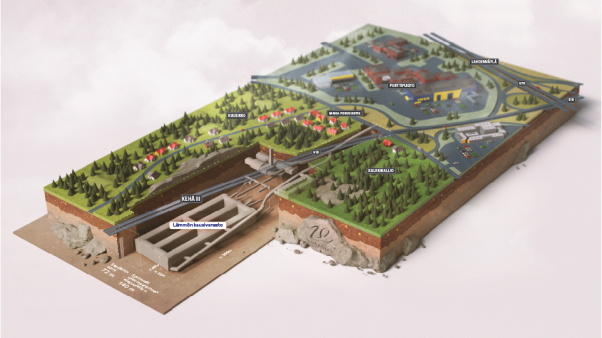
Waste Heat Generated from Electronics to Warm Finnish City in Winter Thanks to Groundbreaking Thermal Energy Project

Saturday, 18 May 2024
Virgin Media O2 reaches plastic waste milestone
Tuesday, 26 March 2024
French reactor using full core of recycled uranium fuel
The Cruas-Meysse plant (Image: EDF)Monday, 30 November 2020
Scottish- and Indian researchers develop wastewater treatment, recycling system
Tuesday, 23 June 2020
Isotek, DOE sign legacy waste contract modification : Waste & Recycling - World Nuclear News
.jpg?ext=.jpg)

An aerial photo of Oak Ridge National Laboratory (Image: ORNL)
- SNC-Lavalin's Isotek Systems, LLC business and the US Department of Energy (DOE) have signed a USD254 million contract modification to perform processing operations to dispose of uranium-233 material up until 2024 on the Uranium-233 Disposition Project at the Oak Ridge National Laboratory (ORNL) in Tennessee. This contract modification, SNC-Lavalin said, is aligned with the company's new strategy to move towards engineering services and greater growth.
- The uranium-233 was created as an alternative fuel source for nuclear reactors but was found not to be viable. The material is now stored in secure vaults in Building 3019, which was built in the 1940s at ORNL. Removing the waste could allow ORNL to relax its overall security posture, which will reduce costs, eliminate nuclear safety issues and make the campus more conducive to collaborative science, according to a US Senate Appropriations Committee report published in July 2017.
- Since 2003, Isotek - a wholly owned subsidiary of Atkins Nuclear Secured - has been contracted by the DOE to safely and securely oversee the inventory of uranium-233 and prepare its removal from ORNL's Building 3019, the USA's oldest operating nuclear facility. SNC-Lavalin acquired WS Atkins in July 2017.
- Isotek in October 2019 began processing canisters of uranium-233 in Building 2026 and shipping the processed material for safe permanent disposal. During the processing of uranium-233, Isotek is extracting thorium-229. This rare man-made isotope is being used to support cancer treatment research. Isotek is using the proceeds from the sale of the thorium-229 to privately fund portions of the Uranium-233 Disposition Project.
- The contract modification continues the partnership between Isotek and the DOE and authorises USD254 million to fund and continue Isotek's mission to safely dispose of more than 80% of the remaining uranium-233 inventory. To date, about half of the inventory has been removed from Building 3019 and directly disposed of.
- "This contract modification reflects DOE's trust and confidence in Isotek to carry out this very important mission," said Isotek President Jim Bolon.
- Sandy Taylor, president of SNC-Lavalin's nuclear business, added: "The successful partnership we have formed with DOE to accelerate this vital work is a proud achievement for our company."Source: https://www.world-nuclear-news.org:\
Friday, 27 April 2018
IAEA assesses waste management in France and Spain
Thursday, 2 April 2015
Apple launches iPhone recycling plan in China
Sunday, 17 March 2013
Solar Car with Secret Weapon
redesigned using a supercomputer and workstation computers donated by Intel. The more efficient design and new technology inside the car is given the CUER team.
Monday, 14 January 2013
Newspapers no more, and online you realise it's about knowledge
Saturday, 24 November 2012
US Navy to test of bio-fuel-mixed marine, jet fuel in Pacific Rim
The US Navy plans to move ships and aircraft from Hawaii to the Pacific Rim to test the performance of a 50/50 bio-fuel-blended fuel, according to the Truman National Security Project, a national security leadership institute based in Washington, D.C. The mission will begin 17 July, continue for six weeks, and include the participation of 25,000 sailors and Marines, the institute said, calling the endeavor "the Navy's most ambitious energy plan yet." Over the course of the test, which is part of the Navy's larger, "Great Green Fleet" project, the fleet will mix 450,000 gallons of bio-fuel made from advanced algae oils and recycled cooking oil with traditional, petroleum-based marine diesel and aviation fuel. The Navy has ramped up funding for home-grown renewable fuels over the past year, making $30 million available last month for companies planning to build or retrofit a commercial-scale bio-refinery. During a forum hosted by the institute on Thursday, several former military members spoke in favor of the use of bio-fuels, the consensus being that the military, of all things, should not be dependent on fossil fuels from regions given to conflict. *** Source: Renewable Energy Magazine
Tuesday, 2 October 2012
New Photos and Details of Peugeot's Onyx Supercar Concept, gets a 680HP V8 Diesel-Hybrid Powertrain


Sunday, 2 September 2012
Miranda Kerr becomes Earth Hour ambassador
Thursday, 26 July 2012
Air Canada to conduct first flight with sustainable bio-fuel
Air Canada has undertaken its first flight with bio-fuel to highlight the airline's commitment to the environment. Flight AC991 from Toronto to Mexico City was expected to generate at least 40 percent fewer emissions by using jet fuel derived from recycled cooking oil and through other fuel-saving measures, making it the most environmentally-friendly flight ever flown by Air Canada. The flight was supported by Airbus and was part of an environmental demonstration by the International Civil Aviation Organization (ICAO) to coincide with the Rio +20 United Nations Conference on Sustainable Development. "Air Canada fully accepts its responsibility to reduce its footprint and our first flight using biofuel tangibly demonstrates our ongoing commitment to the environment," said Duncan Dee, Executive Vice President and Chief Operating Officer at Air Canada. "Since 1990 our airline has become 30 per cent more fuel efficient and we are determined to increase these gains through cutting-edge measures such as those being showcased with this Toronto-Mexico City flight, our greenest ever," Dee continued. "The flight, supported by Airbus, will link with other biofuel flights from Canada to Rio de Janeiro arranged under the auspices of ICAO to underscore the aviation industry's commitment to the environment at the UN sustainability conference," he said. Fabrice Brégier, Airbus President and CEO, said the flight by Air Canada proves that the aviation industry is in a strong position to reduce emissions. "To make this a day-to-day commercial reality, it requires now a political will to foster incentives to scale up the use of sustainable biofuels and to accelerate the modernization of the air-traffic-management system. We need a clear endorsement by governments and all aviation stakeholders to venture beyond today's limitations," Brégier said. The AC991 was a normal revenue flight operated with an Airbus A319 aircraft using a 50/50 mix of regular and bio-fuel derived from recycled cooking oil. This blend produced by SkyNRG has been recertified to normal jet fuel standards and can be safely used without modifying the aircraft's systems. Source: Renewable Energy Magazine, ***
Tuesday, 21 February 2012
Going Green by Design: Bangkok exhibit shows future of nature-sustainable products
RTSea: Green or nature-sustainable thinking in design and products is not just a hot topic among major industrial nations in the West; it's also finding its way into countries like Thailand, as evidenced by the exhibit "Everything Forever Now: Designs for a sustainable future" currently on display at the Thailand Creative & Design Center (TCDC) in Bangkok. Some of the exhibit's many highlights include a bicycle made from nylon powder, a lamp powered by moss, benches made from seaweed, and artificial leather made from leather tannery discards.
"In recent years there has been a shift in the way that designers approach the idea of sustainable design. Now they view it less as a problem, and more as a fact of life – and certainly as an opportunity to rethink what and how we make things, and how we might go about our lives in a more effective and positive way," explained the TCDC website. A bike, made primarily from nylon powder that is formed into a resin, streamlines the manufacturing process with less raw materials involved and is 65% lighter than an aluminum bicycle with less maintenance required. The manufacturing technique was actually borrowed from space satellite construction, called additive layer manufacturing, whereby all the components are formed as a unit at the same time. Biophotovoltaics is the science behind a small, glass-topped table designed by Cambridge University which can power a small lamp. The table contains living moss which, through energy produced by the plant's photosynthesis during the day, can charge a small battery that powers the lamp in the evening hours.

exhibit is an example of science working its way into the design and manufacturing world where the economics and practicality of new processes and products could very well shape our future into a more nature-friendly one. "Whether designing for longevity, building self-sufficient communities, improving the efficiency of infrastructures or developing new materials, the new guard of green designers quietly promises one thing: to deepen and improve our relationship with the environment, both now and well into the future," said TCDC. Source: TCDC website, Source: Thailand's Source: RTSeaFriday, 3 February 2012
Butterflies are the new Pirates
Sunday, 18 December 2011
London streets ‘paved with precious metals like platinum’
A waste management firm is planning to collect tens of thousands of dust from London’s pavements to turn it into cash. Reuters |