A new study has discovered that contact with nature may help people develop healthier eating habits.
The research from Anglia Ruskin University in the UK is reportedly the first to provide evidence that exposure to natural environments can influence people’s relationship with food.
The study, published in the journal Body Image, involved 500 UK adults who were assessed on their individual levels of contact with the natural world, such as how much they noticed nature in their everyday lives, as well as the frequency and duration of the time spent around nature.
The participants also completed surveys measuring body image, self-compassion, connectedness to nature and intuitive eating—which is an anti-dieting approach to eating that focuses on listening to the body’s internal signals instead of following strict eating rules.
The study found a direct positive relationship between nature contact and intuitive eating, but pathways involving other factors were even more important.
“One pathway involved nature contact influencing intuitive eating habits through higher levels of body appreciation. It is thought that nature contact helps people feel more comfortable in their body, more appreciative of what their body can do and more responsive to their body’s needs, which in turn leads to higher levels of intuitive eating.”
“A second pathway involved self-compassion. Greater nature contact promotes self-compassion and the researchers believe this provides a buffer against responding to difficult thoughts and emotions through impulsive eating. Instead, it may encourage people to follow their body’s signals and choose foods that better meet their physiological needs.”
Lead author Viren Swami, Professor of Social Psychology at ARU said, “These findings are important because they provide the first evidence that contact with nature may shape people’s eating habits.
“We already know that contact with natural environments can reduce anxiety and depression and improve various measures of wellbeing, including life satisfaction.”
“Our new study is the first to show how it can influence our eating habits, thanks to helping people develop more positive relationships with their bodies and greater self-compassion, and these findings could have practical benefits for public health professionals.“We recognize there are limitations to this study, particularly as it is based on self-reported data, and further studies in other countries are needed. However, these initial results suggest that greater access to and engagement with nature could support efforts to promote healthier, more sustainable eating behaviors.” Contact With Nature is Linked to Healthy Eating, Shows Encouraging New Study
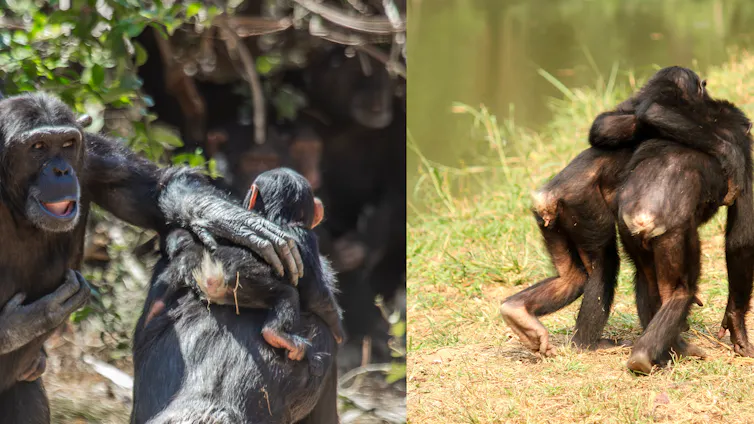
Physical touch may be an important evolutionary tool to help manage social tension and keep the peace. Left: Jake Brooker/Chimfunshi Wildlife Orphanage Trust; Right: Zanna Clay/Lola ya Bonobo Sanctuary, CC BY-NC-ND
During an eight-month-long research trip to the Democratic Republic of Congo (DRC) and Zambia, we studied consolation: the way bonobos and chimpanzees comfort each other after conflicts and distress. But early on, we kept noticing something that didn’t quite fit.
The animals were exchanging a lot of friendly physical contact, embracing, touching and kissing, in competitive situations before any clear conflict or distress signals had broken out. We started wondering what all that touching was actually for.
Our new research into how great apes manage social stress suggests it could be quite important, and that this behaviour dates back at least 6 million years, long before our species evolved. Like us, our closest ape cousins, the bonobos and chimpanzees, also navigate stressful and competitive situations every day.
One example is when they discover a tree laden with ripe fruit. Everyone wants to eat and conflicts of interest can often lead to fights. But something else caught our attention. More often, apes reach out to one another with friendly touch: embracing, patting and making gentle contact.
Our colleague Edwin van Leeuwen, a Dutch biologist, had developed a feeding task to measure social tolerance across great ape groups. This task is called the peanut swing. It involves filling a bamboo trough with peanuts and swinging it over the fence so the food lands in front of the apes. This spreads peanuts evenly across a small area while researchers record who gets food, and how much. We used this test to measure whether groups could share resources peacefully in close proximity.
Because the apes watched the trough being filled, we could observe how they behaved as anticipation built. Friendly touch clustered in the minutes just before the food arrived. Previous researchers called this celebration behaviour. But discovering food is not just a cause to celebrate. It is also tense and risky.
Could friendly physical contact be helping to keep that tension at bay?
To find out, we measured a five-minute anticipation period before the food was released. We watched everything the apes did: friendly contact like kissing, embracing and patting, as well as aggression and threats. Over several months, we filmed 116 apes from five groups across 60 sessions at two African sanctuaries, Lola ya Bonobo in the DRC and Chimfunshi in Zambia.
In both species, the answer was clear. Bonobos and chimpanzees who engaged in more reassuring friendly contact before the food arrived spent significantly more time feeding peacefully alongside others afterwards. This pattern held across most groups and was strongest in the most tolerant ones. Researchers consider tolerance – the willingness to share space without aggression – to be the foundation of cooperation and social learning across the animal kingdom. Our findings suggest that pre-emptive friendly touch may be part of how that tolerance is maintained.
The patterns followed the social structure of each species. In bonobos, female-female pairs were the most likely to show friendly reassurance. This reflects how bonobo society works: females form strong alliances to counter male aggression and occupy high status positions. In chimpanzees, it was males who reassured each other most, reflecting the importance of male coalitions in their societies.
For both apes, these patterns were clearest in the more tolerant groups. In groups with more authoritarian leaders, the pattern disappeared.
Some of the most striking behaviour we saw were among the chimpanzees. During tense moments, they placed fingers, hands and other body parts inside each other’s mouths. They also held each other’s genitals. For a species known for lethal aggression, these are extraordinarily risky things to do.
Perhaps the vulnerability is itself the signal of trust. You only offer a risky contact if you are confident the other animal won’t bite. And this communicates something important about how you see the relationship.
Hand-in-mouth between male Sims (left) and female Careen: a vulnerable contact which is common during tense competitive periods in chimpanzees. Jake Brooker/Chimfunshi Wildlife Orphanage Trust, CC BY-NC-ND
Research across five European cultures published in 2015 found that the area of the body you’ll let someone touch maps almost directly onto the strength of your emotional bond with them. There’s plenty of cultural variation though. Brits are famously more guarded about casual contact than other Europeans, and touch between men in many western contexts carries particular social weight.
Perhaps most strikingly, touch before competition makes a difference. A study of negotiators found that pairs who shook hands before bargaining cooperated more, lied less and reached better joint outcomes, even in situations where cooperation came at a personal cost. A handshake may signal something important about intent before a word is even spoken.
But physical contact matters even during competition. A 2010 study of all 30 teams in the US National Basketball Association during the 2008-09 season found that the teams who touched more during games early in the season, through fist bumps, hugs and high fives, performed better and played more cooperatively later. This held even after controlling for player salaries and preseason expectations. In another 2024 study of women’s college basketball, players who received more physical contact from teammates after missing their first free throw were more likely to score on the second.
We see the same thing in genuinely high-stakes situations too. Research analysing street conflicts using CCTV found that witnessing a fight increased anxiety in bystanders. But, those who then engaged in physical contact with others showed reduced anxiety afterwards. A separate study of consolation after street robberies found that the way bystanders approached and touched victims closely mirrored the post-conflict consolation we observe in chimpanzees.
Humans, bonobos and chimpanzees all use reassuring touch but our evolutionary lineages split over 6 million years ago. The simplest explanation is that reassuring touch predates all three of us, and is certainly far older than our own species. So let’s not forget that we hold within us powerful and ancient behaviour that can help us manage our social worlds and maintain peace.
The Great Pyramid of Giza in Egypt has survived more than 4,500 years. Earthquakes have repeatedly shaken the region, including the magnitude 5.8 Cairo earthquake in 1992, which dislodged some of the pyramid’s outer casing stones. Yet the main body remained essentially intact.
How has it survived so well? A new study of the pyramid’s vibrations by Egyptian geophysicist Asem Salama and colleagues provides insight into its performance during earthquakes, and identifies some interesting features.
But we should be cautious to conclude that its impressive longevity is proof of its builders’ knowledge of earthquake engineering.
What the research found
The researchers measured the pyramid’s vibrations in ambient conditions. They found that its natural frequencies – the frequencies at which it “prefers” to vibrate – are mostly between about 2.0 and 2.6 hertz (cycles per second). The surrounding soil has a much lower dominant frequency, around 0.6Hz.
Every structure has a natural rhythm. Push a child on a swing at the right moment and the motion grows; push at the wrong moment and little happens.
Buildings and monuments behave similarly. If earthquake shaking matches a structure’s natural frequency, the motion can be amplified. This is called resonance, and it can be catastrophic.
The study also reports reduced vibrations near the so-called relieving chambers above the King’s Chamber. These chambers are understood to redirect the enormous weight of stone above, and may also affect how vibration energy moves through the pyramid.
These findings suggest some behaviour that may be helpful during an earthquake, including a frequency mismatch between the pyramid and the soil. But they do not, by themselves, prove people intentionally built the pyramid to be resilient to earthquakes.
How the researchers measured it
The study used a method called horizontal-to-vertical spectral ratio analysis, or HVSR. This records tiny background motions from wind, traffic, human activity and natural ground vibration.
By comparing the horizontal and vertical components of these motions, researchers can estimate dominant frequencies in the soil and structure. In this case, instruments were placed at 37 locations in and around the pyramid, including internal passages, exterior stones and nearby soil.
This suits a heritage structure. Engineers cannot drill into the Great Pyramid, load it experimentally, or put instruments on it like a modern bridge.
The method provides useful information without damage. However, it only measures the response to small background vibrations, not the severe shaking of an earthquake.
The importance of frequency mismatch
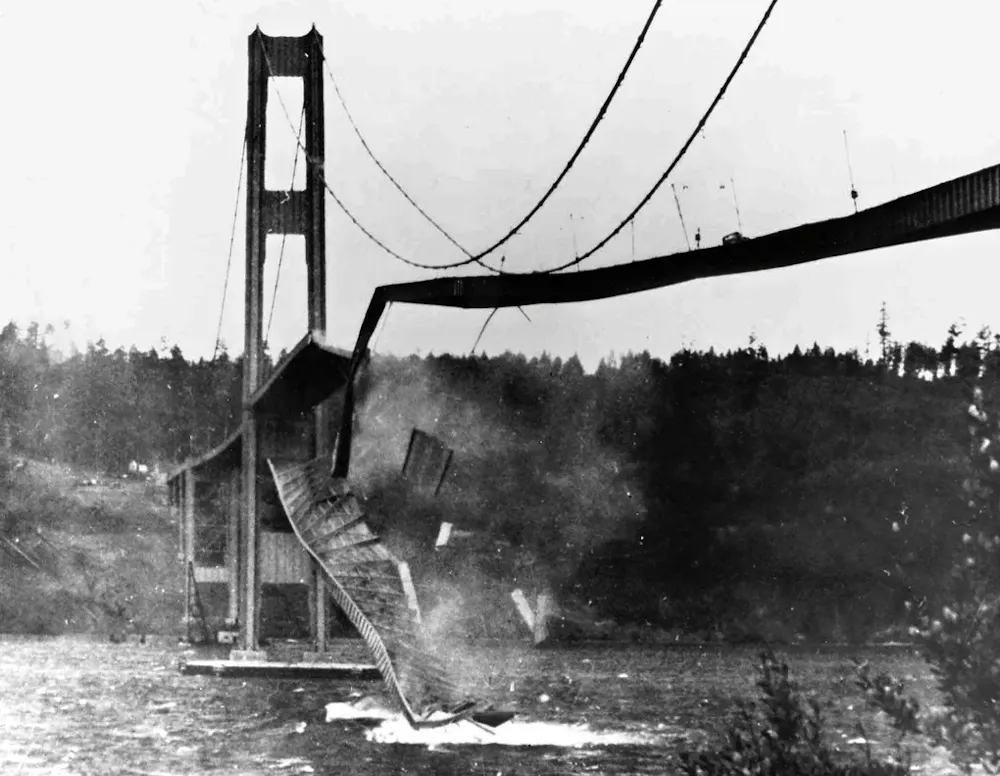
When shaking from an earthquake happens at a frequency that matches a structure’s natural frequency, it can cause resonance. Resonance can be catastrophic.
The 1940 collapse of the Tacoma Narrows bridge in the US is often attributed to resonance during high winds. Wikimedia
So the measured difference matters. If the ground and the structure vibrate at different rates, the ground is less likely to feed energy efficiently into the structure.
But this addresses only one possible mechanism of earthquake damage. There are plenty of examples of structures performing poorly in earthquakes, even though there was a frequency mismatch to the soil below.
Earthquake resilience is more complicated
Modern earthquake design does not assess resilience from one frequency comparison.
Instead, we look at a whole list of questions. How severe is the expected shaking? What ground is the structure on? How heavy and flexible is the structure? Can the structure deform and dissipate energy without sudden collapse? How serious would failure be?
The structure’s natural period or rhythm (which is related to its natural frequency) is part of that assessment. But it sits alongside many other factors.
In practice, earthquake damage depends not only on the earthquake but on the structures that receive it. Australia’s 1989 Newcastle earthquake, for example, was not huge by global standards, but many buildings fared poorly and 13 people died.
Australia’s 1989 Newcastle earthquake wasn’t huge – but it caused great damage and 13 deaths. Australian Earthquake Engineering Society, CC BY
For the Great Pyramid, the behaviour of the stonework is especially important. Ambient vibration testing measures behaviour under very small motions. During strong earthquake shaking, masonry can crack, open joints, rock, slide and lose stiffness. Each of these changes the structure’s natural period, complicating the behaviour.
Beware survivorship bias
In evaluating the pyramid’s longevity, we should also consider survivorship bias.
Famously, in the second world war, statistician Abraham Wald was asked where armour should be added to aircraft. The obvious answer was to reinforce the places where returning aircraft had the most bullet holes.
Wald argued the opposite: those aircraft had survived. The aircraft that did not return were missing from the data.
Ancient structures pose a similar problem. We admire ancient aqueducts, temples and pyramids because they are still here. The failed structures, poor foundations, weak details and abandoned experiments are mostly gone.
That does not diminish the Great Pyramid. It simply means looking at structures that survive today does not tell us everything about the design intentions behind them.
What the pyramid does teach us
The pyramid may not have been intentionally designed for resilience in an earthquake. But its survival is not an accident, either.
From an engineering point of view, it has many favourable features: a broad base, low centre of mass, tapering form, symmetrical plan, competent limestone foundation and massive masonry load path. It is squat, stiff and well-founded rather than tall, slender and flexible.
The safest conclusion is that the builders made excellent empirical engineering choices. Those choices may have been driven by construction experience, observation, structural necessity, or cultural intent. Their seismic benefits may be real without being the original purpose.
The Great Pyramid’s survival is not magic, and it is not proof of ancient seismic design. As evidence, this study is important and impressive, but incomplete.
New Delhi, (IANS) Even as India is seeing a rapid rise in childhood obesity, diabetes, and heart-disease risk, a new study showed how school-based behavioural interventions can help reduce consumption of ultra-processed foods (UPFs) that are rich in salt and sugar among adolescents.
The scientific study led by researchers from the Post Graduate Institute of Medical Education and Research (PGIMER), Chandigarh, found that simple school-based behaviour programmes can dramatically reduce junk food consumption by over 1,000 calories per day.
Higher intake of UPFs, including fast foods and sugary drinks, is a known factor for increasing health issues such as diabetes, hypertension, obesity, and cancers in adolescents and teenagers.
“This study demonstrates the potential of school-based behavioural interventions to reduce ultra-processed food (UPF) consumption among Indian adolescents, addressing a critical gap in public health research and practice in low-and middle-income countries (LMICs),” said the researchers, including those from Imperial College London, UK, and Public Health Foundation of India, in the paper published in the international journal BMJ Global Health.
In the study, the team tested a structured nutrition and behaviour-change programme in schools using a controlled scientific trial design.
A cluster-randomised controlled trial was conducted across 12 public schools in Chandigarh, targeting Grade 8 adolescents and their parents. About 11 sessions were held for adolescents over six months.
In addition, a single educational session was conducted for parents to enhance their awareness of reducing UPF consumption and encouraging healthier dietary behaviours. Dietary intake data were collected at baseline and endline using two non-consecutive 24-hour dietary recalls.
“Students who participated consumed more than 1,000 fewer calories per day from UPF, such as packaged snacks, sugary drinks, and fast food. Intake of other processed foods dropped by about 270 calories per day, showing a consistent move away from unhealthy diets,” the researchers said.
While junk food fell, the study showed that students did not significantly increase fruit or home-cooked food intake, indicating that cutting unhealthy food is easier than building healthy habits.
Parkinson’s disease is the fastest growing neurological disorder, with over 10 million cases worldwide. Up to 150,000 Australians currently live with the disease and 50 new cases are diagnosed each day.
The number of people living with Parkison’s is projected to more than triple between 2020 and 2050.
Yet despite the immense impact on those living with Parkinson’s and their loved ones, and the staggering cost to our economy – at least A$10 billion a year – there is still a lot we don’t know about how this disease presents and progresses.
A recent large-scale study of nearly 11,000 Australians living with Parkinson’s disease provides some critical insights into symptoms, risk factors and how these affect men and women differently. Let’s take a look.
First, what is Parkinson’s disease?
Parkinson’s is a progressive disease in which cells that produce the chemical messenger dopamine in a part of the brain called the “substantia nigra” begin to die. This is accompanied by multiple other brain changes.
It is usually considered a movement disorder. Common motor symptoms include a resting tremor, slowed movement (bradykinesia), muscle stiffness and balance issues.
But Parkinson’s also involves a variety of lesser known non-motor symptoms. These may include:
mood changes
difficulties with memory and cognition (including slower thinking, challenges with planning or multitasking and difficulty paying attention or concentrating)
sleep disturbances
autonomic dysfunction (such as constipation, low blood pressure and urinary problems).
While these are sometimes referred to as the “invisible” symptoms of Parkinson’s, they often have a greater negative impact on quality of life than motor symptoms.
So, what does the new research tell us?
The study used data collected as part of the Australian Parkinson’s Genetics Study led by the QIMR Berghofer Medical Research Institute. After a pilot study in 2020, it was launched as an ongoing, nationwide research project in 2022.
Some 10,929 Australians with Parkinson’s were surveyed and provided saliva samples for genetic analysis. This is the largest Parkinson’s cohort studied in Australia and the largest active cohort worldwide.
There were several key initial findings.
1. Non-motor symptoms are common
The study reinforced how common non-motor symptoms are, with loss of smell (52%), changes in memory (65%), pain (66%) and dizziness (66%) all commonly reported.
Notably, 96% of participants experienced sleep disturbances, such as insomnia and daytime sleepiness.
2. A better picture of risk factors
The study also provided insights into what can influence Parkinson’s risk.
This is important because we don’t completely understand what causes the dopamine producing cells in the substantia nigra to die in the first place.
Age is the primary risk factor for Parkinson’s. The new study found the average age for symptom onset was 64, and for diagnosis, 68.
3. Genes and environment both play a role
In the recent study, one in four people (25%) had a family history of Parkinson’s. But only 10–15% of Parkinson’s cases are caused by – or strongly linked to – mutations in specific genes.
It’s important to remember that families don’t only share genes but often their environment.
Multiple environmental factors, such as pesticide exposure and traumatic brain injury, also increase risk of Parkinson’s.
The majority (85–90%) of cases of Parkinson’s are likely due to complex interaction between genetic and environmental risk factors, and advancing age.
The study showed environmental exposures linked to Parkinson’s risk were common:
36% of people reported pesticide exposure
16% had a prior history of traumatic brain injury
33% had worked in high-risk occupations (such as agriculture, or petrochemicals or metal processing).
These exposures were significantly higher in men than in women.
4. Differences between the sexes
The disease is 1.5 times more common in men. In the new study, 63% of those surveyed were male.
Parkinson’s also presents and progresses differently in males and females.
The study found women were younger than men at time of symptom onset (63.7 versus 64.4 years) and diagnosis (67.6 versus 68.1 years), and more likely than men to experience pain (70% versus 63%) and falls (45% versus 41%).
Men experienced more memory changes than women (67% versus 61%) and impulsive behaviours, particularly sexual behaviour (56% versus 19%) – although most participants exhibited no or only mild impulsivity.
What we still don’t know
The large-scale study and its comprehensive survey shed valuable light on people living with Parkinson’s in Australia.
But it’s still only a sliver of the population. More than 186,000 people with Parkinson’s were invited to participate and just under 11,000 took part – a less than 6% response rate.
Of these participants, 93% had European ancestry. So this sample may not be fully representative of Parkinson’s disease.
The information we have about symptoms also relied on self-reports by the study’s participants, which are subjective and can be biased or less reliable than objective measurements of function. To address this, the researchers are planning to use smartphones and wearable devices to collect more comprehensive data.
Finally, while this provides a snapshot of the current cohort, it’s not clear how participants compare to people of a similar age without Parkinson’s, or how their symptoms may change over time.
These are important areas of future research for this ongoing study.
What all this means
Studies like this provide crucial insights into risk factors linked to Parkinson’s. They also help us better understand the symptoms people experience.
This is important because the way Parkinson’s presents varies from person to person. Not everyone will experience the same symptoms to the same extent.
Similarly, the way the disease progresses over time differs between people.
A better understanding of the factors that influence this can lead to earlier identification of who’s at risk and more personalised ways of managing this disease.
Conservation in India successfully doubled the native population of tigers in the decade before the COVID-19 pandemic, a new study reveals.
In 2010, the nations that make up the remaining range countries of the tiger set a target to double the number of wild tigers worldwide—a goal called Tx2—10 at the St. Petersburg International summit on tiger conservation.
The idea was that by 2022—the Year of the Tiger in the Chinese zodiac, the countries across the Indo-Pacific, East and South Asia, and Russia, would have enough time to effectively support tiger conservation.
By 2022, the objective was estimated to have been achieved when measured across the animal’s whole range, but within that achievement were several localized triumphs even more impressive—Nepal, but also India, had seen their native populations of tiger double.
Despite being the world’s most populous state, Indian governments were able to make room for tigers across 53,360 square miles. By 2018, India’s native tiger population clawed its way above 3,600. Along with being 75% of the world’s tiger population, it was twice as many as the best estimates guessed in 2006.
Published in a study in Science recently, extensive monitoring of the big cat across 20 Indian states every 4 years revealed this increase in the number of tigers, but also the amount of protected-tiger habitat.
As well as there being twice as many tigers since 2006, there is 30% more habitat where they live. The study presents findings that tigers do better in areas of higher economic development where locals and visitors can afford tiger-tourism and governments compensate for tiger-related losses. In contrast, poorer states see increases of human-tiger conflict that make it difficult for the world’s largest cat to endure.
Sharing land with the growing Indian population is increasingly difficult for both man and tiger, but conflict isn’t as common as you might think.
“We lose 35 people to tiger attacks every year, 150 to leopards, and the same number to wild pigs. Additionally, 50,000 people die from snake bites,” Yadvendradev Vikramsinh Jhala, the study’s lead author, told the BBC. “In fact, within tiger reserves, you’re more likely to die from a car accident than from a tiger attack.”
The WWF, which was very involved with the Tx2 goal, published an article late last year entitled “5 reasons for hope for Tigers in 2025, detailing how the cats were spreading naturally into the forests of northern Thailand, northeast China, and northern Myanmar, as well as the extensive preparations made by Kazakhstan for the reintroduction of the tiger in the south of that country where it has been extinct for over a century.They didn’t include that camera traps in Sumatra recently recorded 3-times as many sightings of the Sumatran tiger subspecies than ever before. The Tiger Population Doubled in India in Just Ten Years
New Delhi, (IANS) Up to four in 10 or 7.1 million cancer cases worldwide could be prevented, according to a new global analysis from the World Health Organization (WHO) and its International Agency for Research on Cancer (IARC) on Wednesday.
The study, released on World Cancer Day on February 4, identified tobacco as the leading preventable cause of cancer globally, responsible for 15 per cent of all new cancer cases.
It also found, for the first time, that nine cancer-causing infections are responsible for about 10 per cent of cancer cases.
Other reasons include alcohol, high body mass index, physical inactivity, air pollution, and ultraviolet radiation.
The analysis, based on data from 185 countries and 36 cancer types, estimated that 37 per cent of all new cancer cases in 2022, around 7.1 million cases, were linked to preventable causes.
Three cancer types - lung, stomach and cervical cancer- accounted for nearly half of all preventable cancer cases in both men and women, globally.
Lung cancer was primarily linked to smoking and air pollution, stomach cancer was largely attributable to Helicobacter pylori infection, and cervical cancer was overwhelmingly caused by human papillomavirus (HPV).
"This is the first global analysis to show how much cancer risk comes from causes we can prevent," said Dr Ilbawi, WHO Team Lead for Cancer Control, and author of the study.
"By examining patterns across countries and population groups, we can provide governments and individuals with more specific information to help prevent many cancer cases before they start," he added.
The burden of preventable cancer was substantially higher in men than in women, with 45 per cent of new cancer cases in men compared with 30 per cent in women.
In men, smoking accounted for an estimated 23 per cent of all new cancer cases, followed by infections at 9 per cent and alcohol at 4 per cent.
Among women globally, infections accounted for 11 per cent of all new cancer cases, followed by smoking at 6 per cent and high body mass index at 3 per cent, the report said.
The findings underscore the need for context-specific prevention strategies that include strong tobacco control measures, alcohol regulation, vaccination against cancer-causing infections such as human papillomavirus (HPV) and hepatitis B, improved air quality, safer workplaces, and healthier food and physical activity environments.Addressing preventable risk factors not only reduces cancer incidence but also lowers long-term health care costs and improves population health and well-being, the study said. 7.1 million cancer cases worldwide preventable, tobacco biggest culprit: WHO | MorungExpress | morungexpress.com
New Delhi, (IANS) In a world-first discovery, scientists in Australia have found that the human heart can regrow muscle cells after a heart attack, raising hopes for future regenerative treatments for heart failure.
The study, published in Circulation Research, revealed that while parts of the heart remain scarred after a heart attack, new muscle cells are also produced, a phenomenon previously seen only in mice and now demonstrated in humans for the first time, Xinhua news agency reported.
"Until now we've thought that, because heart cells die after a heart attack, those areas of the heart were irreparably damaged, leaving the heart less able to pump blood to the body's organs," said Robert Hume, research fellow at the University of Sydney and first author of the study.
"In time, we hope to develop therapies that can amplify the heart's natural ability to produce new cells and regenerate the heart after an attack," said Hume, also lead of translational research at Australia's Baird Institute for Applied Heart and Lung Research.
Though increased mitosis (a process in which cells divide and reproduce) after a heart attack has been observed in the heart muscles of mice, this is the first time the phenomenon has been demonstrated in humans.
The team made the breakthrough using living heart tissue samples collected from patients undergoing bypass surgery at Australia's Royal Prince Alfred Hospital.
"Ultimately, the goal is to use this discovery to make new heart cells that can reverse heart failure," said Professor Sean Lal, the study's senior author and heart failure cardiologist at the Royal Prince Alfred Hospital.Cardiovascular disease remains the world's leading cause of death, and heart attacks can eliminate a third of the cells in the human heart, researchers said, adding that the discovery offers promising groundwork for novel regenerative medicine. Human heart regrows muscle cells after heart attack: Study | MorungExpress | morungexpress.com
Bengaluru, (IANS) About 63 per cent of Indian enterprises believe that generative AI will be important for their efforts towards sustainability, according to a new study on Tuesday.
The global study conducted by the IBM Institute for Business Value (IBV) is based on a survey of 5,000 C-suite executives across 22 industries and 22 countries.
It stresses the need for companies to embed sustainability into all facets of business operations, instead of just “treating it as an optional addition.”
The study revealed that 63 per cent of Indian business leaders agreed that generative AI is necessary to strive for sustainability, while 76 per cent said they plan to increase investment in generative AI for sustainability.
“In today's business world, sustainability has evolved from being optional to indispensable. With AI reshaping industries, integrating sustainability into core business practices add to the long-term value creation,” said Sandip Patel, Managing Director, IBM India, in a statement.
“The commitment of businesses to invest in Gen AI for sustainability signals a promising move towards a greener, more prosperous future,” he added.
Further, 78 per cent of Indian executives found that sustainability can help get better business, and 68 per cent agree that sustainability is key to their business strategy.
However, funding, skilling and operations were found as a challenge. While high-quality data and transparency (86 per cent) were touted as necessary to achieve sustainability outcomes, the lack of requisite skills was identified as the major hindrance to sustainability progress (44 per cent).“This study not only underscores the environmental responsibility of enterprises but also highlights their readiness to leverage cutting-edge technology for lasting impact and competitiveness,” Patel said. 63 pc of Indian enterprises believe Gen AI is important for sustainability efforts: Study | MorungExpress | morungexpress.com
It’s pretty normal to wear the same pair of jeans, a jumper or even a t-shirt more than once. But what about your socks?
If you knew what really lived in your socks after even one day of wearing, you might just think twice about doing it.
Our feet are home to a microscopic rainforest of bacteria and fungi – typically containing up to 1,000 different bacterial and fungal species. The foot also has a more diverse range of fungi living on it than any other region of the human body.
Most foot bacteria and fungi prefer to live in the warm, moist areas between your toes where they dine on the nutrients within your sweat and dead skin cells. The waste products produced by these microbes are the reason why feet, socks and shoes can become smelly.
For instance, the bacteria Staphylococcal hominis produces an alcohol from the sweat it consumes that makes a rotten onion smell. Staphylococcus epidermis, on the other hand, produces a compound that has a cheese smell. Corynebacterium, another member of the foot microbiome, creates an acid which is described as having a goat-like smell.
The more our feet sweat, the more nutrients available for the foot’s bacteria to eat and the stronger the odour will be. As socks can trap sweat in, this creates an even more optimal environment for odour-producing bacteria. And, these bacteria can survive on fabric for months. For instance, bacteria can survive on cotton for up to 90 days. So if you re-wear unwashed socks, you’re only allowing more bacteria to grow and thrive.
The types of microbes resident in your socks don’t just include those that normally call the foot microbiome home. They also include microbes that come from the surrounding environment – such as your floors at home or in the gym or even the ground outside.
In a study which looked at the microbial content of clothing which had only been worn once, socks had the highest microbial count compared to other types of clothing. Socks had between 8-9 million bacteria per sample, while t-shirts only had around 83,000 bacteria per sample.
Species profiling of socks shows they harbour both harmless skin bacteria, as well as potential pathogens such as Aspergillus, Candida and Cryptococcus which can cause respiratory and gut infections.
The microbes living in your socks can also transfer to any surface they come in contact with – including your shoes, bed, couch or floor. This means dirty socks could spread the fungus which causes Athlete’s foot, a contagious infection that affects the skin on and around the toes.
This is why it’s especially key that those with Athlete’s foot don’t share socks or shoes with other people, and avoid walking in just their socks or barefoot in gym locker rooms or bathrooms.
What’s living in your socks also colonises your shoes. This is why you might not want to wear the same pair of shoes for too many days in a row, so any sweat has time to fully dry between wears and to prevent further bacterial growth and odours.
Foot hygiene
To cut down on smelly feet and reduce the number of bacteria growing on your feet and in your socks, it’s a good idea to avoid wearing socks or shoes that make the feet sweat.
Washing your feet twice daily may help reduce foot odour by inhibiting bacterial growth. Foot antiperspirants can also help, as these stop the sweat – thereby inhibiting bacterial growth.
It’s also possible to buy socks which are directly antimicrobial to the foot bacteria. Antimicrobial socks, which contain heavy metals such as silver or zinc, can kill the bacteria which cause foot odour. Bamboo socks allow more air flow, which means sweat more readily evaporates – making the environment less hospitable for odour-producing bacteria.
Antimicrobial socks might therefore be exempt from the single-use rule depending on their capacity to kill bacteria and fungi and prevent sweat accumulation.
But for those who wear socks that are made out of cotton, wool or synthetic fibres, it’s best to only wear them once to prevent smelly feet and avoid foot infections.
It’s also important to make sure you’re washing your socks properly between uses. If your feet aren’t unusually smelly, it’s fine to wash them in warm water that’s between 30-40°C with a mild detergent.
However, not all bacteria and fungi will be killed using this method. So to thoroughly sanitise socks, use an enzyme-containing detergent and wash at a temperature of 60°C. The enzymes help to detach microbes from the socks while the high temperature kills them.
If a low temperature wash is unavoidable then ironing the socks with a hot steam iron (which can reach temperatures of up to 180–220°C) is more than enough kill any residual bacteria and inactivate the spores of any fungi – including the one that causes Athlete’s foot.
Drying the socks outdoors is also a good idea as the UV radiation in sunlight is antimicrobial to most sock bacteria and fungi.
While socks might be a commonly re-worn clothing item, as a microbiologist I’d say it’s best you change your socks daily to keep feet fresh and clean.
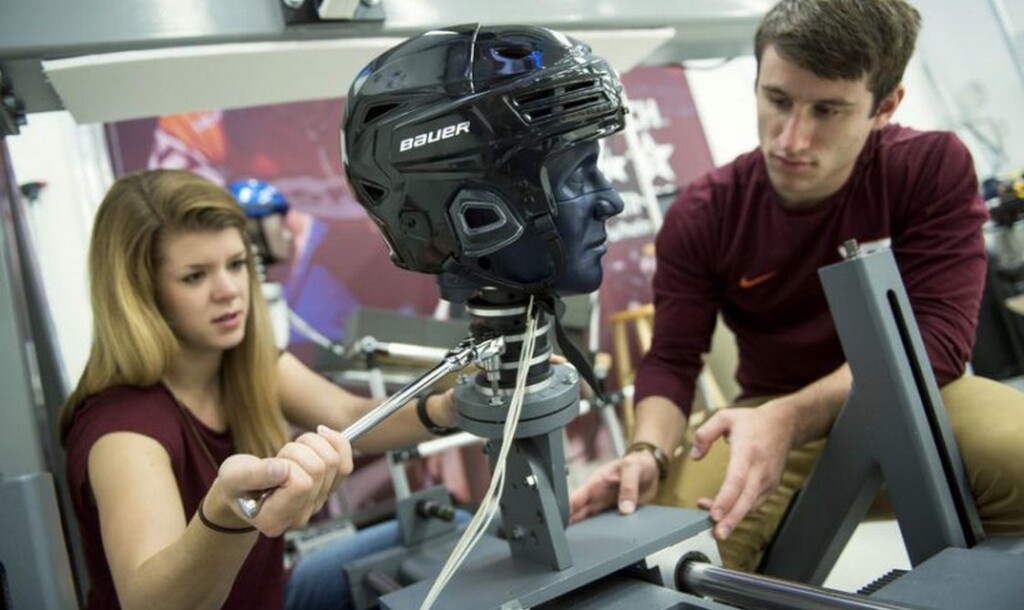
VA Tech Helmet Lab staff testing a hockey helmet – credit, VA Tech Helmet Lab
In 2011, Steve Rowson and his fellow engineering students at Virginia Tech were asked by the Hokies equipment manager if they could test commercially-available football helmets to see which was the safest.
Obliging the man, they ran a series of impact assessments, and found a broad spectrum of differences between them.
At that moment, the institute’s “Helmet Lab” was born, and Rowson would go on to become its director. Now, he’s training the next generation of students producing the VA Tech Helmet Rating with the aim of providing consumers the unbiased information needed to make informed decisions when purchasing helmets.
Now they test all kinds of helmets: cycling helmets, football helmets, snowsport helmets, construction site hard hats, baseball helmets, hockey helmets, and equestrian helmets.
“If you think about what we first started doing, it wasn’t an original thought. You can look back to the 1970s and see the suggestion of someone saying, ‘well, we should stick sensors inside football players’ helmets so we can study head impacts,'” Rowson told CNN’s Tech for Good series, interviewing him on the Helmet Lab’s origin story.
The project became popular with just about everybody. Manufacturers were keen to get the (could one say coveted?) 5-star Helmet Lab safety rating to increase sales, parents and athletes were keen to get the most protection for their dollar, and students had the opportunity to work and study a variety of scientific disciplines in a field with extremely practical implications: the reduction in brain trauma in sports and society at large.
It’s not as obvious as throwing a crash test dummy against a wall. The Helmet Lab pays close attention to the circumstances particular to each sport. In some cases, that means the head smacking into something, while in other cases it’s something smacking into the head.
A child riding a bike will on average hit the ground at different points on the helmet compared to an adult cyclist, in an example of this difference.
Surfaces and material matter too. A football player will need protection from helmet-to-helmet hits, while a hockey player needs both protection from hitting the ice and getting whacked with a wooden stick. Ice has a different impact potential than blacktop, which will be different to snow in the case of skiing helmets, which will be different to sand in the case of horse riding.
All of this is taken into account when creating generating an official Helmet Lab rating.
The various testing machines measure linear and rotational force transmitted by the impact through the helmet and into the head. Lower levels of force detected by sensors mean less of the effects of the impact are making it through the helmet’s protective features, and result in a higher star rating.
People care when you’re buying a helmet, how much protection it offers,” Rowson said. “So, when we started publicizing that information, it was like a light bulb to manufacturers: ‘safety sells’ … and we’ve seen that across just about every single area we’ve evaluated helmets in.” Would Your Helmet Actually Protect You? VA Tech’s ‘Helmet Lab’ Is Testing Every Sport
When we talk about whether the education system is working we often look at results and obvious outcomes. What marks do students get? Are they working and studying after school? Perhaps we look at whether core subjects like maths, English and science are being taught the “right” way.
But we rarely ask young people themselves about their experiences. In our new survey launched on Tuesday, we spoke to young Australians between 18 and 24 about school and university. They told us they value their education, but many felt it does not equip them with the skills, experiences and support they need for future life.
Our research
In the Australian Youth Barometer, we survey young Australians each year. In the latest report, we surveyed a nationally representative group of 527 young people, aged 18 to 24. We also did interviews with 30 young people.
We asked them about their views on the environment, health, technology and the economy. In this article, we discuss their views on their education.
‘They don’t teach you the realities’
In our survey, 57% of respondents agreed or strongly agreed their education had prepared them for their future. This means about two fifths (43%) didn’t agree or were uncertain.
Many said school made them “book smart” but didn’t teach essential life skills such as budgeting, taxes, cooking, renting or workplace readiness. As one 23-year-old from Queensland told us:
They don’t teach you the realities of life and being an adult.
This may explain why 61% of young Australians in our study had taken some form of online informal classes, such as a YouTube tutorial. Young people are looking to informal learning for acquiring practical skills such as cooking, household repairs, managing finances, driving and applying for jobs.
Some interviewees discussed how informal learning – outside of formal education places – was a key site for personal development. One interviewee (21) from Western Australia explained how they had learned how to fix computer problems online: “I’ve learnt a great deal from YouTube”. Others talked about turning to Google, TikTok and, more recently, ChatGPT.
A key question here is the reliability of these sources. This is why students need critical thinking and online literacy skills so they can evaluate what they find online.
‘This is so much money’
Young people in our survey echoed wider community concerns about the rising costs of a university education. As one South Australian man (23) told us:
I was looking at the HECS that came along with [certain courses] and I was like, this is crazy, this is so much money.
One woman (19) explained how the fees had been part of the reason why she didn’t want to go to uni.
Truthfully there was nothing at uni that interested me, any careers that it would be leading me to […] also because university is so expensive, I wouldn’t want to get myself in a HECS debt for the rest of my life.
‘Why don’t I know anyone?’
For those who did go to uni, young people spoke about how they were missing out on the social side of education – partly due to COVID lockdowns, the broader move to hybrid/online learning and changes in campus experiences. As one Queensland 19-year-old told us:
For the past year and a half I kind of just went to class and then went home again and I was like, ‘Why don’t I know anyone? Why do I have no friends?’
While some students reported online study saved time, others told us they found it impersonal and disengaging. As one Victorian (23) told us:
It’s more like I’m learning from my laptop, not by a university I’m paying thousands of dollars to.
Another 23-year-old from NSW said students would complain but learn more if they had face-to-face classes:
[online is] more flexible but it means it’s harder to turn off and on […] more traditional university would be nice.
Some young people are worried
One of the key roles of education is to provide pathways to desirable futures. But 40% of young people told us they were worried about their ability to cope with everyday tasks in the future. Almost 80% told us they thought they would be financially worse off than their parents, up from 53% in 2022.
Education alone can’t address all the challenges facing young people, but we can address some key immediate issues. Our findings suggest young people believe education in Australia needs to be more affordable, practical, social and engaging. To do this we need:
more personalised career counselling and up-to-date labour market information for school leavers and university graduates – so young people have clearer ideas about what study or training can lead to particular jobs and careers
better ways of ensuring online learning enables connections and interactions between students and students and teachers – so learning is not as impersonal and there are more opportunities to learn in person or deliberately social online ways
more investment in campus clubs, student wellbeing programs and peer support so young people have more opportunities to make friends and build networks.
At its height, the Roman empire covered some 5 million square kilometres and was home to around 60 million people. This vast territory and huge population were held together via a network of long-distance roads connecting places hundreds and even thousands of kilometres apart.
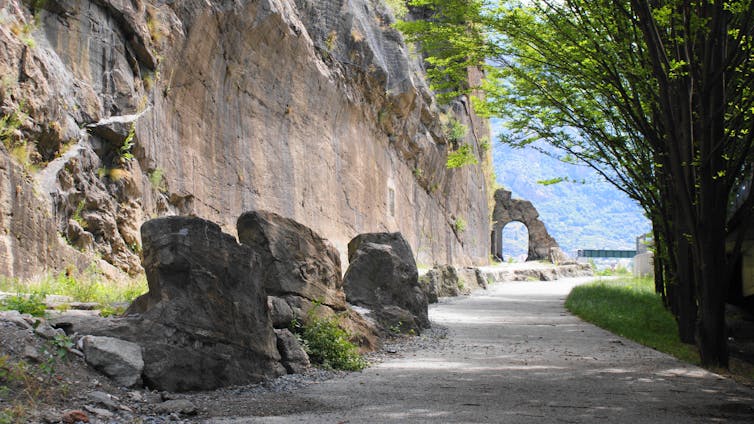
Compared with a modern road, a Roman road was in many ways over-engineered. Layers of material often extended a metre or two into the ground beneath the surface, and in Italy roads were paved with volcanic rock or limestone.
Roads were also furnished with milestones bearing distance measurements. These would help calculate how long a journey might take or the time for a letter to reach a person elsewhere.
Thanks to these long-lasting archaeological remnants, as well as written records, we can build a picture of what the road network looked like thousands of years ago.
A new, comprehensive map and digital dataset published by a team of researchers led by Tom Brughmans at Aarhus University in Denmark shows almost 300,000 kilometres of roads spanning an area of close to 4 million square kilometres.
The Roman road network circa 150 AD. Itiner-e, CC BY
The road network
The Itiner-e dataset was pieced together from archaeological and historical records, topographic maps, and satellite imagery.
It represents a substantial 59% increase over the previous mapping of 188,555 kilometres of Roman roads. This is a very significant expansion of our mapped knowledge of ancient infrastructure.
About one-third of the 14,769 defined road sections in the dataset are classified as long-distance main roads (such as the famous Via Appia that links Rome to southern Italy). The other two-thirds are secondary roads, mostly with no known name.
The researchers have been transparent about the reliability of their data. Only 2.7% of the mapped roads have precisely known locations, while 89.8% are less precisely known and 7.4% represent hypothesised routes based on available evidence.
More realistic roads – but detail still lacking
Itiner-e has improved on past efforts with improved coverage of roads in the Iberian Peninsula, Greece and North Africa, as well as a crucial methodological refinement in how routes are mapped.
Rather than imposing idealised straight lines, the researchers adapted previously proposed routes to fit geographical realities. This means mountain roads can follow winding, practical paths, for example.
Itiner-e includes more realistic terrain-hugging road shapes than some earlier maps. Itiner-e, CC BY
Although there is a considerable increase in the data for Roman roads in this mapping, it does not include all the available data for the existence of Roman roads. Looking at the hinterland of Rome, for example, I found great attention to the major roads and secondary roads but no attempt to map the smaller local networks of roads that have come to light in field surveys over the past century.
Itiner-e has great strength as a map of the big picture, but it also points to a need to create localised maps with greater detail. These could use our knowledge of the transport infrastructure of specific cities.
There is much published archaeological evidence that is yet to be incorporated into a digital platform and map to make it available to a wider academic constituency.
Travel time in the Roman empire
Fragment of a Roman milestone erected along the road Via Nova in Jordan. Adam Pažout / Itiner-e, CC BY
Itiner-e’s map also incorporates key elements from Stanford University’s Orbis interface, which calculates the time it would have taken to travel from point A to B in the ancient world.
The basis for travel by road is assumed to have been humans walking (4km per hour), ox carts (2km per hour), pack animals (4.5km per hour) and horse courier (6km per hour).
This is fine, but it leaves out mule-drawn carriages, which were the major form of passenger travel. Mules have greater strength and endurance than horses, and became the preferred motive power in the Roman empire.
What next?
Itiner-e provides a new means to investigate Roman transportation. We can relate the map to the presence of known cities, and begin to understand the nature of the transport network in supporting the lives of the people who lived in them.
This opens new avenues of inquiry as well. With the network of roads defined, we might be able to estimate the number of animals such as mules, donkeys, oxen and horses required to support a system of communication.
For example, how many journeys were required to communicate the death of an emperor (often not in Rome but in one of the provinces) to all parts of the empire?
Some inscriptions refer to specifically dated renewal of sections of the network of roads, due to the collapse of bridges and so on. It may be possible to investigate the effect of such a collapse of a section of the road network using Itiner-e.
These and many other questions remain to be answered.
Posted by Harry Baldock, New research from Neos Networks suggests that 82% of data centre operators in the UK have delayed deployment due to a lack of connectivity infrastructure
Access to fibre connectivity could be a significant bottleneck for the UK’s data centre ambitions, suggests a new study commissioned by Neos Networks.
The study, conducted by Censuswide, surveyed 100 data centre decision-makers, 100 large enterprise tech/IT decision-makers, and 100 local government stakeholders, asking them about fibre availability, AI, and their data centre projects.
The results showed that the lack of fibre network availability remains a key factor in hampering data centre deployments and AI implementation. It found that 82% of the data centre representatives had had a deployment or expansion delayed due to the lack of available fibre. In addition, 89% of the local government representatives said infrastructure projects in their region had been similarly delayed by fibre gaps, with 46% saying the region’s fibre networks were not ready to support AI data centres.
Part of the issue here, as Neos Network’s CEO Lee Myall points out, is that the UK’s ‘backbone’ fibre network – the high-capacity, long-distance infrastructure that connects major cities, data centres, internet exchanges, and service providers across the country – is at risk of becoming inadequate.
This is largely an issue of geography; data centre projects are increasingly being planned for rural areas with access to affordable land, water, and power, but fibre network access at these locations is often missing.
“Over the past decade, we’ve seen a huge amount of investment in last-mile fibre builds, but core fibre networks across the country have received much less attention. Without them, workloads cannot move between data centres, data cannot be trained, and investments stall,” said Myall. “The UK has the ambition, the demand and the regional readiness to lead in AI, but if we don’t address fibre gaps, we risk losing out on one of the greatest economic opportunities of our generation.”
The good news here is that the government’s AI Growth Zone strategy, part of its AI Opportunities Action Plan, appears to be working as intended, helping lure data centre developments away from existing deployments in metro areas. These AI Growth Zones will receive significant planning and regulatory support, aimed at removing barriers to AI data centre deployments.
While 23% of data centre operators still expect new investment in Greater London, a greater share pointed to the North of England and the Midlands (39%) for new deployments. According to the report, 96% of the data centre respondents were influenced by the AI Growth Zones when considering site selection, with 44% saying they were influenced ‘strongly’.
At the start of the year, Culham, Oxfordshire, was announced as the UK’s first AI Growth Zone, largely due to the availability of land, power, and its proximity to the UK Atomic Energy Authority’s headquarters, which carries conducts complex energy research. This was followed up last month when the Northeast announced it had secured government backing to become the country’s second AI Growth Zone, expanding existing deployments at Cobalt Park Data Centres in North Tyneside and QTS Cambois Data Centre Campus in Blyth.More of these zones are expected to be developed in future, all of which will rely on the availability of high-quality backbone connectivity.Lack of fibre is putting the brakes on UK’s data centre expansion, says study | Total Telecom
The Ganges, a lifeline for hundreds of millions across South Asia, is drying at a rate scientists say is unprecedented in recorded history. Climate change, shifting monsoons, relentless extraction and damming are pushing the mighty river towards collapse, with consequences for food, water and livelihoods across the region.
For centuries, the Ganges and its tributaries have sustained one of the world’s most densely populated regions. Stretching from the Himalayas to the Bay of Bengal, the whole river basin supports over 650 million people, a quarter of India’s freshwater, and much of its food and economic value. Yet new research reveals the river’s decline is accelerating beyond anything seen in recorded history.
In recent decades, scientists have documented alarming transformations across many of the world’s big rivers, but the Ganges stands apart for its speed and scale.
In a new study, scientists reconstructed streamflow records going back 1,300 years to show that the basin has faced its worst droughts over the period in just the last few decades. And those droughts are well outside the range of natural climate variability.
Stretches of river that once supported year-round navigation are now impassable in summer. Large boats that once travelled the Ganges from Bengal and Bihar through Varanasi and Allahabad now run aground where water once flowed freely. Canals that used to irrigate fields for weeks longer a generation ago now dry up early. Even some wells that protected families for decades are yielding little more than a trickle.
Global climate models have failed to predict the severity of this drying, pointing to something deeply unsettling: human and environmental pressures are combining in ways we don’t yet understand.
Water has been diverted into irrigation canals, groundwater has been pumped for agriculture, and industries have proliferated along the river’s banks. More than a thousand dams and barrages have radically altered the river itself. And as the world warms, the monsoon which feeds the Ganges has grown increasingly erratic. The result is a river system increasingly unable to replenish itself.
Melting glaciers, vanishing rivers
At the river’s source high in the Himalayas, the Gangotri glacier has retreated nearly a kilometre in just two decades. The pattern is repeating across the world’s largest mountain range, as rising temperatures are melting glaciers faster than ever.
Initially, this brings sudden floods from glacial lakes. In the long-run, it means far less water flowing downstream during the dry season.
These glaciers are often termed the “water towers of Asia”. But as those towers shrink, the summer flow of water in the Ganges and its tributaries is dwindling too.
Humans are making things worse
The reckless extraction of groundwater is aggravating the situation. The Ganges-Brahmaputra basin is one of the most rapidly depleting aquifers in the world, with water levels falling by 15–20 millimeters each year. Much of this groundwater is already contaminated with arsenic and fluoride, threatening both human health and agriculture.
The role of human engineering cannot be ignored either. Projects like the Farakka Barrage in India have reduced dry-season flows into Bangladesh, making the land saltier and threatening the Sundarbans, the world’s largest mangrove forest. Decisions to prioritise short-term economic gains have undermined the river’s ecological health.
Across northern Bangladesh and West Bengal, smaller rivers are already drying up in the summer, leaving communities without water for crops or livestock. The disappearance of these smaller tributaries is a harbinger of what may happen on a larger scale if the Ganges itself continues its downward spiral. If nothing changes, experts warn that millions of people across the basin could face severe food shortages within the next few decades.
Saving the Ganges
The need for urgent, coordinated action cannot be overstated. Piecemeal solutions will not be enough. It’s time for a comprehensive rethinking of how the river is managed.
That will mean reducing unsustainable extraction of groundwater so supplies can recharge. It will mean environmental flow requirements to keep enough water in the river for people and ecosystems. And it will require improved climate models that integrate human pressures (irrigation and damming, for example) with monsoon variability to guide water policy.
Transboundary cooperation is also a must. India, Bangladesh and Nepal must do better at sharing data, managing dams, and planning for climate change. International funding and political agreements must treat rivers like the Ganges as global priorities. Above all, governance must be inclusive, so local voices shape river restoration efforts alongside scientists and policymakers.
The Ganges is more than a river. It is a lifeline, a sacred symbol, and a cornerstone of South Asian civilisation. But it is drying faster than ever before, and the consequences of inaction are unthinkable. The time for warnings has passed. We must act now to ensure the Ganges continues to flow – not just for us, but for generations to come.






 Australia’s 1989 Newcastle earthquake wasn’t huge – but it caused great damage and 13 deaths. Australian Earthquake Engineering Society,











#/media/File:Tacoma-narrows-bridge-collapse.jpg)


