Monday, 17 August 2026
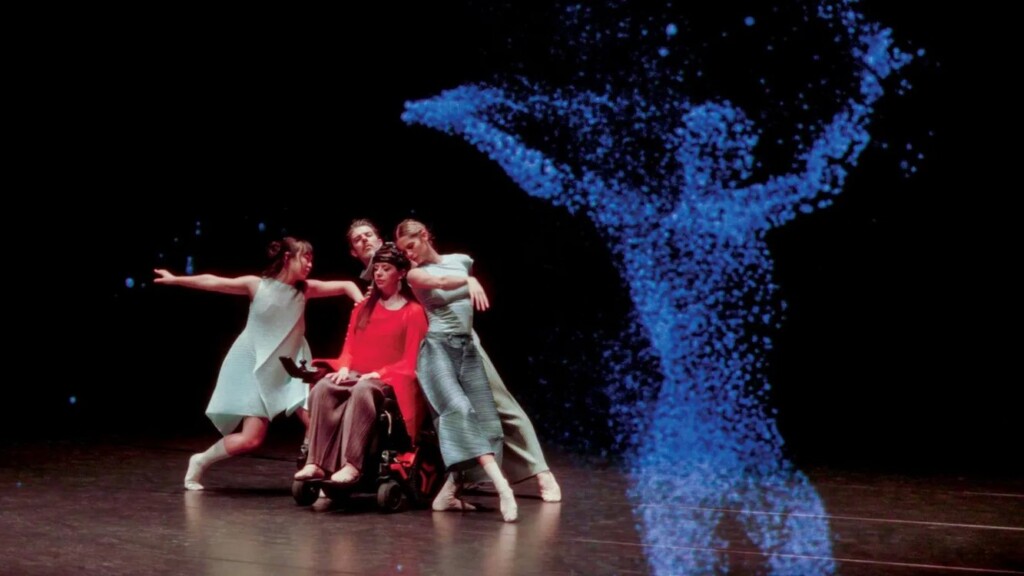
Dancer with ALS Performs on Stage Again Through Digital Avatar–WATCH

Monday, 20 July 2026
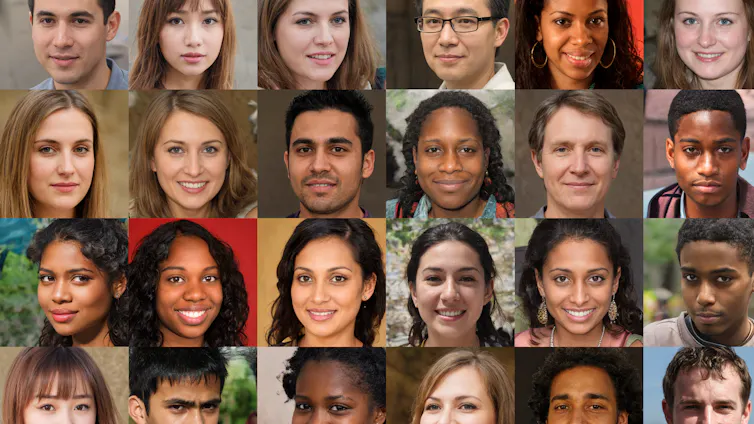
People can learn to spot AI faces – but the clues are no longer obvious
Deepfake faces generated via artificial intelligence (AI) have become so realistic that they routinely fool people, with some research suggesting there may be US$40 billion worth of deepfake-related fraud annually by 2027.
Not only do most people struggle to spot AI faces, but as long ago as 2023 we discovered some AI faces are “hyperreal” – they look more real than actual human faces. We also found people are overconfident they can spot AI faces, with the most confident people making the most errors.
Software-based deepfake detectors do exist, but they can’t really explain the reasons for their detections – and they suffer from serious weaknesses. Some can be fooled simply by converting the image type, such as from png to jpg.
But it turns out most people can learn to spot AI faces with an hour or so of practice. In new research published in PNAS, we show there’s a straightforward way to improve detection of deepfakes, by training people to pick up the tell-tale clues through experience rather than direct instruction.
The difference between human and AI faces
In our early research, we discovered a key difference between AI and human faces. AI faces are hyperaverage.
This means AI faces tend to be more symmetrical, proportional and attractive than human faces. But they’re less expressive and memorable – less likely to stand out in a crowd.
Intriguingly, people can accurately and reliably judge these qualities, but frequently misinterpret the clues. For example, people often think that faces that look a bit odd are AI-generated, when in fact human faces are more likely to have distinctive, unusual features.
Although most people struggle to decide whether a face is AI or real, there is one group who are naturally good at picking up on these clues. So-called super-recognisers, who have exceptional human face perception, seem to be attuned to hyperaverageness, making them better at spotting AI faces.
This made us wonder if, for those of us who aren’t super-recognisers, AI detection abilities can be trained like other forms of perceptual expertise.
Learning to spot AI
In our first study, we invited 45 participants into our lab at the Australian National University, and asked them to rate around 100 faces on six qualities that can be used to tell AI faces apart from real ones: distinctiveness, memorability, proportionality, symmetry, attractiveness and expressiveness.
We didn’t tell participants how these clues might help them distinguish an AI face from a real one – they had to figure that part out for themselves.
We told participants which faces were AI and which were human, but we didn’t tell them that the AI faces were more symmetrical or less expressive, for example. They had to learn these clues through experience rather than direct instruction.
Before and after training, we tested participants’ ability to tell AI faces apart from human ones with new faces that were not used in the training.
Training works
In one test, participants were shown three faces – two human and one AI – and asked to select the face that was AI. On this task, average accuracy doubled from 40% before training to 80% afterwards.
Impressively, all participants improved in their AI detection abilities and several achieved close to 100% accuracy. Participants also became faster and more confident in their correct judgements.
To test the robustness of these findings, the Different Minds Lab at the University of Victoria in Canada conducted a replication of the AI detection training with Canadian participants.
The Canadian lab obtained results that were as strong as those reported in the original Australian study. This shows the training is reliable and can work for different groups of people.
The training was also just as effective when it was administered online rather than in person, which suggests it could be a cost-effective remote intervention in deepfake detection.
A promising start
But this doesn’t mean we’ve solved the AI detection problem. Our training used faces produced with one particular generative AI model, called StyleGAN3.
This is one of the most realistic face generators available, but the technology is advancing rapidly and there are many other models.
Our method has potential to adapt to new models by updating the training images and using multimedia, but we don’t yet have evidence that this will work.
The clues we found for spotting AI faces may shift for other models. And other important questions remain: do the training benefits hold up over time? Is the training effective for people of all ages, including older adults or children?
How to improve your chances of spotting AI faces
If you want to get better at recognising AI-generated faces, looking at a lot of examples is a good start. You can see plenty at websites such as Which Face Is Real or This Person Does Not Exist.
While you’re looking, bear in mind the six key factors we identified:
- how distinctive is the face?
- how memorable is it?
- how proportional is it?
- how symmetrical is it?
- how attractive is it?
- how expressive is it?
This exercise may improve your deepfake radar. But the more important takeaway is that AI deepfakes are improving very quickly – they can easily fool us, even if we think we can spot them.
The clues are no longer obvious: they are not based on specific details but on facial impressions which people form rapidly and naturally, but which can be misleading.
At the same time, there is hope. We have shown it is possible to train people to detect AI faces. By combining our human-centred approach with algorithmic detection, we may yet keep up in this cat-and-mouse game of advancing technology.
Interested in undertaking the AI face detection training? You can register here.![]()
Amy Dawel, Clinical Psychologist and Associate Professor, School of Medicine and Psychology, Australian National University; Eric Mah, Postdoctoral Researcher, Department of Psychology, University of Victoria; Jim Tanaka, Professor of Psychology, University of Victoria, and Tanya George, Research Assistant, Australian National University
This article is republished from The Conversation under a Creative Commons license. Read the original article.
Tuesday, 16 June 2026
Global AI spending expected to surge 47 pc to $2.59 trillion in 2026
Friday, 12 June 2026
I used sound waves to make espresso. It could cut coffee‑brewing energy use by 75%
Francisco Trujillo, UNSW Sydney
Most of us think of espresso as a hot, high-pressure ritual. Finely ground coffee goes into a machine, boiling water is forced through it, and in about 30 seconds we get a concentrated shot with crema, aroma, bitterness, body and caffeine.
As someone from Colombia, I like to think coffee is in my blood – and I’m proud to come from a country known for producing some of the best coffee beans in the world.
So perhaps that’s why I have spent a lot of time in my laboratory with my team asking a simple question: does espresso really need hot water?
Our new research suggests the answer may be no.
Low energy, full strength
We have developed what we call an ultrasonic espresso: a room-temperature brewing process that uses high-frequency sound waves to extract the flavour, oils, aroma and caffeine from coffee grounds. The result is an espresso-strength coffee made in under three minutes, but needing far less energy than the conventional method.
Saving up to 75% of energy by not heating the water is a minor benefit for home users or small coffee shops. But for companies making ready-to-drink coffee products at industrial scale, it could be very significant indeed.
A concentrated room-temperature coffee could be used directly in bottled drinks, milk-based beverages or cold coffee products. It can also be shipped as a concentrate and diluted later. This would reduce not only energy use, but potentially processing time as well.
Ultrasound replaces heat
The key to the new process is ultrasound. These are sound waves above the range of human hearing.
In our system, a small metal device called a transducer presses against the side of a traditional espresso basket and makes it vibrate rapidly. Those vibrations move through the water and coffee grounds.
This creates a phenomenon known as acoustic cavitation. Tiny bubbles form and collapse in the liquid.
When these bubbles collapse near coffee particles, they produce microscopic jets and forces that act a little like scrubbing brushes. They pit and fracture the surface of the coffee grounds, helping flavour compounds, oils and caffeine move into the water much faster than they normally would at room temperature.
In other words, ultrasound helps us replace heat with mechanical energy.
Water, grind and time
This is not the same as cold brew. Cold brew is usually made by steeping coffee in cold water for 12 to 24 hours. It tends to be smooth, mellow and much less concentrated than espresso. In earlier work, we used ultrasound to speed up cold brew dramatically.
But the challenge in this project was different: could we produce something with the strength, body and intensity of espresso, without heating the water?
Grind size also mattered. Finer grounds allowed us to extract flavour more rapidly. Finally, we tested how long the ultrasound should be applied. We found the sweet spot was about two-and-a-half to three minutes.
The taste test
Of course, making a concentrated coffee in the laboratory is one thing. The real test is whether people want to drink it.
So we ran a blind evaluation with around 100 regular coffee drinkers. They were not trained judges; they were everyday consumers who drink coffee at least once a week.
We served them four coffees in identical cups: traditional espresso, ultrasound-brewed espresso, traditional filter coffee and ultrasound-brewed filter coffee. All were freshly prepared, cooled to the same temperature and presented in random order.
For the espresso samples, participants could not reliably tell the traditional and ultrasonic versions apart. There were no significant differences in aroma, flavour, bitterness or overall liking. For filter coffee, the ultrasound version was actually preferred overall, with participants rating its bitterness more pleasantly.
Those results show espresso may not need to begin with hot water after all. By using sound waves to shake the coffee grounds, we were able to create the same richness, body and intensity, but with far less energy.![]()
Francisco Trujillo, Senior Lecturer, School of Chemical Engineering, UNSW Sydney
This article is republished from The Conversation under a Creative Commons license. Read the original article.
Tuesday, 5 May 2026
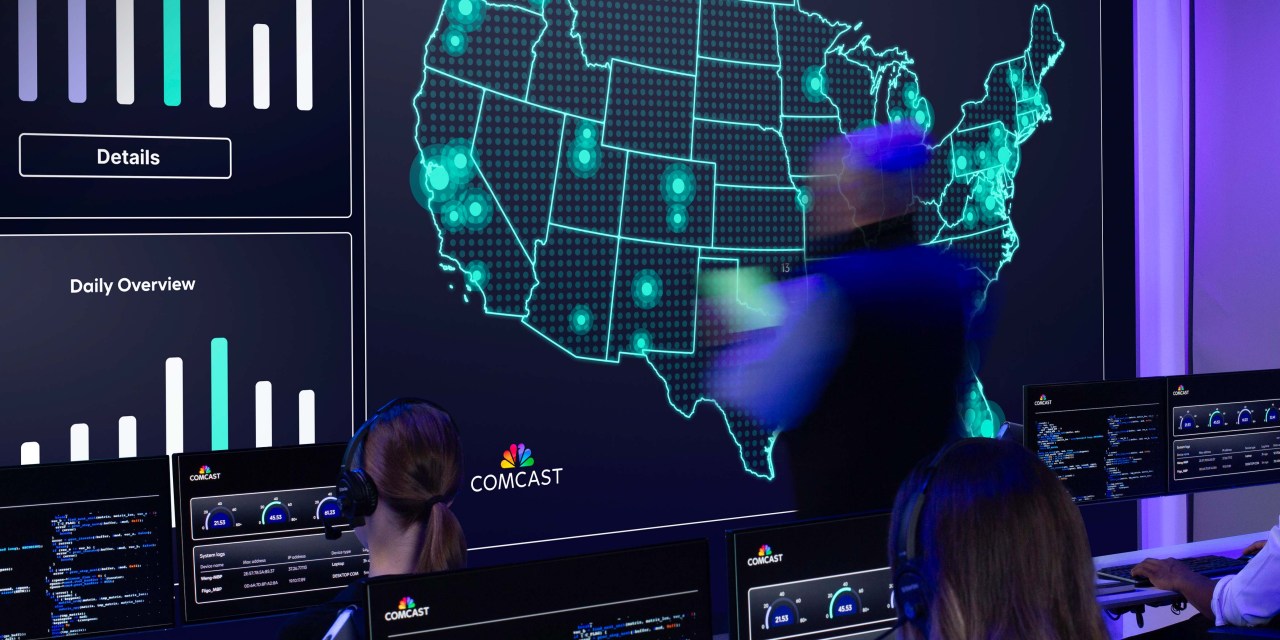
Comcast to test Edge AI apps using NVIDIA GPUs

- Personalized Advertising Agent – An advanced ad-delivery engine powered by Decart real-time AI video models. Decart’s technology is capable of customizing video advertisements down to the household level using attributes such as language, content preferences, household size, or other non-sensitive demographic categories – enabling hyper-relevant experiences for viewers while improving efficiency for advertisers.
- Small Business Concierge Agent – Leveraging Personal AI’s small language model (SLM) and memory platform deployed on HPE ProLiant servers to deliver an AI-powered “front desk” service capable of greeting customers, managing appointments, answering questions, and supporting day-today-day operations for small businesses.
- Reducing Latency for Gaming – Delivering ultra-low latency streaming for online gaming, the AI Grid brings GPU resources physically closer to players. This can dramatically improve responsiveness and overall gameplay quality, building on the impact of the low-latency technology Comcast rolled out for NVIDIA GeForce NOW and other applications last year.
Monday, 4 May 2026
AI demand to push global chip industry revenue past $1.3 trillion in 2026
Tuesday, 14 April 2026
Indian banks benefit from AI‑driven operating models: Report
Wednesday, 1 April 2026
Operant AI launches ecosystem programme to secure India’s rapidly expanding AI infra
Monday, 2 March 2026
Over $200 billion to be infused in creating AI-related infra in India
Friday, 6 February 2026
AI is coming to Olympic judging: what makes it a game changer?
Willem Standaert, Université de Liège
As the International Olympic Committee (IOC) embraces AI-assisted judging, this technology promises greater consistency and improved transparency. Yet research suggests that trust, legitimacy, and cultural values may matter just as much as technical accuracy.
The Olympic AI agenda
In 2024, the IOC unveiled its Olympic AI Agenda, positioning artificial intelligence as a central pillar of future Olympic Games. This vision was reinforced at the very first Olympic AI Forum, held in November 2025, where athletes, federations, technology partners, and policymakers discussed how AI could support judging, athlete preparation, and the fan experience.
At the 2026 Winter Olympics in Milano-Cortina, the IOC is considering using AI to support judging in figure skating (men’s and women’s singles and pairs), helping judges precisely identify the number of rotations completed during a jump. Its use will also extend to disciplines such as big air, halfpipe, and ski jumping (ski and snowboard events where athletes link jumps and aerial tricks), where automated systems could measure jump height and take-off angles. As these systems move from experimentation to operational use, it becomes essential to examine what could go right… or wrong.
Judged sports and human error
In Olympic sports such as gymnastics and figure skating, which rely on panels of human judges, AI is increasingly presented by international federations and sports governing bodies as a solution to problems of bias, inconsistency, and lack of transparency. Judging officials must assess complex movements performed in a fraction of a second, often from limited viewing angles, for several hours in a row. Post-competition reviews show that unintentional errors and discrepancies between judges are not exceptions.
This became tangible again in 2024, when a judging error involving US gymnast Jordan Chiles at the Paris Olympics sparked major controversy. In the floor final, Chiles initially received a score that placed her fourth. Her coach then filed an inquiry, arguing that a technical element had not been properly credited in the difficulty score. After review, her score was increased by 0.1 points, temporarily placing her in the bronze medal position. However, the Romanian delegation contested the decision, arguing that the US inquiry had been submitted too late – exceeding the one-minute window by four seconds. The episode highlighted the complexity of the rules, how difficult it can be for the public to follow the logic of judging decisions, and the fragility of trust in panels of human judges.
Moreover, fraud has also been observed: many still remember the figure skating judging scandal at the 2002 Salt Lake City Winter Olympics. After the pairs event, allegations emerged that a judge had favoured one duo in exchange for promised support in another competition – revealing vote-trading practices within the judging panel. It is precisely in response to such incidents that AI systems have been developed, notably by Fujitsu in collaboration with the International Gymnastics Federation.
What AI can (and cannot) fix in judging
Our research on AI-assisted judging in artistic gymnastics shows that the issue is not simply whether algorithms are more accurate than humans. Judging errors often stem from the limits of human perception, as well as the speed and complexity of elite performances – making AI appealing. However, our study involving judges, gymnasts, coaches, federations, technology providers, and fans highlights a series of tensions.
AI can be too exact, evaluating routines with a level of precision that exceeds what human bodies can realistically execute. For example, where a human judge visually assesses whether a position is properly held, an AI system can detect that a leg or arm angle deviates by just a few degrees from the ideal position, penalising an athlete for an imperfection invisible to the naked eye.
While AI is often presented as objective, new biases can emerge through the design and implementation of these systems. For instance, an algorithm trained mainly on male performances or dominant styles may unintentionally penalise certain body types.
In addition, AI struggles to account for artistic expression and emotions – elements considered central in sports such as gymnastics and figure skating. Finally, while AI promises greater consistency, maintaining it requires ongoing human oversight to adapt rules and systems as disciplines evolve.
Action sports follow a different logic
Our research shows that these concerns are even more pronounced in action sports such as snowboarding and freestyle skiing. Many of these disciplines were added to the Olympic programme to modernise the Games and attract a younger audience. Yet researchers warn that Olympic inclusion can accelerate commercialisation and standardisation, at the expense of creativity and the identity of these sports.
A defining moment dates back to 2006, when US snowboarder Lindsey Jacobellis lost Olympic gold after performing an acrobatic move – grabbing her board mid-air during a jump – while leading the snowboard cross final. The gesture, celebrated within her sport’s culture, eventually cost her the gold medal at the Olympics. The episode illustrates the tension between the expressive ethos of action sports and institutionalised evaluation.
AI judging trials at the X Games
AI-assisted judging adds new layers to this tension. Earlier research on halfpipe snowboarding had already shown how judging criteria can subtly reshape performance styles over time. Unlike other judged sports, action sports place particular value on style, flow, and risk-taking – elements that are especially difficult to formalise algorithmically.
Yet AI was already tested at the 2025 X Games, notably during the snowboard SuperPipe competitions – a larger version of the halfpipe, with higher walls that enable bigger and more technical jumps. Video cameras tracked each athlete’s movements, while AI analysed the footage to generate an independent performance score. This system was tested alongside human judging, with judges continuing to award official results and medals. However, the trial did not affect official outcomes, and no public comparison has been released regarding how closely AI scores aligned with those of human judges.
Nonetheless, reactions were sharply divided: some welcomed greater consistency and transparency, while others warned that AI systems would not know what to do when an athlete introduces a new trick – something often highly valued by human judges and the crowd.
Beyond judging: training, performance and the fan experience
The influence of AI extends far beyond judging itself. In training, motion tracking and performance analytics increasingly shape technique development and injury prevention, influencing how athletes prepare for competition. At the same time, AI is transforming the fan experience through enhanced replays, biomechanical overlays, and real-time explanations of performances. These tools promise greater transparency, but they also frame how performances are understood – adding more “storytelling” “ around what can be measured, visualised, and compared.
At what cost?
The Olympic AI Agenda’s ambition is to make sport fairer, more transparent, and more engaging. Yet as AI becomes integrated into judging, training, and the fan experience, it also plays a quiet but powerful role in defining what counts as excellence. If elite judges are gradually replaced or sidelined, the effects could cascade downward – reshaping how lower-tier judges are trained, how athletes develop, and how sports evolve over time. The challenge facing Olympic sports is therefore not only technological; it is institutional and cultural: how can we prevent AI from hollowing out the values that give each sport its meaning?

A weekly e-mail in English featuring expertise from scholars and researchers. It provides an introduction to the diversity of research coming out of the continent and considers some of the key issues facing European countries. Get the newsletter!![]()
Willem Standaert, Associate Professor, Université de Liège
This article is republished from The Conversation under a Creative Commons license. Read the original article.
Sunday, 1 February 2026
World’s Most Northern Electric Ferry Now Sailing in Frigid -13°F Temps (-25°C)

Wednesday, 28 January 2026
India’s life sciences leaders scaling AI, digital transformation: Report
Friday, 23 January 2026
Centre sanctions 24 chip design projects in big push to India's semiconductor industry
Tuesday, 6 January 2026
Hyundai Motor chief vows AI-driven growth, faster decision-making
Sunday, 21 December 2025
India emerges as world’s 3rd most competitive AI power
Monday, 8 December 2025
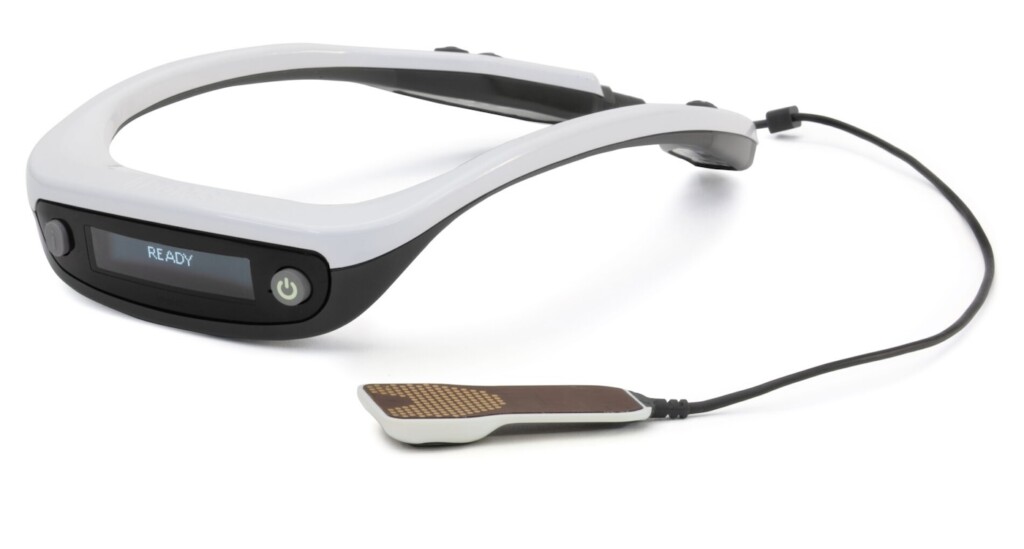
Tongue-Zapping Device Does More in 6 Months Than 4 Years of Normal Stroke Rehabilitation

Friday, 14 November 2025
Women at forefront of technology, leading with vision: Industry leaders
Monday, 10 November 2025
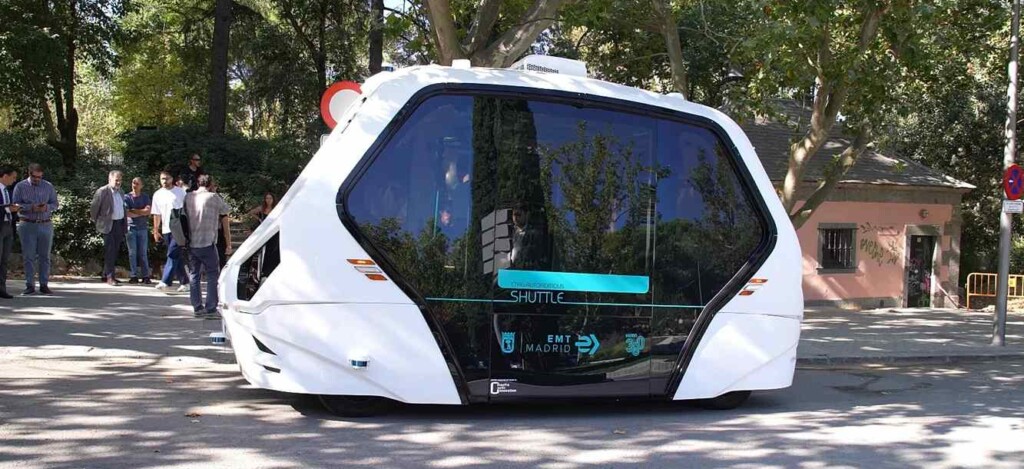
Driverless Electric Bus Eases Driver Shortages and Congestion In Madrid During Maiden Service

Friday, 17 October 2025
Telco transformation and the AI efficiency imperative

Wednesday, 8 October 2025
How safe is your face? The pros and cons of having facial recognition everywhere
Joanne Orlando, Western Sydney University
Walk into a shop, board a plane, log into your bank, or scroll through your social media feed, and chances are you might be asked to scan your face. Facial recognition and other kinds of face-based biometric technology are becoming an increasingly common form of identification.
The technology is promoted as quick, convenient and secure – but at the same time it has raised alarm over privacy violations. For instance, major retailers such as Kmart have been found to have broken the law by using the technology without customer consent.
So are we seeing a dangerous technological overreach or the future of security? And what does it mean for families, especially when even children are expected to prove their identity with nothing more than their face?
The two sides of facial recognition
Facial recognition tech is marketed as the height of seamless convenience.
Nowhere is this clearer than in the travel industry, where airlines such as Qantas tout facial recognition as the key to a smoother journey. Forget fumbling for passports and boarding passes – just scan your face and you’re away.
In contrast, when big retailers such as Kmart and Bunnings were found to be scanning customers’ faces without permission, regulators stepped in and the backlash was swift. Here, the same technology is not seen as a convenience but as a serious breach of trust.
Things get even murkier when it comes to children. Due to new government legislation, social media platforms may well introduce face-based age verification technology, framing it as a way to keep kids safe online.
At the same time, schools are trialling facial recognition for everything from classroom entry to paying in the cafeteria.
Yet concerns about data misuse remain. In one incident, Microsoft was accused of mishandling children’s biometric data.
For children, facial recognition is quietly becoming the default, despite very real risks.
A face is forever
Facial recognition technology works by mapping someone’s unique features and comparing them against a database of stored faces. Unlike passive CCTV cameras, it doesn’t just record, it actively identifies and categorises people.
This may feel similar to earlier identity technologies. Think of the check-in QR code systems that quickly sprung up at shops, cafes and airports during the COVID pandemic.
Facial recognition may be on a similar path of rapid adoption. However, there is a crucial difference: where a QR code can be removed or an account deleted, your face cannot.
Why these developments matter
Permanence is a big issue for facial recognition. Once your – or your child’s – facial scan is stored, it can stay in a database forever.
If the database is hacked, that identity is compromised. In a world where banks and tech platforms may increasingly rely on facial recognition for access, the stakes are very high.
What’s more, the technology is not foolproof. Mis-identifying people is a real problem.
Age-estimating systems are also often inaccurate. One 17-year-old might easily be classified as a child, while another passes as an adult. This may restrict their access to information or place them in the wrong digital space.
A lifetime of consequences
These risks aren’t just hypothetical. They already affect lives. Imagine being wrongly placed on a watchlist because of a facial recognition error, leading to delays and interrogations every time you travel.
Or consider how stolen facial data could be used for identity theft, with perpetrators gaining access to accounts and services.
In the future, your face could even influence insurance or loan approvals, with algorithms drawing conclusions about your health or reliability based on photo or video.
Facial recognition does have some clear benefits, such as helping law enforcement identify suspects quickly in crowded spaces and providing convenient access to secure areas.
But for children, the risks of misuse and error stretch across a lifetime.
So, good or bad?
As it stands, facial recognition would seem to carry more risks than rewards. In a world rife with scams and hacks, we can replace a stolen passport or drivers’ licence, but we can’t change our face.
The question we need to answer is where we draw the line between reckless implementation and mandatory use. Are we prepared to accept the consequences of the rapid adoption of this technology?
Security and convenience are important, but they are not the only values at stake. Until robust, enforceable rules around safety, privacy and fairness are firmly established, we should proceed with caution.
So next time you’re asked to scan your face, don’t just accept it blindly. Ask: why is this necessary? And do the benefits truly outweigh the risks – for me, and for everyone else involved?![]()
Joanne Orlando, Researcher, Digital Wellbeing, Western Sydney University
This article is republished from The Conversation under a Creative Commons license. Read the original article.