bloggggg

Home  |  Live  |  Science  |  Lifestyle  |  Entertainment  |  Broadcast  |  Games  |  eBooks  |  Astounds  |  Adbite  |  Cricbell  |  Cyber  |  Idea  |  Digital  |  Privacy  |  Publish  |  ePaper  |  Contact  .Subscribe.Subscribe.Subscribe.Subscribe.Subscribe.Subscribe.Subscribe.Subscribe.Subscribe
Subscribe

Tuesday, 31 March 2026

IPL 2026: Sooryavanshi’s blistering 52 helps RR register eight-wicket win over CSK


Guwahati: Rajasthan Royals' Vaibhav Sooryavanshi plays a shot during the Indian Premier League (IPL) 2026 match between Rajasthan Royals and Chennai Super Kings at Barsapara Cricket Stadium in Guwahati on Monday, March 30, 2026. (Photo: IANS)

Guwahati, (IANS) Vaibhav Sooryavanshi slammed a blistering 52 off just 17 balls as Rajasthan Royals launched their IPL 2026 campaign with a thumping eight-wicket victory over Chennai Super Kings at the ACA Stadium on Monday.

Sooryavanshi’s fifty came in only 15 deliveries, the third fastest in IPL history, to set up the win for RR. His knock, laced with four fours and five sixes, propelled RR to 74 without loss in the power-play, effectively sealing the contest in their favour.

Though he fell soon after, Yashasvi Jaiswal (38 not out) and skipper Riyan Parag (14 not out) calmly completed the formalities to complete the chase with 47 balls to spare and cap off a dominant performance that began with a disciplined bowling effort to bowl CSK out for 127.

RR had a flying start as Matt Henry’s opening over went for 18 runs, with Sooryavanshi pulling and driving for boundaries (including Kartik Sharma dropping him for zero) while Jaiswal glanced him fine for four.

Khaleel Ahmed thought he had Sooryavanshi lbw on the first ball of his spell, but review showed the ball going over leg stump. Jaiswal played watchfully even as Sooryavanshi continued to attack to keep the runs flowing.

Henry’s second over was taken apart by Sooryavanshi - slashing a slower ball over backward point for six, while Jaiswal muscled Khaleel straight over mid-off for four. Anshul Kamboj was greeted with three boundaries as Sooryavanshi ramped and tickled him over third man and fine leg before smashing a six over long-on, as RR crossed the fifty-run mark.

Noor Ahmad’s introduction did little to stem the flow as Sooryavanshi launched consecutive sixes over long-on to bring up a blistering fifty off just 15 balls, as 19 runs came off the sixth over to take RR to 74/0 at the end of the power-play.

But just after that, Sooryavanshi attempted to flay a length ball over cover but Sarfaraz Khan ran in from the deep and completed a diving catch at deep extra cover to dismiss him for 52.

Dhruv Jurel kept the tempo going with four quick boundaries, before dragging one back onto his stumps off Anshul Kamboj while trying to scoop off him. Parag lofted and reverse-swept to get his four and six, while Jaiswal thumped one over long-off for six before getting the winning single to launch RR’s campaign with a thumping win.Brief Scores: Chennai Super Kings 127 in 19.4 overs (Jamie Overton 43, Kartik Sharma 18; Ravindra Jadeja 2-18, Jofra Archer 2-19) lost to Rajasthan Royals 128/2 in 12.1 overs (Vaibhav Sooryavanshi 52, Yashasvi Jaiswal 38 not out; Anshul Kamboj 2-27) by eight wickets IPL 2026: Sooryavanshi’s blistering 52 helps RR register eight-wicket win over CSK | MorungExpress | morungexpress.com

Sunday, 15 March 2026

Formula 1: Bahrain, Saudi Arabian Grands Prix canceled

Photo credit; Formula 1

Shanghai, March 15 (IANS) Formula 1 has canceled next month's Bahrain and Saudi Arabian Grands Prix because of the escalating conflict in the Middle East, leaving the 2026 season with a reduced 22-race calendar and a lengthy spring break.

The sport confirmed Sunday that the races in Sakhir on April 12 and Jeddah on April 19 will not take place because of security concerns and logistical constraints linked to the ongoing conflict in the region.

The decision comes after weeks of uncertainty following the outbreak of hostilities on February 28, when the United States and Israel launched military strikes on Iran, triggering a wider regional conflict that has disrupted travel and raised security risks, reported Xinhua.

Several countries in the region closed their airspace in the aftermath of the strikes.

Formula 1 and the FIA, the sport's governing body, had been monitoring the situation closely but faced mounting pressure to make a final call as freight deadlines approached. Teams would have needed to ship equipment to the Middle East in the coming days for the races to go ahead.

The cancellation leaves a 35-day gap between the Japanese Grand Prix on March 29 and the Miami Grand Prix on May 3, meaning there will be no F1 racing in April.

Formula 1 evaluated several potential replacement venues, including Portimao in Portugal, Imola in Italy and Istanbul Park in Türkiye, all of which staged replacement races during the Covid-disrupted 2020 season.

However, the short timeframe to organize an event and the difficulty of securing hosting fees meant the options were deemed impractical. With the championship already scheduled for 24 rounds, there was also limited incentive to add replacement races at short notice.

The loss of the two Middle Eastern races will also have financial implications. Bahrain and Saudi Arabia pay among the highest hosting fees on the calendar, and the cancellation is expected to cost Formula 1 and its teams well over 130 million U.S. dollars in lost revenue.

Teams receive a share of the sport's commercial income, meaning the financial impact will be spread across the grid.With the Bahrain and Saudi races removed, the championship will resume in Miami after the extended break following Japan, with the remainder of the season expected to proceed as scheduled. Formula 1: Bahrain, Saudi Arabian Grands Prix canceled | MorungExpress | morungexpress.com

Saturday, 14 March 2026

Can the 2026 FIFA World Cup still be a force for global unity?

Paul R. Carr, Université du Québec en Outaouais (UQO) and Alexis Legault, Université du Québec en Outaouais (UQO)

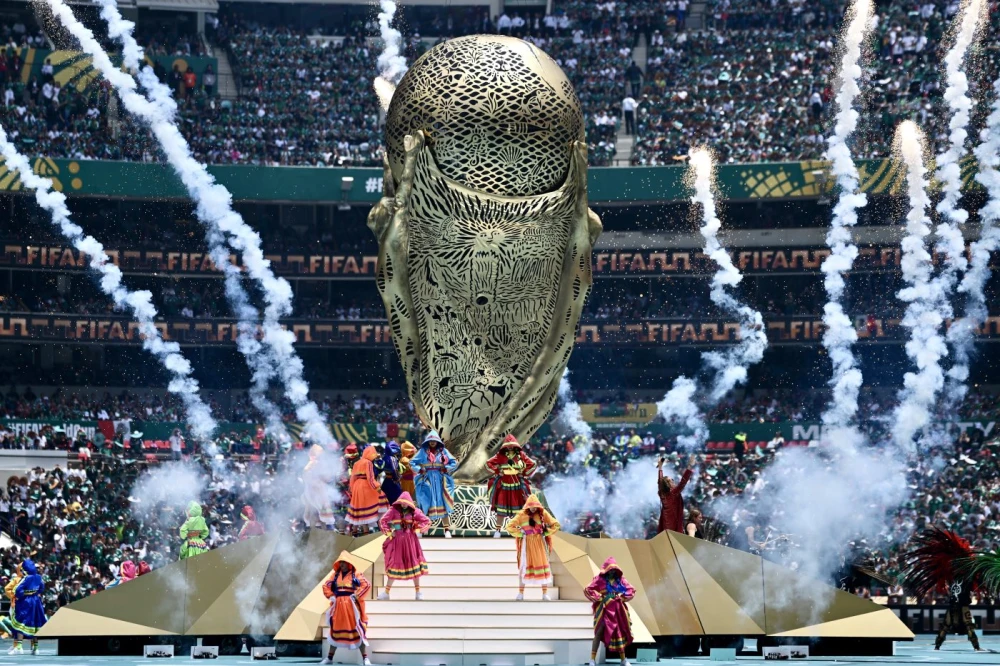
The FIFA Men’s World Cup will unfold across North America from June 11 to July 19, co-hosted by Canada, Mexico and the United States. This year’s event will be the largest ever, with some 48 countries represented.

The FIFA 2026 World Cup was awarded in 2018 and preparations have been ongoing ever since. However, the U.S. has significantly altered course since the election of Donald Trump in January 2025.

The international community is facing an onslaught of actions, threats and rhetoric from the U.S. government, which has led to chaos, confusion, instability and massive political, economic and sociocultural vulnerability.

As a result, calls have emerged to boycott the tournament, including from former FIFA president Sepp Blatter.

It’s clearly late in the game to consider adjusting, transferring, suspending or altering this thoroughly planned international event. The implications for changing the status of the FIFA 2026 tournament are numerous and far-reaching.

Why consider a boycott now?

A series of recent American actions raises serious questions about its suitability to host the FIFA World Cup at this time.

These include destabilizing allies, imposing tariffs without clear justification, launching a military attacking on Iran with Israel, attacking Venezuela and capturing its president, threatening to annex Greenland and Canada, eliminating USAID and putting millions of people at risk of disease, illness, famine and death and overseeing the violence inflicted by U.S. Immigration and Customs Enforcement (ICE) agents that endangers citizens and residents.

In addition, the fair and equitable treatment of people seeking to visit the U.S. cannot be assured. People from many countries would effectively be barred from visiting the U.S. to attend the event because of current American policy.

There is a serious threat of people being detained, surveilled and persecuted. Racial profiling is a particular concern given how ICE has maneuvered in immigrant communities in the U.S.

Many are also concerned about violence within the U.S., which is disproportionately higher than in most western countries.

At the same time, the U.S. has withdrawn from numerous international organizations and agreements, the antithesis of co-operation on global issues, shutting down the potential for meaningful and necessary dialogue.

All these realities fly in the face of the spirit and solidarity of global sporting events like the World Cup that aim to cultivate peace and intercultural understanding.

FIFA’s record

Allegations of corruption and bribery within FIFA have persisted for years. They have been documented in a U.S. Department of Justice indictment and in FIFA’s own Garcia Report.

FIFA is sensitive to these complaints, and some reforms have been implemented to make the organization more transparent and credible, but many groups still argue the corruption is rampant.

Human rights have long been an issue at FIFA events. The 2022 FIFA World Cup in Qatar prompted concerns related to LGBTQ+ rights, with many players wearing the “One Love” armband in protest. It also raised concerns over the rights of workers and migrants, who were exploited and faced discrimination.

There are also environmental concerns related to the carbon footprint of such a large event. However, the counter-claim of the event fostering global solidarity is an equally strong justification for it.

FIFA is lathered in capitalist trappings, and there is a great deal of profit to be made for a small number of people. The 2026 World Cup is expected to bring in more than US$10 billion for the organization.

It is unclear how local taxpayers and citizens benefit economically from holding the World Cup, especially given that they underwrite many of the costs through their taxes.

Similarly, the marketing, television and dissemination rights present a lucrative landscape, yet that funding does little to fight poverty, hunger and unacceptable living conditions for many.

Do boycotts work?

There is some debate about the effectiveness of boycotting. The boycotts of the 1980 Summer Olympics in Moscow, following the invasion of Afghanistan, and of the 1984 Summer Olympics in Los Angeles, led by the Soviet bloc in retaliation, did not produce substantive political change.

Some questioned the enormity of eliminating the potential for intercultural and diplomatic interaction.

By contrast, the sporting boycott of apartheid-era South Africa from 1964 to 1992 did help contribute to significant change in the country.

The ongoing Boycott, Divestment, Sanctions movement against Israel — although not supported by the U.S. and many other countries — has had varying success, but the very fact that it exists and is supported by many is politically significant.

The costs of boycotting now

Altering or boycotting the tournament at this stage would inevitably punish national teams and athletes for political considerations beyond their reach. The FIFA event could generate goodwill, promote global understanding and bring people together, especially in relation to nations from the Global South that are often portrayed negatively.

Some argue a boycott would affect players and fans more than FIFA itself. The economic repercussions of a boycott would also be substantial. Yet the very notion of a boycott is that it does, and should, affect and influence attitudes, behaviours and actions.

Others have suggested alternative avenues for change, including through organized protests and social movement mobilization.

Other alternative proposals for enacting change include targeted boycotts against certain sponsors, institutions and sectors. Some activists may wish to target a policy, such as the assault on migrants in the U.S. or corruption within FIFA.

A force for the global public good?

Boycotts are complicated and have been more commonly related to the Olympic Games than the World Cup. However, citizens and activists alike seek opportunities to develop a more just and equitable world.

In 2021, there were also great concerns regarding human rights violations. Interestingly, while a Statista survey of 4,201 respondents across 120 countries found that most respondents believed their country should boycott the 2022 World cup in Qatar, very few soccer fans were willing to boycott it themselves.

But FIFA isn’t a political party; it’s a business and sports organization. Although considered favourable, it does not need the population to approve its decisions, and sponsors are at risk of being targeted and tarnished if public sentiment turns sharply against the event.

Will the FIFA World Cup provide the opportunity for the U.S. to address problems of racism, gender discrimination, the mantra to annex other countries, ICE overreach and denigration against migrants? Or will such issues be simply swept under the carpet?

The tournament could offer a platform to engage with the world through diplomacy grounded in sovereignty, human rights and mutual benefit. A tri-national hosting arrangement with Canada and Mexico may yet foster cross-border co-operation, even amid strained relations.

The current U.S. political climate does not provide an encouraging model to move the FIFA World Cup toward peace and solidarity currently, but the world is in desperate need for it to do so.The Conversation

Paul R. Carr, Professeur/Professor (Université du Québec en Outaouais) & Titulaire/Chair, Chaire UNESCO en démocratie, citoyenneté mondiale et éducation transformatoire/ UNESCO Chair in Democracy, Global Citizenship and Transformative Education., Université du Québec en Outaouais (UQO) and Alexis Legault, PhD Candidate in Education, Université du Québec en Outaouais (UQO)

This article is republished from The Conversation under a Creative Commons license. Read the original article.

Monday, 9 March 2026

T20 WC: Samson, Bumrah star as India clinch third title, beat New Zealand by 96 runs

Ahmedabad: India's Hardik Pandya celebrates after India won the ICC Men's T20 World Cup 2026 at the Narendra Modi Stadium in Ahmedabad on Sunday, March 08, 2026. (Photo: IANS)

Ahmedabad, March 8 (IANS) Fast bowling spearhead Jasprit Bumrah picked 4-15 as India became the first team to retain the Men’s T20 World Cup title and win the crown for a record three times after beating New Zealand by 96 runs in front of 86,824 fans at the Narendra Modi Stadium in Ahmedabad on Sunday.

Sanju Samson’s blistering 89 off 46 balls, laced with five fours and eight sixes, powered India to 255/5, the highest total in a T20 World Cup final, before Bumrah and Axar Patel (3-27) ripped through New Zealand’s top order to seal victory. The visitors were dismissed for 159 in 19 overs, with only Tim Seifert offering resistance through a fighting 52.

Samson, in prime form after scores of 97 not out and 89 in his previous innings, shared a 98-run opening stand with Abhishek Sharma (52 off 21 balls) while Ishan Kishan added 54 off 25 deliveries. James Neesham briefly checked the charge with three wickets in an over, but Shivam Dube’s unbeaten 26 off eight balls pushed India past 250.

India’s bowlers then ensured there was no repeat of the semi-final scare against England, reducing New Zealand to 52/3 inside the powerplay. The win broke two hoodoos - India’s first victory over New Zealand in a T20 World Cup and their first ICC white-ball triumph in Ahmedabad after defeats in the 2023 ODI final and earlier in this tournament.

Captain Suryakumar Yadav is now the fourth Indian skipper to lead the side to a men’s cricket World Cup title after having not lost a single series since taking charge after the trophy triumph in Barbados in June 2024 - a remarkable record that highlights India's dominance in the shortest format. Head coach Gautam Gambhir also gets his second ICC title, as India completed their two-peat of Men’s T20 World Cup titles via their high-risk and reward approach.

On a flat mixed soil pitch, India’s imposing total was built on an explosive platform laid by their top three, all of whom attacked from the outset with strike rates that underlined their dominance. Samson finished on a strike rate of 193.47, while Abhishek struck at 247.61 and Kishan hit his runs at a strike-rate of 216.

The early overs had set an ominous tone for New Zealand before the tactical decision to introduce fast bowler Jacob Duffy in the third over backfired badly. Runs and boundaries flowed from there like an avalanche, as New Zealand's bowlers were sent on a leather hunt via depending too much on slower balls and bowling away from stump-to-stump lines.

Inserted into batting first, Samson defended solidly off Matt Henry for the first four balls, before opening up with an elegant swing over long-on for six. After Glenn Phillips gave away five runs in the second over, Abhishek announced himself with an ugly heave off Jacob Duffy for four, before sweetly timing a lofted off-drive for another boundary.

Samson, meanwhile, pumped a Duffy inswinger back over the bowler's head for four. The pitch was a belter, and both batters were beginning to sense it as the fourth over opened the floodgates for India. Lockie Ferguson endured a nightmare introduction - two wides, with Abhishek and Samson taking him for a pair of four and six each, as the duo plundered 24 runs.

Henry's second over saw Abhishek launch a slower ball over mid-off for six before Samson rocked back to pull a bouncer for another maximum, even as four wides in the over told its own story. New Zealand's plans were clearly unravelling against batters who simply refused to stick to a blueprint.

Abhishek reached his half-century off just 18 balls in the sixth over, swatting and swinging his way to the milestone with nonchalance via three fours and a six, as India plundered 92 runs in power-play. Though Santner brought himself on in the seventh over, Samson cracked a cut off him for four.

Abhishek's fine innings ended in the eighth over when Rachin Ravindra pushed it wide, and the opener feathered an edge behind to the keeper to depart for 52. Ishan Kishan walked in and immediately fitted the template, as an on-drive for two brought up India's hundred in 7.2 overs. With an off-drive and a muscular four through mid-wicket being the standout from his four quick boundaries, Kishan maintained India’s tempo.

Samson, after raising his third successive fifty, was on an altogether different level – smacking Ferguson for two sixes and a four before smashing three consecutive sixes off Ravindra in the 14th over. By the 15th over, India had already surpassed the highest team total in a T20 World Cup final, even as Kishan’s audacious strokeplay got him his fifty off 23 balls.

But Neesham struck thrice in quick succession - Samson slapped a full toss to long-on and departed for 89, then Kishan holed out to long-on for 54, and skipper Suryakumar Yadav jabbed to deep backward square leg for a golden duck.

Hardik Pandya smacked Henry for a six and four, before the pacer dismissed him on a slower bouncer and cover taking the catch. Shivam Dube ensured India got a great finishing kick by lofting Neesham for four, before smashing the next delivery over midwicket for six and clearing cover for another maximum.

Dube then pulled Neesham for four and finished the innings with a cross-bat drive through cover, as India went past 250, thanks to 24 runs coming off the final over. In defence of 256, Arshdeep Singh found swing early on to keep Seifert and Finn Allen in check.

After Allen was dropped on two by Dube at mid-off, Tim Seifert launched Hardik Pandya for two sixes and two fours in the second over, yielding 21 runs. India's response was swift and ruthless, as Axar, introduced in the third over, had the dangerous Allen holing out to long-on. Bumrah was summoned in the fourth over and struck with his very first ball, as Rachin Ravindra chipped an off-cutter to Ishan Kishan, who took a brilliant diving catch.

Axar then castled Glenn Phillips with a perfectly disguised arm ball in the fifth over, the ball slipping past his bat to peg back leg stump, as New Zealand ended power-play at 52/3. Seifert marched forward to bring up a half-century off 23 balls by carting Varun Chakaravarthy for two sixes.

But India continued to chip away - Mark Chapman chopped onto his stumps off Pandya, while Seifert miscued the pull and Kishan tossed the ball in the air and regained balance to complete a solo relay catch in the deep.

The crowd was briefly silenced when Daryl Mitchell struck successive sixes off Arshdeep Singh, who later fielded off his own bowling and threw the ball back at the batter, invoking an angry reaction from him.

The umpire intervened, with Suryakumar Yadav offering an apology and Arshdeep following with a handshake at the end of the over. Despite the steep asking rate, Mitchell and skipper Mitchell Santner, dropped on 26 by Pandya, continued to smash boundaries.

But Axar came back to have the former hole out to deep mid-wicket off a full toss, while Bumrah castled James Neesham, Matt Henry, and Neesham with slower balls, before Tilak Varma completed a solo relay catch of Jacob Duffy off Abhishek Sharma’s bowling, as India lived up to their pre-tournament hype and made the history they were destined to make in blistering style.

Brief scores:India 255/5 in 20 overs (Sanju Samson 89, Ishan Kishan 54, Abhishek Sharma 52; James Neesham 3-46, Rachin Ravindra 1-32) beat New Zealand 159 in 19 overs (Tim Seifert 52, Mitchell Santner 43; Jasprit Bumrah 4-15, Axar Patel 3-27) by 96 runs T20 WC: Samson, Bumrah star as India clinch third title, beat New Zealand by 96 runs | MorungExpress | morungexpress.com

Thursday, 26 February 2026

Ronaldo 'should never stop playing football', insists fellow Real Madrid legend Roberto Carlos


Cristiano Ronaldo has been urged to “never stop playing football”, with fellow Real Madrid legend Roberto Carlos telling the Portuguese GOAT that he needs to prolong his career for as long as possible - even if he ends up “with one leg or crawling”. CR7 has passed his 41st birthday without giving any thought to retirement and is expected to grace the 2026 World Cup, GOAL reported.

Ronaldo has been making unfortunate headlines at present, with the all-time great taking to going on strike at Saudi Pro League side Al-Nassr. He has not figured in their last two games and is seeing it suggested that the most lucrative contract in world football could be broken in the summer - with said deal including a release clause.

There is no suggestion that CR7 will be hanging up his boots, with returns to Europe or a move to join eternal rival Lionel Messi in MLS being speculated on. Brazil icon Carlos hopes that the evergreen frontman will play on for several years yet - with his body showing no sign of breaking down.

Former Real full-back Carlos told O Jogo of a man that he watched rewrite the history books at Santiago Bernabeu: “Cristiano can't stop, ever. If he ever decides to stop playing, I'll call him and tell him not to stop. He's one of those players who represent a lot, both for clubs and for the national team, for children, for younger players. He should never stop playing football, even if it's just with one leg or crawling. He transmits a lot of strength and energy to any boy who wants to start.”Ronaldo still has targets to hit in the latter stages of his career, with his intention being to reach 1,000 competitive goals before any thought is given to walking away. Quizzed on whether that milestone will be reached, Carlos added: “For those who love Cristiano and football, seeing him continue to make history and break records is wonderful. The only player to have scored 1,000 goals was Pele, but Cristiano could join the list. I see him happy and confident in the Saudi league. I'm absolutely certain he'll reach that milestone. He never gets injured. He continues to play well, he's a role model, Portugal deserves congratulations.” custom title

Tuesday, 17 February 2026

Italy hosted the Winter Olympics 70 years ago. What was it like, and what’s changed?

Richard Baka, Victoria University

The 2026 Milan Cortina Winter Olympics are Italy’s fourth as Olympic host and come 70 years after the region first welcomed the world’s best winter athletes.

It is Italy’s third Winter Olympics, second only to the United States (four), reinforcing the nation’s long-standing influence within the Olympic movement.

So, what’s changed since 1956?

Looking back: Cortina d’Ampezzo 1956

The 1956 winter games were originally scheduled for 1944 but were postponed due to the second world war, eventually taking place in Cortina d’Ampezzo.

It was groundbreaking in several ways.

The games ran for 11 days, far shorter than this year’s 17-day program.

Italian skier Giuliana Chenal-Minuzzo became the first woman to recite the Olympic Oath at an opening ceremony.

For the first time, the Winter Olympics were broadcast live on television, albeit in black and white, to nine European nations.

In 1956, winter and summer games were held in the same year, (Melbourne hosted the Summer Olympics that year).

This changed in 1994, when the International Olympic Committee (IOC) moved them to alternating even-numbered years, significantly boosting the profile, commercial appeal and growth of the Winter Olympics.

From centralised to decentralised hosting

Cortina 1956 featured a highly centralised model, with eight venues clustered within the Dolomites mountain range.

In contrast, Milan Cortina in 2026 reflects the IOC’s modern strategy of decentralisation and sustainability.

The spread-out nature of the 2026 event features:

  • four main geographical clusters (Milan, Cortina d'Ampezzo, Valtellina and Val di Fiemme) plus Verona (opening and closing ceremonies)
  • 15 competition venues
  • two host cities – the first time in Olympic history, separated by 413 kilometres
  • six Olympic villages
  • four opening ceremony locations.

With Milan as a major metropolitan hub, the 2026 games are far more urban than their alpine predecessor.

Growth of the winter games

The expansion from 70 years ago is striking:

New, youth-friendly and broadcast-driven sports such as short-track speed skating, snowboarding and freestyle skiing have transformed the program.

The only new sport in 2026 will be ski mountaineering.

Near-gender parity will be achieved through expanded women’s events and mixed-gender competitions.

Leading nations on the medal table

In 1956, the dominant nations were mainly European – the Soviet Union, Austria, Norway, Finland, Sweden and Switzerland as well as the US.

This year, the podium will likely be owned by Norway, the US, Germany, Italy, China and Canada – the latter two making huge improvements in recent times.

Even Australia, a summer games powerhouse, which never made the podium until 1994, has improved dramatically and is expected to have its best result of around six medals, placing it in the top 15.

The Russians will be noticeably absent, forced out by the IOC due to the Ukrainian invasion. They will be allowed to have neutral athletes who can win medals but as a nation they are on the outer.

Paralympics, professionalism and equity

The 2026 Winter Paralympics will follow immediately after the Olympics – something that did not exist in 1956.

The Winter Paralympics first appeared in 1976 and only began sharing host cities with the Olympics in 1992.

Other major shifts since 1956 include:

  • expanded women’s participation, including ice hockey (introduced in 1998)
  • the end of strict amateur-only participation (phased out after 1986)
  • increased financial rewards for medal winners
  • the return of professional National Hockey League male players for the first time since 2014 – a major boost for fans and broadcasters.

Media, technology and the fan experience

Media coverage has exploded since 1956 with the ability to follow every sport, every event on television and radio, digital platforms, newspaper and print media, blogs, podcasts and social media.

Technological changes over the past seven decades have been dramatic. This includes:

  • extensive new types of media coverage
  • use of artificial intelligence
  • equipment design
  • athlete apparel innovation
  • snow-making capabilities
  • venue design and preparation
  • transportation improvements
  • monitoring of athlete performance and training methods.

Fan experience will be greatly enhanced and transformed through:

Costs, sustainability and climate challenges

The 1956 games operated on a modest budget of around US$250,000 (A$350,000).

The 2026 event is projected to cost around US$5.9 billion (A$8.3 billion) for operating and infrastructure expenses.

Cost escalation is driven by inflation, transport and accommodation, security requirements, venue construction and technology.

Balancing this are vastly increased revenues from broadcast rights, sponsorship and ticketing.

Most Olympic hosts end up losing money. The list is long, with Montreal (1976), Nagano (1998), Athens (2004), Sochi (2014), Rio (2016), Tokyo (2020/21) and others all going well over budget.

Sustainability and legacy – barely considered in 1956 – are now central.

The IOC strongly discourages “white elephant” venues, prioritising temporary facilities, venue reuse and carbon reduction.

Climate change remains a long-term concern. While snow was imported for some events in 1956, global warming now threatens the future pool of viable hosts.

Geopolitics, governance and security

The election of Kirsty Coventry as the first woman president of the IOC underscores the organisation’s broader push toward gender equity in leadership.

Under her guidance, the IOC is looking to implement firmer policies on transgender participation.

No major boycotts by nations are expected despite tension caused by the expulsion of Russia and Belarus.

Several international sport federations – supported by some European nations – have even restricted these two banned national Olympic teams from participating as individual neutral athletes.

For the 2026 games, doping controls are stricter than ever, led by the IOC and the World Anti-Doping Agency.

Security planning is at an all-time high. It now includes cyber-threats as well as physical risks.

Watch this space

Seventy years after Cortina d’Ampezzo hosted a modest, alpine-focused winter games, Milan Cortina 2026 represents a vastly expanded, technologically sophisticated and globally connected Olympic festival.

Despite challenges – climate, cost and geopolitics – all indicators suggest the games will deliver a compelling, inclusive and memorable celebration of winter sport.The Conversation

Richard Baka, Honorary Professor, School of Kinesiology, Western University, London, Canada; Adjunct Fellow, Olympic Scholar and Co-Director of the Olympic and Paralympic Research Centre, Institute for Health and Sport, Victoria University

This article is republished from The Conversation under a Creative Commons license. Read the original article.

-

Monday, 16 February 2026

Winter Olympics face an existential chill from climate change


There are currently 93 cities in the world with the infrastructure needed to host the Winter Olympics and Paralympics. But as the planet continues to warm, that pool of options is dwindling rapidly. By 2050, only four cities would be able to support the Olympics without the aid of artificial snow, Observer reported, citing a study.

“Hockey, figure skating, curling, etc., are all indoors; you can do that in Miami if you want,” Daniel Scott, a professor of geography and environmental management at the University of Waterloo and one of the study’s authors, told Observer. “It’s really the snow sports that we’re talking about as vulnerable—how do you maintain that as part of the Winter Games?”

This question is top of mind for the International Olympic Committee (IOC), which is preparing to kick off the 2026 Milano Cortina Winter Olympics in Italy next month. The governing body is weighing a range of options to address rising temperatures, from combining the Olympic and Paralympic games to hosting them in different cities, or even shifting their traditional start dates to take advantage of the coldest months of the year.

“Our ambition is to protect the Olympic Winter Games and the winter sports that so many people love; to minimize the impact on the environment; and to help safeguard the winter economies that so many people rely on,” an IOC spokesperson told Observer over email.

It isn’t just the IOC that’s worried about warming winters. A 2022 survey of professional and Olympic winter athletes and coaches from 20 countries found that 90 percent were concerned about climate change’s impacts on their sport. Those impacts can include serious safety risks: eight years earlier, during the Sochi Winter Games, higher crash and injury rates among snow sport athletes were linked to warmer temperatures and lower-quality snow.

The ramifications of global warming will only get worse as the years go by. Of the 93 past and potential hosts for the Winter Olympics—which traditionally take place in February—between 45 and 55 are expected to be climate-reliable by the 2050s, with that figure falling to between 30 and 54 by the 2080s, according to the study.

The Winter Paralympics, which are held the month after the Olympics, face an even steeper challenge. Only 17 to 31 cities will be able to host the games by mid-century, with just four to 31 cities remaining viable three decades later. “How do you get the Paralympics out of March?” said Scott.
Rising heat won’t just affect the Winter Olympics. The Summer Olympics are already feeling the strain: during the 2020 Summer Olympics in Tokyo, marathons were moved to Sapporo to escape extreme heat. And the 2032 Summer Olympics in Brisbane will be held during Australia’s winter rather than summer to take advantage of cooler weather. “Heat risk is a growing concern,” said Scott.Source: https://www.panorama.am/

Saturday, 14 February 2026

Winter Olympics face an existential chill from climate change


There are currently 93 cities in the world with the infrastructure needed to host the Winter Olympics and Paralympics. But as the planet continues to warm, that pool of options is dwindling rapidly. By 2050, only four cities would be able to support the Olympics without the aid of artificial snow, Observer reported, citing a study.

“Hockey, figure skating, curling, etc., are all indoors; you can do that in Miami if you want,” Daniel Scott, a professor of geography and environmental management at the University of Waterloo and one of the study’s authors, told Observer. “It’s really the snow sports that we’re talking about as vulnerable—how do you maintain that as part of the Winter Games?”

This question is top of mind for the International Olympic Committee (IOC), which is preparing to kick off the 2026 Milano Cortina Winter Olympics in Italy next month. The governing body is weighing a range of options to address rising temperatures, from combining the Olympic and Paralympic games to hosting them in different cities, or even shifting their traditional start dates to take advantage of the coldest months of the year.

“Our ambition is to protect the Olympic Winter Games and the winter sports that so many people love; to minimize the impact on the environment; and to help safeguard the winter economies that so many people rely on,” an IOC spokesperson told Observer over email.

It isn’t just the IOC that’s worried about warming winters. A 2022 survey of professional and Olympic winter athletes and coaches from 20 countries found that 90 percent were concerned about climate change’s impacts on their sport. Those impacts can include serious safety risks: eight years earlier, during the Sochi Winter Games, higher crash and injury rates among snow sport athletes were linked to warmer temperatures and lower-quality snow.

The ramifications of global warming will only get worse as the years go by. Of the 93 past and potential hosts for the Winter Olympics—which traditionally take place in February—between 45 and 55 are expected to be climate-reliable by the 2050s, with that figure falling to between 30 and 54 by the 2080s, according to the study.

The Winter Paralympics, which are held the month after the Olympics, face an even steeper challenge. Only 17 to 31 cities will be able to host the games by mid-century, with just four to 31 cities remaining viable three decades later. “How do you get the Paralympics out of March?” said Scott.Rising heat won’t just affect the Winter Olympics. The Summer Olympics are already feeling the strain: during the 2020 Summer Olympics in Tokyo, marathons were moved to Sapporo to escape extreme heat. And the 2032 Summer Olympics in Brisbane will be held during Australia’s winter rather than summer to take advantage of cooler weather. “Heat risk is a growing concern,” said Scott. Source: https://www.panorama.am/

Friday, 6 February 2026

AI is coming to Olympic judging: what makes it a game changer?

Willem Standaert, Université de Liège

As the International Olympic Committee (IOC) embraces AI-assisted judging, this technology promises greater consistency and improved transparency. Yet research suggests that trust, legitimacy, and cultural values may matter just as much as technical accuracy.

The Olympic AI agenda

In 2024, the IOC unveiled its Olympic AI Agenda, positioning artificial intelligence as a central pillar of future Olympic Games. This vision was reinforced at the very first Olympic AI Forum, held in November 2025, where athletes, federations, technology partners, and policymakers discussed how AI could support judging, athlete preparation, and the fan experience.

At the 2026 Winter Olympics in Milano-Cortina, the IOC is considering using AI to support judging in figure skating (men’s and women’s singles and pairs), helping judges precisely identify the number of rotations completed during a jump. Its use will also extend to disciplines such as big air, halfpipe, and ski jumping (ski and snowboard events where athletes link jumps and aerial tricks), where automated systems could measure jump height and take-off angles. As these systems move from experimentation to operational use, it becomes essential to examine what could go right… or wrong.

Judged sports and human error

In Olympic sports such as gymnastics and figure skating, which rely on panels of human judges, AI is increasingly presented by international federations and sports governing bodies as a solution to problems of bias, inconsistency, and lack of transparency. Judging officials must assess complex movements performed in a fraction of a second, often from limited viewing angles, for several hours in a row. Post-competition reviews show that unintentional errors and discrepancies between judges are not exceptions.

This became tangible again in 2024, when a judging error involving US gymnast Jordan Chiles at the Paris Olympics sparked major controversy. In the floor final, Chiles initially received a score that placed her fourth. Her coach then filed an inquiry, arguing that a technical element had not been properly credited in the difficulty score. After review, her score was increased by 0.1 points, temporarily placing her in the bronze medal position. However, the Romanian delegation contested the decision, arguing that the US inquiry had been submitted too late – exceeding the one-minute window by four seconds. The episode highlighted the complexity of the rules, how difficult it can be for the public to follow the logic of judging decisions, and the fragility of trust in panels of human judges.

Moreover, fraud has also been observed: many still remember the figure skating judging scandal at the 2002 Salt Lake City Winter Olympics. After the pairs event, allegations emerged that a judge had favoured one duo in exchange for promised support in another competition – revealing vote-trading practices within the judging panel. It is precisely in response to such incidents that AI systems have been developed, notably by Fujitsu in collaboration with the International Gymnastics Federation.

What AI can (and cannot) fix in judging

Our research on AI-assisted judging in artistic gymnastics shows that the issue is not simply whether algorithms are more accurate than humans. Judging errors often stem from the limits of human perception, as well as the speed and complexity of elite performances – making AI appealing. However, our study involving judges, gymnasts, coaches, federations, technology providers, and fans highlights a series of tensions.

AI can be too exact, evaluating routines with a level of precision that exceeds what human bodies can realistically execute. For example, where a human judge visually assesses whether a position is properly held, an AI system can detect that a leg or arm angle deviates by just a few degrees from the ideal position, penalising an athlete for an imperfection invisible to the naked eye.

While AI is often presented as objective, new biases can emerge through the design and implementation of these systems. For instance, an algorithm trained mainly on male performances or dominant styles may unintentionally penalise certain body types.

In addition, AI struggles to account for artistic expression and emotions – elements considered central in sports such as gymnastics and figure skating. Finally, while AI promises greater consistency, maintaining it requires ongoing human oversight to adapt rules and systems as disciplines evolve.

Action sports follow a different logic

Our research shows that these concerns are even more pronounced in action sports such as snowboarding and freestyle skiing. Many of these disciplines were added to the Olympic programme to modernise the Games and attract a younger audience. Yet researchers warn that Olympic inclusion can accelerate commercialisation and standardisation, at the expense of creativity and the identity of these sports.

A defining moment dates back to 2006, when US snowboarder Lindsey Jacobellis lost Olympic gold after performing an acrobatic move – grabbing her board mid-air during a jump – while leading the snowboard cross final. The gesture, celebrated within her sport’s culture, eventually cost her the gold medal at the Olympics. The episode illustrates the tension between the expressive ethos of action sports and institutionalised evaluation.

AI judging trials at the X Games

AI-assisted judging adds new layers to this tension. Earlier research on halfpipe snowboarding had already shown how judging criteria can subtly reshape performance styles over time. Unlike other judged sports, action sports place particular value on style, flow, and risk-taking – elements that are especially difficult to formalise algorithmically.

Yet AI was already tested at the 2025 X Games, notably during the snowboard SuperPipe competitions – a larger version of the halfpipe, with higher walls that enable bigger and more technical jumps. Video cameras tracked each athlete’s movements, while AI analysed the footage to generate an independent performance score. This system was tested alongside human judging, with judges continuing to award official results and medals. However, the trial did not affect official outcomes, and no public comparison has been released regarding how closely AI scores aligned with those of human judges.

Nonetheless, reactions were sharply divided: some welcomed greater consistency and transparency, while others warned that AI systems would not know what to do when an athlete introduces a new trick – something often highly valued by human judges and the crowd.

Beyond judging: training, performance and the fan experience

The influence of AI extends far beyond judging itself. In training, motion tracking and performance analytics increasingly shape technique development and injury prevention, influencing how athletes prepare for competition. At the same time, AI is transforming the fan experience through enhanced replays, biomechanical overlays, and real-time explanations of performances. These tools promise greater transparency, but they also frame how performances are understood – adding more “storytelling” “ around what can be measured, visualised, and compared.

At what cost?

The Olympic AI Agenda’s ambition is to make sport fairer, more transparent, and more engaging. Yet as AI becomes integrated into judging, training, and the fan experience, it also plays a quiet but powerful role in defining what counts as excellence. If elite judges are gradually replaced or sidelined, the effects could cascade downward – reshaping how lower-tier judges are trained, how athletes develop, and how sports evolve over time. The challenge facing Olympic sports is therefore not only technological; it is institutional and cultural: how can we prevent AI from hollowing out the values that give each sport its meaning?


A weekly e-mail in English featuring expertise from scholars and researchers. It provides an introduction to the diversity of research coming out of the continent and considers some of the key issues facing European countries. Get the newsletter!The Conversation


Willem Standaert, Associate Professor, Université de Liège

This article is republished from The Conversation under a Creative Commons license. Read the original article.

Tuesday, 3 February 2026

Aus Open: Alcaraz ends Djokovic’s perfect finals record to win first Australian Open title in Melbourne

(Credit: X/Aus Open)

Melbourne, (IANS) Spaniard Carlos Alcaraz made tennis history on Sunday, winning his maiden Australian Open men's singles title and in the process, becoming the youngest professional tennis player to achieve a career Grand Slam.

Carlos Alcaraz achieved a Melbourne milestone, overcoming a shaky start to defeat Novak Djokovic 2-6, 6-2, 6-3, 7-5 and claim his first title at the season's first Grand Slam tournament. By inflicting a first defeat on Djokovic in 11 Australian Open finals, the 22-year-old Alcaraz became the youngest man to complete the career Grand Slam, which is achieved by lifting the trophy at all four majors, in the open era.

The World No.1 roared back into action after an uncharacteristically flat opening set in which Djokovic came out firing. Alcaraz locked in from the baseline to take control of his first Australian Open final. The Spaniard broke his rival’s serve twice to win the second set and appeared back to his free-flowing best in a third set featuring several stunning all-court exchanges in one of the best final encounters in Melbourne in recent times.

Djokovic dug deep in the fourth set and fended off six break points to hold in the second game. However, the 38-year-old was unable to counter and maintain his perfect championship-match record at the Rod Laver Arena and went down fighting.

Alcaraz broke decisively in the 12th game of the fourth set to seal a three-hour, two-minute triumph and ensured Djokovic’s wait for a record 25th Grand Slam title continues.

Alcaraz is now a seven-time Grand Slam singles champion, making him level with his fellow ATP No. 1 club member John McEnroe and Mats Wilander on the all-time list. The Spaniard's Melbourne victory continued the stranglehold that he and his great rival Jannik Sinner have had on the majors in recent years: the pair have won the past nine Grand Slam titles between them, dating back to Djokovic’s triumph at the 2023 US Open. Sinner lost to Djokovic in the 2026 Australian Open semifinals.

Djokovic came out fresh and strong despite playing a marathon five-set semifinal against 2024 and 2025 champion Jannik Sinner on Friday night and pummeled the ball aggressively from the first game. The 38-year-old Serbian, who was bidding to lift an all-time record 25th Grand Slam trophy and also become the oldest winner of the men’s singles title at a major in the Open Era, barely put a foot wrong in a statement opening-set display.

Just as he had against Sinner, Djokovic came out determined to dictate play with his forehand, and the Serbian carved out the opening three break points of the set in the fourth game. Although Alcaraz held his nerve to fend off the first two, Djokovic prevailed in an extended baseline rally on the third to gain an early advantage.

Alcaraz himself contested the longest semifinal in tournament history on Friday against Alexander Zverev, and he delivered a low-energy opening set. Djokovic expertly capitalised on his momentum by breaking his opponent’s serve again in the eighth game to clinch a set in which he dropped just two points behind serve, according to Infosys Stats.The Spaniard became the eighth player to complete a career Grand Slam, joining Fred Perry (1935), Don Budge (1938), Rod Laver (1962), Roy Emerson (1964), Andre Agassi (1999), Roger Federer (2009), Rafael Nadal (2010), and Djokovic (2015). Of these, Budge and Lever bagged the Grand Slam in a calendar year. Aus Open: Alcaraz ends Djokovic’s perfect finals record to win first Australian Open title in Melbourne | MorungExpress | morungexpress.com

Friday, 30 January 2026

Aus Open: Rybakina brushes past Pegula to set up final showdown with Sabalenka

Photo credit: AusOpen/X

Melbourne, (IANS) Elena Rybakina booked her place in the women's singles final of the Australian Open 2026 with a composed, hard-fought straight-sets victory over sixth seed Jessica Pegula on Thursday night, prevailing 6-3, 7-6(7) under the lights at Rod Laver Arena at Melbourne Park in Melbourne on Thursday.

The fifth seed reached her third career Grand Slam final, and her first since 2023, by withstanding a fierce late surge from Pegula, saving two set points in a tense second-set tiebreak to close out the match in just over two hours. Rybakina will now meet World No.1 Aryna Sabalenka for the title, renewing their rivalry from the 2023 Australian Open final.

Rybakina appeared in control early, dictating play with her serve and first-strike power to take the opening set. Serving at 5-3, she brushed aside a brief wobble with a series of heavy deliveries, repeatedly pushing Pegula behind the baseline. A moment of resistance came when Pegula erased one set point with a stunning backhand winner, but Rybakina quickly shut the door, finishing the set with a body serve followed by a clean forehand strike to secure it 6-3.

The second set unfolded as a far more dramatic contest. Pegula, seeking to become the first woman in the Open Era to reach her first two Grand Slam finals after turning 30, refused to fade. Down 5-3 and facing three match points on her own serve, the 2024 US Open runner-up dug deep, holding serve before breaking Rybakina twice as the Kazakhstani attempted to close out the match at both 5-4 and 6-5.

That resilience forced a tiebreak filled with momentum swings and extended rallies. Pegula struck first, winning a gruelling 19-shot exchange to set the tone, but Rybakina answered with clutch serving, firing aces at key moments to stay level. Neither player could create separation as mini-breaks were exchanged and tension mounted.

At 7-7, Rybakina found her breakthrough. A pair of aggressive returns pressured Pegula’s second serve, setting up match point. She sealed it emphatically, ripping a backhand down the line from well outside the sideline to end the contest and spark a roar from the Melbourne crowd.

The win sends Rybakina into her second Australian Open final, where she will again face Sabalenka, who won their 2023 Melbourne showdown in three sets on her way to her maiden major title and holds a narrow overall edge in their head-to-head. However, Rybakina has enjoyed greater success in their final matches, including a straight-sets victory at the 2025 WTA Finals in Riyadh.

With her serve firing and her nerve holding firm in the biggest moments, Rybakina now stands one win away from a second Grand Slam title — and a chance to settle the score on one of the sport’s biggest stages.

Rybakina and Sabalenka will contest a rare repeat Australian Open final, becoming only the fourth pair this century to meet multiple times in Melbourne. Neither player has dropped a set en route to the final, a feat last achieved at the Australian Open in 2004 and only the 23rd time in the Open Era overall.Rybakina enters the final in outstanding form, having won 19 of her last 20 matches since losing to Sabalenka in Wuhan last October, including nine straight victories over Top 10 opponents. She also improved her head-to-head record against Jessica Pegula to 4-3 with her semifinal win. Aus Open: Rybakina brushes past Pegula to set up final showdown with Sabalenka | MorungExpress | morungexpress.com

Monday, 26 January 2026

3rd T20I: Abhishek, Suryakumar shine as India clinch series with 3-0 lead

Guwahati: India's Ishan Kishan and Abhishek Sharma during the third T20I match between India and New Zealand at the Barsapara Cricket Stadium, in Guwahati on Sunday, January 25, 2026. (Photo: IANS)

Guwahati, January 25 (IANS) With the T20 World Cup just days away, Team India sent a clear warning to their rivals, crushing New Zealand by eight wickets in the third T20I here at the Barsapara Cricket Stadium. The comprehensive victory also sealed the five-match series 3-0 in India’s favour, leaving the BlackCaps reeling.

While the Suryakumar Yadav-led side was handed an early setback in their chase when Matt Henry dismissed Sanju Samson in the very first ball of the second innings, opener Abhishek Sharma, Ishan Kishan and the skipper made sure that the team wasn’t affected by the blow and led the hosts to a brilliant victory.

The trio was ruthless and aimed to hit every ball they faced as the white Kookaburra soared across the ground, with India finishing off the chase before even drinks were taken.

Abhishek and Kishan shared a 53-run partnership in just 19 balls before the latter was dismissed, scoring an explosive 13-ball 28, hitting three fours and a couple of sixes.

But what followed next was absolute carnage as Abhishek and Suryakumar lit up the stadium and unleashed the beat within. While the opening batter hit the second-fastest fifty ever by an Indian, the skipper continued his fine form with the bat, sending positive signs heading into the World Cup as defending champions.

Abhishek remained unbeaten, scoring 68 off just 20 deliveries, while Surya remained unbeaten at 57 off 26 deliveries, helping India to chase down an average target in just 10 overs.

Earlier, bowlers Jasprit Bumrah, Ravi Bishnoi, and all-rounder Hardik Pandya turned the game against New Zealand on its head as the BlackCaps collapsed to 153/9 in 20 overs.

India began strongly, restricting New Zealand to 36/3 in the powerplay. Hardik Pandya made an immediate impact, helping Harshit Rana remove Devon Conway (1) in the first over with a brilliant diving catch and then picked Rachin Ravindra (4) himself after taking charge of the second over. Jasprit Bumrah followed by dismissing Tim Seifert (12) on his first delivery, giving India three early wickets.

Glenn Phillips and Mark Chapman tried to rebuild with boundaries in the middle overs as Kuldeep Yadav and Shivam Dube conceded runs, failing to stem the flow. However, Ravi Bishnoi broke the partnership, bowling Chapman (32) through a well-flighted googly and later removing Phillips (48), triggering a batting collapse.

Pandya struck again to remove Daryl Mitchell (14), while Bumrah’s fiery spell claimed Kyle Jamieson (3) and Mitchell Santner while Matt Henry (1) was run out as the visitors barely survived through the innings.Brief Scores: New Zealand 153/9 in 20 overs (Glenn Phillips 48, Mark Chapman 32; Jasprit Bumrah 3-17, Ravi Bishnoi 2-18) lost to India 155/2 in 10 overs (Abhishek Sharma 68, Suryakumar Yadav 57; Matt Henry 1-28, Ish Sodhi 1-28) by eight wickets. 3rd T20I: Abhishek, Suryakumar shine as India clinch series with 3-0 lead | MorungExpress | morungexpress.com

Sunday, 11 January 2026

FA Cup: Chelsea beat Charlton Athletic; Macclesfield knock out holders Crystal Palace in greatest upset

Credit: Macclesfield FC/X

London, (IANS) Liam Rosenior's reign as Chelsea head coach began with a convincing 5-1 victory away to Charlton Athletic as the Blues' progressed to the fourth round of the FA Cup.

Rosenior was appointed as Blues head coach on Tuesday, replacing former head coach Enzo Maresca, but didn't take training until Thursday, meaning this was his first game in charge.

Chelsea were totally dominant in the first half, enjoying 78 per cent possession and having Charlton camped in their defensive third for most of the opening 45 minutes.

However, Chelsea had to wait until the fourth minute of injury-time to take the lead when Jorrel Hato smashed home an impressive first goal for Chelsea.

The head of Tosin then doubled the advantage five minutes after the restart before Miles Leaburn pulled a goal back soon after.

Chelsea's two-goal advantage was restored five minutes later, though, through Marc Guiu and the win was rounded off in injury time with further goals by Pedro Neto and Enzo Fernandez, the latter from the penalty spot.

Earlier, FA Cup holders Crystal Palace were knocked out in stunning fashion by non-league Macclesfield FC in one of the greatest upsets in the competition’s history.

Macclesfield FC delivered the greatest upset in Emirates FA Cup history as they bridged a gap of 117 league places to stun defending champions Palace in a magical third-round tie.

Paul Dawson’s towering header and Isaac Buckley-Ricketts’ genius flick ensured the National League North team are the first non-league side to beat the Cup holders in 108 years.

The 117 league places between the sides at kickoff represent the largest gap of any upset in FA Cup history and it was the first time a non-league side scored twice against the FA Cup holders since Runcorn v Preston in 1939.

In another action, Manchester City didn’t hold back against Exeter City, scoring a phenomenal 10 goals including one from Antoine Semenyo, who made his debut the day after signing for the club from AFC Bournemouth.

A top-flight team hasn’t scored 10-plus goals in an FA Cup game since Tottenham Hotspur beat Crewe 13-2 in 1960.Semenyo also set up Rico Lewis – making him the first player to score and assist on his Man City debut since Sergio Aguero, in 2011, in an impressive first game. FA Cup: Chelsea beat Charlton Athletic; Macclesfield knock out holders Crystal Palace in greatest upset | MorungExpress | morungexpress.com

Wednesday, 7 January 2026

FIDE World Rapid Chess Championship ends in Doha


The 2025 FIDE World Rapid Chess Championship concluded in Doha, Qatar, on Sunday.

The Open section featured 247 players from 64 countries, including 126 grandmasters.

GM Magnus Carlsen became world champion, scoring 10.5 points out of 13, the Armenian Chess Federation reported.

Among the players representing Armenia, the best results were achieved by GM Shant Sargsyan and GM Haik Martirosyan, who scored 8 points, finishing 38th and 51st, respectively.

American-Armenian GM Samuel Sevian scored 9 points and tied for 6th place, finishing 11th on tie-breaks.

The Women's Championship featured 141 players from 42 countries, including 23 grandmasters and 32 international masters.

GM Aleksandra Goryachkina became Women's World Champion, scoring 8.5 points out of 11. GM Zhu Jiner and GM Koneru Humpy also scored 8.5 points. The champion was decided in a play-off.

Among Armenian women players, the best result was achieved by IM Lilit Mkrtchian, who scored 7 points, tying for 15th place and finishing 29th on tie-breaks.The Blitz Championship is scheduled for December 29-30. Souurce: https://www.panorama.am/

Sunday, 4 January 2026

A resounding year that saw Indian men's hockey team retain Asia No.1 status

ANS Photo

New Delhi, December 30 (IANS): A resounding victory at the Asia Cup in Rajgir, Bihar reinstated the Indian men's hockey team's status as the No.1 side in Asia. The title victory after a gap of eight years was a highlight of 2025 for Craig Fulton and team as they trounced giants like Korea, China and Malaysia in the tournament.

The year started with a good outing at the home leg of FIH Pro League, soon after the revamped Hero Hockey India League (HIL) that saw some pacy performances from players on the fringes who were pushing for a place in the senior side.

The international season kicked off with the Pro League in Bhubaneswar, where India tasted good results against Spain, Germany, Ireland and England. The team led by Harmanpreet Singh won six out of the eight matches on the back of a long HIL season which began soon after the Olympic success where the team had won bronze in Paris and backed it up with an Asian Champions Trophy win in China.

However, the Pro League ended on a dull note for India in Europe, where they could only muster one consolation win against Belgium and lost their matches against Australia, the Netherlands and Argentina in June.

But they rewrote the script in August by lifting the Asian crown. Another highlight for this squad was their outing in the Sultan Azlan Shah Cup, where India 'A' side, with most of their star players such as Harmanpreet Singh, Manpreet Singh and Hardik Singh rested, put up a valiant show. They lost the title by a whisker (0-1) to Belgium but beat Korea, Malaysia, New Zealand and Canada in an inspiring fashion.

"Winning the Asia Cup was definitely a highlight for the Indian team, but I think Azlan Shah was one of the highlights of the year for the Indian team, where many of us from the main team were rested, but the development squad ended up doing well."This puts us in good stead for a busy year in 2026 with the Asian Games and the World Cup being close to eachother and we can have different options in the squad," expressed Captain Harmanpreet Singh, who capped off the year as the highest goal scorer for India. A resounding year that saw Indian men's hockey team retain Asia No.1 status | MorungExpress | morungexpress.com

Friday, 19 December 2025

GOAT India Tour: Messi leaves fans, celebrities mesmerised; gets signed India jersey from Tendulkar

Mumbai: Argentine football icon Lionel Messi with cricket legend Sachin Tendulkar during an event held as part of his ‘G.O.A.T. India Tour 2025’ at the Wankhede Stadium, in Mumbai on Sunday, December 14, 2025. (Photo: IANS)

Mumbai, December 14 (IANS) He came, he saw, and he conquered hearts -- all in one hour. In one Messi-merising hour spent at the iconic Wankhede Stadium as part of his GOAT India Tour 2025, Lionel Messi interacted with cricket legend Sachin Tendulkar, Maharashtra Chief Minister Devendra Fadnavis, some current India and former football players, film stars, celebrities and politicians.

By the time he left, exactly one hour after making a grand entry into the stadium at 5.30 pm, the crowd was satisfied, unlike his 20-odd-minute appearance in Kolkata, which left ardent fans fuming and led to chaotic scenes, including rioting by some angry fans and forced the West Bengal government to initiate a judicial inquiry.

Mumbai was the third stop on his GOAT India Tour 2025, and the Argentine World Cup winner spent the most time with the fans after making a brief appearance at the Salt Lake Stadium in Kolkata and a slightly longer stay at the Rajiv Gandhi International Stadium in Uppal.

He spent some time talking to Tendulkar with the help of his translator. Tendulkar presented his signed India jersey and was seen pointing to the No 10 on the back, a number he shared with the Argentine great. Tendulkar also addressed the gathering, talking to them initially in Marathi and then switching to English, telling them that his meeting with Messi would be among the memorable moments he spent at the Wankhede.

Mumbai: Maharashtra Chief Minister Devendra Fadnavis with Argentine football icon Lionel Messi during an event held as part of the latter’s ‘G.O.A.T. India Tour 2025’ at the Wankhede Stadium, in Mumbai on Sunday, December 14, 2025. (Photo: IANS/CMO)

In an iconic moment, the crowd chanted for Messi's name alongside that of Tendulkar and Luis Suarez, who, along with Rodrigo, are accompanying Messi on this GOAT India Tour 2025. Through Messi, the crowd also tried to send a message to FC Barcelona for a visit to Mumbai, chanting 'Barca, Barca'.

On the occasion, Chief Minister Fadnavis officially launched the Project Maha-deva, of which Bollywood star Tiger Shroff is a mentor and brand ambassador. Project Maha-deva plans to provide transformative support for school-going boys and girls players from the state and help them realise their football dreams. The Chief Minister, in his address, informed Messi & Co, the details of the project and hoped that one day players from this project would rule the football world just like the Argentine legend has done. The Maharashtra government has picked 16 players as an initial intake in the Maha-deva project.

Mumbai: Former cricketer Harbhajan Singh with Argentine football icon Lionel Messi during an event held as part of the latter’s ‘G.O.A.T. India Tour 2025’ at the Wankhede Stadium, in Mumbai on Sunday, December 14, 2025. (Photo: IANS/instagram/@harbhajan3)

Messi reached the Wankhede at around 5.30 pm, around 30 minutes later than what was scheduled. But he looked more relaxed and ready to mingle, at times pointing out to the security personnel and officials the areas of the ground he would like to go to. He came from the nearby Cricket Club of India (CCI) where he participated in a programme promoting Padel and reportedly played some time with businessman Parth Jindal of JSW Sport.

He reached the Wankhede Stadium halfway through the Celebrity Football Match involving India XI, versus Mitra XI, which involved Bengaluru FC players like Sunil Chettri, Rahul Bheke, Jayesh Rana and Ashutosh Mehta, along with India woman star Bala Devi.

Messi shook hands with the two teams and posed for photographs with them. After that he took a lap of the stadium, kicking footballs into the crowd to carry home as mementoes of his visit. Suarez and Rodrigo joined him in the lap of order. Messi also kicked a ball with school kids from the Maha-deva project and also interacted with them.

Mumbai: Argentine football icon Lionel Messi with Maharashtra Chief Minister Devendra Fadnavis and actors Ajay Devgn, Tiger Shroff and others during an event held as part of his ‘G.O.A.T. India Tour 2025’ at the Wankhede Stadium, in Mumbai on Sunday, December 14, 2025. (Photo: IANS)

After reaching the make-shift stage, Messi was welcomed by Fadnavis and his wife and presented a GOAT Tour jersey to the Chief Minister. He also posed for photographs with Bollywood stars Tiger Shroff, Ajay Devgn, and Dino Morea.

After a lengthy interaction with Tendulkar, Messi left the stadium to attend some more events as part of his whirlwind tour of the city. He is scheduled to attend a celebrity fashion show where he is likely to auction some signed jerseys and mementoes.The Argentine football captain is scheduled to depart for Delhi on Monday morning. GOAT India Tour: Messi leaves fans, celebrities mesmerised; gets signed India jersey from Tendulkar | MorungExpress | morungexpress.com