Friday, 25 September 2026
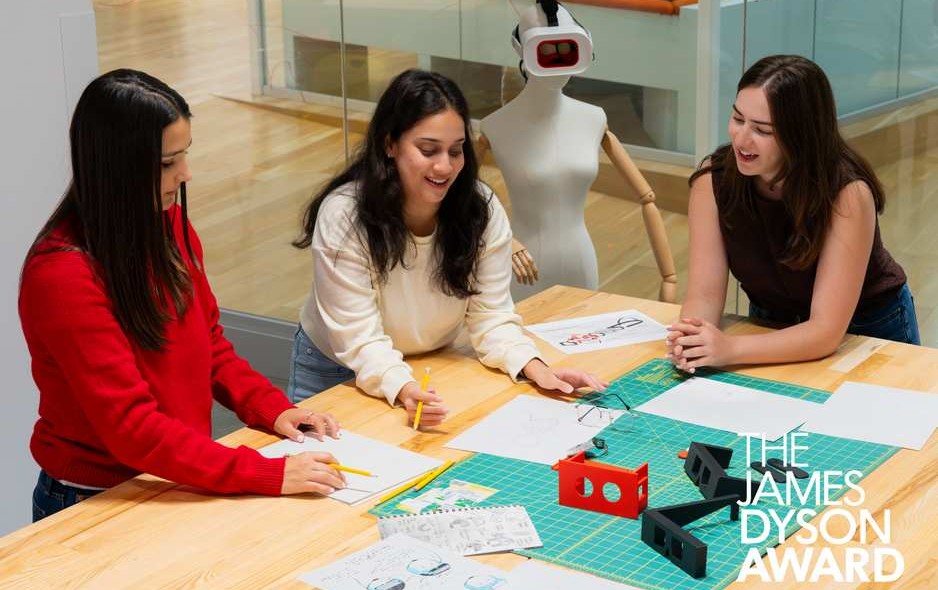
Students Win James Dyson Award for Device That Screens Students for Concussions in Just 60 Seconds

Friday, 4 September 2026
Zero‑alcohol drinks are rising in popularity. What do young people think about them?
Over the past decade, zero-alcohol drinks have gone from a relatively niche product to a staple of our supermarket aisles, bottle stores and pubs.
Their rising appeal in New Zealand and around the world isn’t difficult to understand. Patrons can enjoy the closest thing there is to beer or wine, but without the alcohol, they don’t need to worry about taxi fares or hangovers.
But how do young people view these products? Might they offer an alternative for teenagers as they begin navigating social situations where their peers are drinking?
Or, more concerningly, could products designed to look, taste and feel like alcoholic drinks simply reinforce long-standing problems with New Zealand’s drinking culture?
Our recently published research suggests these booze-free options can indeed fulfil some of the social and symbolic roles young people associate with drinking.
But there are important limits to what they can replace.
Why do young people drink?
The health harms of alcohol are well established – and they rarely stop with the drinker, extending outward to affect partners, families and entire communities.
Globally, this harm contributes to an estimated 2.6 million deaths each year and is linked to more than 200 diseases, injuries and other health conditions.
In New Zealand, its economic toll – through lost productivity, road crashes, healthcare and other impacts – has been calculated at more than NZ$9 billion a year.
The risks of drinking from a young age are known too. Around half of young New Zealanders drink alcohol, with 6.3% drinking at hazardous levels. This early exposure can increase the risk of harmful drinking and dependence later in life.
But it’s also important to remember that young people drink for many reasons other than just getting drunk. It can be part of bonding with others, fitting in or expressing identity. They can drink to celebrate, to feel better or to regulate emotions.
So, if zero-alcohol drinks are going to provide an alternative, can they fulfil these emotional, social, and symbolic roles too?
There are also concerns they could have the opposite effect, potentially creating a gateway to alcohol consumption later on. With relatively little known about how young people perceive these products, we sought to gain a clearer picture.
In our research, we spoke to 52 Year 11 students aged 15 and 16 from three secondary schools across New Zealand.
Using creative, art-based techniques, they shared with us what alcohol and zero-alcohol drinks symbolised for them and whether they thought zero-alcohol could replace alcohol for young people.
We found zero-alcohol drinks could be used to fit in socially. They could also communicate something positive about the person drinking them, such as being responsible for themselves and others.
However, even at this young age, participants recognised that zero-alcohol could not provide the same emotional crutch as alcohol.
For instance, they recognised that zero-alcohol couldn’t “make boring things fun”. In situations they considered inherently fun – going to the beach, weddings or concerts – they could imagine zero-alcohol replacing alcohol.
But in “boring” settings, or situations where they felt socially anxious, they saw regular alcohol as serving a different purpose.
Changing what drinking represents
Our findings suggest several ways health promotion, regulation and education could potentially reduce alcohol harm among young people.
Health promotion could pair zero-alcohol drinks with fun settings normally associated with alcohol, encouraging the idea that there are alternatives to drinking at these occasions.
Restricting alcohol advertising and product placement that link alcohol with fun, could also help reduce that association between alcohol, socialising, and having fun.
As well, young people could be given more education around social skills, coping mechanisms, and emotion regulation, alongside alternative messages to those presenting alcohol consumption as normal.
Ultimately, the symbolic meaning young people attach to zero-alcohol drinks may determine how useful they are as an alternative.
We found evidence that zero-alcohol can be used to fit it, but if it is seen as less valuable than full-strength alcohol, and doesn’t provide the same social status or acceptance, young people may continue to choose alcohol.
But if zero-alcohol gains equal value as a way of socialising and fitting in, it could challenge the idea that drinking alcohol is necessary to be accepted.![]()
Ann-Marie Kennedy, Professor or Marketing, Business School, University of Canterbury; Jennifer Smith, Senior Lecturer, Faculty of Education, University of Canterbury; Johnpaul Smith, Lecturer of Marketing, Swinburne University of Technology, and Rachael Dixon, Senior Lecturer, University of Canterbury
This article is republished from The Conversation under a Creative Commons license. Read the original article.
Thursday, 3 September 2026
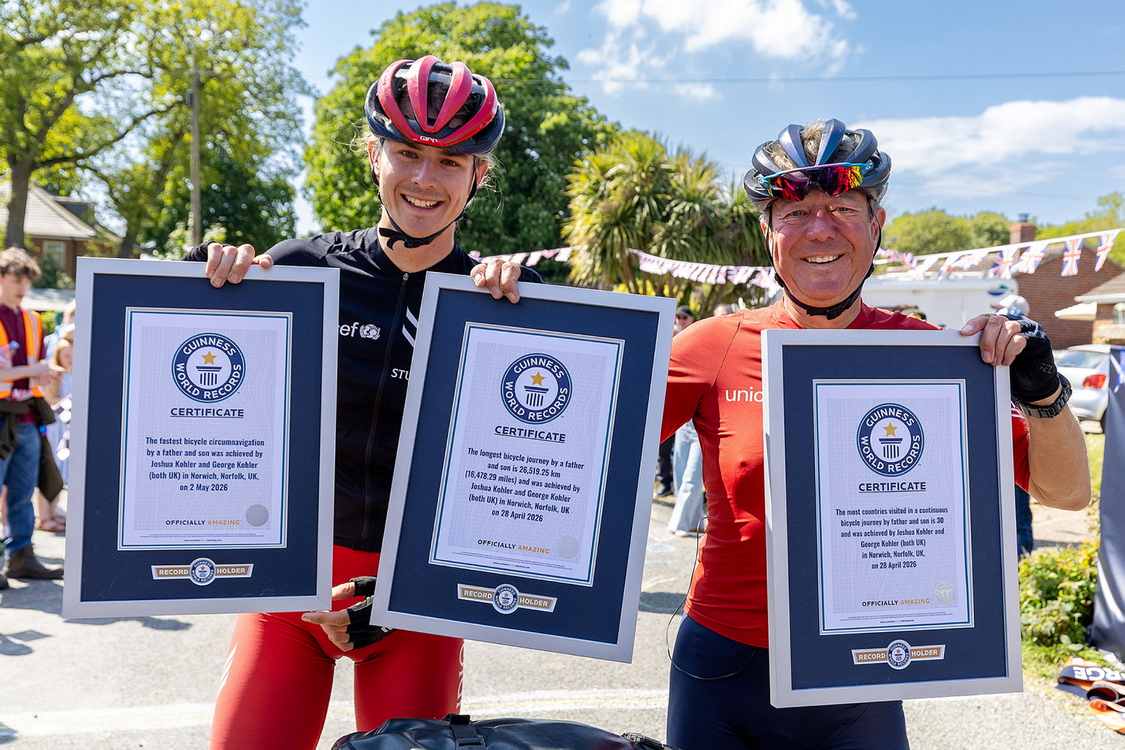
Father and Son Break Three World Records in 18,000 Mile Cycle Around the World


Friday, 29 May 2026
Indian-American teen wins spelling bee title
Friday, 1 May 2026
Abdon Mech among GQ’s Most Influential Young Indians 2026
Tuesday, 17 June 2025
12-Year-old Girl Plants 150,000 Trees in India, Becoming a Reforestation Leader
Friday, 30 May 2025
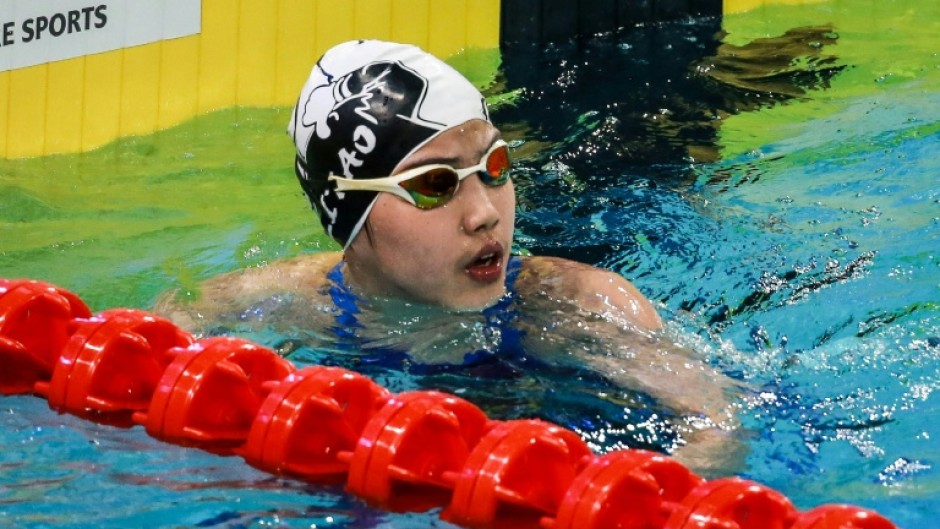
Yu Zidi (12) set for world stage after stunning swims

Saturday, 24 May 2025
Girl With Cleft Lip Adopts Dog Born With the Same Feature
Kynlee Rogers, 10, with her dog – credit: Kimberly Rogers

Mandy, another dog with cleft lip (right) Kynlee hugs Tennee in the airport – credit Cleft Rescue UnitMonday, 20 January 2025
Nagaland's Imnainla Jamir honoured with 'National Youth Icon Award'
Tuesday, 24 December 2024
‘World’s Most Intrepid Twins’ Break World Altitude Record Flying Over The Alps at 8,000-ft in Electric Paraglider
Ross and Hugo Turner attempting to break a record, flying a paraglider-style aircraft at 10,000ft in the French Alps – via SWNS

Ross and Hugo, the Turner Twins, on a para-motor flying over French Alps breaking altitude record – via SWNS

The Turner Twins making final preparations for a world altitude record in a tandem electric paramotor – SWNSFriday, 13 December 2024
Teenage prodigy Gukesh D defeats Ding Liren to become youngest world chess champion
Eighteen-year-old Indian prodigy Gukesh Dommaraju has become the new world chess champion, winning the final game of the title match after a dramatic blunder from the reigning champ, China’s Ding Liren.
Gukesh is now the youngest world champion in chess history, and the first Indian to hold the title since Vishwanathan Anand lost it to Magnus Carlsen in 2013.
Ding was gracious in defeat, saying
Considering [my play], it’s a fair result to lose in the end. I have no regrets. I will continue to play, and I hope I can show the strength like this time.
For Gukesh, the victory fulfilled a childhood dream. At the age of 11, in a video clip that later went viral, he told an interviewer “I want to be the youngest world chess champion.”
In a post-match press conference, Gukesh said spotting Ding’s blunder “was probably the best moment of my life”.
The road to the title
Ding became world champion in 2023 after an unlikely journey. He almost missed qualifying due to COVID lockdowns in China, and even then only made it into the championship match when Russian grandmaster Sergey Karjakin was disqualified over his support for Russia’s invasion of Ukraine.
Ding is renowned for his kind demeanour and defensive skills, having once achieved a record-breaking 100-game unbeaten streak. However, after defeating Ian Nepomniachtchi to claim the champion’s title in 2023, he struggled both on and off the board. Plagued by fatigue and depression, he dropped to 23rd in the world rankings.
In stark contrast, Gukesh has been a force of nature in 2024. He led the Indian team to an historic gold medal at the biennial Chess Olympiad, personally achieving a performance rating of 3,056 – the highest at the event, winning the gold medal on the top board.
Drama on the board
The championship match – a series of 14 games held in Singapore and sponsored by Google – was marked by twists and turns. Ding was regarded as the clear underdog before play began, but he set the tone for tense battle when he pulled off a shock victory in game 1, playing black. In chess, the player with the white pieces has an advantage, so when games at the top level are not drawn it is usually the white player who comes out ahead.
Before game 14, Ding and Gukesh were tied with two wins each. It was widely expected the game would be a draw, setting the scene for a round of high-speed games to break the tie.
When the game began, Ding – playing white – achieved a small advantage out of the opening, but was unable to capitalise on it and instead settled for a technically equal endgame.
However, after four hours of play, just as the game seemed destined for a draw, Ding made a catastrophic blunder, handing Gukesh a decisive advantage.
On his 55th move, Ding offered a trade of rooks, attempting to simplify the position and steer the game towards a draw. However, this offered an opening for the young challenger to also trade off the remaining bishops and reach a winning king-and-pawn endgame. In the process, he secured his place as the 18th world chess champion.
Elite commentators such as former world champions Magnus Carlsen and Vladimir Kramnik and grandmasters Fabiano Caruana and Hikaru Nakamura criticised the quality of play throughout the match, with both players missing several key opportunities.
Following the final game, Carlsen labelled Ding’s fatal mistake “one of the worst blunders we’ve seen in a world championship.” Because the final position is a textbook chess endgame studied by all grandmasters in their youths, many expressed shock at the abrupt and anticlimactic conclusion to the sport’s most elite contest.
Yet the sheer drama of the three-week match, with its high stakes and emotional rollercoasters, kept millions of fans riveted across the globe.
The Carlsen question
Hanging over the world chess championship is the presence of 34-year-old Norwegian Magnus Carlsen, widely regarded as the greatest chess player of all time. (Disclosure: I once played a drawn game with Carlsen, at the 2016 Chess Olympiad.) In 2022, citing a lack of motivation, Carlsen relinquished the title of world champion.
However, Carlsen continues to play chess, and he is still number one in the International Chess Federation (FIDE) rankings. His presence casts doubt on the idea that the winner of the championship is “the best player in the world”.
Gukesh’s victory, while historic, doesn’t resolve this debate. With a chess rating of 2,777 after this match, he will remain outside the world’s top three by rating. (Chess ratings are based on the Elo system, a complicated method for calculating the relative skill levels of players based on their previous wins and losses.)
Remarkably, he is not even the highest-rated Indian. His 21-year-old compatriot, Arjun Erigaisi, is rated 2,801.
Yet Gukesh’s win may signal something larger: a generational shift, and the emergence of a new star in the chess universe.
In his post-match press conference, Gukesh acknowledged that “becoming the World Champion doesn’t mean that I’m the best player in the world – there’s obviously Magnus”.
Carlsen himself remarked that Gukesh had shown the potential to “establish himself as the number-two player in the world”, before adding “and who knows, maybe in the not-too-distant future, the number one”.
What’s next for chess?
The triumph of the 18-year-old Gukesh represents the dawn of a new era. His victory also underscores the growing influence of India – the gold medallists for both the Open and Women’s competitions at the recent chess Olympiad – in global chess.
For Ding, the defeat is a heartbreaking end to a short, challenging reign. Yet his resilience in reaching this stage, despite his personal struggles, has not gone unnoticed by fans around the world.
The championship itself, as a showdown between players from China and India – two nations with over a billion people each – has captured global attention and highlighted the game’s surging popularity. Chess has experienced a renaissance in recent years, fuelled by the pandemic-induced shift to online play and pop-culture events such as the Netflix drama The Queen’s Gambit.
Platforms such as Chess.com and Lichess have turned the game into a spectator sport, with live commentary from grandmasters such as Carlsen and Nakamura drawing huge audiences. For India, Gukesh’s victory could ignite a new wave of chess enthusiasm, cementing the country’s status as a rising superpower in the game.
As chess fans celebrate the rise of a prodigy, the future of the sport looks brighter than ever.![]()
David Smerdon, Assistant Professor, School of Economics, The University of Queensland
This article is republished from The Conversation under a Creative Commons license. Read the original article.
Friday, 6 December 2024
‘World’s Most Intrepid Twins’ Break World Altitude Record Flying Over The Alps at 8,000-ft in Electric Paraglider


Wednesday, 2 October 2024
World youth unemployment rate lowest for 15 years: UN
Tuesday, 9 July 2024
Teens and screens
Thursday, 6 June 2024
Teens and screens
Friday, 17 May 2024
Iowa Teen Has Donated 7,000 Pounds of Produce from Her Own Garden to Food Banks: ‘A really good feeling’

Thursday, 25 April 2024
At Just 19, Runner with Down’s Syndrome Makes History as the Youngest Impaired Person to Finish the London Marathon

Tuesday, 16 April 2024
Teen with Incredibly Rare Genetic Condition is Cured in World First By British Doctors
Kai Xue with her mom and team members from University Hospitals at North Midlands – NHS Trust via SWNS